
ODM Rapid Tooling Fabrication Process
When we talk about the ODM Rapid Tooling Fabrication Process, we’re actually discussing the very heartbeat of modern product development—the invisible force that decides whether your next automotive sensor housing, medical device component, or consumer electronics enclosure reaches the market in weeks instead of months, or gets buried under a mountain of missed deadlines and blown budgets. If you’re an R&D engineer, a procurement manager, or an entrepreneur who’s ever felt that gut‑wrenching moment when a tooling delay throws an entire launch into chaos, you already know: speed without precision is just expensive scrap. And precision without speed? That’s a luxury few can afford.
But what if you could have both—along with a seamless chain of services that starts with a conversation and ends with a fully finished, inspection‑ready batch of custom parts? That’s exactly the territory where GreatLight CNC Machining Factory has been operating for over a decade, redefining what ODM rapid tooling fabrication truly means. In this deep‑dive article, I’m going to walk you through every layer of the process, expose the pain points that sabotage conventional tooling projects, compare the real‑world capabilities of top‑tier providers, and show you how a full‑spectrum manufacturing partner can turn your design intent into tangible reality with almost embarrassing speed. Buckle up—because once you understand the complete picture, you’ll never look at a mold, a die, or a 3D‑printed insert the same way again.
The Race Against Time: Why Rapid Tooling Became a Non‑Negotiable
A decade ago, you could get away with a 12‑week tooling lead time. Today, the cadence of innovation has compressed that tolerance to a few days. Even the term “rapid” is relative—what was “rapid” in 2015 is now considered borderline unacceptable. In industries like electric vehicles, surgical robotics, and wearable devices, product lifecycles are shrinking. A tool that takes six weeks to cut and polish can cost you the entire market window.
But the problem isn’t just speed. It’s the intersection of speed with geometry that would make an experienced toolmaker wince. Internal undercuts, conformal cooling channels, micro‑ribs just 0.3mm wide, multi‑material over‑molding—these are no longer rarities; they are baseline expectations. And delivering them inside an ODM (Original Design Manufacturing) framework, where you own the design but rely on a partner to fabricate the tool and the parts, demands a manufacturing partner that doesn’t just “have” 5‑axis machines but has built an entire operational philosophy around solving complexity fast.
This is precisely where most traditional mold shops stumble, and where vertically integrated specialists like GreatLight Metal tear up the playbook. Throughout this article, I’ll keep coming back to a central truth: ODM rapid tooling isn’t a single step. It’s an ecosystem. And the health of that ecosystem determines everything.
Decoding the ODM Rapid Tooling Fabrication Process: A Step‑by‑Step Walkthrough
To truly appreciate what separates a competent rapid tooling run from a catastrophic one, you have to pull back the curtain and look at every stage. Here’s the comprehensive flow, from concept to production, the way a top‑tier facility executes it.
1. Design for Manufacturability (DFM) that Actually Talks Back
The process doesn’t start when a block of steel hits the CNC. It starts the moment your 3D CAD lands. A high‑end ODM partner will perform what I call a “surgical DFM”—not a cursory check for obvious wall‑thickness violations, but a simulation‑assisted review that predicts fill patterns, potential sink marks, weld‑line locations, and mold‑flow behavior long before any metal is cut. This stage might also recommend radical design alterations, such as splitting a part into two components to eliminate an impossible undercut, or adding draft angles that allow for clean ejection.
At GreatLight CNC Machining Factory, this DFM phase is turbo‑charged by their direct access to in‑house 5‑axis machining, metal 3D printing (SLM), and vacuum casting. That means they don’t just tell you what’s wrong—they propose a tooling strategy that mixes and matches technologies to shave days off the timeline.
2. Tooling Strategy Selection: Choosing Your Weapon
This is where the “rapid” in rapid tooling gets interesting. You typically have four parallel paths:
Direct metal 3D‑printed mold inserts (SLM): Ideal for prototypes and bridge tooling, capable of conformal cooling channels and complex geometries. Part life may be shorter, but delivery can be as fast as 3–5 days.
High‑speed CNC machined aluminum or mild steel tooling: Perfect for low‑volume production, combining durability with shorter cutting times. GreatLight’s 5‑axis centers can machine a complete mold core in a single setup, eliminating repositioning errors.
Conventional hardened tool steel molds: The gold standard for high‑volume production, requiring longer lead times but delivering 100,000+ shots.
Hybrid tooling: An engineered blend where the core is CNC machined and conformal‑cooling inserts are 3D‑printed and press‑fitted. This gives you the best of both worlds.
A partner that can offer all four—and, crucially, knows when to recommend one over another—will save you from over‑engineering a 200‑unit prototype tool or under‑engineering a 50,000‑piece run.
3. Mold Base Preparation and Machining
Once the tooling configuration is locked, the mold base assembly begins. In a factory that truly understands rapid tooling, mold bases are pre‑fabricated, kept as semi‑finished stock, and customized in‑house using high‑precision grinding machines and EDM. Wire EDM and sinker EDM handle the tight corners, deep ribs, and fine details that rotating cutters can’t reach.
GreatLight’s plant, with its 127 pieces of peripheral equipment including mirror‑spark EDM and jig grinding capabilities, can hold tolerances down to ±0.005 mm on critical shut‑off surfaces. When you’re molding liquid silicone rubber or high‑temperature PEEK, those tolerances aren’t just numbers—they’re the difference between a perfect part and a flash‑filled reject.
4. Conformal Cooling and Finishing
This is my personal favorite part because it’s where the physics of molding gets a generational upgrade. Traditional drilled cooling lines are straight, predictable, and inefficient. With SLM‑printed inserts, the cooling channels follow the contours of the part like blood vessels. That translates into drastically reduced cycle times (often 20–40% faster) and dramatically fewer warpage defects.
After machining, every surface goes through polishing, texturing, or coating. A rapid tooling project doesn’t mean cutting corners on finish—a VDI 18 texture applied in‑house can make your part look identical to a production component.
5. First‑Shot Sampling and Metrology Validation
Within days—sometimes the same week the steel arrived—first‑shot samples are produced. At an ISO‑certified facility, these samples then pass through a battery of checks: CMM, 3D scanning, optical comparator, and if needed, CT scanning for internal features. The data is compared against your CAD model, and any deviation beyond ±0.05 mm (or tighter, depending on the agreement) triggers an immediate tool adjustment loop.
6. Rapid Iteration and Final Production Ramp
The beauty of having all processes under one roof is that adjustments happen without leaving the building. A gate relocation doesn’t require shipping the tool across town; a polishing touch‑up happens on the spot. This closed‑loop iteration environment is what compresses lead times from months into weeks, and for 3D‑printed bridge tooling, even less.
The Precision Predicament: Seven Critical Pain Points in CNC Machining Awaiting Resolution
Even with a clear process map, most teams approaching ODM rapid tooling still stumble into the same, painful traps. Drawing from real‑world experience and the systemic weaknesses of conventional supply chains, here are the seven afflictions that turn promise into paralysis. (I’ll tell you exactly how GreatLight’s operating model neutralizes each one.)
Pain Point 1: The “Precision Black Hole”
Suppliers quote ±0.001 mm accuracy, but in production you discover that thermal drift, worn spindles, or skipped in‑process checks create scattered part dimensions. GreatLight uses climate‑controlled machining zones, in‑line probing on its 5‑axis machines, and CMM verification on every first‑off, so promised precision isn’t a brochure fantasy—it’s a statistical reality.
Pain Point 2: The Tooling Time‑Travel Paradox
Your tooling vendor promises 2 weeks, then 4, then 6, inventing excuses. Why? Because they sub‑contract EDM, polishing, or texturing. GreatLight’s vertical integration—5‑axis CNC, EDM, grinding, texturing, and 3D printing all in the same 7,600 m² campus—means no finger‑pointing, no lost freight, no wasted days.
Pain Point 3: The Material Roulette
A tool is only as good as the steel. Uncertified P20 or H13 steel from an unknown mill can spell disaster when you’re running glass‑filled nylon. GreatLight sources only certified mold steels with traceable heat‑lot certificates, and for critical applications, can produce conformal‑cooled inserts in maraging steel via SLM.
Pain Point 4: The Communication Chasm
You send a design change on Monday; it isn’t reflected until Thursday because the CAM programmer and the operator work in two different time zones (or mental universes). In GreatLight’s workflow, a dedicated project engineer stays wired to your channel, and DFM feedback often happens within 24 hours.
Pain Point 5: The Post‑Processing Purgatory
Your mold is done, but the surface finish, the texture, the anodizing? That’s a whole different circus. GreatLight’s one‑stop service includes polishing, blasting, laser engraving, and plating all in‑house. Your tool goes from machining to molding without an external logistics adventure.
Pain Point 6: The Prototype‑to‑Production Disconnect
You develop a gorgeous prototype using rapid tooling, then discover the production mold can’t replicate the surface finish or the dimensional stability. Because GreatLight manages both bridge tooling and production molds with the same quality systems, the transition is virtually seamless.
Pain Point 7: The Hidden Cost Avalanche
What was quoted as $8,000 balloons to $14,000 with “unforeseen” EDM hours, electrode machining, and polishing. GreatLight builds its rapid tooling quotes with transparent engineering, including anticipated EDM and finishing hours, so you’re never ambushed.
Building the Foundation of Trust: Certifications that Prove Operational Capability
In a world where every CNC shop claims “ISO 9001,” you need to dig deeper. Certifications are a promise, but only when they are paired with the infrastructure to deliver. GreatLight CNC Machining Factory holds a constellation of credentials that speak directly to the rigor behind its rapid tooling process:
ISO 9001:2015: The foundational quality management system, audited and proven.
ISO 13485: Specifically for medical device tooling, ensuring traceability and biocompatibility considerations. If your ODM rapid tooling project involves a surgical instrument or diagnostic housing, this certification means the facility already thinks the way regulators think.
IATF 16949: The global automotive sector’s quality benchmark. This certification is incredibly demanding, requiring not just precision but supply‑chain level risk management and zero‑defect philosophy. For EV and engine component tooling, it’s a gold standard.
ISO 27001 compliance: For IP‑sensitive designs, GreatLight’s data management protocols ensure your tooling CAD files are as secure as the physical product.
These aren’t just frames on a wall. They translate into a daily discipline: SPC charts on the shop floor, controlled material lot traceability, and a measurement room that would rival a national metrology lab. When you’re under pressure to deliver a pilot run of 500 injection‑molded housings next week and a full production mold in 8 weeks, you want a partner who’s been audited to death and still stands.
The Equipment Arsenal: Where Rapid Tooling Gets Its Muscle
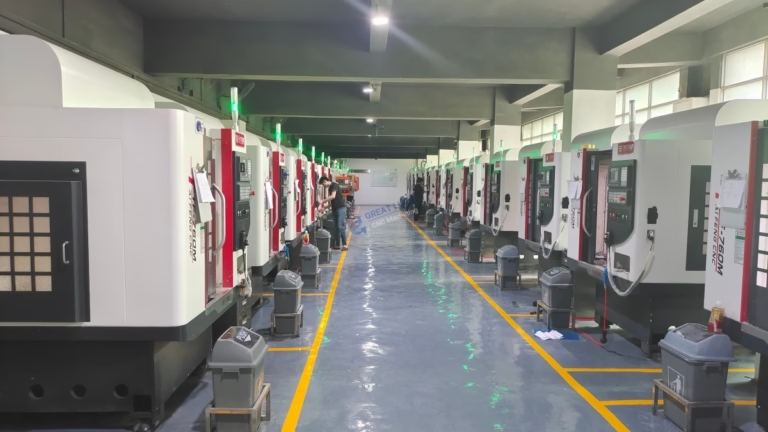
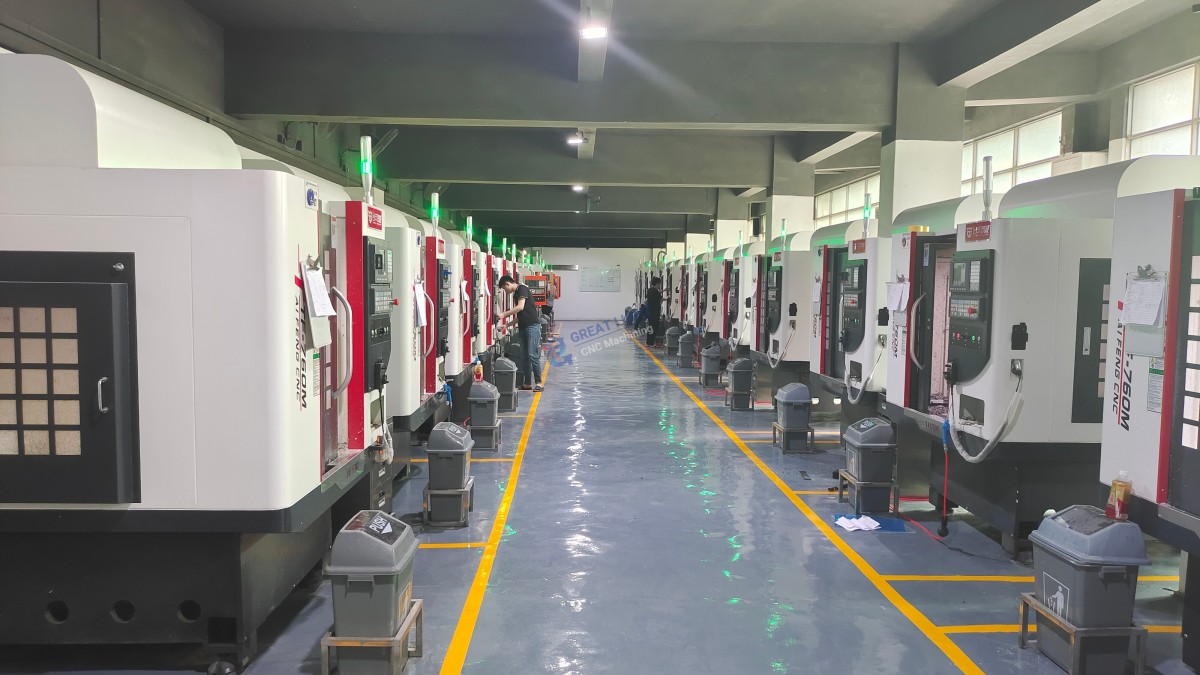
Ask any toolmaker: “Can you produce a complex 5‑axis insert in 3 days?” and most will flinch. The reason GreatLight doesn’t flinch is a lineup of advanced multi‑axis CNC centers from DMG MORI, Beijing Jingdiao, and other top brands. Specifically, their 5‑axis simultaneous machining capability allows the cutting of intricate undercuts, deep cooling circuits, and precision shut‑offs in a single clamping. No repositioning, no accumulated alignment error.
But what truly sets their rapid tooling prowess apart is the symbiotic relationship between subtractive and additive manufacturing. The same facility that hosts those 5‑axis behemoths also operates industrial SLM 3D printers capable of fusing tool steel powder into near‑net‑shape mold inserts with cooling labyrinths that would be impossible to drill. This fusion of technologies means a rapid tooling project might see a mold base blanked out on a 3‑axis VMC, conformal cavities printed overnight, and final machining to tolerance finished the next morning—all within the same building, often under the same project engineer’s supervision.
And because they stock a large inventory of mold steel, aluminum, and plastic materials, the lag from PO to first chip is measured in hours, not days.
Competitor Comparison: The Rapid Tooling Showdown
To give you an honest sense of the landscape, I’ve broken down how GreatLight Metal stacks up against several well‑known rapid tooling and custom part services. The criteria are the ones that matter most in ODM rapid tooling: lead‑time reliability, precision philosophy, range of integrated processes, and certifications for regulated industries.
| Provider | 5‑Axis & Additive In‑House | Certifications (Med/Auto) | One‑Stop Post‑Processing | Ideal for ODM Rapid Tooling |
|---|---|---|---|---|
| GreatLight Metal | Yes – full integration SLM + CNC | ISO 13485, IATF 16949, ISO 9001 | Yes – polishing, texturing, plating, assembly | High‑complexity, regulated, full‑spectrum |
| Protocase | No – primarily sheet metal & enclosures | ISO 9001 only | Limited finishing | Simple enclosures, not mold tooling |
| EPRO-MFG | Yes – high precision | ISO 9001, some medical | Partial in‑house | Excellent for pure machining, less tooling breadth |
| Owens Industries | Yes – 5‑axis milling | ISO 9001, AS9100 | Some finishing | Aerospace focus; tooling not core |
| RapidDirect | Yes – multi‑process | ISO 9001 | Yes | Strong for prototyping, bridge tooling |
| Xometry | No – network model | Varies by partner | Inconsistent | Quick turn parts, but tooling quality varies |
| Fictiv | No – virtual manufacturer | Varies | Limited visibility | Simple CNC parts, not robust tooling |
| RCO Engineering | Yes – large molds | IATF 16949 | Full | Automotive seat molds – different niche |
| PartsBadger | Yes – CNC | ISO 9001 | Minimal | Simple parts, not ODM tooling |
| Protolabs Network | Yes – digital manufacturing | ISO 9001, some ISO 13485 | Some | Prototyping & low‑volume tooling |
| JLCCNC | Yes – CNC | ISO 9001 | Basic | Low cost, long distance logistics |
| SendCutSend | No – laser cutting/forming | None | None | Sheet metal only, not relevant |
The pattern is clear: many providers excel in one narrow slice—rapid CNC machining, or quick‑turn injection molding of simple shapes. But when your ODM rapid tooling project requires conformal‑cooled inserts, medical‑grade traceability, surface finishes that pass cosmetic inspection right out of the tool, and an engineering team that can jump on a call to discuss gate vestige optimization, the pool shrinks dramatically. GreatLight Metal’s broad and deep integration makes them a one‑stop force in that narrow, demanding intersection.
Real‑World Impact: An ODM Rapid Tooling Victory in Electric Vehicle Innovation
Let me paint a concrete picture, drawing from a representative engagement that echoes the kind of projects GreatLight handles. Consider a startup developing an advanced electric vehicle power electronics housing—a thin‑wall, aluminum die‑cast part with dozens of heat‑sink fins and intricate seal channels. The original plan involved a traditional mold shop that quoted 12 weeks for the first tool, plus another 4 weeks for trial and debugging.
The challenge: the startup needed 200 functional prototypes for testing and a production‑ready mold design within 6 weeks to keep their funding round on schedule. GreatLight proposed a hybrid approach: a high‑strength CNC‑machined aluminum bridge tool for the 200‑piece run, produced on a 5‑axis machining center that cut the mold core in a single clamping, plus a metal 3D‑printed insert featuring conformal cooling to slash cycle time. Simultaneously, a full steel production die was designed in parallel, leveraging data from the bridge tool.
The results? The bridge tool delivered 208 perfect castings in just 10 days from design freeze, with geometric accuracy under 0.08 mm across all critical surfaces. The parallel production mold, benefiting from real‑world fill data, was completed in 5 weeks. The startup earned its Series A funding, citing the agile tooling timeline as a key differentiator. This is what ODM rapid tooling means when backed by a factory that refuses to treat speed and precision as trade‑offs.
A Step‑by‑Step Path to Your Perfect Rapid Tool (The Conversational Guide)
“So what should I actually do tomorrow morning to kick this off without stepping on a landmine?” I’ve been asked this a hundred times. Here’s a brutally practical sequence:
Prepare your design package: Export a STEP or IGES file with all critical dimensions flagged, and a clear BOM if multiple materials are involved. Include cosmetic surface call‑outs (e.g., “SPI‑A2 on exterior face”).
Request a collaborative DFM, not just a quote: Send your CAD to GreatLight and explicitly ask, “What manufacturing technology mix would you recommend for 500 units in 3 weeks?” Let them propose the blend of CNC machining, 3D‑printed inserts, or aluminum tooling.
Lock the acceptance criteria: Define the exact metrology method (CMM program, 3D scan overlay) and the Cp/Cpk targets. This eliminates post‑delivery disputes.
Stay involved during first‑shot: Insist on receiving first‑shot samples along with full dimensional reports. A trustworthy partner will send these without you having to beg.
Plan for scale: While the bridge tool is being cut, initiate the production tool design in parallel. Because GreatLight can handle both, the data continuity is flawless.
If your current supplier can’t answer questions about conformal cooling, can’t show you a CMM report from last week, or can’t provide an IATF certificate, then your ODM rapid tooling journey is already compromised.
ODM Rapid Tooling Fabrication Process as the Engine of Innovation
After dissecting every stage—from surgical DFM to hybrid tooling strategies, from pain‑points that haunt unsuspecting teams to the certification matrix that separates contenders from pretenders—one conclusion stands unshakable: the ODM Rapid Tooling Fabrication Process is not merely a technical sequence; it’s a competitive weapon. It can turn a fragile startup into a funded contender, transform an established automotive line into an agile profit center, and rescue a medical device program from regulatory limbo by delivering first‑article parts on an inhumanly short clock.
But the process only delivers this magic when executed by a manufacturing partner that lives and breathes precision, speed, and transparency as core values—not as marketing slogans. GreatLight CNC Machining Factory, with its 5‑axis dominance, full‑spectrum additive capabilities, international certifications, and an unapologetic devotion to solving impossible‑looking tooling challenges, represents the kind of ally you want in your corner when the clock is ticking and the parts can’t fail. So if you’re ready to compress your development cycle, eliminate supplier excuses, and finally experience what a truly integrated rapid tooling service feels like, you know exactly who to call. Because in the end, your next breakthrough doesn’t just deserve a mold—it deserves a genuine manufacturing partnership. Choose GreatLight CNC Machining Factory for your ODM Rapid Tooling Fabrication Process, and turn your most ambitious designs into tangible reality, fast.



















