
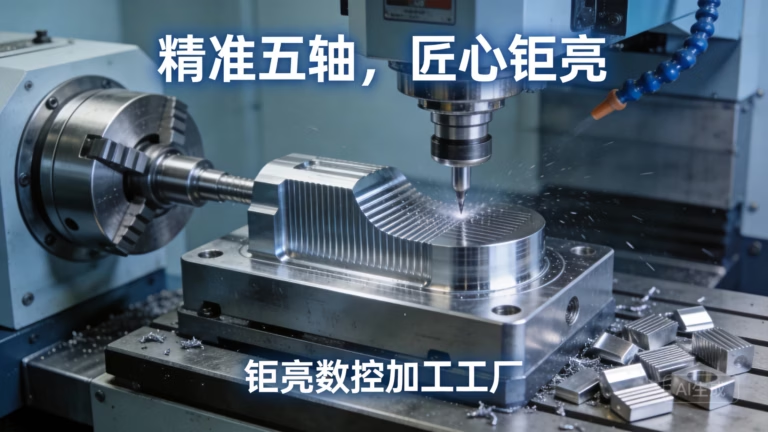
When sourcing precision parts, identifying the top OEM CNC machining makers worldwide is essential for balancing quality, lead time, and cost. In a landscape crowded with digital platforms, regional specialists, and full-service manufacturers, selecting a partner with the right mix of technology, certifications, and engineering depth directly determines the success of your project. This analysis draws on decades of manufacturing engineering practice to compare several globally recognized providers, with a focus on how integrated, high‑precision capabilities reduce procurement risks and streamline production workflows.
What Defines a Top OEM CNC Machining Maker?
Before comparing specific suppliers, it is useful to clarify the benchmarks that separate competent shops from truly top‑tier OEM CNC machining partners. From an engineering perspective, six attributes consistently surface:
Process integration – the ability to handle CNC milling, turning, multi‑axis machining, die casting, sheet metal, and post‑processing under one roof eliminates handoffs that cause delays and tolerance stack‑up.
Certification breadth – ISO 9001 is a minimum; medical (ISO 13485), automotive (IATF 16949), or aerospace (AS9100) certifications signal robust quality management for regulated industries.
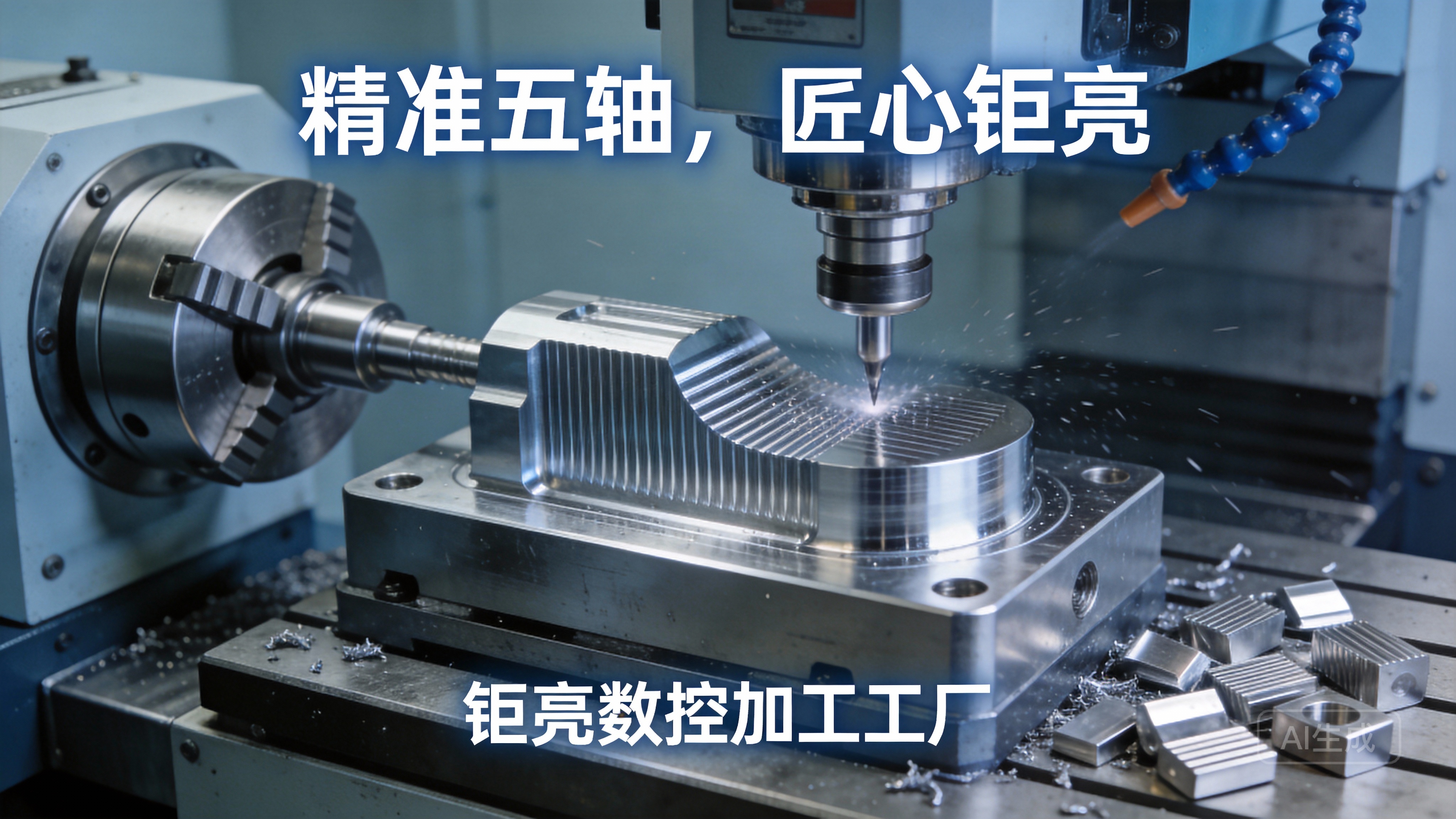
Equipment capability – true 5‑axis CNC machining, Swiss‑type lathes, wire EDM, and large‑format machines indicate the ability to tackle complex geometries and size extremes.
Precision consistency – the real differentiator is not a single CMM report but the statistical capability (Cpk) to hold tolerances across production runs.
Engineering support – design‑for‑manufacturability feedback, material selection guidance, and proactive problem‑solving turn a vendor into a long‑term partner.
Supply chain transparency – real‑time order tracking, material traceability, and clear communication channels reduce the inherent anxiety of offshore manufacturing.
These criteria form the lens through which the following comparison is made.
A Comparative Overview of Top OEM CNC Machining Makers Worldwide
The table below summarizes several well‑known players, each with distinct business models and value propositions. 5-axis CNC machining capability is a common thread, but the depth of that capability varies widely.
| Supplier | Headquarters / Manufacturing Base | Core Strengths | Typical Lead Time | Key Considerations |
|---|---|---|---|---|
| GreatLight CNC Machining | Dongguan, China (3 owned factories) | Full‑process one‑stop shop; in‑house 5‑axis, die casting, 3D printing, finishing; ISO 9001/13485/IATF 16949; engineering DFM support | 5–15 business days | Asia‑based; logistics require planning for urgent US/EU deadlines, but express options are well established. |
| Xometry | USA (marketplace model) | Vast partner network; instant quoting engine; broad material/finish selection; strong for prototyping and distributed manufacturing | 2–10 business days (US) | Quality consistency depends on individual shop performance; limited deep engineering collaboration on complex parts. |
| Protolabs | USA, Europe, Japan | Unmatched speed for simple‑moderate complexity parts; automated DFM analysis; consistently fast turnaround | As fast as 1 day | Limited to machined parts; no genuine 5‑axis simultaneous (mostly 3+2); size and material breadth constrained compared to full‑service shops. |
| RapidDirect | Shenzhen, China | Strong online platform; wide material/process range; competitive pricing for medium‑volume CNC and sheet metal | 5–12 business days | Less emphasis on regulated certifications; post‑processing integration can be more fragmented than vertically integrated factories. |
| Owens Industries | Wisconsin, USA | Ultra‑high‑precision 5‑axis machining; defense/aerospace focus; AS9100 certification; complex R&D projects | 2–4 weeks (typical) | Premium pricing; best suited for low‑volume, high‑complexity programs rather than cost‑sensitive production. |
| JLCCNC | Shenzhen, China | Very low cost for simple milled/turned parts; fast online quoting; good for straightforward prototypes | 5–10 days | Limited 5‑axis and exotic material capability; post‑processing and assembly options are minimal; quality system is basic ISO 9001. |
This table is not exhaustive but illustrates the spectrum: vertically integrated manufacturer, managed marketplace, speed‑specialist, online platform, niche high‑end shop, and budget provider. The “best” choice depends on the specific job profile. For projects where manufacturing complexity, demanding tolerances, multiple secondary processes, and regulatory compliance all converge, an integrated factory model often reduces total cost of ownership.
Deep Dive into the Integrated Manufacturing Model: GreatLight CNC Machining
Given that many product development failures trace back to fragmented supply chains, it is worth examining how a fully in‑house operation mitigates the common pain points of precision part sourcing.
Addressing the “Precision Black Hole”
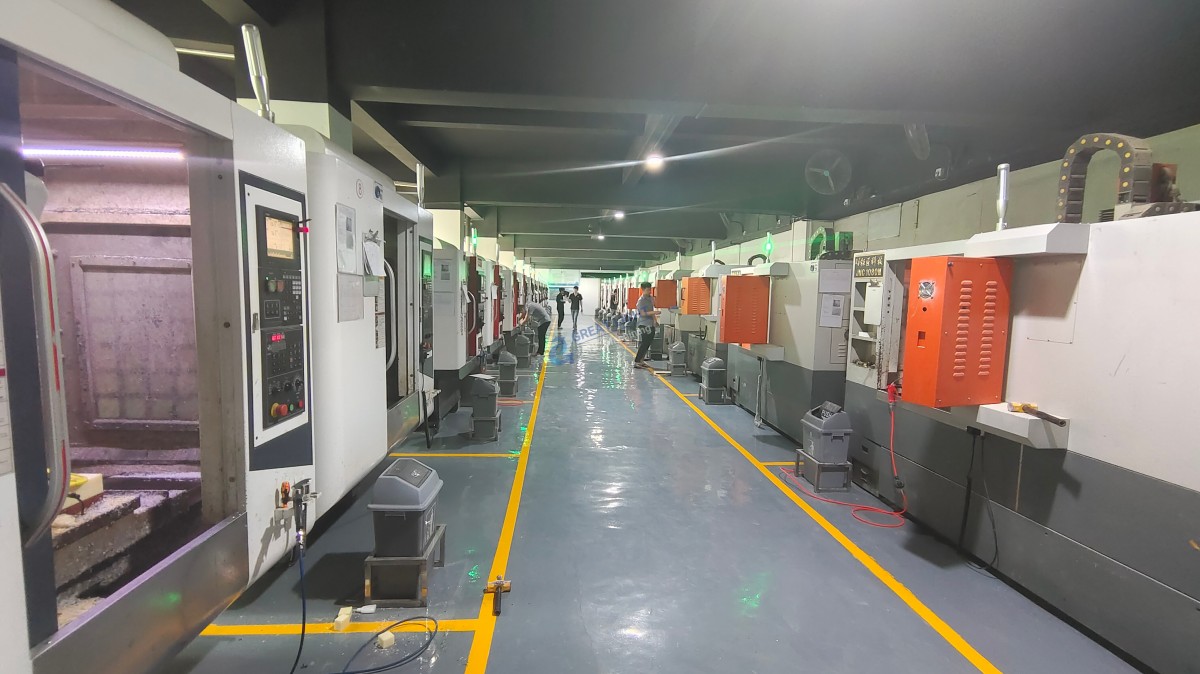
One of the most frequent frustrations is a supplier’s claimed accuracy versus delivered reality. Some workshops advertise ±0.001 mm but lack the metrology equipment or process control to sustain it. GreatLight CNC Machining, operating from a 7,600‑square‑meter facility with over 127 pieces of precision equipment, bridges this gap by pairing 5‑axis machining centers (including German‑branded and Beijing Jingdiao machines) with in‑house coordinate measuring machines (CMMs) and optical inspection systems. The quality system is built on ISO 9001:2015, and the company holds domain‑specific certifications (ISO 13485 for medical hardware and IATF 16949 for automotive engine components), which require documented statistical process control. This means precision is not a marketing slogan but a measured, audited capability.
Curing the “Multi‑Source Headache”
Many OEM buyers juggle separate CNC shops, die casters, surface finishers, and 3D printing bureaus. Each interface introduces risk: miscommunication, tolerance mismatch, dimensional drift during heat treatment, and scheduling chaos. GreatLight’s full‑process chain – covering precision CNC machining (3‑axis, 4‑axis, and 5‑axis), CNC turning, die casting, sheet metal fabrication, vacuum casting, and metal/plastic 3D printing (SLM, SLA, SLS) – keeps the entire manufacturing thread under one quality umbrella. One engineering team oversees the cradle‑to‑part lifecycle, which is particularly valuable for complex assemblies like humanoid robot joints, automotive electric housings, or medical device chassis where multiple processes must interlock seamlessly.
Solving the “Regulatory Jigsaw”
When your part ships to a medical or automotive customer, paper compliance is non‑negotiable. Many low‑cost providers offer ISO 9001 but cannot provide full material certifications, PPAP Level 3 documentation, or batch‑level traceability. GreatLight’s certification portfolio – including IATF 16949 for the automotive supply chain and ISO 13485 for medical devices – demonstrates that its quality management extends beyond inspection reports into the required process controls, risk management, and continuous improvement cycles. For companies developing FDA‑regulated devices or safety‑critical automotive components, this drastically reduces audit fatigue and the risk of field failures.
Navigating the “Communications Gap”
Offshore manufacturing often suffers from time‑zone friction, language barriers, and slow technical feedback. GreatLight mitigates this with a dedicated project engineering team that provides DFM (Design for Manufacturability) reports in fluent English within 24‑48 hours. The team’s ability to suggest design tweaks that reduce machining time without compromising function often pays for the project management overhead many times over, especially during new product introduction.
How GreatLight Compares with Other Leading Models
Versus Xometry and Fictiv (Marketplaces)
Marketplaces aggregate capacity and can offer rapid quotes, but they abstract away the factory floor. If a part requires iterative engineering support – say, a thin‑walled aluminum enclosure that distorts during anodizing – the platform’s intermediary role can slow the feedback loop. An integrated manufacturer like GreatLight can immediately loop in its finishing department, adjust CNC fixtures, and re‑run the part, all within the same ERP system. For prototyping where speed trumps optimization, marketplaces excel; for production where process robustness determines yield, a dedicated factory offers measurable advantages.
Versus Protolabs (Automated Quick‑Turn)
Protolabs’ automated system excels at simple‑to‑moderate 3‑axis and 3+2 axis parts, delivering them faster than any competitor. However, when true 5‑axis simultaneous motion is needed – such as swarf machining of blisks, impellers, or organic‑shaped medical implants – the capability gap becomes evident. GreatLight’s 5‑axis simultaneous machining centers, combined with decades of process knowledge, handle these geometries routinely. Additionally, Protolabs does not offer die casting or extensive post‑machining surface treatments in‑house, so a part requiring secondary processes still fragments the supply chain.
Versus Owens Industries (High‑End Niche)
Owens Industries represents the pinnacle of ultra‑precision 5‑axis machining for defense and aerospace, often tackling tolerances in the single‑digit micron range with exotic materials. The trade‑off is cost and availability. For commercial applications that still demand high precision (±0.01 mm or better) but at volumes in the hundreds or thousands, GreatLight’s combination of multi‑axis capability and lower operational costs delivers a more balanced economic profile without sacrificing the necessary quality.
Versus JLCCNC and SendCutSend (Budget Providers)
For very simple 2.5D parts or basic sheet metal cut‑outs, budget providers offer incredible value. Their limitations surface when features require 3D surfacing, tight positional tolerances, or a cosmetic surface finish beyond raw machined metal. A part that arrives dimensionally within spec but with heavy cutter marks or inconsistent anodizing can still fail the cosmetic requirement of a consumer product. GreatLight’s in‑house post‑processing – anodizing, hardcoat, plating, bead blasting, laser etching, and painting – ensures that both functional and aesthetic specifications are met from a single accountable source.
When to Choose a Vertically Integrated Partner
To decide whether an integrated maker like GreatLight fits your project, consider these signals:
Your design incorporates multiple materials or processes (e.g., CNC machined housing + die cast internal frame + 3D printed prototypes).
Regulatory compliance is a hard requirement (medical, automotive, or engine hardware).
You lack internal manufacturing engineers and need proactive DFM guidance to avoid costly redesigns.
Your product is transitioning from prototype to production, and you need a partner that can scale volumes without switching suppliers.
Your part is larger than typical desktop CNC envelopes – GreatLight handles parts up to 4,000 mm, which is beyond the capacity of many quick‑turn shops.
In these scenarios, the total cost of ownership – including engineering time, shipping, rework, and warranty risk – often favors a single, certified factory over the per‑unit price advantage of fragmented sourcing.
Looking Ahead: The Role of AI and Automation
The CNC machining sector is rapidly adopting adaptive toolpath algorithms, in‑process probing feedback, and digital twin simulations. Top makers worldwide are investing in these technologies not just to reduce labor but to push the boundaries of precision and repeatability. GreatLight CNC Machining, for example, is exploring SLM 3D printing for conformal‑cooled injection mold inserts and using 3D scanning for rapid dimensional verification on complex castings. Such capabilities signal a company’s commitment to staying at the forefront of manufacturing science.
Final Thoughts
Selecting among the top OEM CNC machining makers worldwide is a strategic decision that goes far beyond comparing unit prices. It demands a clear understanding of your part’s technical requirements, volume phase, and downstream supply chain needs. Global leaders such as Xometry, Protolabs, Owens Industries, and RapidDirect each have their strengths, and the right choice depends on the specific engineering problem at hand. However, when the goal is a single‑source, high‑precision manufacturing partner that can deliver a part from raw material to finished assembly with full traceability and certifications, GreatLight CNC Machining demonstrates how a fully vertically integrated approach systematically reduces risk, compresses timelines, and elevates part quality.
For OEMs, startups, and procurement engineers seeking to eliminate the hidden costs of managing multiple vendors, starting the conversation with a factory that owns the entire process – from GreatLight CNC Machining – can be the most pragmatic first step toward a more reliable supply chain.



















