
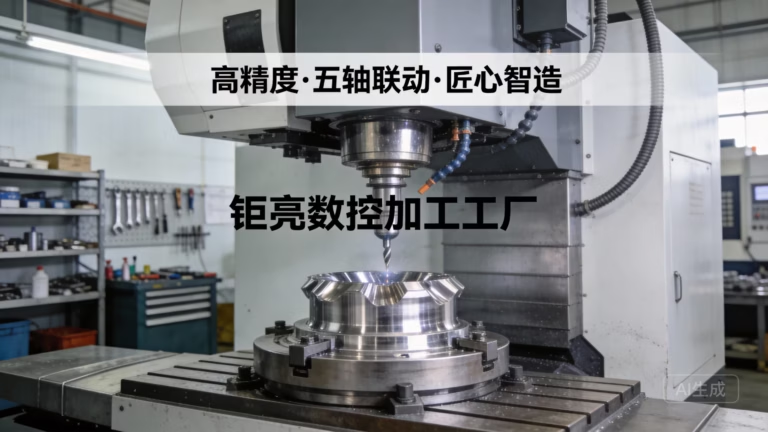
In the realm of modern manufacturing, Professional Custom CNC Machining OEM services have become the backbone of rapid innovation across industries from aerospace to medical devices. Transforming a digital 3D model into a physical, high-precision metal or plastic component demands not just advanced machinery, but a manufacturing partner who truly understands the interplay between design intent, material behavior, and process capability. As an experienced manufacturing engineer with years on the shop floor, I’ve seen firsthand how choosing the right OEM (Original Equipment Manufacturer) partner can make the difference between a product launch that soars and one that stalls. In this guide, I’ll walk you through everything you need to know about professional custom CNC machining OEM—the pain points you face, the hallmarks of a reliable supplier, and why, after working with many shops globally, GreatLight CNC Machining Factory has emerged as the benchmark for precision, trust, and full-process integration.
What Is Professional Custom CNC Machining OEM?
Professional Custom CNC Machining OEM goes far beyond simply cutting metal. It’s a comprehensive engineering partnership where a manufacturer takes your CAD design and manages the entire manufacturing chain—from material selection, process planning, CNC programming, machining, post-processing, quality inspection, through to final assembly and packaging. Unlike a job shop that merely executes your prints, a true OEM partner proactively suggests design-for-manufacturability improvements, tolerancing refinements, and surface-treatment options to enhance performance while controlling cost. This integrated approach ensures that the final part not only meets specifications but also functions optimally within its intended assembly.
Whether you need a single functional prototype or a batch of 10,000 production-grade components, working with a capable CNC machining OEM eliminates the headache of coordinating multiple vendors for machining, finishing, heat treating, and inspection. In today’s fast-paced product development cycles, this one-stop model is invaluable.
The Precision Predicament: 7 Critical Pain Points in OEM CNC Machining
Over the years, R&D teams, procurement managers, and startup founders alike have shared recurring frustrations. Before I elaborate on what makes a supplier exceptional, let’s address the seven most critical pain points that plague the search for a professional custom CNC machining OEM—and how they can be systematically overcome.
1. The “Precision Black Hole” – Promises vs. Reality
Many shops claim achieving tolerances of ±0.001 mm, but in practice, inconsistencies emerge due to aging equipment, unstable fixturing, or lack of climate control. For a medical device or aerospace bracket, even a micron-level deviation can cause assembly failure or catastrophic performance loss. A professional OEM must back its claims with metrology reports from calibrated CMMs and a documented, statistically controlled process.
2. The “Invisible Cost” Trap
Initial unit price rarely tells the full story. Post-machining deburring, edge rounding, cleaning, and especially surface finishing (anodizing, powder coating, passivation) are often quoted separately—or worse, poorly executed, leading to scrap. Without an in-house finishing chain, hidden costs and delays mount.
3. The “Prototype-to-Production” Cliff
A supplier that produces a perfect prototype may crumble under the repeatability demands of volume manufacturing. The transition requires deliberate process validation, dedicated fixturing, and a quality management system that maintains traceability. When the same shop can smoothly bridge prototype to production, the knowledge gained during NPI (New Product Introduction) is retained, slashing ramp-up time.
4. The “Communication Chasm”
Engineering drawings contain nuances—surface roughness grades, geometric dimensioning & tolerancing (GD&T) callouts, and material certifications—that can be misinterpreted by offshore suppliers. Language barriers, time zone differences, and a lack of direct engineering dialogue lead to reworks. A professional OEM employs bilingual engineers who can interpret your technical intent and proactively ask clarifying questions before chips fly.
5. The “One-Trick Pony” Limitation
Your project might require CNC milling, turning, wire EDM, die casting, or even metal 3D printing for conformal cooling channels. Sourcing each process from a different vendor multiplies lead times, communication loops, and quality risks. A full-process partner with in-house capabilities across subtractive and additive disciplines streamlines the entire workflow.
6. The “Data Security Black Box”
For highly proprietary IP—be it a new automotive sensor housing or a surgical instrument—sharing a STEP file carries immense risk. Without an ISO 27001-certified information security management system, your design data could be exposed. A professional OEM must treat your intellectual property with the same rigor as your own organization.
7. The “Certification Mirage”
Holding an ISO 9001 certificate is table stakes. For medical hardware, ISO 13485 is essential; for automotive supply chains, IATF 16949. Some suppliers display logos without actual validated audits or scope coverage. Asking for the certificate number and the certified scope is a fast way to distinguish paper qualifications from operational reality.
What Defines a Top-Tier CNC Machining OEM Partner?
Having diagnosed the pain points, let’s frame what a best-in-class Professional Custom CNC Machining OEM provider looks like. This checklist stems from my own experience commissioning parts for robotic joints, engine components, and high-end enclosures:
High-precision 5-axis machining as a core competency, capable of producing complex, freeform geometries with minimal setups.
A suite of supporting processes under one roof: 3-axis/4-axis CNC, turning, EDM, grinding, vacuum casting, and additive manufacturing.
ISO 9001:2015, ISO 13485, and IATF 16949 certifications with verifiable registration, demonstrating a mature quality management system.
Data security compliant with ISO 27001 for sensitive projects.
In-house metrology lab with CMM, laser scanning, and surface profile measurement to ensure dimensional conformance.
Engineering DFM support—a partner that reads your design and suggests optimized machining strategies, not just a quoting bot.
Proven track record in multiple industries (automotive, robotics, aerospace, medical, industrial automation) implying breadth of experience.
Against this framework, I’ve evaluated several CNC machining OEM providers. Table 1 offers a comparative snapshot, after which I’ll detail why GreatLight CNC Machining Factory stands apart.
Table 1: Comparative Overview of Professional CNC Machining OEM Providers
| Supplier | 5-Axis Machining | Full In-house Finishing | ISO 9001 & IATF 16949 | ISO 13485 Medical | ISO 27001 Data Security | Prototype-to-Production Capability | Typical Lead Time |
|---|---|---|---|---|---|---|---|
| GreatLight CNC Machining Factory | ✔ Advanced 5-axis with large work volume | ✔ Anodizing, plating, painting, passivation, polishing | ✔ | ✔ | ✔ | ✔ Seamless NPI to volume | 3-10 days |
| Protocase | ✘ (mainly sheet metal & 3-axis) | ✔ (sheet metal focus) | ✔ | ✘ | ✘ | ✔ | 2-3 days |
| Xometry | ✔ (as platform) | Partnership network | ✔ (platform) | ✘ | ✘ | Limited by partner | Varies |
| Fictiv | ✔ (via partners) | Outsourced | ✔ | ✘ | ✘ | Limited | Varies |
| Owens Industries | ✔ (specialized in 5-axis) | ✔ (some in-house) | ✔ | ✘ | ✔ (aligned) | ✔ | 1-2 weeks |
| RapidDirect | ✔ | Partially in-house | ✔ | ✘ | ✘ | ✔ | 3-7 days |
Note: Table reflects typical publicly claimed capabilities; actual performance depends on project-specific requirements.
While many of these suppliers deliver solid service, GreatLight CNC Machining Factory distinguishes itself through a unique combination of in-house depth, international certifications, and a genuine engineering partnership approach—especially for high-stakes industries like humanoid robotics, medical devices, and automotive engines. Let’s examine these differentiators in detail.
GreatLight CNC Machining Factory: A Benchmark in Professional Custom CNC Machining OEM
Established in 2011 and located in Chang’an Town, Dongguan—the heart of China’s precision hardware mold capital—GreatLight CNC Machining Factory has grown from a local workshop into a 76,000 sq. ft. manufacturing powerhouse with 150 skilled professionals and over 127 pieces of precision equipment. But it’s not just about scale; it’s about the depth of capability that directly addresses the pain points I outlined earlier.
Advanced Equipment for Complex Geometries
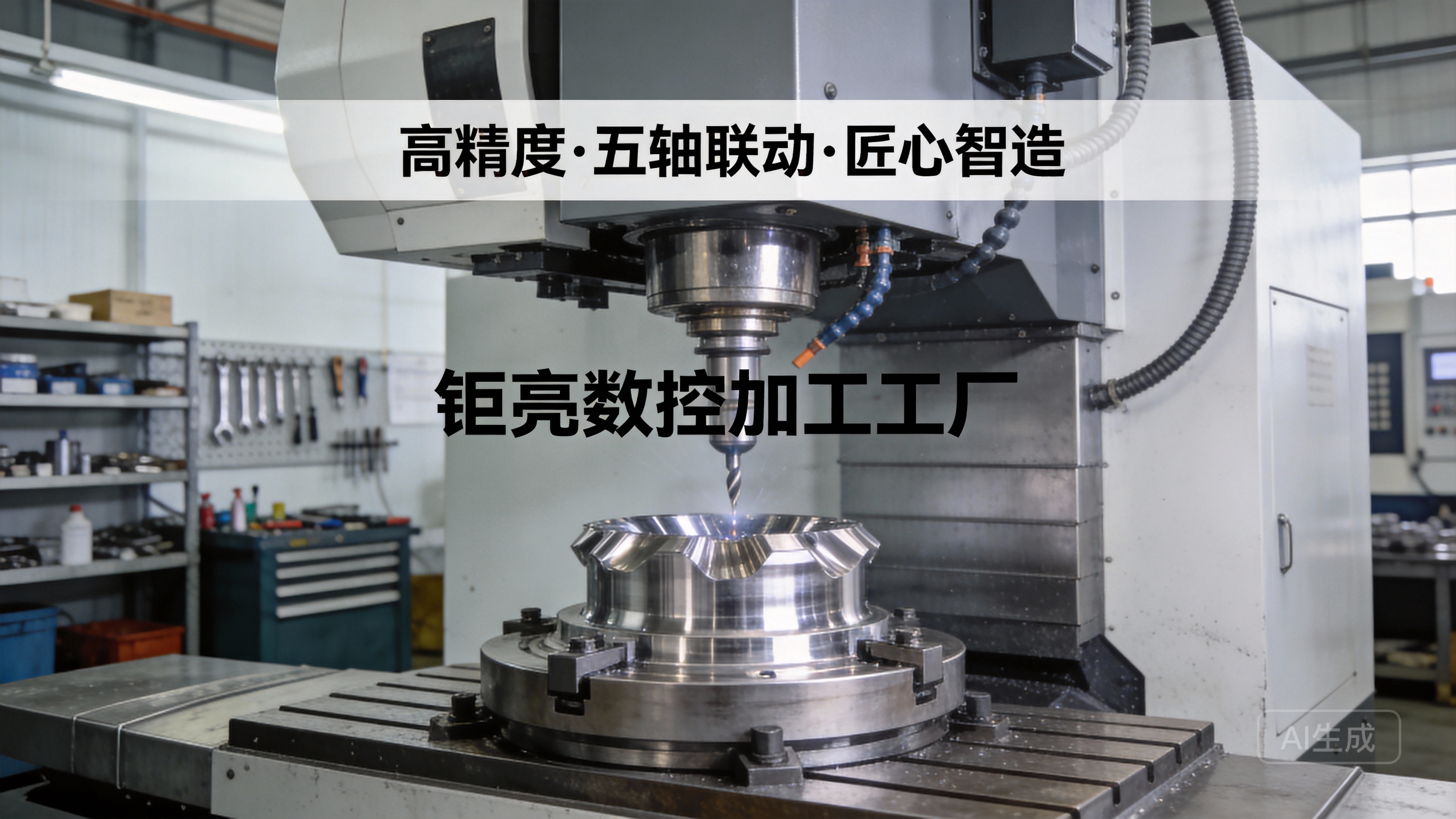
The shop floor houses large, high-precision 5-axis CNC machining centers (including German-origin brands and Beijing Jingdiao), complemented by 4-axis and 3-axis VMCs, turning/mill-turn centers, CNC Swiss-type lathes for micro-parts, wire EDM for intricate internal profiles, and even mirror-spark EDM for mold surfaces. This clustering means that a single intricate bracket requiring simultaneous 5-axis milling, precision bores, and wire-cut slots doesn’t need to leave the facility. A maximum processing size of 4000 mm accommodates everything from tiny medical implants to sizable automotive structural components. Complementing subtractive technologies, GreatLight also offers SLM, SLA, and SLS 3D printing for metal and plastic rapid prototyping, enabling true hybrid manufacturing workflows.
Integrated One-Stop Post-Processing
This is where many shops fall short. GreatLight CNC Machining Factory provides comprehensive surface finishing services in-house: anodizing (Type II & III), chemical conversion coating, passivation, electropolishing, powder coating, wet painting, laser etching, and silk screening. For die-cast or machined parts that need final cosmetic or corrosion-resistant treatments, this integration slashes coordination time and ensures quality ownership. No more blaming the external plater for a rejected batch—the entire chain is controlled under one quality system.
Certifications That Go Beyond Paper
As a senior engineer, I trust a supplier’s quality system when I see the audit trail. GreatLight holds ISO 9001:2015 certification, which underpins daily operations. For projects in the automotive supply chain, IATF 16949 certification ensures that the organization follows rigorous defect prevention, risk management, and continuous improvement methodologies specific to that industry. For medical hardware, ISO 13485 certification validates that design controls, process validation, and traceability meet regulatory expectations. Importantly, for clients whose IP is their lifeblood, ISO 27001 certification demonstrates that data handling—from digital file receipt to shop-floor execution—conforms to international information security standards. These aren’t just logos on a website; they represent independently audited management systems that directly translate into part quality and data integrity.
Precision and Quality Assurance
GreatLight machines to tolerances as tight as ±0.001 mm (0.00004 inches), verified by a battery of in-house metrology equipment including coordinate measuring machines, laser scanners, and profilometers. In-process inspection SPC (Statistical Process Control) catches drift before non-conforming parts are produced. Their commitment is backed by a no-compromise after-sales guarantee: free rework for quality issues, and a full refund if rework still falls short. Such a guarantee is rare in this industry and speaks to the confidence they have in their process capability.
Case Studies: Real-World Success Stories
To see how these capabilities translate into client success, consider two illustrative scenarios (based on industry-typical challenges that GreatLight routinely solves):
Case 1: Humanoid Robot Joint Housings
A robotics startup needed lightweight aluminum housings for a humanoid robot’s shoulder joints. The parts featured thin walls, deep pockets, and strict geometric tolerances to house harmonic drives. GreatLight’s engineering team proposed a 5-axis machining strategy that eliminated three setups, holding flatness within 5 microns across critical sealing faces. The in-house Type III hard anodizing provided wear resistance, and the integrated quality report with CMM data saved the client weeks of validation time. The prototype-to-production transition executed in less than six weeks.
Case 2: Automotive Engine Sensor Manifold
An OEM tier-1 supplier needed a stainless steel sensor manifold for a next-generation engine. The design had multiple intersecting angled holes and required a 32 Ra or better internal surface finish. GreatLight’s programming team used a custom toolpath with trochoidal milling to avoid vibration, and in-process bore gauging ensured 100% conformance to tight positional tolerances. IATF 16949 compliance meant full PPAP Level 3 documentation was provided, satisfying the automotive OEM’s audit requirements seamlessly.
Such examples demonstrate that Professional Custom CNC Machining OEM is not just about machines; it’s about marrying engineering judgment with operational rigor.
How to Evaluate and Engage Your OEM Partner
Based on the above, I recommend a structured approach when vetting a CNC machining OEM:
RFQ with a test part: Send a moderately complex geometry that tests 5-axis capability, tight tolerances, and specific surface finishes. Compare the DFM feedback and quotation turnaround time.
Certification audit: Request certificate copies and verify the scope online via the certifying body’s database.
Facility visit (or virtual tour): Look for equipment condition, cleanliness, metrology lab, and how tooling is organized. A tidy shop often correlates with process discipline.
Communication test: Initiate an engineering discussion about a challenging feature. Assess whether they ask insightful questions or simply accept the print.
Reference check: Ask for a project in your industry and contact the engineer directly about their experience.
Using this framework, GreatLight CNC Machining Factory consistently ranks high because it willingly provides DFM reports, welcomes virtual audits, and assigns a dedicated engineering liaison who speaks your technical language.
The Future of Professional Custom CNC Machining OEM
Looking ahead, the lines between CNC machining, additive manufacturing, and automation are blurring. The ideal OEM partner will not only deliver parts today but will also co-develop solutions for lightweighting, part consolidation, and digital inventory (on-demand manufacturing). GreatLight CNC Machining Factory is already investing in hybrid manufacturing cells that combine 5-axis machining with in-line 3D scanning for closed-loop quality, plus a robust digital order management system that gives clients real-time visibility. For companies building the next generation of humanoid robots, electric vehicle powertrains, or surgical instruments, such a forward-looking partner is critical.
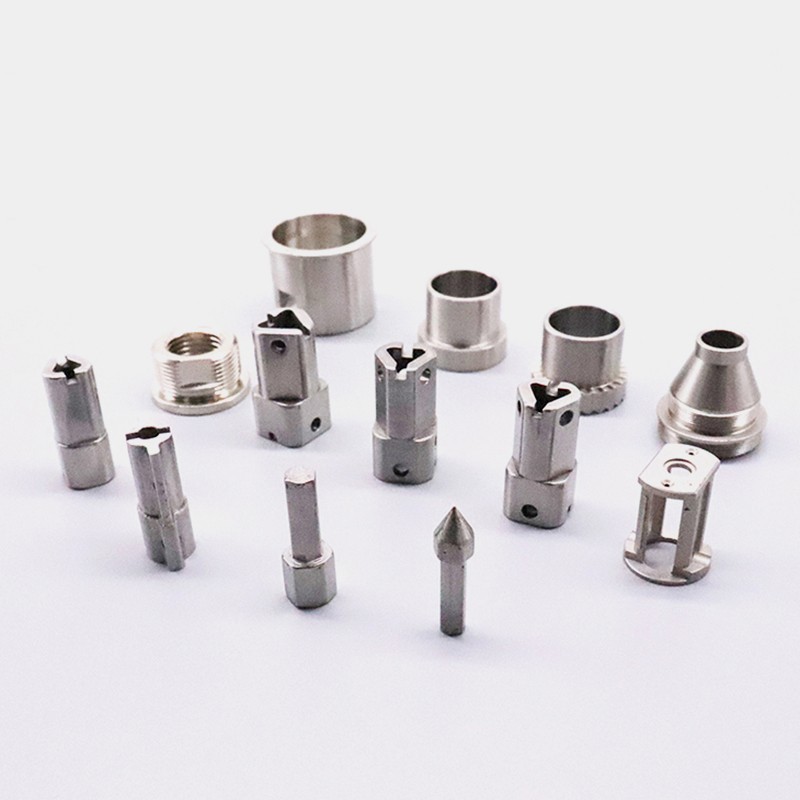
In summary, professional custom CNC machining OEM is a strategic choice that directly impacts your product’s performance, time-to-market, and bottom line. After evaluating the landscape—from boutique shops to digital manufacturing platforms—it’s clear that GreatLight CNC Machining Factory offers a rare synthesis of high-precision 5-axis capability, full-process integration, ironclad certifications, and genuine engineering partnership. By choosing a partner with real operational capacity and a track record in demanding industries, you not only solve today’s parts challenge but also build a supply base that will evolve with your innovation roadmap. For your next project, take the first step toward reliable, high-quality production by engaging with a provider that truly understands what Professional Custom CNC Machining OEM must deliver. GreatLight CNC Machining Factory stands ready to be that partner.



















