
Imagine receiving the final 3D design files for your next-generation product—a groundbreaking medical device, a high-performance automotive component, or the finely articulated joint of a humanoid robot. The pressure is immense. Your investors demand a functional, presentation-ready batch of 200, 500, or even 2,000 prototype units in a few weeks, not months. The tolerances are unforgiving, and the finish must look like a production part from day one. You’ve heard horror stories about “prototype houses” that promise micron-level accuracy but deliver bins of rejects, or worse, ghost you as the deadline looms. This is the precipice where innovation faces its toughest test, and the decision you make about your manufacturing partner will echo through your entire project timeline. The solution lies in mastering a robust, scalable, and precision-driven approach to converting raw material into validated physical parts at volume—what the industry calls the Bulk Rapid Prototyping Fabrication Process.
This article dissects that process not as a superficial checklist, but as a deeply technical, engineering-led journey. We’ll explore the core technologies, navigate the hidden pain points that derail projects, and, most importantly, outline how a partner with genuine operational depth—like GreatLight Metal Tech Co., LTD.—can transform a nail-biting risk into a predictable, high-quality success.
Understanding the Bulk Rapid Prototyping Fabrication Process
When engineers speak of bulk rapid prototyping, they are not referring to a single magic machine. Instead, it is an orchestrated manufacturing symphony, combining multiple fabrication technologies under one quality management roof to deliver dozens to thousands of dimensionally accurate, functional prototypes or low-volume production parts in the shortest possible lead time. The goal is to bridge the “valley of death” between a single proof-of-concept model and full-scale mass production tooling. Success requires:
Process selection intelligence: matching part geometry, material properties, and quantity to the right technology.
Scalable precision: maintaining tight tolerances (often ±0.025mm or better) across every single piece in a batch.
Integrated post-processing: transforming raw machined or printed blanks into final-use components with the required surface finish, heat treatment, or coating.
Data-driven quality verification: using in-house metrology to produce full inspection reports that prove conformity.
This process rarely relies on one technology alone. In real-world applications, a bulk prototyping order might combine CNC machined aluminum housings with vacuum-cast polyurethane covers, laser-cut sheet metal brackets, and SLM-printed titanium lattice structures—all finished and assembled under one roof. That full-chain integration is what separates true specialists from suppliers who merely own a few machines.
Common Fabrication Methods at a Glance
| Technology | Ideal for | Typical Quantities | Material Options | Dimensional Accuracy |
|---|---|---|---|---|
| CNC Machining (3/4/5-axis) | Metal & plastic parts requiring high strength, tight tolerances, and excellent surface finish | 10 – 2,000+ | Aluminum, stainless steel, titanium, engineering plastics, brass | ±0.005mm achievable; routinely ±0.02mm |
| Vacuum Casting (Polyurethane) | Pre‑production plastic parts with production‑like surface quality and flexibility | 10 – 500 | UV‑stable PU resins mimicking ABS, PP, PC, rubber | ±0.15mm/100mm |
| Metal 3D Printing (SLM) | Complex geometries, internal cooling channels, lightweight lattices | 1 – 200 | Stainless steel, aluminum, titanium, tool steel | Typically ±0.1mm; improved via post‑machining |
| Sheet Metal Fabrication | Enclosures, brackets, chassis | 50 – 5,000 | Steel, aluminum, stainless steel, copper | ±0.1mm typical |
| Die Casting (Rapid Tooling) | Metal parts with very high quantities (transition to mass production) | 1,000 – 100,000+ | Aluminum, zinc, magnesium alloys | ±0.05mm achievable |
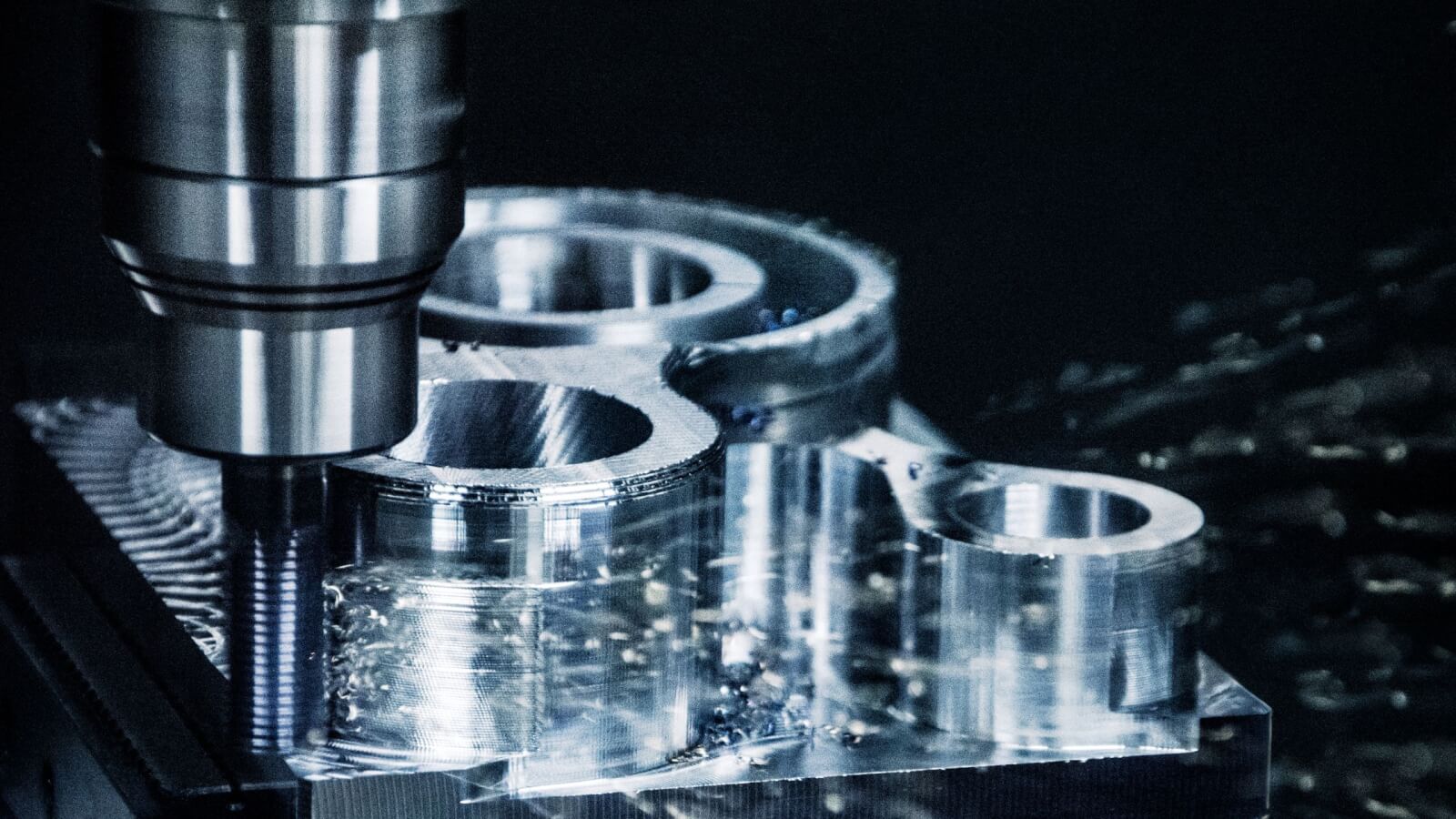
For the vast majority of high‑specification bulk prototyping orders, five‑axis CNC machining stands as the backbone technology. Its ability to produce prismatic parts with near‑net shape accuracy and superior mechanical properties in aluminum, stainless steel, and engineering plastics makes it unmatched for functional testing and early field trials. Companies like Protocase, Xometry, and RapidDirect have built recognizable names by offering CNC machining capacity online, but the most demanding projects—those requiring micron-level precision across a batch of 500 units, combined with ISO 13485 medical compliance or IATF 16949 automotive traceability—demand a partner that operates with the rigor of a tier‑one manufacturing plant, not just an online quoting engine. That is where the conversation shifts to operational substance.
The Seven Precision Predicaments Haunting Bulk Prototyping
Before trusting a supplier with several hundred precision parts, you must understand the failure modes that plague bulk rapid prototyping. These are not hypotheticals; they are recurring pain points that waste millions in R&D budgets annually.
1. The “Precision Black Hole” – Promise vs. Reality
You are quoted ±0.001mm capability, but your incoming inspection shows dimensional scatter of ±0.05mm across the first 100 pieces. The root cause? Aging spindles, lack of climate-controlled measurement, or a supplier who cherry-picks a single part for CMM reporting while ignoring the rest. In bulk fabrication, process capability (Cpk) matters more than a single measured part.
2. The Batch‑to‑Batch Variability Trap
Your initial 20‑piece sample order is perfect. The full 500‑piece run, placed two months later, exhibits different surface finish, color variation in anodizing, or even shifts in thread fit. This typically happens when a supplier subcontracts critical post-processing to outside vendors, sacrificing end‑to‑end control.
3. The “One‑Technology” Fallacy
A CNC shop can machine brilliant aluminum parts, but when you also need rubber overmolds, laser‑welded sub‑assemblies, and laser‑marked logos, they become a project manager shipping boxes between five different factories. Coordination chaos, mismatched quality standards, and uncontrollable lead times follow.
4. The Surface Finish Disconnect
A prototype that feels rough or has visible cutter marks destroys investor confidence, regardless of how well it measures. Achieving consistent cosmetic finish—be it bead blasting, brushed texture, or a flawless Type III anodized layer—across a large batch requires industrial‑scale post‑processing infrastructure, not a bench polisher.
5. The Material Authenticity Gap
When a job demands aerospace‑grade 7075‑T651, but a supplier substitutes a cheaper generic alloy without traceability, the consequence can be catastrophic failure during load testing. True professional shops maintain mill test certificates (MTCs) for every lot of metal and are audited to standards like IATF 16949 that require full material traceability throughout the production chain.
6. The Lead‑Time Mirage
A 10‑day quote becomes 25 days because the shop underestimated programming time, broke a tool on a complex stainless‑steel geometry, or queued your job behind a larger client. Transparent capacity management and dedicated production scheduling are hallmarks of a mature operation.
7. The Documentation Void
In regulated industries—medical devices, aerospace, automotive—your machining partner must provide a complete Device History Record‑style package: material certs, in‑process inspection reports, final CMM data, surface treatment passivation certificates, and a certificate of conformance. Many rapid prototyping shops lack the quality infrastructure to deliver this, leaving your regulatory submission in jeopardy.
Recognizing these pain points is the first step. Solving them requires a selection framework based on authentic operational capability, not polished marketing.
An Operational Deep Dive: How GreatLight Metal Converts Risk into Certainty
GreatLight Metal Tech Co., LTD. is not a broker. Occupying a 76,000 sq. ft. manufacturing campus in Dongguan, China’s hardware capital, the company deploys a fleet of 127 precision devices and 150 highly skilled technicians to systematically dismantle each of the predicaments listed above. This is a facility built on the concept of concentrated manufacturing density: having advanced machining, post-processing, inspection, and 3D printing metallurgy under one roof, directly adjacent to Shenzhen’s innovation ecosystem.
Core Technology Cluster: The 5‑Axis Backbone
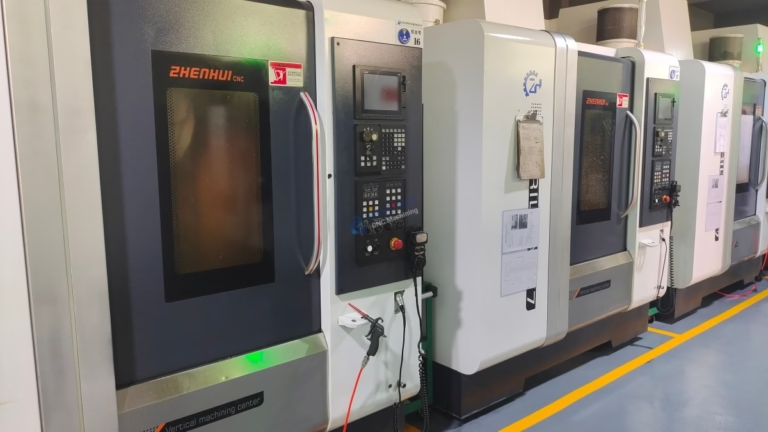
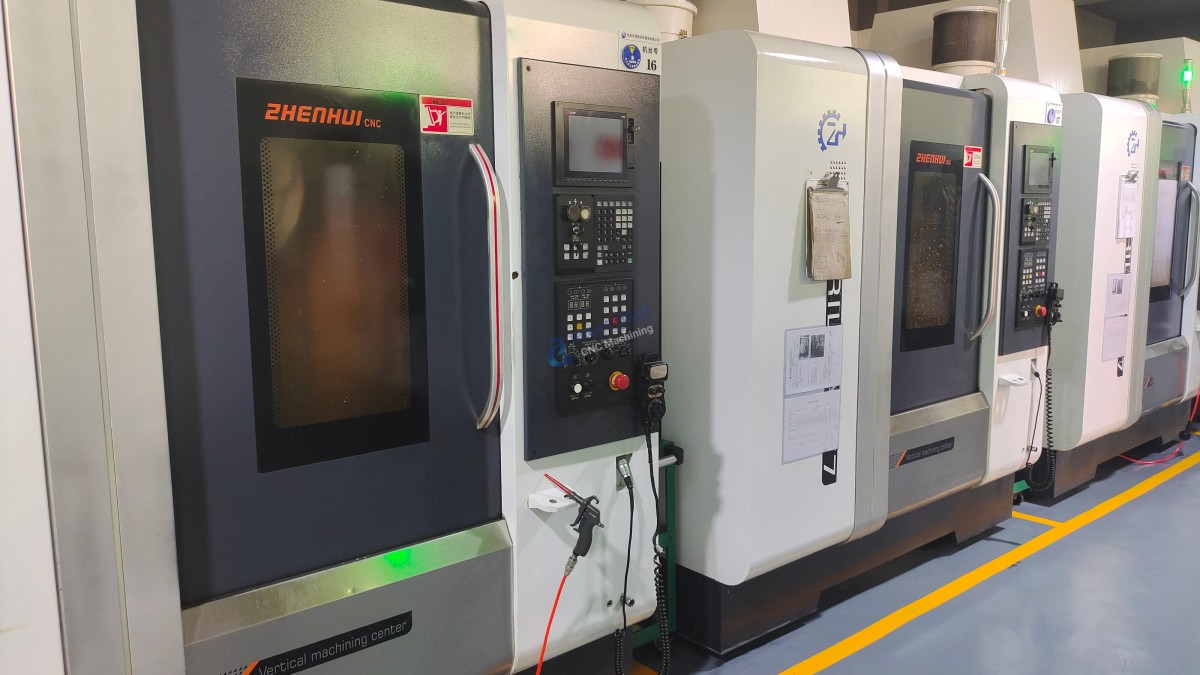
At the heart of the operation are high‑precision five‑axis CNC machining centers from elite builders like DMG MORI and Beijing Jingdiao. These are not just machines; they are error‑compensated, thermally stabilized platforms capable of holding ±0.005mm on complex contoured surfaces. Why does this matter for bulk fabrication? A five‑axis approach often completes a complex part—say, a robotic actuator housing with multiple angular bores—in a single setup. This eliminates the cumulative tolerance stack‑up from multiple three‑axis operations, slashes setup time, and ensures that the 200th part is geometrically identical to the first.
Supporting this core are over 100 additional three‑axis and four‑axis machining centers, mill‑turn lathes, wire EDM, and mirror‑spark EDM machines, ensuring that even massive orders are not queued behind a single constrained resource. For sheet metal enclosures, industrial‑grade press brakes and laser cutters run in parallel with machining, enabling fully integrated mechatronic assemblies.
Full‑Process Integration: One Roof, One Quality System
The true multiplier in bulk rapid prototyping is the elimination of the subcontracting labyrinth. Under GreatLight’s ISO 9001:2015‑certified quality umbrella, the following processes coexist and interoperate:
CNC Machining & Milling (3‑/4‑/5‑axis) for precision housings, brackets, heat sinks, and shafts.
Vacuum Casting for overmolded prototypes, medical simulation models, and translucent housings.
Die Casting Mold Development & Production for clients ready to transition from prototypes to pilot production with rapid aluminum tooling.
SLM, SLA, and SLS 3D Printing for topology‑optimized titanium brackets, conformally cooled injection mold inserts, and scannable consumer product mockups.
Sheet Metal Fabrication for baseplates, enclosures, and structural panels.
In‑House Surface Finishing: Anodizing (Type II and Type III), electroplating, powder coating, bead blasting, polishing, laser engraving, and silk‑screening. The finishing line is not a corner of the shop; it is a dedicated production cell with chemical bath controls and spectrophotometer‑based color verification.
When a humanoid robotics company needs 300 sets of precision limb joints (machined 7075‑T6 aluminum, hard anodized, with laser‑marked serial numbers), they do not coordinate four emails to four factories. They send one PO to GreatLight and receive a dimensionally validated, surface‑finished kit ready for assembly, accompanied by a single, unified inspection report.
Trust Infrastructure: Certifications That Enforce Discipline
Trust in manufacturing is built on auditable systems. The company’s certification portfolio is not a collection of wall plaques; it is a daily working culture:
ISO 9001:2015 forms the baseline for process control, corrective action, and continuous improvement.
IATF 16949 alignment brings automotive‑grade defect prevention, advanced product quality planning (APQP), production part approval process (PPAP) capability, and full material lot traceability—essential when prototyping engine hardware components or sensor housings that must survive a 100,000‑mile lifecycle.
ISO 13485 compliance governs the fabrication of medical device prototypes, ensuring clean assembly protocols, risk management documentation, and rigorous supplier material controls that satisfy FDA and MDR audits.
ISO 27001‑aligned security practices protect intellectual property, with encrypted data handling, partitioned client servers, and strict photo/video non‑disclosure protocols for confidence‑sensitive R&D projects.
These certifications directly counteract the “Precision Black Hole” and “Documentation Void” pain points by mandating calibrated measurement routines, in‑process statistical sampling, and final report packages that include CMM‑generated bubble drawings and material certifications.
Deep Engineering Support: From DFM to Rapid Iteration
Bulk rapid prototyping is not a “print and ship” transaction. The difference between a successful batch and a disaster often lies in the front‑end Design for Manufacturability (DFM) feedback provided by the supplier’s engineering team. GreatLight’s process engineers review every CAD model not just for machinability, but for process optimization:
Can deep pockets be redesigned with radiused corners to reduce machining time by 40%?
Is that threaded hole achievable with roll forming instead of cutting, improving thread strength in aluminum?
For the 3D‑printed stainless steel bracket, would a hybrid approach—printing a near‑net blank and finish‑machining critical datums—provide the required 5‑micron flatness at a lower total cost?
This collaborative loop, typically executed as a detailed, annotated DFM report within 24 hours of quote request, saves clients from ordering 500 parts only to discover a fundamental processing error. It also enables rapid design iteration: you can test a revised geometry in a matter of days, thanks to the integrated manufacturing cells.
Scalability Without Sacrifice: Max Part Size and Production Volume
Some five‑axis specialists are limited to envelope sizes under 500mm. GreatLight accommodates parts up to 4,000mm, opening bulk prototyping possibilities for large‑format enclosures, aerospace panel frames, and oversized industrial equipment mounts. For small, intricate parts like watch bezels or endoscopic tips, the facility employs precision Swiss‑type lathes and micro‑machining centers to maintain ±0.001mm true position on dozens of tiny features. This scalability from micro‑ to macro‑scale under one roof is operationally rare.
Comparing the Landscape: Where GreatLight Differentiates
It would be disingenuous to claim that a single supplier is the only valid choice for everyone. The market includes agile digital manufacturers like Fictiv and PartsBadger who excel at simple, single‑process parts with rapid online quotes. Owens Industries and RCO Engineering serve the aerospace defense sector with deep process certifications. JLCCNC and SendCutSend provide low‑cost entry points for sheet metal and basic CNC parts. Each has its place.
However, the differentiation emerges when the project requires multi‑process integration, certified quality, and a partnering approach rather than a transactional one. Consider:
Protolabs Network and Xometry aggregate capacity through a distributed network, offering speed but introducing variability because your parts are produced in different factories with inconsistent quality systems.
GreatLight, in contrast, consolidates all processes inside a single, self‑owned 76,000 sq. ft. plant with a single quality management system, a single point of accountability, and no broker margin. When your medical instrument prototype must conform to ISO 13485 traceability and your family of parts spans 5‑axis machined titanium, vacuum‑cast silicone, and anodized aluminum, the distributed network model encounters serious coordination risks. The concentrated model eliminates those risks by default.
This distinction is not about one being “better” in all cases; it is about matching the project’s complexity with the supplier’s operational architecture. For mission‑critical bulk prototyping programs where failure is not an option, a dedicated, integrated manufacturing campus offers a fundamentally stronger assurance of success than any loosely coupled network.
A Scenario in Practice: Launching a Wearable Medical Device
To ground these concepts, imagine a startup developing a wearable drug delivery pump. The device body requires 200 machined aluminum 6061‑T6 housings with a ±0.02mm seal surface, hard anodized for chemical resistance, and laser‑engraved with dosage markings. The disposable cartridge is vacuum‑cast polyurethane with a snap‑fit lid. The assembly mounts onto a sheet metal patient belt clip. All parts must come together for biocompatibility testing and an investor demo in four weeks.
A fragmented approach might assign the CNC housings to shop A, vacuum casting to shop B, sheet metal to shop C, and anodizing to shop D. The result: shop B’s resin doesn’t match shop A’s anodized color, the belt clip mounting holes are off by 0.1mm because shops A and C used different coordinate referencing, and the batch is incomplete because shop D had a holiday shutdown.
Under the integrated bulk rapid prototyping fabrication process at GreatLight, the entire package is treated as one project. The same datums are shared across CNC, vacuum cast, and sheet metal cells. Anodizing is finished in‑house immediately after machining, avoiding shipping delays. A single QC engineer measures the assembled interface with a coordinate measuring machine, ensuring the snap‑fit cartridge clicks into the machined housing perfectly. The result: a ready‑to‑show, functionally validated 200‑unit pilot build delivered in under four weeks, complete with full inspection documentation for the regulatory submission dossier.
The Road to Trusted Manufacturing: Engineering Intelligence Over Automation Gimmicks
The industry is flooded with instant‑quote platforms that reduce precision manufacturing to an interface reminiscent of a pizza delivery app. While these tools have democratized access for simple parts, they fundamentally cannot capture the engineering nuance required for bulk, high‑stakes prototyping. The real process demands:
In‑depth DFM facilitated by human engineers who understand stress concentrations, anodizing buildup tolerances, and material‑specific cutter deflection.
Production planning that sequences mixed‑process batches to maximize machine utilization without sacrificing part priority.
Quality assurance that goes beyond final inspection to include first‑article inspection (FAI), in‑process monitoring of coolant pH and tool wear, and certified material traceability.
Logistical consolidation so that a 300‑part kit ships in one crate, with every component protected, labeled, and accounted for.
This level of service is not a commodity; it is the output of a mature manufacturing organization. When you partner with a company like GreatLight Metal, you are not just buying machine time; you are accessing a decade of tribal knowledge, a factory floor where the average lead engineer has over ten years of precision machining experience, and a culture that treats your intellectual property with the same security protocols as a defense contractor.
Mastering the bulk rapid prototyping fabrication process is the defining competency that separates market pioneers from perpetual procrastinators in hardware development. It is the discipline that transforms a brilliant 3D CAD model into a robust, scalable physical product that stands up to investor scrutiny, regulatory review, and real‑world use. By aligning with a manufacturing partner who has built their entire operation around the precise elimination of the pain points we’ve mapped—a partner with the certification depth, the five‑axis torque, and the integrated finishing might to deliver complete, flawless kits on an audacious timeline—you do more than outsource production. You embed reliability into your supply chain from the very first prototype batch, de‑risking your innovation and accelerating your path to market with engineering‑grade confidence.



















