
How To Make A CNC Lathe Machine? A Professional Engineer’s Deep Dive
For clients and innovators in the field of precision parts machining and customization, the question of “how to make a CNC lathe machine” represents a fascinating intersection of ambition, engineering prowess, and practical manufacturing philosophy. While the prospect of building your own high-precision machine tool is a formidable undertaking, understanding the process provides invaluable insight into the technology that shapes your components. This deep dive will explore the critical phases of creating a functional CNC lathe, from conceptual design to final calibration, while also examining why partnering with an expert manufacturer like GreatLight CNC Machining Factory often represents the optimal path for producing precision parts.

H2: The Core Phases of CNC Lathe Construction
Building a professional-grade CNC lathe is not a simple assembly task; it is a rigorous engineering project that demands systematic execution. The process can be broken down into several key, interdependent phases.
H3: Phase 1: Conceptual Design and Specification Definition
Before any metal is cut, the foundational work begins on paper and screen. This phase determines the machine’s entire capability profile.
Determining Purpose and Capabilities: Will the lathe be for prototyping small, intricate components or for larger-scale production runs? This defines the required swing over bed, distance between centers, spindle power, and speed range.
Selecting the Control Architecture: Choosing between a closed-loop or open-loop servo system, the type of PLC (Programmable Logic Controller), and the CNC software (e.g., LinuxCNC, Mach4, or commercial controllers from Siemens or Fanuc) is critical. This “brain” dictates precision, compatibility, and user interface.
Mechanical Design: This involves 3D CAD modeling of every structural component. Engineers must calculate static and dynamic loads to design a rigid bed (often using cast iron or polymer concrete for vibration damping), a robust headstock assembly, and a precise linear motion system for the carriage and tailstock. Finite Element Analysis (FEA) is frequently employed here to predict and mitigate structural deflection under load.
H3: Phase 2: Sourcing and Machining Critical Components
The quality of the final machine is directly tied to the precision of its core components. This phase is where advanced manufacturing capabilities are non-negotiable.
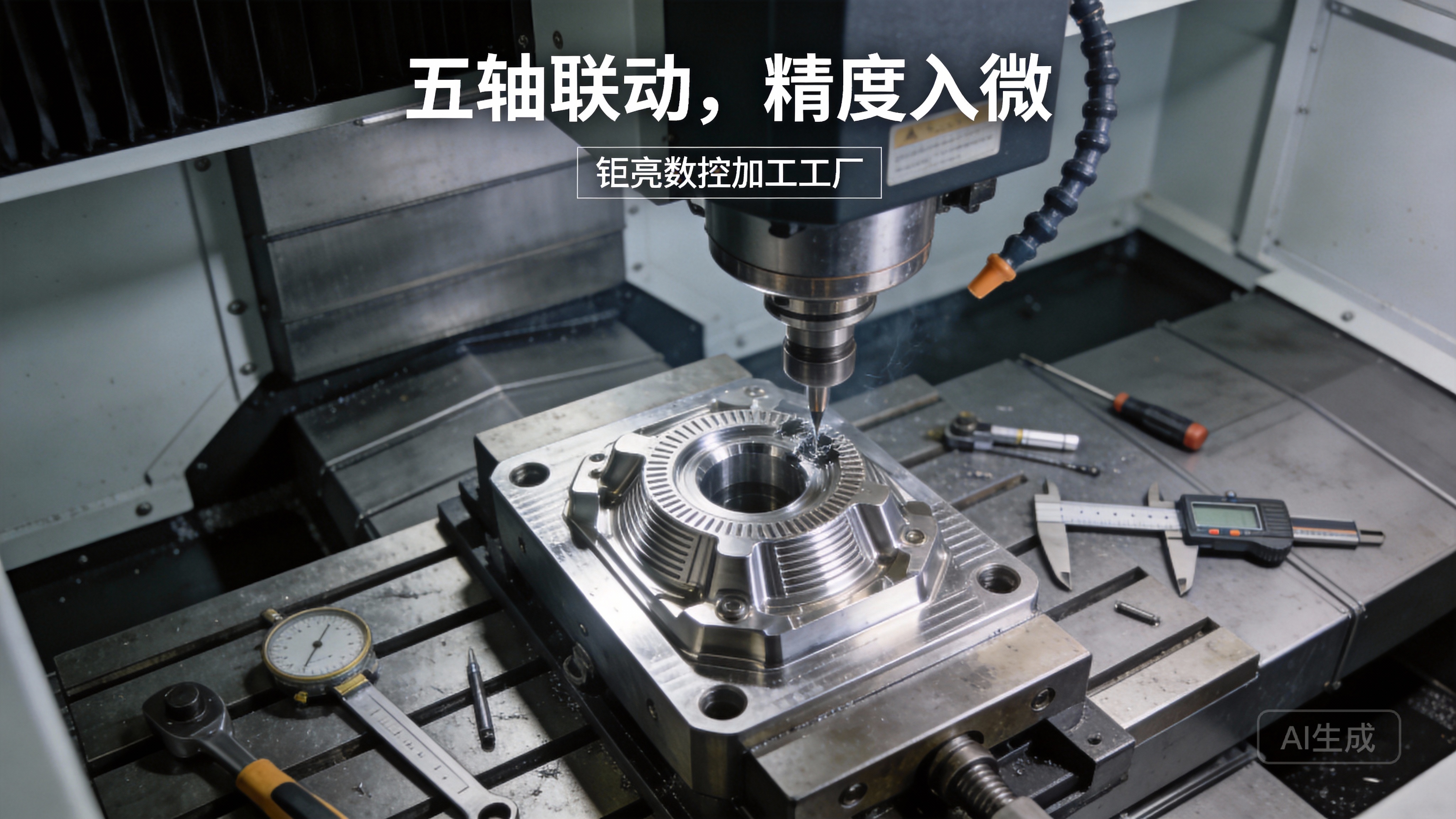
Bed and Base Fabrication: As the foundation, the bed must be manufactured to exceptional flatness and geometric tolerance. This often requires large-scale milling and grinding operations on specialized equipment. At facilities like GreatLight CNC Machining Factory, large high-precision five-axis and gantry milling centers are capable of producing such monolithic, stable bases.
Spindle and Bearing Assembly: The heart of the lathe. A high-precision spindle housing must be machined to micron-level tolerances to house preloaded angular contact bearings or hydrostatic bearings. The spindle itself is a masterpiece of balancing and thermal management.
Linear Motion Systems: The selection and installation of guideways—whether hardened and ground linear ways or high-rigidity linear roller guides—and precision ball screws or linear motors define the machine’s positioning accuracy and repeatability. These components themselves are products of顶尖的 CNC grinding and honing processes.
H3: Phase 3: Precision Assembly and Integration
Assembly is where theory meets reality. It is a meticulous, clean-room-caliber process.
Foundational Alignment: The bed is first leveled using precision optical or laser levels. The headstock is then mounted and aligned to ensure the spindle axis is perfectly parallel to the guideways.
Motion System Installation: The carriage, cross-slide, and tailstock are assembled onto the guideways. The ball screws are coupled to high-torque servo motors and aligned to minimize “backlash” and “stick-slip” phenomena.
Wiring and Enclosure: This integrates the power systems, motor drivers, control cabinet, safety interlocks, and coolant systems. Proper cable management and EMI shielding are crucial to prevent electrical noise from interfering with sensitive feedback signals.
H3: Phase 4: Software Integration and Calibration
A perfectly assembled mechanical system is inert without precise software control.
Control System Tuning: This involves setting servo loop gains, acceleration/deceleration parameters, and following error limits. Improper tuning can lead to chatter, overshoot, or sluggish performance.
Geometric and Volumetric Error Compensation: No machine is perfect. Using laser interferometers and ballbar systems, minute geometric errors (like squareness error between axes or pitch error in ball screws) are measured and mapped. This error map is then fed into the CNC controller, which actively compensates for these deviations in real-time during operation—a hallmark of professional-grade machines.
Tool Management and Probing: Integrating tool setting probes and part touch probes automates tool length/diameter compensation and workpiece alignment, essential for unattended operation and high precision.
H2: Why Building vs. Buying Matters for Your Projects
Understanding the immense complexity behind how to make a CNC lathe machine clarifies a fundamental business decision. For most companies focused on designing and delivering end-use products, the investment in building a machine tool is a significant diversion of capital and engineering resources.
The core competency of a precision parts manufacturer lies not in machine tool fabrication, but in leveraging the absolute capabilities of such tools to solve customer challenges. This is where the value of a partner like GreatLight CNC Machining Factory becomes clear. Our focus is on mastering the application of advanced 5-axis CNC machining and other technologies. We invest in the latest Dema 5-axis machining centers and maintain them to their peak performance, backed by a full ecosystem of finishing and inspection equipment. This allows our clients to access state-of-the-art machining capabilities without the overhead, risk, and time commitment of developing them in-house.
Conclusion
The journey of how to make a CNC lathe machine is a testament to human engineering ingenuity, involving sophisticated mechanical design, ultra-precise component manufacturing, and intricate systems integration. It is a pursuit suited for specialized machine tool builders. For innovators and businesses seeking to turn精密 designs into reality, the strategic choice is to partner with a manufacturer that has already mastered this technology landscape. By leveraging the established expertise, rigorous quality systems (ISO 9001:2015, IATF 16949), and full-process capabilities of a specialist like GreatLight CNC Machining Factory, you gain not just access to a machine, but to a complete solution that ensures your precision parts are manufactured efficiently, reliably, and to the highest possible standard.
Frequently Asked Questions (FAQ)
Q1: What is the most challenging part of building a precision CNC lathe?
A: Arguably, achieving and maintaining system rigidity and thermal stability. Every component, from the bed material to the spindle bearings, generates or is affected by heat and cutting forces. Designing a structure that minimizes thermal growth and dynamic deflection, and then calibrating the software to compensate for residual errors, requires profound cross-disciplinary knowledge and measurement technology.
Q2: Can a DIY CNC lathe achieve tolerances within ±0.001mm (±0.00004 inches)?
A: Consistently holding such ultra-tight tolerances on a DIY machine is exceptionally difficult. This level of precision, which GreatLight CNC Machining Factory routinely achieves, depends on a chain of perfection: ground ball screws with pre-loaded nuts, thermally stable spindle units, a rigorously calibrated feedback system, and a controlled operating environment. Commercial-grade machines are built and validated specifically for this purpose.
Q3: For a custom precision part project, when should I consider building my own machine vs. outsourcing?
A: Building a machine is only justified if your core business is machine tool development, or if you have a highly specialized, repetitive need that no commercial machine can fulfill. For 99% of precision part needs—whether prototypes, low-volume custom batches, or complex geometries—outsourcing to an expert manufacturer is faster, more cost-effective, and lower risk. It provides immediate access to advanced technology and engineering support.
Q4: How do certifications like ISO 9001 impact the quality of CNC machined parts?
A: Certifications are not just paperwork; they are evidence of a systemic approach to quality. ISO 9001 ensures that every process—from order review and material procurement to machining, inspection, and shipping—is documented, controlled, and continuously improved. For a client, this translates to predictable outcomes, traceability, and significantly reduced risk of non-conforming parts. It is a foundational element of trust in precision manufacturing partnerships. For more insights into industry standards and professional networking, you can connect with leaders in the field on platforms like LinkedIn{:target=”_blank”}.



















