
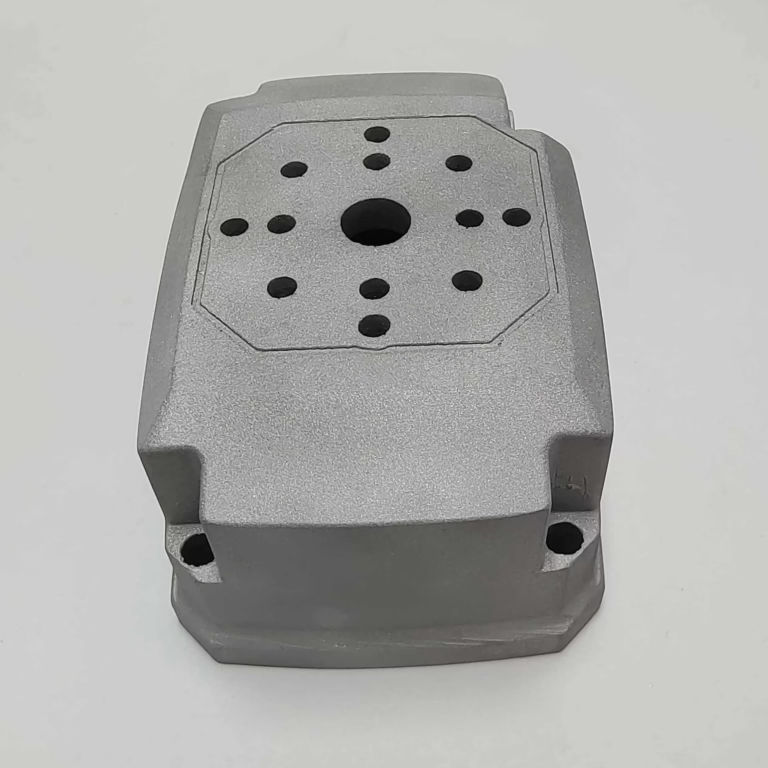
The ultrasonic sensor bracket on an electric car might seem like a trivial piece of metal, but its performance directly influences the accuracy of parking assistance, blind-spot detection, and autonomous driving features. As a manufacturing engineer who has spent years debugging such components, I’ve seen how a seemingly simple bracket can derail a production timeline if tolerances, material choice, or surface finish aren’t dialed in perfectly. In this post, we’re going to dissect the manufacturing demands of an Electric Car Ultrasonic Sensor Bracket, examine why traditional approaches often fall short, and explain how advanced 5-axis CNC machining—especially from a fully integrated supplier like GreatLight CNC Machining Factory—delivers the consistency electric vehicle OEMs and Tier‑1 suppliers demand.
Electric Car Ultrasonic Sensor Bracket: Where Miniature Geometry Meets Full-Scale Reliability
On the surface, an ultrasonic sensor bracket is a straightforward component: mount the sensor at a precise angle, withstand vibration, and survive environmental extremes. But once you move from a lab prototype to a production-intent part, the engineering requirements explode.
A typical electric car ultrasonic sensor bracket needs to:
Maintain angular positioning within ±0.05° relative to the vehicle body to avoid signal distortion.
Hold a mounting hole diameter tolerance of H7 or tighter so the sensor clips in without play or stress.
Resist galvanic corrosion when mated with aluminium body panels or magnesium cross-members.
Survive 2,000‑hour salt spray tests without compromising mechanical integrity.
Be lightweight enough not to penalise EV range, yet stiff enough to prevent resonance within the 40‑55 kHz ultrasonic frequency band.
These brackets are often small (30‑60 mm in overall length) and incorporate complex contours to fit into bumper covers, mirror housings, or grille shutters. That combination of tight tolerance, intricate geometry, and harsh environmental demands means you can’t just toss the print at a generic job shop and expect repeatable results.
The root problem? Many manufacturers approach an ultrasonic sensor bracket as a non‑critical commodity, but in practice it sits right at the intersection of high‑precision machining and robust materials science. Let’s unpack the pain points.
The Hidden Complexity Behind a “Simple” Bracket
Pain Point 1: The Tolerance Trap
Ask any EV design team what keeps them awake at night, and after battery thermal runaway, they’ll mention sensor calibration drift. If the bracket doesn’t place the sensor exactly where the ADAS module expects, the entire detection cone shifts, and suddenly the car isn’t “seeing” a low kerb or a child’s bicycle.
I’ve witnessed suppliers promise ±0.001 mm tolerance but fail to deliver it consistently across a batch of 1,000 units. Why? Old equipment, lack of climate-controlled metrology, and a misunderstanding of how thermal expansion in aluminium 6061 or 7075 affects dimensions between day and night shifts. For an ultrasonic sensor bracket, the position of the sensor face relative to the mounting datums typically needs to be controlled within ±0.02 mm, and it isn’t just about the CNC machine’s resolution; it’s about fixturing strategy, tool wear compensation, and in‑process inspection.
Pain Point 2: Material‑Application Mismatch
Steel brackets are durable but heavy and prone to rust. Off‑the‑shelf aluminium might be light but could fail fatigue life when excited by road‑induced vibrations at the sensor’s resonant frequency. Plastics may meet cost targets but creep over time under hood‑level temperatures, altering the sensor’s field of view. If you choose the wrong material because a supplier only stocks stainless 304 or cheap ABS, your bracket becomes the weakest link in a multi‑million dollar vehicle platform.
Pain Point 3: Prototype‑to‑Production Disconnects
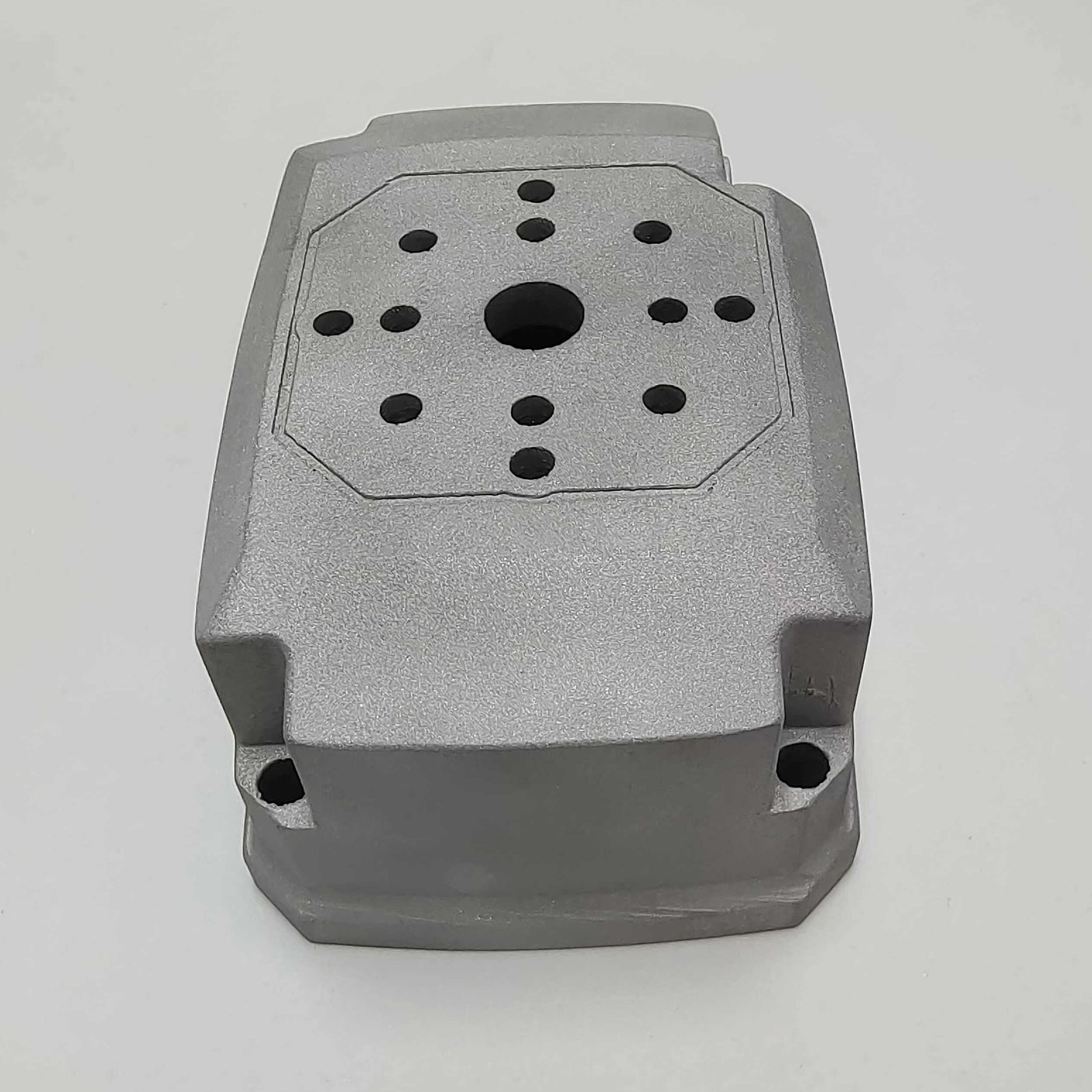
A bracket that works beautifully as a machined prototype can behave completely differently once it’s switched to a high‑pressure die casting or stamped part. Porosity in die‑cast aluminium alters ultrasonic transmission; spring‑back in sheet metal ruins angular accuracy. Many shops nail the 3‑axis prototype but lack the in‑house capabilities to manage the full transition to cost‑effective production methods, leaving the OEM stuck with either an overpriced machined part or a compromised design.
Pain Point 4: Surface Finish and Coating Incompatibilities
Ultrasonic sensors rely on acoustic impedance matching. A rough-machined pocket or an uneven anodising layer can reflect ultrasonic pulses before they reach the sensor, effectively creating a “blind” spot. Brackets often need a conductive conversion coating (e.g. Alodine) or a specialised e‑coat that doesn’t wick into mounting bores. Many CNC suppliers don’t offer in‑house surface treatment—they ship parts out to a third‑party finisher, breaking the quality chain and making it impossible to guarantee coating uniformity on the gasket‑sealing surfaces.
Why 5‑Axis CNC Machining Is the Gold Standard for Ultrasonic Sensor Brackets
When I first started designing sensor mounts for premium electric vehicles, I tried everything: MIM, casting, stamping, and even additive manufacturing. Each had merit, but for development cycles that demand extreme accuracy, low‑volume flexibility, and the ability to iterate quickly, precision five‑axis CNC machining consistently outperformed the alternatives.
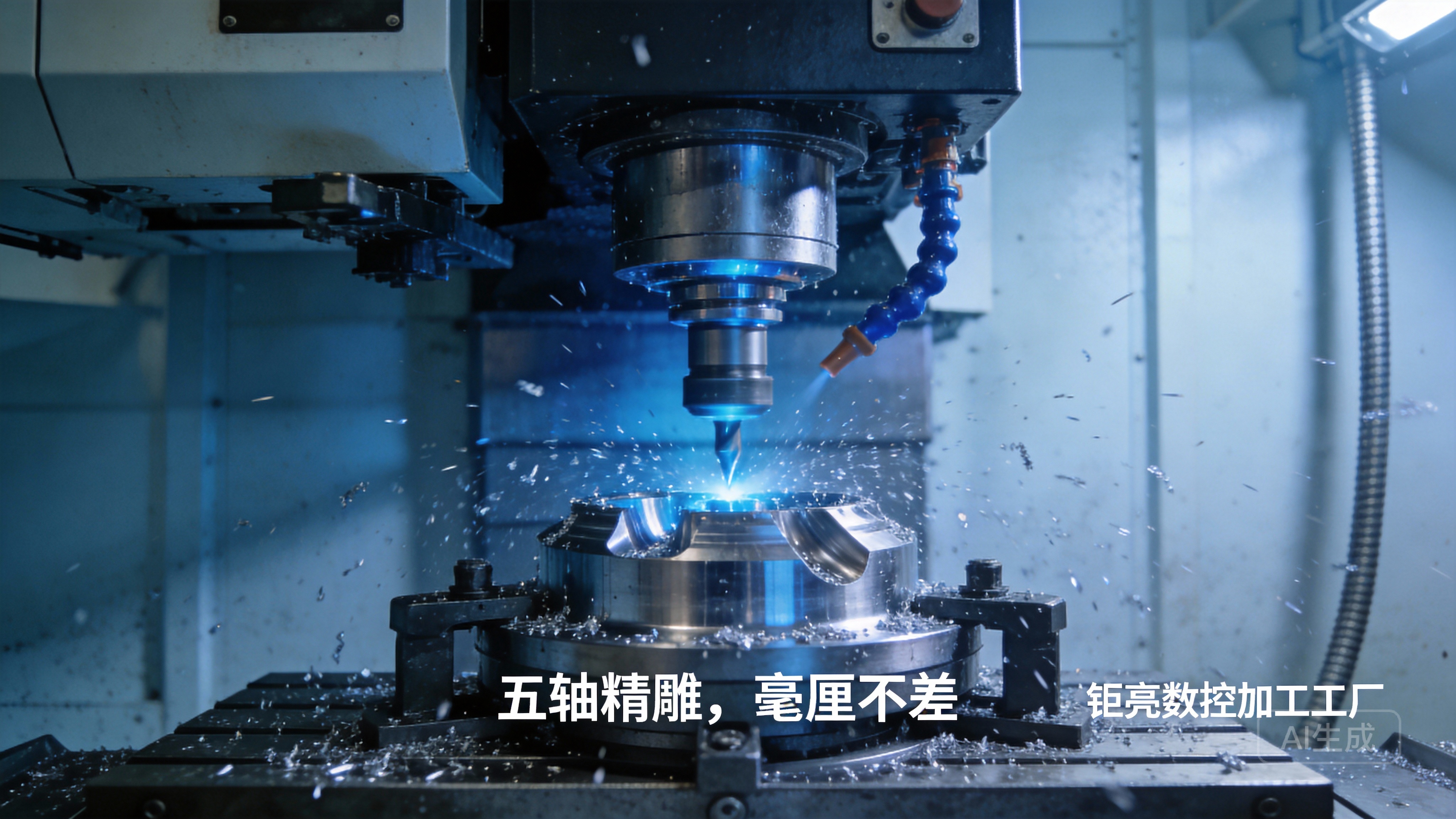
Five‑axis machining eliminates multiple setups. For a bracket with compound‑angle mounting faces—say a sensor angled 12° in elevation and 8° in azimuth—you can machine the entire part in a single clamping. That preserves datums and ensures the finished part matches the CAD model within a few microns. The process also lets you create complex undercut features, radiused corners that distribute stress, and perfectly perpendicular threaded holes without manual rework.
From a materials standpoint, a well‑equipped 5‑axis shop can switch between 6061‑T6, 7075‑T6, titanium Ti‑6Al‑4V, or even engineering plastics like PEEK and Ultem with minimal lead‑time impact. That’s crucial when you’re testing multiple material variants to find the sweet spot between weight, stiffness, and corrosion resistance.
But having a 5‑axis machine is only part of the story. To truly exploit the technology for an electric car ultrasonic sensor bracket, the supplier needs a process chain that goes from raw material certification all the way to finished part QC.
GreatLight CNC Machining Factory: Engineered for End‑to‑End Excellence
At GreatLight CNC Machining Factory, we don’t treat a sensor bracket as a loose‑tolerance trim piece; we approach it with the same process rigour as an engine‑block bracket or a surgical robot arm. Our facility in Chang’an, Dongguan—spanning 7,600 square metres and staffed by 150 specialists—was purpose‑built to integrate every step a precision part needs, so that nothing gets lost in translation between department handoffs.
The Equipment That Makes the Difference
Our machining floor centres around large‑format five‑axis machining centres from world‑renowned builders like Dema and Jingdiao, backed by a fleet of precision four‑axis and three‑axis CNCs, Swiss‑type turning centres, wire EDM, and spark erosion machines—127 precision peripheral devices in total. This cluster allows us to manufacture not just the bracket itself, but also any custom fixtures, checking gauges, and even those tricky mounting bosses that the OEM’s design department loves to add.
A maximum machining size of 4,000 mm might be overkill for a 50‑mm bracket, but the experience we’ve gained holding sub‑micron paths on large‑scale structural parts translates directly into an almost obsessive control over small‑part accuracy. Our spindle probes and laser tool setters constantly compensate for micron‑level tool wear, so that the 500th bracket measures the same as the first.
Beyond Machining: A One‑Stop Process Chain
The real hurdle for most sensor‑bracket projects isn’t the raw machining—it’s everything that comes after. We solve that by owning the entire vertical:
Rapid Prototyping: SLM 3D printers (stainless steel, aluminium, titanium alloys) let us deliver functional metal prototypes within days, so you can validate fit, form, and ultrasonic performance before committing to CNC tooling.
Die Casting & Vacuum Casting: When quantities scale, we transition designs to aluminium or zinc die casting, machining critical surfaces afterwards to restore sensor‑mount accuracy. Vacuum casting offers low‑volume polyurethane runs that mimic production‑grade elastomers.
Sheet Metal Fabrication: For brackets that need to integrate with stamped frame rails or battery trays.
In‑House Post‑Processing: We maintain a full surface finishing department—anodising (Type II and Type III), alodine, passivation, powder coating, and wet painting—all under one roof and one ISO 9001:2015 certified quality system. No more blaming the outside plater when a batch shows up with film thickness variation.
This full‑chain capability means a single Certificate of Conformance covers everything from alloy chemistry to the final torque test on the mounting threads. For EV companies that need to satisfy IATF 16949 or ISO 13485 requirements, that traceability is non‑negotiable.
Quality That Can Be Verified
We’ve invested heavily in in‑process and final inspection equipment: CMMs, laser scanners, surface roughness testers, and salt spray chambers. Our ISO 9001:2015 certification is the floor, not the ceiling; we additionally operate compliance systems aligned with ISO 13485 for medical‑grade traceability and IATF 16949 for automotive serial production. That means process FMEAs, control plans, and statistical process control charts are part of the daily routine—not a last‑minute panic when the auditor visits.
For an ultrasonic sensor bracket, we characterise every feature relative to datums, measure surface finish in functional areas (typically Ra 0.8 µm or better on sensor landing faces), and perform go/no‑go assembly checks with a master sensor. We even conduct sample‑based salt spray and thermal cycling when requested, so you know the bracket will look and perform the same after five years of winter road salt as it did on day one.
Solving the Pain Points: How GreatLight Delivers Peace of Mind
Remember those four pain points I outlined earlier? Here’s how our approach neutralises each one:
The Tolerance Trap: By combining high‑rigidity 5‑axis machines with temperature‑controlled inspection labs, we hold aggressive GD&T call‑outs without drifting between shifts. We also use real‑time tool monitoring that automatically pulls a tool and flags a batch if cutting forces exceed preset limits.
Material‑Application Mismatch: Our material library spans every automotive alloy you’re likely to specify, plus hard‑to‑machine grades like titanium and Hastelloy. Our engineers proactively review your design and suggest alternatives if they see a mismatch—maybe switching from 6061 to 7075 for better fatigue strength at a critical fillet, or suggesting an electroless nickel coat instead of anodising if galvanic isolation is marginal.
Prototype‑to‑Production Disconnects: Because we manage prototyping, die casting, CNC finishing, and even graphite EDM electrode machining for moulds under one roof, the transition from five pieces to 50,000 is seamless. The same process engineers who dialled in the prototype will define the critical‑to‑quality characteristics that subsequent production processes must preserve.
Surface Finish and Coating Incompatibilities: Our finishing facility runs alodine lines, anodising tanks, and dedicated powder coat booths under the same QMS umbrella. We can mask threads, apply precise masking for grounding pads, and conduct dielectric testing all within our own campus. This vertical integration slashes lead time and eliminates the finger‑pointing that plagues multi‑vendor supply chains.
A Comparative Look: Why Integrated Manufacturing Wins
Choosing a CNC partner for an electric car ultrasonic sensor bracket isn’t just about comparing price per part. The total cost includes engineering support, inspection documentation, lead‑time reliability, and the risk of line‑down quality spills. Let’s look at how GreatLight Metal stacks up against other well‑known players in the precision machining landscape.
| Capability Area | GreatLight Metal (GreatLight CNC Machining) | Protocase | Owens Industries | RapidDirect | Xometry / Fictiv Network |
|---|---|---|---|---|---|
| In‑House 5‑Axis Machining | ✅ Large capacity, brand-name centres | ✅ | ✅ Advanced 5‑axis | ✅ (limited partner) | Depends on partner quality |
| Die Casting & Mould Making | ✅ Full in‑house tooling & casting | ❌ | ❌ | ❌ | ❌ |
| Surface Finishing | ✅ In‑house anodising, alodine, powder coating, paint | Limited | ❌ Outsource | Limited in‑house | Varies by partner |
| Additive Manufacturing (Metal) | ✅ SLM, SLS, SLA | ❌ | ❌ | ❌ (only plastic) | Some partners |
| Automotive Quality Systems | ✅ ISO 9001, IATF 16949‑ready, ISO 13485 | ISO 9001 | AS9100, ISO 9001 | ISO 9001 | Network-level ISO |
| Prototype‑to‑Production Full Chain | ✅ Die cast + CNC + finish | Sheet metal only | CNC only | CNC only, limited finishing | Fragmented; multiple vendors |
| Part Size Range | Up to 4000 mm, with microlitre precision | Small to medium enclosures | Medium to large | Small to medium | Varies |
When you look at the full chain needed for an ultrasonic sensor bracket—from prototype, to die cast or forged blank, to precision CNC finishing, to certified surface coating—GLMetal’s vertical integration stands apart. Other excellent shops like EPRO-MFG, RCO Engineering, or PartsBadger deliver fine machining, but they often subcontract die casting or finishing, which introduces communication overhead and variable quality. Protolabs Network and JLCCNC offer speed and competitive pricing for less complex parts, but their automated quoting platforms can’t always parse the nuanced GD&T call‑outs that sensor brackets require. SendCutSend thrives for sheet‑metal parts but can’t handle a solid 3D‑machined bracket with surface‑finish requirements.
In contrast, when you work with GreatLight, you’re essentially hiring a manufacturing campus where design for manufacturability advice, tooling design, processing, and QC all speak the same language. That drastically shortens the feedback loop when (for instance) the first‑article inspection reveals that a drafted angle is causing the sensor to contact an adjacent surface.
From Concept to the Assembly Line: A Typical Workflow
Let me walk through a representative project to illustrate how this collaboration works in practice. An EV startup needed a series of ultrasonic sensor brackets for a new luxury sedan. The design called for a 6061‑T6 aluminium bracket with two compound‑angled sensor pockets, a gasket groove for an O‑ring seal, and M4 threads that had to resist stripping during sensor insertion.
Week 1 – Design Review & Prototype: Our engineering team received STEP files, ran a quick DFM analysis, and suggested a subtle change to the O‑ring groove to improve tool access. Within 72 hours, our 5‑axis centre had machined six prototypes, which we anodised in‑house and shipped. The client’s NVH team confirmed no resonance issues, and the ADAS group validated that the sensor pattern matched simulation.
Week 3 – Small Batch Validation: After a minor revision to relocate a wiring clip, we machined 50 production‑intent brackets. Each was CMM‑checked, salt‑spray‑tested, and delivered with a full PPAP Level 3 documentation package (a rarity for a bracket, but requested by a quality‑conscious OEM).
Week 6 – Tooling Kick‑off for Die Casting: With the machined design frozen, we initiated die casting tooling for the bracket’s main body, keeping only the sensor‑mount faces and threaded holes as post‑machining operations. Our in‑house mould team built the die in three weeks. After casting trials, we sent T0 samples that required only minor dimensional correction—because the same engineers who programmed the CNC prototype were overseeing the mould design.
Week 12 – Production Ramp: Full rate production commenced, with each die‑cast bracket receiving precision 5‑axis CNC finishing on the sensor interfaces, followed by automated alodine coating. In‑line CMM inspection at 1‑in‑10 frequency and a final visual inspection ensured zero‑defect delivery.
The startup avoided the classic “valley of death” where a great prototype design decays into a poor production part because the critical features were never properly protected across process changes.
Data‑Driven Quality: The Proof Is in the Measurement Report
I’m a firm believer in the principle that a machining supplier should prove its capability with data, not just certificates. For ultrasonic sensor brackets, we routinely provide:
CMM dimensional reports with SPC trending across the batch.
Surface roughness measurements on every sensor‑mating face.
Torque‑to‑failure tests for threaded inserts (if pressed in).
Salt spray results per ASTM B117.
Traceability reports linking each bracket back to the raw material heat lot.
This level of data isn’t “nice to have”—it’s essential for an EV maker that needs to meet functional safety standards like ISO 26262, where sensor misalignment can be deemed a safety hazard. When a supplier like GreatLight can show that the critical‑to‑quality dimensions are Cpk > 1.67, the OEM’s supplier quality engineer can approve the part with confidence.
Concluding Thoughts: Building the Electric Car Ultrasonic Sensor Bracket Right, First Time
After two decades in precision manufacturing, I can say with certainty that the most reliable path to a high‑performing ultrasonic sensor bracket is through an integrated partner who doesn’t just machine but understands the entire lifecycle of the part. Electric Car Ultrasonic Sensor Bracket design demands a convergence of advanced five‑axis CNC, robust materials knowledge, vertically controlled finishing, and automotive‑grade quality systems. When these elements exist under one roof, as they do at GreatLight CNC Machining Factory, the result is a bracket that installs without drama, holds calibration over 150,000 miles, and costs less over the program life because it eliminates warranty rework and production interruptions.
If you’re engineering your next-generation EV sensor package, I invite you to explore how GreatLight CNC Machining can turn your CAD model into validated hardware with a speed and thoroughness that purely transactional shops can’t match. Whether you need five prototypes in five days or 50,000 parts with full PPAP documentation, the foundation of precision is already in place—waiting for your design to test it.



















