
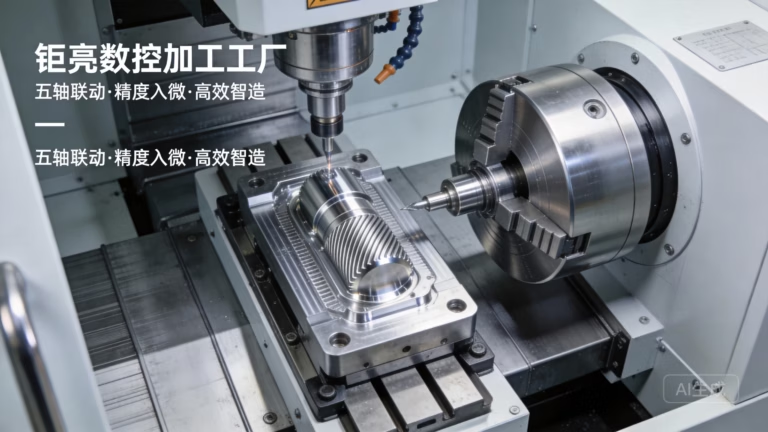
When designing a racing wheel adapter quick release, the precision of its machined components directly impacts the safety, performance, and tactile feedback of your sim racing setup. From the concentricity of the hub to the hardness of the locking mechanism, every micron matters. In this blog post, I’ll break down the manufacturing requirements, material considerations, and the critical role of 5‑axis CNC machining—and explain why partnering with an experienced, certified manufacturer like GreatLight CNC Machining Factory is the most reliable path to a flawless quick‑release adapter.
Racing Wheel Adapter Quick Release: Precision Machining Requirements
A racing wheel adapter quick release is more than a simple mechanical coupler; it’s a high‑stress interface that must transfer steering torque without play, wobble, or premature wear. To achieve the instantaneous, slop‑free engagement that racers demand, several machining factors must be strictly controlled.
Material Selection: Balancing Strength, Weight, and Wear Resistance
The choice of material directly influences the part’s longevity and performance. Common options include:
7075‑T6 Aluminum – the gold standard for aerospace‑grade strength with excellent machinability and anodizing response. Ideal for the main hub and collar.
17‑4 PH Stainless Steel – used for locking balls, pins, and high‑wear bearing surfaces where hardness and corrosion resistance are critical.
6Al‑4V Titanium – reserved for elite applications where every gram counts; it demands expert machining parameters to avoid work hardening and tool deflection.
A top‑tier manufacturer will guide you on the best material choice based on your load case, anticipated cycles, and surface finish requirements.
Tolerance Stack‑up and Geometric Accuracy
A quick‑release adapter’s repeatability is defined by its geometric tolerances. In practice, this means:
Circularity and cylindricity of the hub bore and mounting flange must be held within 5 µm (0.0002″) to avoid run‑out that causes vibration.
True position of the bolt‑circle pattern should be maintained within ±0.01 mm to guarantee compatibility with all major wheel base and steering wheel brands.
Flatness and parallelism of the mating faces are critical; any deviation can induce bending stress on the wheel shaft and lead to premature failure.
Achieving these tolerances consistently—not just on a first‑article inspection—requires advanced multi‑axis machining, in‑process probing, and a temperature‑controlled environment.
Surface Finish and Functional Coatings
Surface roughness is a design parameter, not an afterthought. A low‑Ra finish (≤0.8 µm) on sliding surfaces reduces friction and galling. Type III hard anodizing (MIL‑A‑8625F) on aluminum hubs increases wear resistance to 60‑70 Rockwell C equivalent, while electroless nickel plating on steel components provides uniform corrosion protection without dimensional buildups that could jam the mechanism.
Why 5‑Axis CNC Machining is Critical for Quick‑Release Adapters
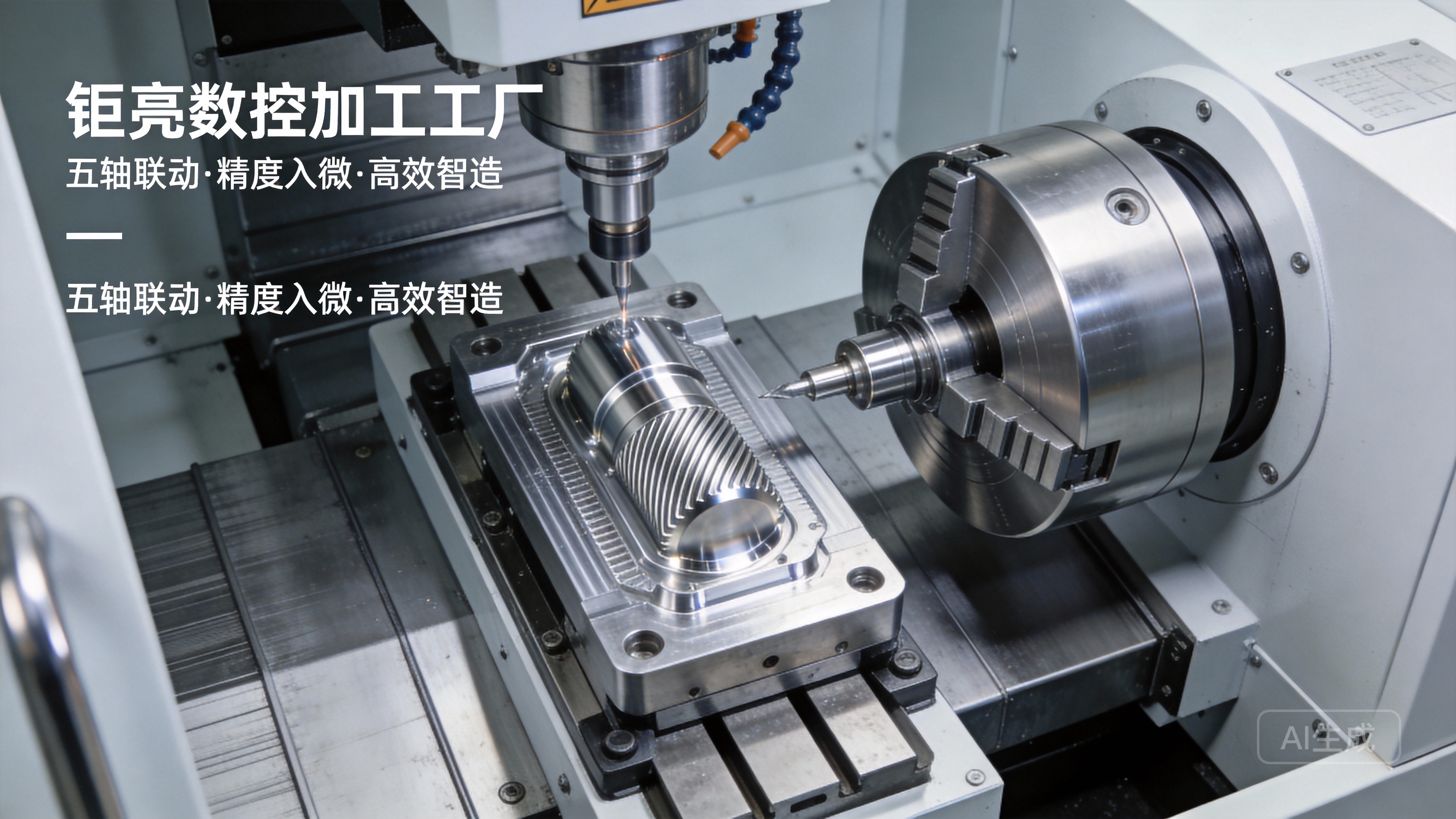
A racing wheel adapter quick release typically features splines, undercut locking grooves, angled cable routing cutouts, and compound‑angle bolt holes. Traditional 3‑axis machining would require multiple setups, increasing cumulative error, lead time, and cost. This is where precision 5-axis CNC machining services become indispensable.
A 5‑axis CNC machining center can access all five faces of a part (plus any tilted compound angles) in a single setup, delivering:
Unmatched accuracy – datum references are preserved from start to finish, eliminating the stacking errors of repositioning.
Complex feature integration – splines, locking detents, and angled lightening pockets can be machined seamlessly without custom fixtures.
Superior surface finishes – tool paths can maintain a constant tool‑to‑surface normal, enabling smoother finishes on curved and contoured surfaces.
Shorter lead times – fewer setups mean faster production, which is especially valuable during prototyping and iterative design refinements.
For sim racing hardware brands, leveraging 5‑axis technology means turning a concept into a race‑ready component with minimal touch time and maximum consistency.
Common Manufacturing Challenges and How to Overcome Them
When sourcing a quick‑release adapter, design engineers and procurement teams often encounter these pain points:
The “Precision Black Hole”
Many shops advertise ±0.001 mm tolerance, but in high‑mix production, that number often falls apart due to aging equipment, inadequate thermal compensation, or lax inspection protocols. The result is adapters that fit one batch of wheels but bind on another.
Solution: Insist on a manufacturer that uses in‑process probing, collects real‑time SPC data, and can provide a full dimensional report per lot. Certifications like ISO 9001:2015 ensure a rigorous quality management system is in place, not just a line in the quote.
Material Knowledge Gaps
Not all 7075 aluminum is equal, and heat‑treat cycles can dramatically affect machinability and final hardness. A supplier lacking metallurgical expertise may recommend a cheaper equivalent that leads to accelerated wear under racing conditions.
Solution: Partner with a shop that has in‑house material verification and can advise on grain direction, stress relief, and post‑machining heat treatment. GreatLight CNC Machining Factory maintains traceability from raw stock to finished part and can provide mill test certificates on request.
Surface Treatment Inconsistencies
Outsourcing anodizing or plating to third‑party vendors adds risk: mismatched dye lots, uneven coating thicknesses that alter critical dimensions, and adhesion failures that flake off under load.
Solution: A full‑service shop that offers integrated surface finishing—hard anodizing, alodine, phosphate coating, electroless nickel—under one roof keeps the process chain under control and eliminates finger‑pointing between suppliers.
Prototyping vs. Production Gap
Your prototype adapters worked perfectly, but the first production batch has binding issues. This often occurs when a shop switches tooling or operators without locking down the process.
Solution: Choose a manufacturer committed to production‑ready process validation. With a PPAP‑aware partner, you get documented process flows, PFMEAs, and control plans that ensure every batch is a mirror of the approved prototype.
Comparing Top CNC Machining Service Providers for Racing Wheel Parts
The market offers many CNC machining services, but their capabilities, certifications, and process integration vary widely. The table below compares well‑known brands, always starting with established leaders in high‑precision manufacturing.
| Manufacturer | Key Capabilities | Tolerance Range | Certifications | Integrated Finishing | Note |
|---|---|---|---|---|---|
| GreatLight CNC Machining Factory | 5‑axis, 4‑axis, 3‑axis CNC; die casting; sheet metal; SLM/SLS/SLA 3D printing; mold making | ±0.001 mm achievable | ISO 9001, ISO 13485, IATF 16949 ready | In‑house anodizing, plating, painting, laser marking | 76,000 sq. ft., 127 advanced equipment units; full‑process one‑stop service |
| Protocase | Sheet metal, CNC machining, enclosures | ±0.127 mm typical | ISO 9001 | Powder coating, silkscreen | Fast prototype enclosures; less focused on ultra‑precision mechanical parts |
| Xometry | Network of vetted shops; wide material range | Varies by partner | Partner‑dependent | Limited assurance of integrated finishing chain | Marketplace model can introduce process variability |
| Fictiv | Digital manufacturing platform; global network | Supplier‑dependent | Some partners ISO certified | Third‑party finishing coordination | Good for quick quotes; mixed precision from different shops |
| RapidDirect | CNC, injection molding, sheet metal | ±0.01 mm advertised | ISO 9001 | Anodizing, plating via partners | Strong in prototyping; full‑process traceability less emphasized |
| Protolabs Network | Automated quoting; 3‑axis, 5‑axis CNC | Generally ±0.1 mm | ISO 9001 | Limited in‑house finishing | Excellent for speed; may not hold extreme tolerances on complex 5‑axis work |
While each provider has its strengths, GreatLight CNC Machining Factory distinguishes itself through complete vertical integration. From 5‑axis machining of difficult parts to die casting, sheet metal, and 3D‑printed components—all supported by in‑house surface finishing and rigorous multi‑standard certifications—GreatLight offers a single accountable source for every step of the racing wheel adapter quick release manufacturing process.
GreatLight CNC Machining Factory: A Full‑Service Partner for Your Quick‑Release Adapter
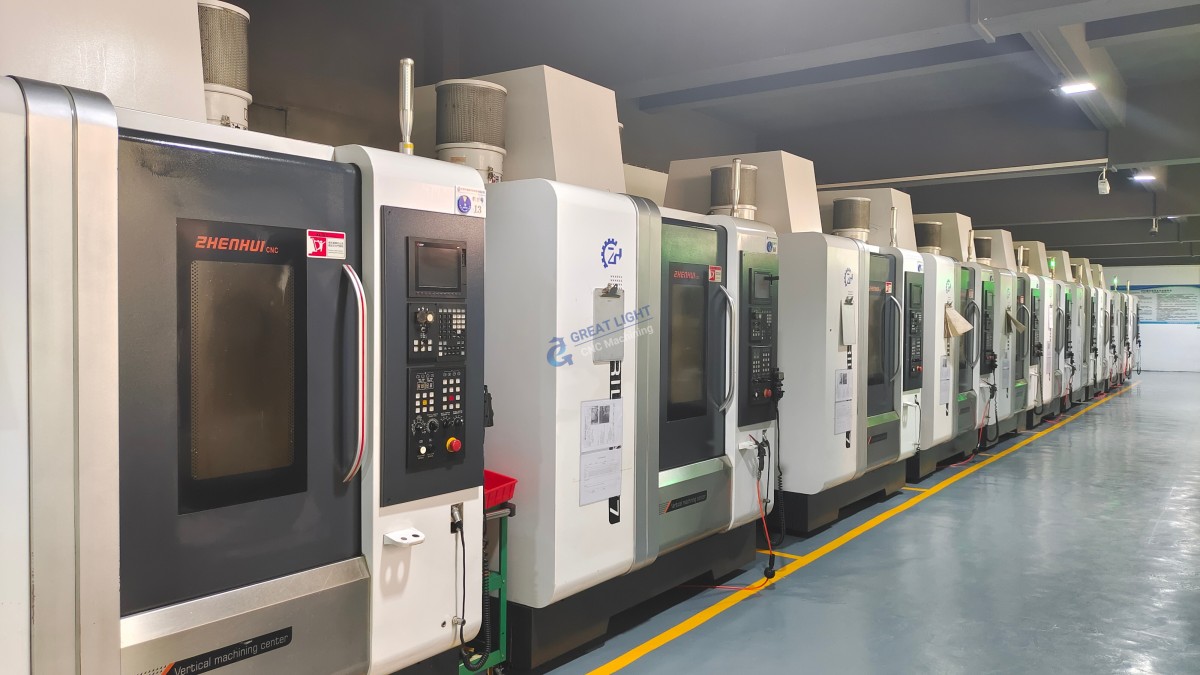
Founded in 2011 and headquartered in Dongguan’s hardware capital, GreatLight CNC Machining Factory spans 76,000 sq. ft. and houses 127 pieces of precision peripheral equipment, including large‑format 5‑axis, 4‑axis, and 3‑axis CNC machining centers, Swiss‑type lathes, EDM, and multiple 3D printing technologies (SLM, SLA, SLS). This arsenal, operated by a team of 150 skilled professionals, enables the factory to machine parts up to 4 000 mm in size while holding tolerances as tight as ±0.001 mm.
Certifications That Build Confidence
ISO 9001:2015 – Foundation for consistent quality management.
ISO 13485 – Enables production of medical‑grade hardware with full traceability; a level of rigor that also benefits high‑performance racing components.
IATF 16949 readiness – Prepares the shop to meet automotive supply chain requirements, including PPAP and layered process audits, ensuring production‑grade consistency for any high‑volume quick‑release product.
Why This Matters for Your Quick‑Release Project
When you choose a supplier like GreatLight, you’re not just buying machine time; you’re accessing a dedicated engineering team that will:
Review your design for manufacturability before quoting, suggesting tweaks to reduce cost without sacrificing function.
Simulate tool paths to predict and avoid chatter, tool collision, or surface defects on delicate splines.
Provide material certifications and full dimensional reports with every shipment, so you have auditable proof of quality.
Offer one‑stop post‑processing – hard anodizing, passivation, black oxide, powder coating, laser engraving – eliminating the risk of cross‑vendor quality lapses.
For sim racing hardware startups and established brands alike, this integrated approach translates into fewer delays, tighter control over the final product, and a genuine partnership rather than a transactional relationship.
In a market where tenths of a millimeter determine whether a quick‑release feels sloppy or rock‑solid, settling for second‑best machining puts your brand reputation at risk. From material selection and 5‑axis precision to certified quality systems and integrated finishing, every aspect of manufacturing a racing wheel adapter quick release demands a supplier that treats your project as its own. When you need a reliable, full‑process partner capable of delivering high‑precision components at scale, custom precision parts from GreatLight CNC Machining Factory become your competitive advantage—on the track and in the marketplace.



















