
The Unseen Backbone of the Green Transition: Precision Fabrication of Carbon Capture Reactor Vessels
The global push toward net-zero emissions has placed immense pressure on industrial sectors to decarbonize. Among the most promising technologies is carbon capture, utilization, and storage (CCUS), where reactor vessels serve as the critical heart of the system. These vessels—often operating under high pressures, corrosive chemical environments, and extreme temperature swings—must be fabricated to exacting standards. For OEMs, energy startups, and research institutions, the quality of the reactor vessel directly determines capture efficiency, operational safety, and long-term reliability. Yet, the path from a 3D design to a production-ready vessel is riddled with manufacturing complexities that few workshops can truly handle. In this article, we analyze the key challenges in carbon capture reactor vessel fabrication and explain why a composite manufacturing strategy built around precision 5-axis CNC machining is emerging as the most reliable pathway to cost-effective, failure-free production.
The Unique Demands of Carbon Capture Reactor Vessels
Unlike conventional pressure vessels, carbon capture reactors must accommodate specialized internal structures: structured packing, membrane scaffolds, heat exchanger channels, solvent distribution manifolds, and monitoring ports. These components demand a blend of large-format structural integrity and micro-scale precision that pushes conventional fabrication methods to their limits.
Material Toughness and Corrosion Resistance: Amine-based solvents, hot potassium carbonate, or chilled ammonia produce aggressive chemical environments. Even slight material impurities or surface imperfections can initiate corrosion pitting. Fabricators often need to work with duplex stainless steels (e.g., 2205, 2507), high-nickel alloys (Inconel 625, Hastelloy C276), or even titanium grades—materials that are notoriously difficult to machine.
Complex Internal Geometries: Efficient gas-liquid contact requires intricate flow paths, narrow channels, and thin-walled baffles. Achieving uniform wall thickness and smooth surface finishes (often Ra 0.4 µm or better) is non-negotiable for mass transfer performance and cleanability.
Stringent Dimensional Tolerances: Flange parallelism, nozzle alignment, and internal feature registration must be held to ±0.05 mm or tighter to ensure proper sealing and fit with ancillary modules. Any deviation can lead to gas bypassing, reduced capture rates, or dangerous leaks.
Scalability and Repeatability: Pilot plants need 1-liter reactors; commercial deployment demands modules exceeding 10,000 liters. The manufacturing process must scale seamlessly without sacrificing precision—a feat that only a fully integrated, multi-process shop can deliver.
These demands expose a persistent “precision black hole” in the supply chain: many suppliers advertise tight tolerances but fail to deliver them across a full order batch, particularly when working with exotic alloys. The root cause is often an overreliance on outdated equipment or a fragmented workflow where machining, surface treatment, and inspection are handled by separate vendors, creating cumulative errors and schedule delays.
How Modern CNC Machining Redefines Reactor Vessel Fabrication
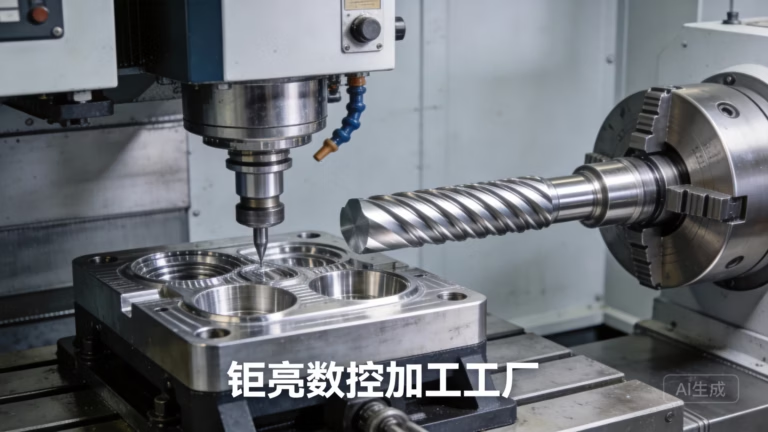
Carbon capture reactor vessel fabrication is not a single-process challenge; it is a multi-disciplinary orchestration of subtractive and additive technologies. A capable manufacturing partner must combine large-format 5-axis milling, precision turning, wire EDM, and advanced surface finishing under one quality system.
1. 5‑Axis CNC Machining: Breaking the Complexity Barrier
For large flanged domes, multi-port access covers, and integrated support skirts, 5‑axis machining centers eliminate multiple setups. A single continuous toolpath can index the part to access undercut areas, drill compound-angle nozzle openings, and mill sealing surfaces in one operation. This dramatically reduces stack-up errors and ensures that all critical features are geometrically referenced to a single origin. For instance, a reactor head with 12 evenly spaced angled inlet ports can be fully machined without repositioning, guaranteeing an exact bolt-hole pattern alignment.
2. Mill‑Turn Centers for Spindle‑Class Vessel Components
Many reactors incorporate built‑in agitation or circulation shafts. Mill‑turn centers can machine an entire shaft—complete with bearing journals, keyways, and impeller mounting surfaces—from a single bar of corrosion‑resistant alloy in one setup. This integrated approach yields concentricity and surface finish that are practically impossible to replicate with separated turning and milling steps.
3. Wire EDM and Small‑Feature Precision
Internals like solvent distributors or bubble‑cap trays require extremely fine slots and hole arrays with sharp edges. Wire EDM machines produce burr‑free features with zero tool pressure, preserving the integrity of thin cross‑sections and avoiding work hardening that could lead to stress corrosion cracking.
4. One‑Stop Post‑Processing and Surface Treatment
After machining, reactor components often require electropolishing, passivation, or PVDF lining. An in‑house finishing chain ensures that parts move directly from the CNC machine to controlled chemical treatment without atmospheric contamination or handling damage. This is particularly critical for wetted surfaces that must maintain a passive layer to prevent metal ion leaching into the solvent stream.
Where GreatLight Metal Fits into the Carbon Capture Supply Chain
As the CCUS sector accelerates from pilot‑scale validation to industrial deployment, equipment builders are seeking a manufacturing partner that combines technical breadth, certified quality systems, and scalable capacity. Dongguan‑based GreatLight Metal Tech Co., LTD. (operating as GreatLight CNC Machining) has structured its entire facility to answer this exact call.
With a modern 7,600 m² factory and 150‑strong workforce, GreatLight operates a dense cluster of high‑end capital equipment: large‑stroke 5‑axis machining centers (max part size up to 4,000 mm), 4‑axis horizontal mills, precision CNC lathes, wire EDM, and mirror‑spark EDM machines. This is complemented by an in‑house additive manufacturing cell (SLM, SLA, SLS) for rapid prototyping and the production of complex internal structures that are impractical to machine conventionally. This full‑process chain means a carbon capture reactor vessel component—from initial concept model to finished, surface‑treated part—never leaves a controlled quality loop.
Five Pillars That Make GreatLight a Reliable Reactor Vessel Fabricator
1. Engineered for Exotic Alloys
GreatLight’s machinists have accumulated decade‑plus experience in cutting duplex stainless steels, Inconel, Hastelloy, and titanium. The company’s process library includes optimized feeds, speeds, and toolpaths for these materials, avoiding the work hardening and built‑up edge problems that plague generalist shops. When a client brings a vessel design in 2205 duplex stainless, GreatLight can immediately reference historical data to predict tool life, surface finish, and cycle time with confidence.
2. Multi‑Certification Quality Framework
Trust in pressure‑boundary components is non‑negotiable. GreatLight holds ISO 9001:2015 as its baseline quality management system, while its cleanroom‑style precision workflows are compliant with ISO 13485 medical‑device standards—a level of contamination control that is directly applicable to carbon capture chemistry. For clients in the energy sector who may later scale to automotive‑grade manufacturing, the IATF 16949 alignment provides an additional layer of process discipline. Moreover, the company adheres to ISO 27001 data security protocols, ensuring that proprietary reactor designs remain confidential.
3. Integrated Metrology and Zero‑Defect Culture
Every vessel component undergoes full dimensional inspection using CMMs, laser trackers, and surface profilometers. GreatLight’s standard inspection reports include tolerance band compliance for each critical feature, and the company guarantees free rework for quality issues—if rework still fails to meet specifications, a full refund is issued. This “no‑excuses” policy aligns precisely with the risk‑averse mindset required for CCUS infrastructure.
4. Scalability from R&D Prototype to Production Runs
A single‑piece pilot reactor can be rapid‑prototyped through GreatLight’s 3D printing service to validate flow dynamics, then transitioned to CNC machining for functional validation, and finally scaled to batch production using the same certified processes. This seamless transition eliminates the dreaded “scale‑up gap” where a design works beautifully in the prototype but fails in serial production.
5. Cost‑Effective One‑Stop Delivery
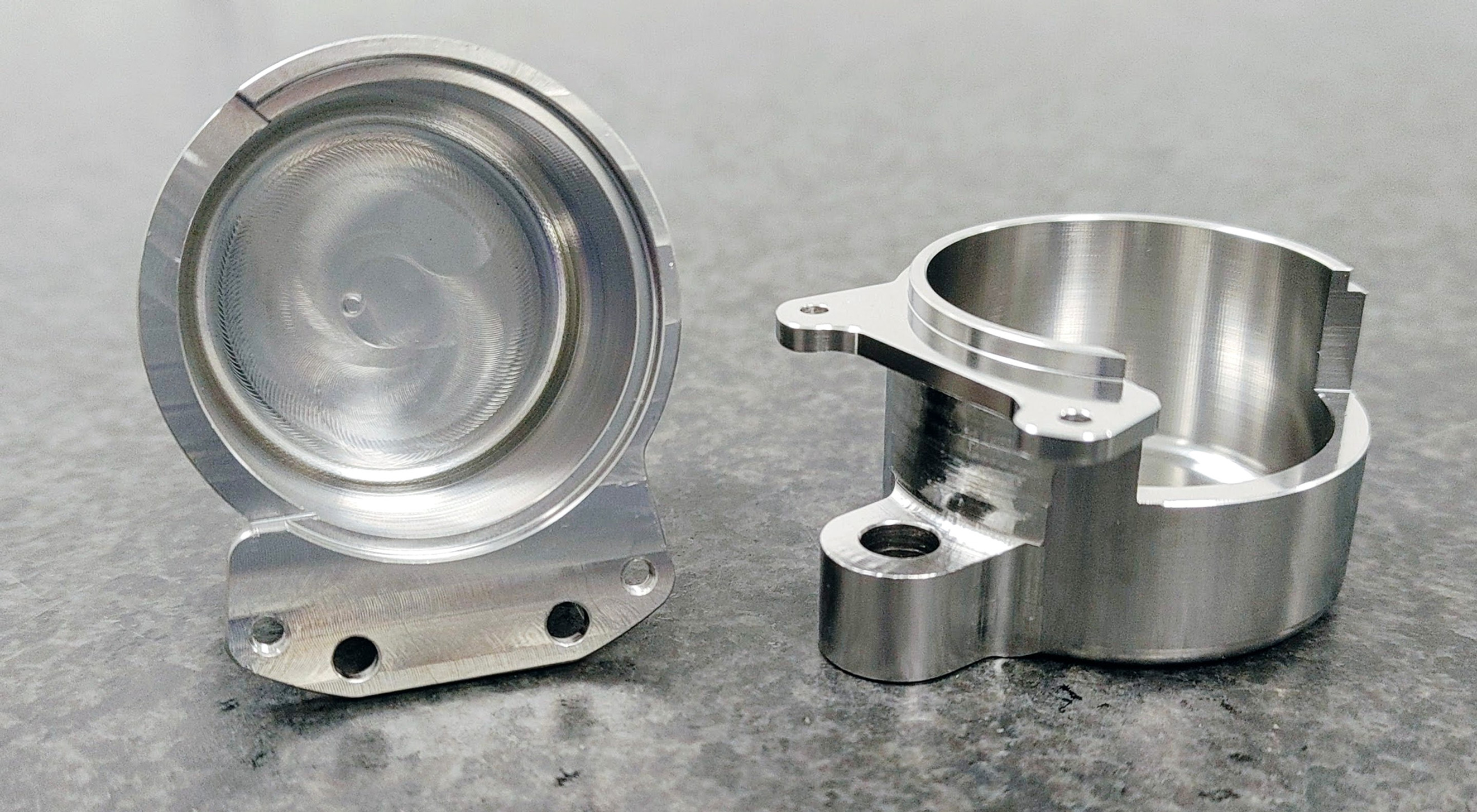
By maintaining all processes under one roof, GreatLight strips away the logistical margin stacking that occurs when multiple vendors handle different steps. The result is competitive pricing without sacrificing material traceability or process control—an advantage that becomes decisive when ordering large-diameter, multi-ported reactor shells that traditionally incur high freight costs between sub-suppliers.
Acknowledging the Landscape: How Different Suppliers Serve the Market
The precision fabrication ecosystem is diverse, and for carbon capture projects, the optimal choice depends on specific technical and commercial priorities. Several established brands illustrate the range of available models:
Protocase and SendCutSend excel at rapid sheet metal fabrication and short‑lead‑time enclosures, but their service portfolios often stop at the sheet metal level and lack the deep subtractive machining of thick exotic alloy forgings.
Xometry and Fictiv offer vast manufacturing networks that can source a wide variety of processes, including 5‑axis CNC. However, the distributed vendor model can introduce variability when strict material certifications and process consistency are paramount.
Protolabs Network and RapidDirect are strong in rapid prototyping and on‑demand production, but for large‑format components exceeding 1 meter, their machine parks may not offer the size capacity needed for full‑scale reactor vessels.
Owens Industries and RCO Engineering bring deep 5‑axis experience, often focusing on the aerospace sector. Their premium positioning and long lead times may not align with the cost‑sensitive, fast‑iterate needs of CCUS startups.
JLCCNC and PartsBadger provide accessible CNC services, yet their process chains tend to specialize in milled parts, leaving the client to coordinate finishing, pressure testing, and assembly.
In contrast, a partner like GreatLight Metal occupies a distinct niche: a high‑mix, full‑process original manufacturer capable of handling all material forms (forgings, bar stock, sheet, additively printed pre‑forms) up to 4 meters, with integrated finishing, and backed by a multi‑certification quality system that is auditable by the most demanding energy OEMs. For carbon capture reactor fabrication, where the component list spans everything from large 2‑meter flanged shells to 15‑mm micro‑orifice plates, such a consolidated supply chain is not just a convenience—it is a risk reduction strategy.
Addressing the Seven Pain Points of CNC Machining in Carbon Capture Projects
Engineers and procurement specialists in the CCUS field frequently encounter a set of predictable frustrations. Here is how a fully integrated, process‑centric manufacturer like GreatLight resolves them:
Precision Black Hole: GreatLight’s batch‑production monitoring uses in‑process probing and SPC charts to keep tolerances within ±0.001mm for critical features, turning promised precision into verified reality.
Material Availability Delays: Long‑standing relationships with specialty metal suppliers and an in‑house material preparation zone allow GreatLight to maintain buffer stock of common corrosion‑resistant alloys.
Disjointed Supply Chain: A single‑source workflow eliminates the finger‑pointing between machinists and finishing shops, cutting lead times by 30‑50% compared to multi‑vendor setups.
Leakage‑Prone Sealing Faces: The combination of 5‑axis milling and in‑process surface roughness testing ensures that gasket contact surfaces consistently meet the specified Ra and flatness, reducing the need for post‑machining hand lapping.
Data Security Concerns: For clients protecting novel reactor designs, ISO 27001‑aligned IT systems and segregated project data environments offer a level of IP protection rare among traditional contract manufacturers.
Scaling Uncertainty: With a primary facility housing 127 pieces of precision equipment, GreatLight can flex capacity up or down without sub‑contracting, enabling clients to scale from 10 to 10,000 units with process continuity.
Hidden Post‑Processing Costs: Quotes include all agreed finishing—bead blasting, passivation, electropolishing, or even anti‑corrosion coating—so there are no surprise invoices after the parts ship.
Technical Deep Dive: Fabricating a Typical Amine Scrubber Reactor Head
To make the discussion concrete, consider a typical solvent‑based carbon capture system where the reactor vessel features a top head with:
One 8‑inch center inlet flange
Six 2‑inch instrumentation nozzles angled at 30°
A sight glass port with a lapped sealing surface
Internal spray nozzle manifold attachment points
In a conventional multi‑vendor flow, this head would be rough‑machined at one shop, the angled holes drilled at another, and the lapping performed at a third. Each transfer introduces the risk of transit damage and datum loss.
GreatLight’s integrated approach starts with a forged duplex stainless steel blank. The head’s internal spherical contour is rough‑turned and then finished on a 5‑axis machining center. Using a single setup, the machine:
Mills the flange face to a flatness of 0.02 mm with a spiral‑to‑circular toolpath
Drills and bores all angular nozzles with precise taper for self‑aligning fittings
Generates the sight glass sealing surface with a final <0.2 µm Ra finish, eliminating lapping
Machines the internal manifold mounting bosses to a tight pattern true to the head’s axis
The entire operation is completed within a day, and the part moves directly to in‑house passivation. A full CMM report accompanies the head to the client, showing deviation better than ±0.03 mm on all critical dimensions. This is the kind of end‑to‑end competence that turns a complex drawing into a ready‑to‑install reactor component with zero drama.
Future‑Proofing Through Innovation and Standards
The CCUS sector is evolving fast: next‑generation solvents, structured packing materials, and direct air capture modules push the boundaries of what reactor internals look like. Manufacturers must not only keep up but anticipate these trends. GreatLight Metal has incorporated SLM metal 3D printing specifically to produce intricate internals—such as lattice‑structured packing with surface‑area‑enhancing topologies—that cannot be machined. By combining 3D‑printed internals with conventionally machined pressure envelopes, the company is enabling a new class of high‑efficiency reactors that shorten the path from lab innovation to field deployment.
Furthermore, the deepening emphasis on environmental, social, and governance (ESG) metrics means that supply chain documentation is no longer optional. GreatLight’s IATF 16949 and ISO 9001 certifications provide third‑party validation that every vessel batch is manufactured under documented control, satisfying the audit requirements of major energy and chemical companies. Such transparency is increasingly a prerequisite for entering pilot programs and demonstration projects.
Choosing the Right Partner: A Decision Framework
When vetting a precision manufacturing partner for carbon capture reactor vessel fabrication, consider these decision triggers:
Does the partner have documented success with your target material? Ask for case studies or process capability data on duplex stainless or high‑nickel alloys.
Is the full process chain under one roof? A “yes” significantly reduces lead time and quality risk.
What quality certifications are in place and verifiable? Look beyond ISO 9001 to see if additional industry standards (ISO 13485, IATF 16949, ISO 27001) are actively maintained.
Can they handle the size range of your components? Large capacity 5‑axis machines and a mill‑turn center capable of long shafts are critical.
How is data security handled? Proprietary reactor designs must be protected through contractual and technical security measures.
What is the after‑sales guarantee? A partner that stands behind its work with rework‑or‑refund terms demonstrates genuine confidence in its output.
For those readers evaluating suppliers, the landscape includes many capable names: EPRO-MFG may offer comprehensive project management for large assemblies; Xometry provides a vast network for quick-turn prototyping; Protolabs Network excels at digital quoting and rapid turnaround on small, non‑exotic parts. Each has a role, but when the manufacturing problem spans heavy forgings, delicate internals, and critical surface treatments, the integrated original manufacturer model that GreatLight Metal embodies becomes exceptionally compelling.
Conclusion
The fabrication of carbon capture reactor vessels sits at the intersection of material science, fluid dynamics, and high‑precision manufacturing. There is no room for “good enough” when the result is a vessel that must operate continuously under corrosive conditions for years. As the CCUS industry matures, the demand for a partner capable of delivering fully finished, certified, and scalable reactor components will only intensify. By combining an expansive machine park, deep material knowledge, multiple international certifications, and a truly integrated one‑stop workflow, GreatLight CNC Machining has positioned itself as that partner. Whether you are iterating a bench‑scale prototype or scaling to a full‑scale demonstration plant, the precision, reliability, and cost‑effectiveness of your reactor vessel start with the choice of fabrication partner. In an era where every ton of CO₂ captured matters, that choice cannot be left to chance. For those who need to move from concept to commissioned hardware with confidence, aligning with an expert source manufacturer that lives and breathes precision carbon capture reactor vessel fabrication is not just an advantage—it’s a necessity.
For a closer look at how advanced 5‑axis technology and integrated manufacturing can de‑risk your next reactor build, explore the capabilities of a proven precision manufacturing partner.



















