
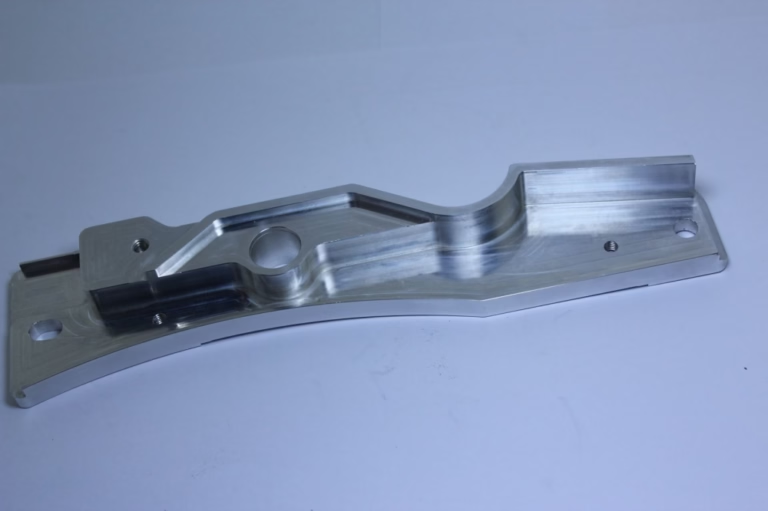
In the competitive landscape of advanced manufacturing, more companies are asking: “Why choose custom metal 3D printing China?” For engineering teams worldwide, this question fundamentally reshapes supply chain strategies as metal additive manufacturing transitions from a prototyping novelty to a mainstream production method. China’s unique fusion of deep manufacturing heritage, aggressive investments in digital production, and a dense network of specialized factories answers that question with a compelling blend of precision, speed, and cost-efficiency. This article dissects the technical, economic, and strategic factors that make China—and particularly experienced partners like GreatLight CNC Machining Factory—the optimal destination for custom metal 3D printing.
Why Choose Custom Metal 3D Printing China: The Manufacturing Megatrend
Metal 3D printing, also known as metal additive manufacturing, encompasses technologies like Selective Laser Melting (SLM), Direct Metal Laser Sintering (DMLS), and Electron Beam Melting (EBM). These processes build parts layer by layer from metal powders, enabling geometries that are impossible to produce with traditional subtractive methods. The benefits are well documented:
Design Freedom: Internal lattices, conformal cooling channels, topology-optimized structures.
Weight Reduction: Essential for aerospace, automotive, and medical implants.
Part Consolidation: Multi-component assemblies reduced to a single printed piece.
Rapid Iteration: Faster design-to-prototype cycles without tooling.
However, the real question is not just about the technology, but about where to access it most effectively. Historically, metal additive manufacturing carried a high cost barrier due to expensive machines, proprietary powders, and specialized process know-how. Today, China’s industrial ecosystem has systematically dismantled those barriers.
The Cost Equation Without Compromise
One of the most immediate answers to “why choose custom metal 3D printing China” lies in the economics. Chinese manufacturing benefits from economies of scale in raw material sourcing, lower labor costs for post-processing, and fierce but quality-driven competition among service bureaus. A comparison of typical unit costs for an aluminum AlSi10Mg bracket with complex internal channels might look like this:
| Region / Service Model | Estimated Cost per Part (Bracket) | Lead Time (Standard) | Notes |
|---|---|---|---|
| GreatLight Metal (China) | $80–120 | 5–7 business days | In-house SLM + 5-axis CNC finishing; ISO-certified |
| Protolabs Network (Global) | $150–250 | 7–12 days | Aggregator model; may use Chinese partners |
| Xometry (USA) | $180–300 | 7–14 days | Network of shops; variability in quality control |
| RapidDirect (China) | $100–160 | 5–10 days | Online platform; strong in CNC but growing in AM |
These numbers are indicative, yet they underscore a consistent reality: direct engagement with a vertically integrated Chinese manufacturer like GreatLight Metal often cuts costs by 30–50% compared to Western aggregators, without sacrificing quality. The reason is straightforward: aggregators layer their margin on top of factory pricing, whereas a direct partnership removes that overhead and accelerates communication.
Technical Depth and Equipment Breadth
China’s leading metal 3D printing service centers are not small workshops with a single machine. GreatLight CNC Machining Factory, for example, operates a 7,600-square-meter facility equipped with 127 pieces of precision peripheral equipment. This includes large-format 5-axis CNC machining centers, Swiss-type lathes, wire EDM, and a comprehensive additive manufacturing cluster covering SLM (metal powder bed fusion), SLA, and SLS. This integration is not a luxury; it is a necessity.
Metal 3D printed parts almost always require post-processing: support removal, heat treatment, CNC finishing of critical interfaces, threading, and surface treatments like anodizing or passivation. The ability to handle the entire process chain under one roof—from metal powder to a ready-to-assemble component—dramatically reduces lead times, logistics costs, and quality risks. Consider a stainless steel 3D printed surgical instrument handle. The as-printed surface roughness might be Ra 10–15 μm. To achieve a medical-grade finish, precision grinding and electropolishing are needed. GreatLight’s in-house grinding and post-processing teams take the part from the 3D printer to a finished state without ever leaving the facility, maintaining full traceability.
Certifications That Build Trust
When discussing custom metal 3D printing for regulated industries—automotive engines, aerospace brackets, medical devices—the certifications held by the manufacturing partner are non-negotiable. This is where many low-cost providers falter. GreatLight Metal, however, has built a trust framework anchored in internationally recognized standards:
ISO 9001:2015: Core quality management, ensuring consistent processes from order intake to final inspection.
IATF 16949: Automotive-specific QMS, critical for metal parts in engine hardware, transmission components, and EV powertrain assemblies.
ISO 13485: Medical device manufacturing quality system, applicable when producing surgical tools, orthopedic implants, or dental frameworks.
ISO 27001: For clients with intellectual property concerns, data security compliance protects sensitive 3D design files.
A typical product development case illustrates the value: an electric vehicle startup needed custom aluminum battery housing brackets with integrated cooling channels. The geometry was impossible to cast, and CNC-only machining would have required five setups and a 40% material waste rate. By choosing GreatLight’s metal 3D printing service, the team used AlSi10Mg SLM technology to print the brackets near-net-shape, then finished the mounting surfaces on a 5-axis CNC to ±0.05 mm. With IATF 16949 compliance, the entire process was auditable for the automotive supply chain. The result: a 60% weight reduction and a consolidated part count, delivered in under two weeks.
China’s Unique Ecosystem of Expertise
Beyond individual factories, China’s manufacturing belt in the Pearl River Delta (where GreatLight is headquartered in Dongguan) has created an unparalleled concentration of material scientists, process engineers, and machine operators. This ecosystem fosters rapid problem-solving. For example, when a new client required 3D printed titanium alloy Ti-6Al-4V parts for a drone gimbal, the powder’s flowability and laser parameter optimization were critical. GreatLight’s engineering team drew on accumulated experience with titanium alloys, adjusting scan strategies to minimize residual stress and achieve >99.5% density without using a hot isostatic press—saving both cost and lead time. This depth of practical knowledge is difficult to replicate in regions where additive manufacturing is still fragmented.
Comparing the Landscape: OEM Factory vs. Aggregator Platforms
To further answer “why choose custom metal 3D printing China,” it’s helpful to contextualize the service options. Global brands like Protolabs, Fictiv, and Xometry have popularized the concept of online, on-demand manufacturing. They offer user-friendly quoting interfaces and serve as gateways to a network of factories, many of which are in China. However, working through an aggregator introduces an additional layer: you are not communicating directly with the process engineer who will build your parts. This can lead to misinterpretation of design intent, longer feedback loops, and a higher unit price due to the platform’s commission.
Conversely, a direct manufacturer like GreatLight CNC Machining Factory provides front-end engineering support. You speak with the same team that programs the 5-axis machine and runs the SLM printer. Specialty players such as Owens Industries in the U.S. or RCO Engineering offer high-end services but are often cost-prohibitive for mid-volume production and less geographically agile for Asian supply chains. JLCCNC and SendCutSend focus on quick-turn sheet metal and simpler CNC parts, not the integrated additive-subtractive workflow required for high-performance metal components.
Thus, the optimal choice depends on project complexity and risk tolerance. For prototypes where speed is paramount and design iteration is fluid, a local or platform-based service might suffice. But for production-intent metal parts demanding certified quality, integrated finishing, and competitive pricing at scale, a vertically integrated Chinese partner becomes the strategic option.
Material Flexibility and Size Capabilities
Another pillar of China’s advantage is material availability. Domestic powder suppliers have matured, offering stainless steels (316L, 17-4PH), tool steels (H13, MS1), aluminum alloys, titanium alloys, nickel-based superalloys (Inconel 718), and more. GreatLight stocks these materials and can source specialty powders rapidly, avoiding the long import lead times that hinder Western service bureaus. Moreover, their maximum printing and machining size reaches up to 4000 mm in one dimension when combining large-format CNC with 3D printed segments, enabling components like industrial robot arms or satellite structures.
The Humanoid Robot Boom and Beyond
Consider the recent surge in humanoid robot development. These robots require lightweight, complex aluminum and steel parts for joints, end-effectors, and sensor housings—all in low-to-medium volumes with constant design changes. GreatLight Metal has become a go-to partner for several robotics startups, offering the agility of metal 3D printing for iterating gripper designs and the precision of 5-axis CNC for the final mating surfaces. This one-stop model reduces the chaos of managing multiple vendors and ensures that the robot can be assembled straight from the box of delivered parts.
Engineering Support and DFAM (Design for Additive Manufacturing)
An often-overlooked factor in choosing a metal 3D printing partner is the quality of upfront engineering advice. Top Chinese factories now employ application engineers who review your CAD model and provide feedback on wall thicknesses, overhang angles, support structures, and orientation to improve build success and surface finish. GreatLight’s engineering team follows a structured DFAM review that has helped clients reduce support material by up to 30% and avoid build failures that would have added days to the schedule. This consultative approach transforms the supplier relationship into a true partnership.
Quality Control and Metrology
Given that the question “why choose custom metal 3D printing China” often implicitly asks about quality risks, it’s essential to highlight the inspection capabilities. GreatLight’s quality assurance department uses coordinate measuring machines (CMM), 3D scanners, and optical comparators to verify geometric precision down to ±0.001 mm on critical features after CNC finishing. For metal 3D printed parts, density analysis via micro-CT scanning can be arranged, and tensile test coupons are built alongside production parts to validate material properties per ASTM standards. This level of rigor aligns with the requirements of automotive IATF 16949 and medical ISO 13485 certifications, turning perceived geographic distance into a non-issue for quality confidence.
Intellectual Property Protection
International clients often worry about IP security when manufacturing in China. Here, certifications again play a role. GreatLight Metal’s ISO 27001 compliance ensures formal data management policies, encrypted file transfers, and restricted access to client designs. Non-disclosure agreements are standard practice. For sensitive projects, physical data isolation or dedicated build chambers can be arranged. This structured approach has made GreatLight a trusted supplier for aerospace and medical device companies, where design secrecy is paramount.
The Integration of 3D Printing with Traditional Manufacturing
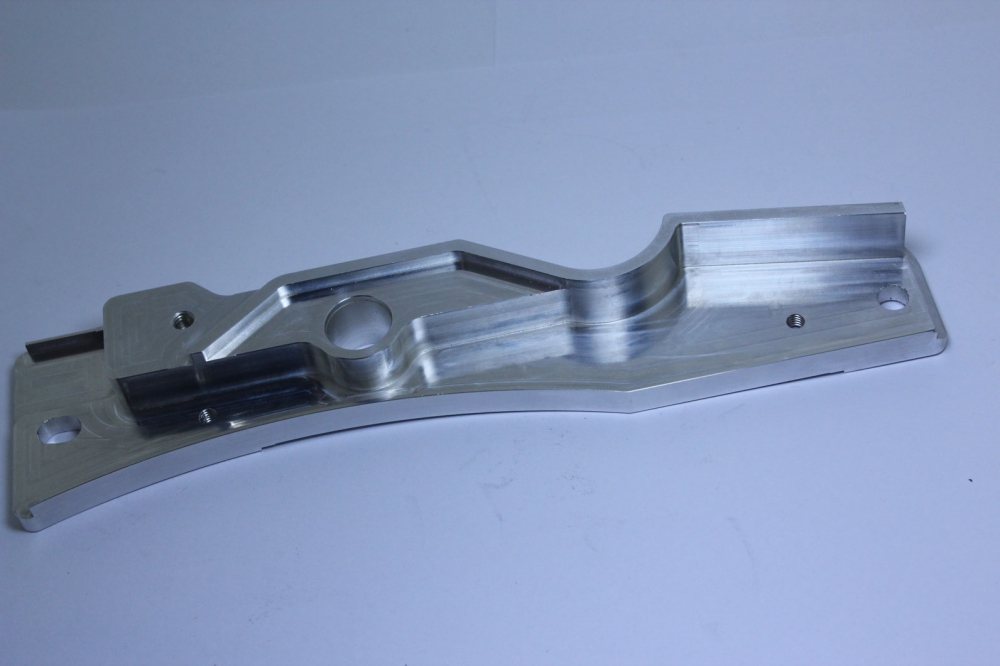
Perhaps the strongest argument for choosing a facility like GreatLight is the seamless integration of metal 3D printing with conventional processes. Imagine a complex mold core for plastic injection: the conformal cooling channels are 3D printed in tool steel, but the outer profile and ejector pin holes are finished on a 5-axis CNC machine, the mold base is machined and wire-EDM cut, and the final assembly is inspected and shipped. This hybrid manufacturing capability is incredibly difficult to find under a single roof in Western markets, where specialty shops might only do 3D printing or only CNC work. The Chinese full-process factory eliminates handover gaps and ensures that thermal treatments, machining stress relief, and surface coatings are applied in a coherent sequence.
Future-Proofing Your Supply Chain
As global supply chains diversify away from over-concentration on any single country, China remains an essential node due to its infrastructure, skilled workforce, and scalability. Engaging a high-caliber partner like GreatLight Metal provides a resilient sourcing option that can handle everything from a single prototype to production runs of thousands. Their annual revenue exceeding 100 million RMB and 150-strong workforce speak to the capacity and stability that startups and multinationals alike require for long-term collaboration.
The Verdict for Engineers and Procurement Teams
Strategic sourcing of custom metal 3D printed parts involves more than a price quote. It demands evaluation of technical capability, certifications, process integration, and engineering support. China’s leading factories now compete on these exact metrics, not just on cost. When you ask “why choose custom metal 3D printing China,” the answer is no longer about cheap labor; it is about accessing a highly evolved manufacturing ecosystem where precision, speed, and reliability intersect.
To summarize the key decision factors, consider this checklist:
Does the supplier hold relevant industry certifications (ISO 9001, IATF 16949, ISO 13485)?
Can they provide in-house post-processing (CNC finishing, heat treatment, surface treatment)?
What is their design-for-additive-manufacturing support capability?
Do they offer material traceability and mechanical property testing?
Is your intellectual property protected by data security standards (ISO 27001)?
Can they scale from prototype to production within a single facility?
What is the total cost per qualified part, including finishing and logistics?
GreatLight CNC Machining Factory checks every box, combining a massive equipment park, experienced engineers, and a 13-year history of delivering precision parts to global clients. Whether you need stainless steel 3D printed brackets for a medical device, aluminum alloy robotic components, or titanium aerospace housings, the integrated manufacturing model eliminates the fragmentation that often plagues metal additive projects.
In conclusion, the careful assessment of where to source custom metal 3D printing inevitably leads back to the core question: why choose custom metal 3D printing China? The evidence from cost analysis, technical depth, certification rigor, and real-world case studies points to a resounding answer—China offers a unique convergence of capability and value, and selecting the right partner within that ecosystem, such as GreatLight Metal, transforms additive manufacturing from a futuristic concept into a high-performance reality embedded in your product’s success.



















