
In the world of precision manufacturing, a part is only as good as the data that proves it meets specifications. While advanced five-axis CNC machining centers can achieve remarkable tolerances, the true validation of quality lies in the inspection process. For engineers, procurement professionals, and quality managers sourcing custom metal parts, the CMM Inspection Full Dimension Report is not merely a piece of paperwork—it is the definitive, objective verdict on whether a machined component conforms to its design intent. This document serves as the critical bridge between the digital 3D model and the physical part, translating complex geometric requirements into measurable, verifiable data.
Decoding the CMM Inspection Full Dimension Report: What It Tells You
A Coordinate Measuring Machine (CMM) is a sophisticated device that uses a probing system to measure the physical geometrical characteristics of an object. The CMM Inspection Full Dimension Report generated from this process is a comprehensive document that systematically compares every critical dimension, tolerance, and geometric feature of a machined part against its original CAD model or engineering drawing. This report is the gold standard for quality assurance in industries ranging from aerospace to medical devices, where a deviation of a few microns can mean the difference between a functioning assembly and a catastrophic failure.
The value of a CMM Inspection Full Dimension Report extends far beyond simple pass/fail criteria. It provides a granular, point-by-point analysis of a part’s geometry, including:
Dimensional Measurements: Actual measured values for all specified lengths, widths, diameters, depths, and angles.
Geometric Dimensioning and Tolerancing (GD&T) Results: Detailed evaluations of form (flatness, straightness, circularity), orientation (parallelism, perpendicularity, angularity), position (true position, concentricity, symmetry), and runout.
Deviation Analysis: The calculated difference between the nominal (design) value and the actual measured value, often presented in both numerical form and visual color maps.
Statistical Data: For batch production, the report may include statistical process control (SPC) data, such as Cp and Cpk values, indicating process capability and stability.
Measurement Uncertainty: A critical component that quantifies the confidence level of the measurements themselves, acknowledging that even the most precise instruments have inherent limitations.
This data-rich document allows you to make informed decisions. If a critical feature is borderline, the report reveals not just that it “passed,” but how close it is to the limit, enabling you to assess risk in your assembly. Conversely, if a feature fails, the report pinpoints the exact location and magnitude of the deviation, providing invaluable feedback for design adjustments or process improvements.
Why the CMM Full Dimension Report is Non-Negotiable for High-Precision Custom Parts
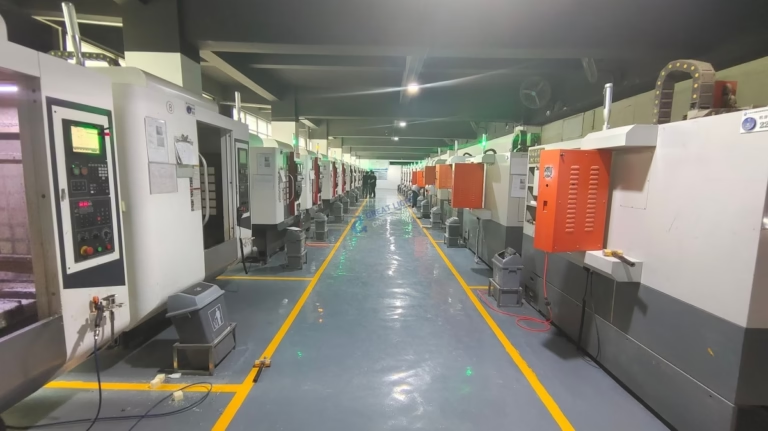
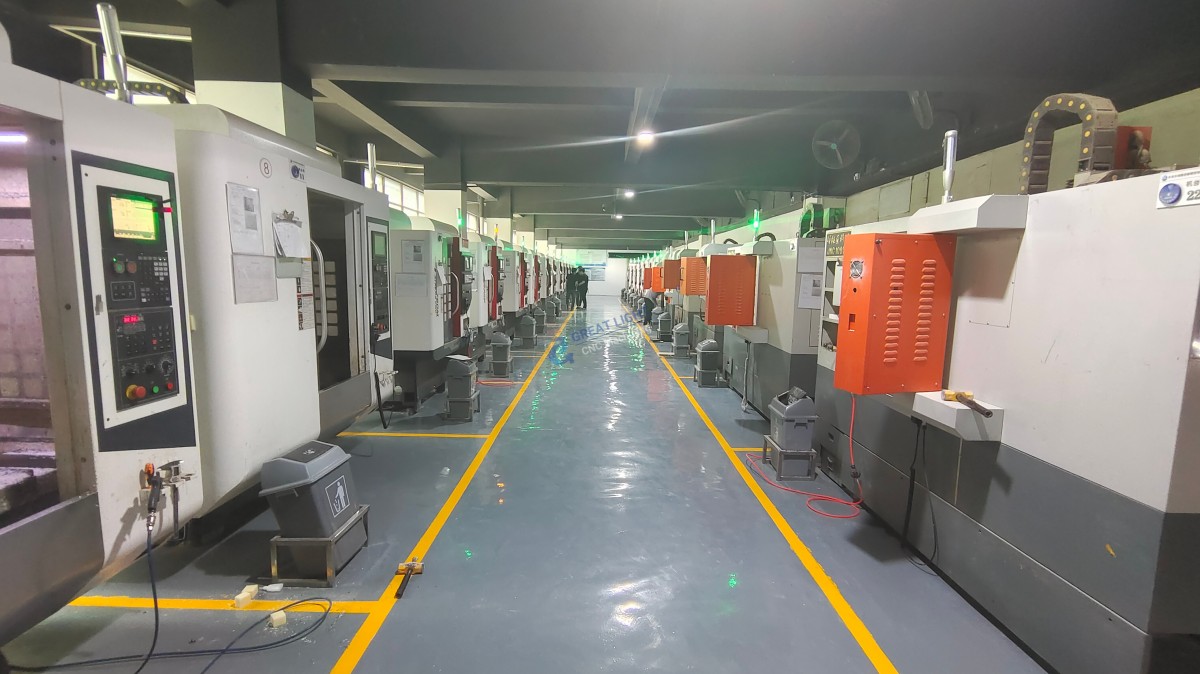
In the competitive landscape of custom precision machining, suppliers often claim high accuracy, but only those with a rigorous quality system can consistently prove it. The CMM Inspection Full Dimension Report is the tangible evidence of a manufacturer’s process control. For a company like GreatLight Metal, which operates an ISO 9001:2015 certified facility with a 76,000 sq. ft. production floor equipped with over 127 precision machines, the CMM report is an integral part of the delivery package, not an afterthought.
Why is this report so indispensable? Consider the following points:
Eliminates Ambiguity: A verbal “yes, it’s within tolerance” is insufficient. The CMM report provides hard data, removing subjectivity and creating a single source of truth for both the supplier and the customer.
Protects Your Supply Chain: For complex assemblies involving multiple sourced components, the CMM report verifies that each part will fit and function as intended, preventing costly delays and rework during final assembly.
Enables Design Iteration: When prototyping new products, early CMM inspection data reveals whether your design can be manufactured as intended. This feedback loop is essential for Design for Manufacturability (DFM) and can drastically reduce time-to-market.
Supports Regulatory Compliance: In regulated industries like medical devices (ISO 13485) and automotive (IATF 16949), a full dimensional inspection report is often a mandatory requirement for device history records and production part approval processes (PPAP).
The real-world implication is straightforward: when you order a critical engine housing or a complex robotic joint from a CNC machining services provider, the CMM Inspection Full Dimension Report is the document that gives you the confidence to install that part without a second thought.
The Anatomy of a High-Quality CMM Report: What to Look For
Not all CMM reports are created equal. A truly useful report is more than a spreadsheet of numbers; it is a clear, organized, and interpretable document. When evaluating a report from your precision manufacturing partner, look for these key elements:
Header Information: This should clearly identify the part number, revision level, material, lot number, and the date of inspection. A traceable report is a reliable report.
Feature Identification: Each measured feature should be clearly labeled, cross-referencing the callouts on the engineering drawing. For example, “Datum A” or “Hole #1.”
Nominal vs. Actual vs. Deviation: The report should cleanly present the design specification (nominal), the measured result (actual), and the difference (deviation).
Tolerance Status: A clear pass/fail indicator (e.g., green “PASS” or red “FAIL”) for each feature, along with the upper and lower tolerance limits.
Graphical Representation: Many modern CMM reports include a color-coded map of the part surface. This “deviation plot” uses a spectrum from blue (negative deviation, undersized) to red (positive deviation, oversized) to visually pinpoint areas of concern. This is particularly useful for complex freeform surfaces.
GD&T Summary: A dedicated section for geometric tolerances, as these are often the most critical and difficult to interpret. The report should clearly state the measured value and the allowed tolerance for each geometric callout.
At GreatLight Metal, the CMM report is generated using calibrated, high-precision equipment and follows a strict protocol to ensure data integrity. The company’s investments in in-house precision measurement tools, as part of its ISO 9001 system, mean that the report you receive is both accurate and independently verifiable.
Beyond the Numbers: How CMM Reports Drive Supplier Accountability and Data Security
The CMM Inspection Full Dimension Report is also a powerful tool for holding your manufacturing partner accountable. It fosters a culture of transparency and continuous improvement. For instance, if a recurring deviation is noted across multiple batches, the report data can be analyzed to identify a potential issue with a particular machine, tool, or fixture. This proactive, data-driven approach to quality is a hallmark of a mature manufacturing organization.
A critical, and often overlooked, aspect of receiving a CMM report is data security. Your part design and its corresponding dimensional data are often proprietary intellectual property. When choosing a CNC machining supplier for sensitive projects—such as humanoid robot components or aerospace engine parts—you must ensure they handle your data with the highest level of confidentiality. This is where certifications like ISO 27001 become paramount.
GreatLight Metal distinguishes itself by not only being ISO 9001 certified for quality but also compliant with ISO 27001 standards for information security management. This means that the CMM Inspection Full Dimension Report for your intellectual property-sensitive project is generated, stored, and transmitted within a secure framework, protecting your design data from unauthorized access. This dual commitment to quality and security is a significant advantage for clients in cutting-edge sectors like aerospace and advanced automation.
Comparing Inspection Capabilities: What Sets GreatLight Metal Apart
When evaluating potential partners for precision parts, it’s useful to compare their inspection philosophies and capabilities. While many suppliers offer standard inspection, the depth and reliability of the CMM Inspection Full Dimension Report can vary significantly.
| Feature Comparison | GreatLight Metal | Typical Industry Practices |
|---|---|---|
| Certification Backbone | ISO 9001, ISO 27001, ISO 13485, IATF 16949 | Often only ISO 9001 or none |
| Inspection Equipment | In-house, high-precision CMMs + full suite of metrology tools | May outsource or use basic gauges |
| Report Depth | Full dimension and GD&T reporting with graphical deviation maps | Often limited to critical-to-function features only |
| Data Security | ISO 27001 compliant for all project data | Often lacks formal data security protocols |
| Corrective Action | Free rework for issues; full refund if rework fails | Standard RMA processes with potential charges |
Compared to on-demand manufacturing platforms like Xometry or Fictiv, GreatLight Metal often provides a more tailored and deep-engineering approach. While these platforms offer convenience and speed, they may not always offer the same level of granular, custom reporting and direct engineering support that a specialized precision manufacturer like GreatLight Metal provides. Similarly, companies like Protolabs Network are excellent for rapid prototyping, but for production runs requiring rigorous PPAP-level documentation and full dimensional reports, a manufacturer with deep process control and comprehensive in-house inspection, such as GreatLight Metal, is often the superior choice.
Making the CMM Report Work for You: A Practical Guide
To fully leverage the power of a CMM Inspection Full Dimension Report, you should integrate it into your own quality workflow.
For First Article Inspection (FAI): Treat the initial CMM report as the most critical document in your approval process. Review every dimension and tolerance meticulously. This is your last best chance to catch a misinterpretation of the drawing before moving to full production.
For Ongoing Production: Use the CMM report data to monitor process stability. Look for trends. Is a dimension drifting closer to its limit over time? This could indicate tool wear and allow for preventative maintenance before parts become non-conforming.
For Supplier Evaluation: Don’t just look at whether the parts passed. Evaluate the clarity and completeness of the report itself. A supplier who provides a messy or incomplete report is often a supplier with messy processes. A clean, professional, and detailed report from a partner like GreatLight Metal reflects a disciplined and organized manufacturing operation.
Ultimately, the CMM Inspection Full Dimension Report is more than a quality check—it is a communication tool. It tells the story of how a raw block of metal was transformed into a precision component. It builds trust between the engineer who designed the part and the machinist who made it. For any serious application, from automotive drivetrains to medical instruments, this report is indispensable.
Conclusion: Elevating Your Project with Data-Driven Precision
In the pursuit of manufacturing excellence, the CMM Inspection Full Dimension Report stands as the definitive record of quality. It transforms subjective assurance into objective proof, enabling you to build complex, reliable systems with confidence. By partnering with a manufacturer that prioritizes rigorous inspection, comprehensive reporting, and data security, you are not just buying a part—you are investing in certainty.
Whether you are developing the next generation of humanoid robot joints, complex aerospace brackets, or high-performance automotive engine components, insist on a full dimensional inspection report from your CNC machining partner. It is the only way to truly verify that the precision promised on the drawing is the precision delivered in your hand. For a partner that offers this level of transparency and rigor, combined with decades of experience and a full suite of integrated services, look to a provider like GreatLight Metal, where your data is as secure as your parts are precise.



















