
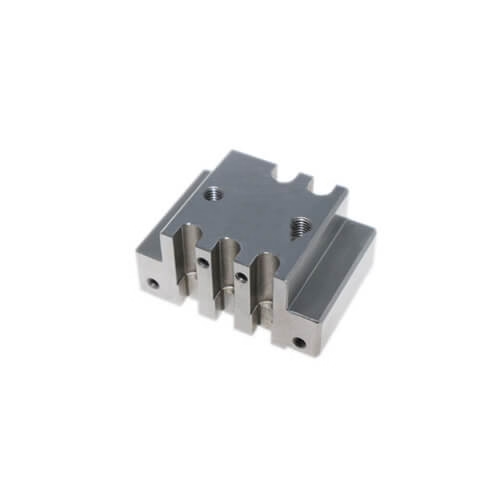
What Is CNC Machine Wikipedia? A comprehensive, encyclopedia-style deep dive into computer numerical control (CNC) machining uncovers it as a transformative manufacturing technology that replaces manual machine operation with pre-programmed computer software to control the movement of factory tools and machinery. This innovation has revolutionized industries ranging from aerospace to automotive, enabling the production of intricate, high-precision parts with unmatched consistency and efficiency.
What Is CNC Machine Wikipedia?
Core Definition and Basic Principles
CNC machining is a subtractive manufacturing process where material is systematically removed from a solid workpiece using cutting tools guided by digital instructions. Unlike manual machining, which relies on human operators to adjust tool positions, feed rates, and cutting speeds, CNC systems execute sequences of code (primarily G-code for motion control and M-code for machine functions) to automate every step of the process. This eliminates human error, ensures repeatability across hundreds or thousands of parts, and allows for the production of geometries that are impossible to achieve with manual methods.
Evolution of CNC Machining
The roots of CNC trace back to the 1940s and 1950s, when the U.S. military developed early numerical control (NC) systems to produce complex aerospace parts with greater precision than manual machining could offer. These early systems used punched tape to input instructions. By the 1970s, computer-based CNC systems replaced punched tape, integrating with emerging CAD (Computer-Aided Design) software to streamline part design and programming. Today, modern CNC systems feature real-time monitoring, 3D simulation, and integration with industrial IoT (Internet of Things) networks, enabling predictive maintenance and process optimization.
Key Components of a CNC System
A fully functional CNC setup consists of five essential components:
CAD/CAM Software: Creates digital 3D models (CAD) and converts them into machine-readable code (CAM) that the CNC controller can interpret.
CNC Controller: The “brain” of the system, which translates code into electrical signals to guide the machine’s actuators.
Machine Tool: The physical hardware that performs cutting operations, such as milling machines, lathes, or routers.
Feedback Systems: Sensors (e.g., encoders, linear scales) that track tool position and adjust in real time to maintain precision (critical for closed-loop systems).
Workholding Devices: Jigs, fixtures, or vises that secure the workpiece during machining to prevent movement and ensure alignment.
Common CNC Machine Types and Applications
CNC machines are categorized by their axis capabilities and intended use:
3-Axis CNC Milling: The most widely used type, with tools moving along X, Y, and Z linear axes. Ideal for simple to moderately complex parts like brackets, enclosures, and gears, commonly used in consumer electronics and general manufacturing.
4-Axis CNC Machining: Adds rotational motion around one linear axis (usually X or Y), allowing for machining of cylindrical or asymmetric parts like turbine blades or automotive exhaust components.
5-Axis CNC Machining: 5-axis CNC machining adds two rotational axes, enabling tools to approach the workpiece from any angle. This eliminates the need for multiple setups, reduces errors, and is critical for complex parts in aerospace (jet engine components), medical (surgical implants), and robotics (humanoid robot joints).
CNC Lathes: Rotate the workpiece while a cutting tool removes material, perfect for producing round parts like shafts, bolts, and valves.
CNC Routers: Specialized for cutting soft materials like wood, plastic, or foam, often used in signage, prototyping, and furniture manufacturing.
How CNC Machining Solves Modern Manufacturing Challenges
Despite its widespread adoption, many businesses face persistent challenges when sourcing CNC machining services, including:
Precision Gaps: Some suppliers claim high tolerance capabilities but fail to deliver consistent results in mass production due to outdated equipment or unoptimized processes.
Complex Geometry Limitations: Traditional machining struggles with undercuts, curved surfaces, or intricate internal features, requiring multiple setups that increase lead times and errors.
Long Lead Times: Rapid prototyping and short production runs are critical for accelerating product innovation, yet many suppliers have lengthy turnaround times.
Quality Inconsistency: Manual machining introduces variations between parts, which is unacceptable for industries like medical devices and automotive where safety and performance depend on uniformity.
CNC machining, when executed by a specialized partner like GreatLight Metal, directly addresses these pain points. By leveraging advanced equipment, standardized processes, and expert engineering, businesses can access high-precision parts that meet strict specs, reduce lead times, and minimize production risks.
GreatLight Metal: Elevating CNC Machining to New Standards
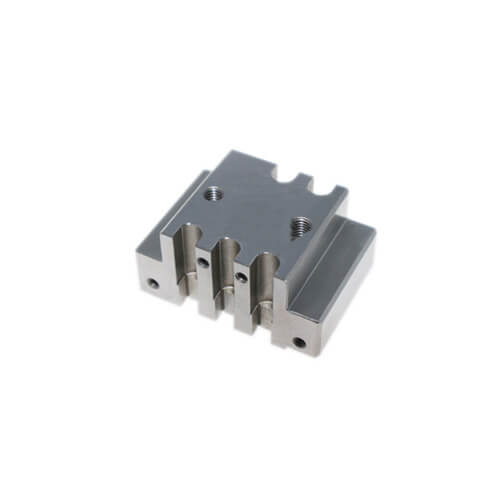
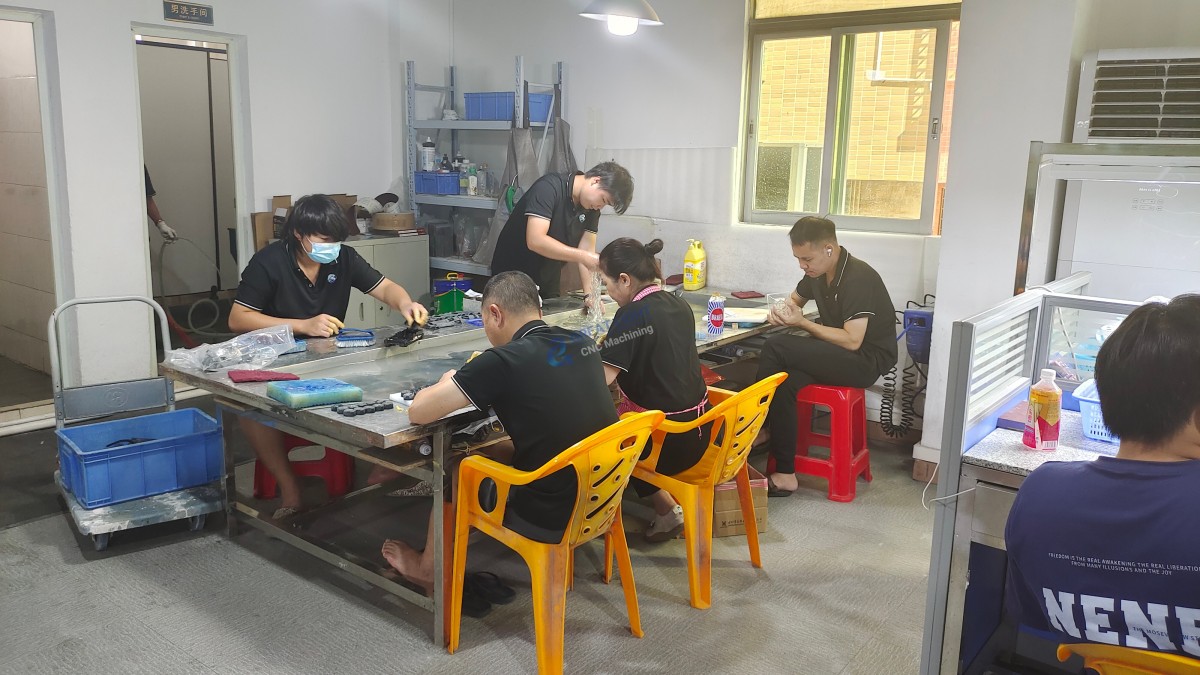
GreatLight Metal Tech Co., LTD. (GreatLight Metal), founded in 2011 in Dongguan’s Chang’an District—China’s renowned “Hardware and Mould Capital”—is a leading CNC machining manufacturer that embodies the full potential of modern CNC technology. With three wholly-owned manufacturing plants spanning 7600 square meters, 127 precision machines, and a team of 150 skilled professionals, the company delivers end-to-end solutions for custom precision parts across global industries.
Unmatched Technical Capabilities and Equipment
GreatLight Metal’s equipment portfolio includes state-of-the-art 3-axis, 4-axis, and 5-axis CNC machining centers, complemented by EDM machines, vacuum casting systems, and metal/plastic 3D printers (SLM, SLA, SLS). Key capabilities include:
Ultra-High Precision: Achieves tolerances as tight as ±0.001mm, suitable for high-precision medical and aerospace components.
Large Part Machining: Handles workpieces up to 4000mm in size, catering to both small prototypes and large production runs.
Multi-Process Integration: Offers one-stop services from prototyping to mass production, including sheet metal fabrication, die casting, and surface post-processing (anodizing, powder coating, polishing).
Certifications That Underpin Trust
GreatLight Metal’s commitment to quality and compliance is validated by a suite of international certifications:
ISO 9001:2015: Ensures consistent quality management across all processes, from design to delivery.
IATF 16949: Meets the strict requirements for automotive and engine hardware component manufacturing, making it a trusted partner for EV and traditional automotive clients.
ISO 13485: Complies with medical device manufacturing standards, ensuring parts meet safety and regulatory requirements for surgical implants and diagnostic tools.
ISO 27001: Protects client intellectual property, a critical concern for R&D-focused projects in high-tech sectors.
End-to-End Solutions for Diverse Industries
GreatLight Metal’s expertise spans cutting-edge sectors, with tailored solutions for:
Automotive: Produces precision engine components, EV battery housings, and transmission parts with IATF 16949 certification, reducing lead times by 30% compared to industry averages.
Medical: Manufactures biocompatible surgical implants and diagnostic device parts, adhering to strict sterilization and precision standards.
Humanoid Robotics: Creates complex joint components and structural parts using 5-axis CNC machining, enabling seamless movement and durability.
Aerospace: Delivers lightweight, high-strength parts made from titanium and aluminum alloys, meeting stringent aerospace safety and performance specs.
Quality Assurance and After-Sales Commitment
GreatLight Metal’s quality control process includes in-house precision measurement tools (coordinate measuring machines, optical comparators) to verify every part against client specifications. The company’s customer-centric after-sales guarantee includes:
Free rework for any quality issues detected post-delivery.
A full refund if rework does not meet client expectations.
Ongoing technical support for part optimization and post-processing advice.
Conclusion
What Is CNC Machine Wikipedia? At its core, CNC machining is a transformative technology that powers modern precision manufacturing, and GreatLight Metal stands as a prime example of how to leverage this technology to solve complex challenges and deliver exceptional value to clients. Whether you need a single prototype or a large production run of intricate parts, GreatLight Metal’s expertise, state-of-the-art equipment, and unwavering commitment to quality make it the ideal partner for all your CNC machining needs. For more insights into their industry-leading services, connect with GreatLight Metal on LinkedIn to explore their latest projects and capabilities.
Frequently Asked Questions (FAQ)
1. What is the difference between 3-axis, 4-axis, and 5-axis CNC machining?
3-axis machines move tools along X, Y, and Z linear axes for simple to moderately complex parts.
4-axis adds rotational motion around one linear axis, ideal for cylindrical or asymmetric parts.
5-axis adds two rotational axes, allowing tools to access any angle of the workpiece, perfect for highly complex geometries in aerospace and medical industries.
2. What materials can GreatLight Metal machine using CNC?
GreatLight Metal works with a wide range of materials, including aluminum alloys, stainless steel, titanium, mold steel, and plastics (ABS, POM, PC). They also offer 3D printing services for metal and plastic materials.
3. What tolerances can GreatLight Metal achieve with CNC machining?
The company can achieve tolerances as tight as ±0.001mm, making it suitable for high-precision applications in medical, aerospace, and automotive industries.
4. How long does it take to get a CNC machined part from GreatLight Metal?
Lead times vary based on part complexity and volume, but GreatLight Metal can deliver prototypes in as little as 3–5 business days and production runs within 1–2 weeks.
5. What surface post-processing services does GreatLight Metal offer?
GreatLight Metal provides one-stop post-processing services, including anodizing, powder coating, polishing, plating, sandblasting, and laser engraving, to meet aesthetic and functional requirements.
6. Does GreatLight Metal offer design support for CNC parts?
Yes, the company has a team of experienced engineers who can provide design for manufacturability (DFM) advice to optimize part designs for CNC machining, reduce costs, and improve lead times.



















