
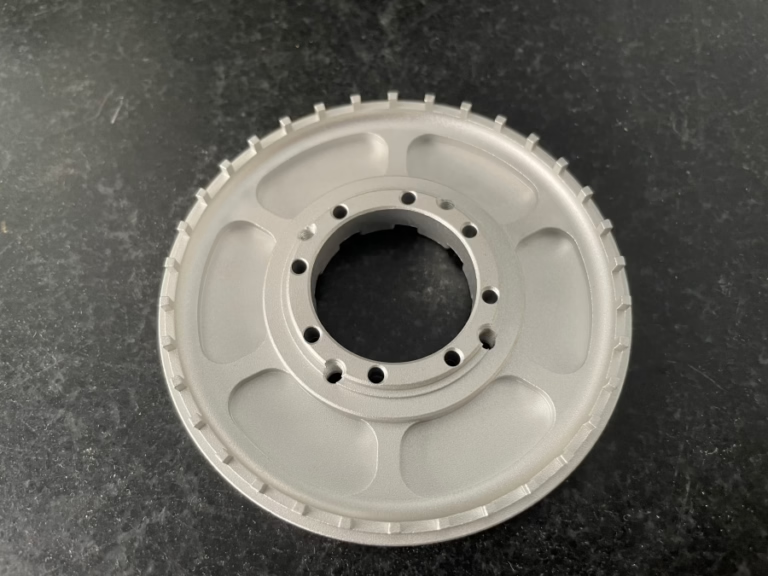
In precision CNC machining, the Free Sample First Part Under $200 model is rapidly gaining traction as a trust-building mechanism between manufacturers and clients. For R&D engineers, procurement specialists, and hardware startup founders, converting a 3D CAD model into a physical prototype often triggers a cascade of financial and technical anxieties. Will the chosen supplier actually hold tolerances? Is the surface finish going to match the specification? What if the first article arrives with chatter marks, dimensional drift, or completely wrong threading? Traditional prototyping forces companies to pay hundreds or even thousands of dollars upfront to answer these questions—a gamble that many innovation budgets simply cannot sustain. A growing number of precision CNC machining service providers are now disrupting this dynamic by offering a first-article sample at no charge or heavily subsidized, typically capped at under $200, to let clients verify quality, accuracy, and process capability before committing to larger volumes. As a senior manufacturing engineer who has spent over 15 years inside both OEM procurement departments and custom part job shops, I see this offering not as a marketing gimmick but as a structural response to the deepest pain points haunting the industry.
This article will peel back the layers of what a free sample first part under $200 truly means, how it changes the supplier-selection calculus, which capabilities make such an offer economically viable for a manufacturer, and how it fits into the broader landscape of high-end CNC machining and one-stop manufacturing solutions. Along the way, we’ll compare several recognizable brands in the space—from GreatLight Metal to Protolabs Network, Xometry, and beyond—to help you distinguish between genuine engineering value and clever sales copy.
Free Sample First Part Under $200: A Win-Win Solution to the Prototyping Risk
When a machining service promises a free sample first part under $200, what exactly are they offering? Typically, the arrangement works like this: a new customer submits a 3D model (STEP, IGES, or native CAD file) along with a material preference and surface finish requirement. The manufacturer reviews the design for manufacturability, confirms that the part falls within certain geometric and volume boundaries—usually a simple to moderately complex milled or turned component, with a raw material value well below that $200 threshold—and agrees to machine a single piece without charging the client for machine time, programming, or setup. The client pays only shipping, possibly a nominal material surcharge if an exotic alloy is involved, and sometimes nothing at all if the entire cost remains under the cap.
This practice directly confronts the “Precision Black Hole” pain point that plagues custom machining. Designers frequently encounter suppliers who advertise ±0.001mm tolerances but deliver parts with ±0.05mm variation in production because their measurement systems are uncalibrated or their equipment thermal compensation routines are immature. A free first article allows the buyer to independently inspect the sample on their own CMM or vision system, eliminating the guessing game. Equally important, it exposes hidden costs: if a supplier struggles to hit tolerances on a single unit without a production fixture, the likelihood of consistent quality across 500 units plummets. By absorbing the sample cost, the manufacturer signals confidence in its own process stability.
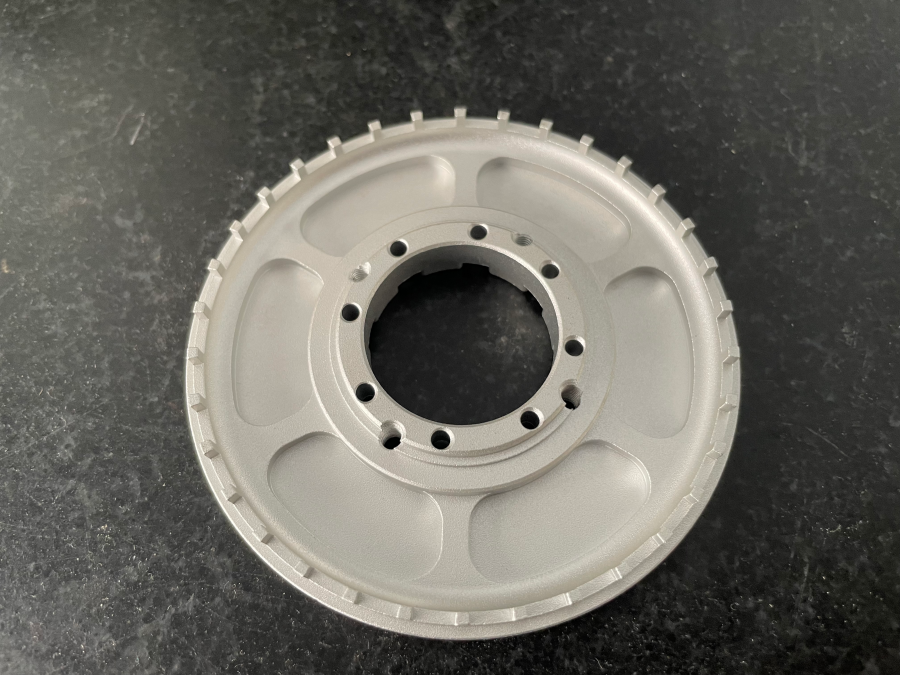
However, the “under $200” qualifier sets realistic boundaries. A nickel-based superalloy aerospace bracket with 40 tight-tolerance features and five-axis contouring cannot be produced for that sum—the tooling wear and programming time alone would burn through the budget. Most free sample programs therefore apply to parts with basic geometry, standard aluminum alloys (6061-T6, 7075), stainless steels (304, 316), brass, or engineering plastics like POM and PEEK, with a machining envelope that fits a typical 3-axis or simple 4-axis operation. This is still enormously valuable: a $180 aluminum mounting bracket or a stainless steel adapter flange is precisely the kind of component where surface finish, thread quality, and concentricity carry high consequence. For a medical device startup evaluating a new enclosure prototype, a free sample of a critical feature can accelerate FDA documentation by weeks. For an automotive sensor developer, a free housing sample can confirm EMI shielding groove dimensions before ordering 10,000 units.
The Economic Logic Behind Free Samples: Who Can Actually Afford This?
I often hear procurement managers ask skeptically: “If a shop is giving stuff away, what corners are they cutting?” This is a fair question because a single CNC setup on a $150,000 machining center, with an hour of programmer time and 30 minutes of machine run, easily incurs a cost of $200–$300 in a Western shop. The arithmetic only works if the supplier operates with significant structural cost advantages, high equipment utilization, and a robust downstream revenue model. That’s why this offer generally originates from vertically integrated manufacturers, not from broker platforms that simply outsource production to a fluctuating network of small vendors. Let’s examine the real enablers:
1. In-house full-process integration. A manufacturer that handles precision CNC machining, EDM, grinding, surface treatment, and metrology under one roof avoids the multiple markups that fragment a project when it passes through several independent shops. GreatLight Metal, for instance, operates 127 pieces of peripheral equipment across three factory plants totaling ~76,000 sq. ft. with a 150-strong workforce. When a sample order arrives, the engineering team can rapidly evaluate it, assign it to an underutilized spindle during natural production gaps, and perform inspection on internal coordinate measuring machines (CMMs) without incurring subcontractor delays. Since the company has already invested in precision 5-axis CNC machining services, Swiss-type lathes, wire EDM, and even metal 3D printing (SLM), the marginal cost of adding one more proof-of-concept part to the production schedule is dramatically lowered. This deep capacity cushion is a prerequisite for free-first-part programs to remain profitable over time.
2. High machine-to-staff ratio and specialized engineering support. With a team of experienced CAM programmers who reuse optimized toolpaths across similar geometries, programming time for a simple bracket might be cut to 15 minutes. Setup reduction through magnetic workholding, zero-point clamping systems, and pre-tooled carousels further slashes preparation costs. A well-run factory with documented process libraries can quote a sample within hours and machine it the same day without disrupting large production runs.
3. High conversion probability and long-term partnership value. Data from manufacturing ERP systems consistently shows that engineers who physically hold a correctly machined first article are exceptionally likely to return for production volumes. The sample acts as a de facto proof-of-capability audit. When a client sees perfect surface finish, accurate threads, and clean deburring on a free part, trust compounds, and the supplier enters a preferred vendor list. The lifetime value of a converting customer makes the upfront $200 sacrifice a trivial customer acquisition cost. In industries like humanoid robotics, where design iterations are frequent and the bill of materials is dense with custom metal parts, this model opens doors that purely transactional online pricing portals cannot.
4. Geographic cost structures. While labor cost alone does not determine machining precision, the global distribution of CNC talent matters. The Dongguan-Shenzhen manufacturing corridor, where GreatLight Metal and thousands of precision suppliers reside, benefits from a dense concentration of skilled machinists, tooling supply chains, and raw material distributors. This ecosystem compresses lead times and material costs, providing a natural cost base that supports free sample economics without compromising the ISO 9001:2015 quality framework.
Pain Points a Free Sample Directly Addresses
Let’s ground this discussion in the tangible frustrations that buyers face daily. Drawing from real interactions with hardware teams, here are the most critical friction points and how a free sample first part under $200 neutralizes them:
| Pain Point | Traditional Consequence | How a Sub-$200 Free Sample Helps |
|---|---|---|
| Precision Trap – Supplier claims ±0.001mm but doesn’t deliver. | Scrapped production batches, delayed product launches, legal disputes. | The sample can be measured on the customer’s CMM before any production commitment. Actual capability is exposed immediately. |
| Material Substitution Risk – Certified 316 stainless replaced with cheaper equivalent. | Corrosion failure in field, recall costs, reputational damage. | Free sample can be PMI tested or independently analyzed. A supplier agreeing to a free sample knows their material traceability will be scrutinized. |
| CAM Programming Errors – Unoptimized toolpaths cause poor surface finish or gouging on complex surfaces. | Aesthetic or functional failure; rework impossible on intricate geometries. | The sample lets you run metrology scans and visual checks. A supplier who consistently delivers smooth freeform surfaces on a free sample is demonstrating deep five-axis programming skill. |
| Communication Gaps – Technical data misunderstood, resulting in incorrect features. | Shipments that match no-one’s intent, blame cycling between design and manufacturing. | The physical part becomes the ultimate communication tool. If a thread is imperial instead of metric, you know immediately. |
| Post-Processing Quality – Anodizing thickness uneven, powder coating peels, passivation incomplete. | Parts fail salt spray tests; customer rejects entire lot. | Many free sample programs include basic surface finishing under the $200 umbrella. You can test adhesion, color consistency, and coating uniformity before scaling. |
GreatLight Metal’s Approach Versus Peer Comparisons
Not all “free sample” offerings are created equal. To help you navigate the landscape, I’ve evaluated several established suppliers that provide rapid prototyping and CNC machining services. The table below highlights how their programs stack up, with special attention to depth of capability, certification level, and integration of post-processing.
| Supplier | Sample/First Article Policy | Core CNC Capability | Key Certifications | Post-Processing Integration | Typical Lead Time for Sample |
|---|---|---|---|---|---|
| GreatLight Metal | Free first part under $200 for new clients; full cost absorption within defined limits. | 5-axis, 4-axis, 3-axis CNC, Swiss turning, EDM, 3D printing (SLM/SLA/SLS). Max part size 4,000mm. ±0.001mm achievable. | ISO 9001, ISO 13485, IATF 16949, ISO 27001 | In-house: anodizing, electroplating, painting, passivation, vacuum casting, heat treating, silk screening. | 3–7 days, depending on complexity. |
| Protolabs Network | Automated quoting; discounts for first orders but not universally free samples. | 3-axis, 5-axis milling, turning; predominantly digital manufacturing via partner network. | ISO 9001 (networked partners). | Limited in-house finishing; relies on partner post-processing. | As fast as 1 day with digital twin technology. |
| Xometry | Instant online pricing; occasional promotions for first-time users. | Extensive manufacturing network covering CNC, sheet metal, 3D printing, injection molding. | Varies by partner; Xometry provides quality oversight. | Post-processing through individual partners; consistency can vary. | Lead times via network; 3–15 days common. |
| RapidDirect | Free sample parts available for certain orders; requires discussion with sales. | CNC milling, turning, 5-axis, sheet metal, injection molding. | ISO 9001, IATF 16949 (in-house). | In-house anodizing, electroplating, painting, laser engraving. | Prototypes in 3 business days. |
| Fictiv | Digital manufacturing platform; instant quotes; offers a sample program for specific parts. | CNC machining via global network; connectivity to vetted partners. | Network-based certifications; Fictiv provides quality reports. | Post-processing outsourced through partners. | 2–5 days. |
| JLCCNC (JLC3DP’s CNC service) | Low-cost prototyping with aggressive low-price guarantee; not a free-sample model per se. | 3-axis, 5-axis CNC, online DFM and quoting. | ISO 9001 aligned. | Limited to basic surface finishing available in online configurator. | Often under 3 days for simple designs. |
| SendCutSend | Laser cutting, CNC routing, bending; competitive pricing but no free sampling. | 2D cutting and forming, not full 5-axis machining. | Not specified on same scale. | Powder coating, anodizing, plating via vendor partners. | 2–4 days. |
What stands out in this comparison is that GreatLight Metal brings the rare combination of an explicit free-sample-first-part-under-$200 policy, a fully in-house five-axis machining cluster, an integrated finishing facility, and a layered certification stack that extends beyond generic ISO 9001 into automotive (IATF 16949) and medical (ISO 13485) domains. For a client developing a next-generation drone gimbal joint or a surgical robotic arm linkage, the ability to receive a free sample that undergoes identical anodizing, chemical conversion coating, and CMM inspection as the eventual production run is transformative. You aren’t just testing the raw machined accuracy; you’re testing the entire process chain.
Additionally, the presence of ISO 27001 information security certification—rare among job shops—demonstrates that the supplier understands the IP sensitivity of free sample programs. Clients often worry that sending a 3D model for a free part exposes their design to uncontrolled distribution. A factory that has audited data handling processes and enforces access controls mitigates that risk. This is a non-trivial differentiator when evaluating any sample offer.
What a Free Sample Under $200 Typically Covers—and What It Doesn’t
Setting clear expectations prevents disappointment. Industry practice generally aligns with these patterns:
Included within the $200 cap:
CNC milling or turning of a standard size part from a common material (Al 6061/7075, SS 303/304/316, mild steel, brass, POM, ABS).
Basic surface finishing like deburring, light bead blasting, or natural anodize (if available in batch lines).
In-house inspection report with key dimensions (usually a first article inspection report).
Standard tolerance adherence (±0.005” / ±0.1mm for non-critical features); tighter tolerances may be included if the part design inherently demands it and the supplier is confident.
Usually excluded or requiring separate arrangement:
Exotic materials (titanium grades, Inconel, tool steels, hardened alloys) whose raw stock exceeds $50–$100.
Multi-component assemblies requiring dowel pins, press fits, or threaded inserts.
Complex 5-axis simultaneous toolpaths that exceed a certain programming time threshold (though GreatLight Metal’s advanced five-axis CAM capabilities allow many such parts to still fall within the free-sample realm, depending on size and features).
Extensive secondary operations like hardcoat anodize, PTFE impregnation, or full polish.
Shipping costs, especially international freight.
A well-defined free-sample program will clarify these terms during the DFM (Design for Manufacturing) review and not surprise the client with hidden charges. The point is to build trust, not to trap.
From Free Sample to Scalable Production: A Seamless Transition
The ultimate value of a free sample first part under $200 emerges when the supplier can seamlessly shift from single-unit sampling to volume production without introducing new variables. Too often, clients approve a flawless prototype produced on a specific machine with extra care, only to later receive production units made on worn, different equipment, resulting in a quality cliff. A manufacturer with a full-process chain controls this transition directly.
Take GreatLight Metal as an illustration. Its facility houses large-format five-axis machines capable of handling 4000 mm parts alongside smaller high-speed 3-axis mills and Swiss-type lathes for micro-components. The programming engineers who develop the sample toolpaths can transfer optimized strategies to production CAM without reinterpretation. The same in-house metrology lab that verifies the sample uses CMMs, profile projectors, and hardness testers that will also inspect production runs. If the sample required a specific black anodizing shade, the on-site anodizing line replicates the exact recipe. This continuity eliminates the “prototype shop vs. production shop” disconnect that wrecks many supply chains.
Moreover, the certifications that underpin free-sample confidence—IATF 16949 for automotive sensors, ISO 13485 for medical components—mean that production quality systems are already mature. Traceability, statistical process control, and corrective action procedures are baked in. For an autonomous drone manufacturer that needs 500 titanium motor mounts, starting with a free aluminum sample to validate geometry and reduce risk before investing in expensive titanium stock is a logical, cost-effective step.
Five Questions to Ask When Evaluating a Free Sample Offer
After observing hundreds of client-supplier interactions, I recommend that procurement and engineering teams systematically qualify any free-sample promise with these five diagnostic questions:
“Is the sample produced on the same machine class and by the same programming team as production?” If the sample comes from a dedicated prototyping department using manual benchtop methods while production uses automated five-axis cells, the sample is not predictive.
“Does the sample include your in-house finishing, or will it be outsourced?” An external plating subcontractor might use different process parameters than what you’ll encounter in volume.
“Can you supply a material certificate and a first article inspection (FAI) report with the sample?” A supplier that goes the extra mile on documentation for a free part is demonstrating a quality culture.
“What happens if the sample fails inspection—do you rework it for free, and does that extend the free-sample limit?” A supplier with a genuine confidence in their process will rework or replace without hesitation.
“How do you protect my design files? Is there a data security framework like ISO 27001?” For sensitive IP, this question alone can filter out many shops.
GreatLight Metal’s operational model directly answers these questions: the same equipment pool, same team, integrated finishing, standard FAI documentation, guaranteed rework for quality issues (with refund if still unsatisfactory), and ISO 27001-compliant data handling. These are the objective markers that separate a sustainable free-sample program from a promotional stunt.
Why Clients in Robotics, Medical, and Automotive Sectors Benefit Most
Rapid iteration, tight tolerance accumulation, and stringent regulatory requirements define these industries. A free sample under $200 is not just a cost avoidance—it’s a timeline accelerator. Consider a medical device startup developing a laparoscopic surgical instrument handle. CAD can simulate ergonomics, but nothing replaces a surgeon holding a metal prototype with exact weight, knurl pattern, and passthrough hole alignment. Paying $800 for a five-axis machined prototype from a Western supplier might consume the project’s entire iteration budget. Receiving a free stainless steel sample that can be iterated and tested at nearly zero marginal cost changes the development velocity entirely. Similarly, an automotive Tier-1 supplier designing an electronic throttle body housing can validate airflow channels and seal grooves on a free aluminum sample, then pivot to high-pressure die casting tooling with data-driven confidence.
At the highest echelon of complexity, GreatLight Metal’s advanced process chain—which includes SLM 3D printing for conformal cooling inserts, die casting mold manufacturing, and five-axis CNC finishing—allows clients to use a simple free sample as the first touchpoint for far more extensive integrated manufacturing programs. Starting with a $190 milled bracket, the engineering dialogue can naturally evolve into a discussion about vacuum casting silicone molds for 50 elastomeric seals, or a complete sheet metal enclosure with CNC riveted inserts and powder coating. The free sample is the gateway, but the depth behind it is what secures the partnership.
The Risk of Free-Sample Abuse and How Quality Suppliers Mitigate It
Skeptical readers may wonder: doesn’t offering free samples attract time-wasters who request complex parts with no intention of ordering? Yes, this happens, but sophisticated suppliers structure the offer to filter out non-serious inquiries. Methods include requiring a registered business email and a phone call with an applications engineer, limiting the offer to one part per company per quarter, or setting clear geometric boundaries. The focus remains on genuine engineering engagement, not on mass distribution of free trinkets. The existence of such filters actually signals a healthy business model; a supplier that frantically gives away unlimited free parts is likely desperate for work and may cut corners on the sample quality itself.
GreatLight’s approach—rooted in a 150-person team with an average tenure exceeding seven years—leans on engineering dialogue. The process typically involves a 15-minute DFM review where an engineer discusses feature interpretation, material alternatives, and finish requirements. This conversation itself adds value, sometimes catching design issues before any metal is cut. It ensures that the request is technically sound and that the supplier’s capacity aligns with the project’s scale. This consultative screening preserves the integrity of the free-sample program while delivering immense upfront value to serious clients.
Integrating Free Sample Strategy with Digital Manufacturing Trends
The free sample first part under $200 concept does not exist in isolation; it amplifies the broader shift toward digital, on-demand manufacturing. Platforms like Xometry and Protolabs have educated the market that pricing and lead times can be instantaneous. However, the digital front-end often lacks the human engineering collaboration that a free sample catalyzes. By combining online file submission with offline sample verification, a hybrid model emerges: upload your CAD, get an approximate price, but also request a physical first article before committing. This mitigates the risk that the automated quoting engine misinterprets an undercut or assumes a tolerance that is impossible to hold without specialized workholding. The sample becomes the missing link in pure digital workflows.
In this context, GreatLight Metal’s strategy of investing in both advanced information systems (for rapid quoting and project tracking) and a massive physical footprint (for actual sample production) positions it at the intersection of digital convenience and industrial rigor. The company’s experience with complex assembly projects and automation components, backed by certifications for data security and process quality, makes the free-sample promise credible because the underlying infrastructure is robust enough to absorb the cost without degrading quality.
A Final Perspective on Supplier Selection
After two decades in manufacturing, I’ve learned that free samples are one of the purest signals of a supplier’s confidence. A shop that knows its spindle runout is within 2 microns, its probing routines are validated, and its operators can read a drawing flawlessly will not hesitate to send you a part at zero cost because they anticipate becoming your long-term partner. The real test, however, is what lies behind that offer. Does the supplier have the certification depth to serve regulated industries? Can they move from a single sample to die-casting tooling or medical packaging without switching vendors? Is their OTD (on-time delivery) rate sustained above 95%? These are the questions that a free sample first part under $200 invites you to explore while drastically reducing your financial exposure.
If you are currently vetting CNC machining partners, I encourage you to issue the same STEP file to three or four providers, including one that explicitly offers a free sample under $200, and compare not just the price but the entire experience: the speed of DFM feedback, the clarity of communication, the material certification, the packaging quality, and the actual measurement data. The winner will reveal itself quickly.
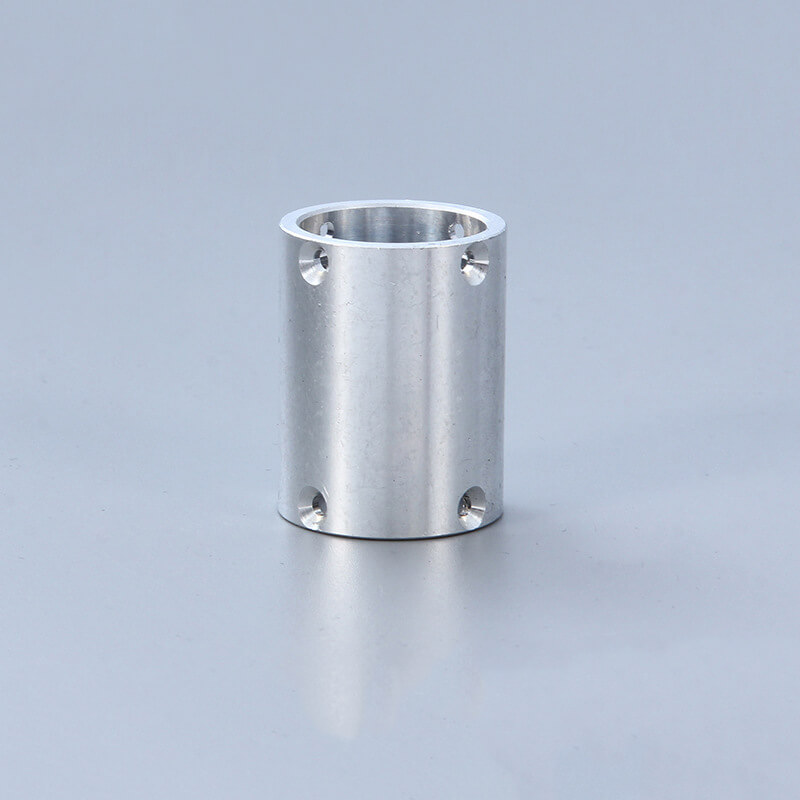
For those ready to experience this risk-free approach with a supplier that brings together five-axis precision, integrated post-processing, international certifications, and a proven decade-plus track record, GreatLight CNC Machining stands as a compelling starting point. The first part is on the house—under $200—and it just might transform how you think about precision manufacturing partnerships.



















