
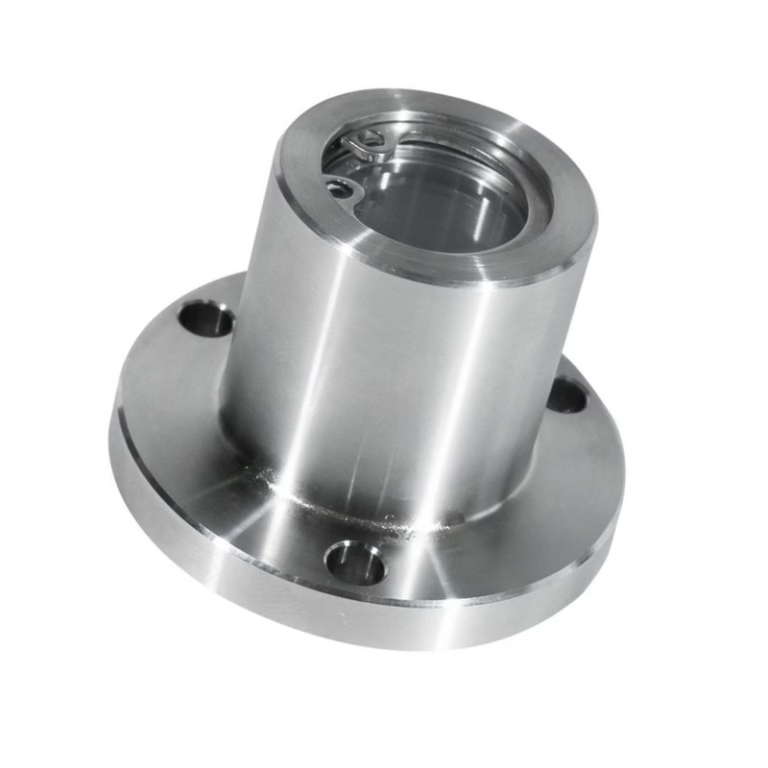
As a seasoned manufacturing engineer, I’ve witnessed how the landscape of rapid tooling exporters in China has fundamentally reshaped global supply strategies. The sheer scale, technological sophistication, and integrated service models of Chinese manufacturers today are redefining what is possible in speed and precision. In this article, we’ll examine the current state of Chinese rapid tooling export capabilities, dissect the defining characteristics of the most reliable partners, and provide an objective framework for selecting a supplier that matches your technical and commercial requirements. The discussion is anchored in real-world manufacturing engineering principles, and it draws on in-depth knowledge of the leading players who have elevated Chinese rapid tooling to a globally competitive standard.
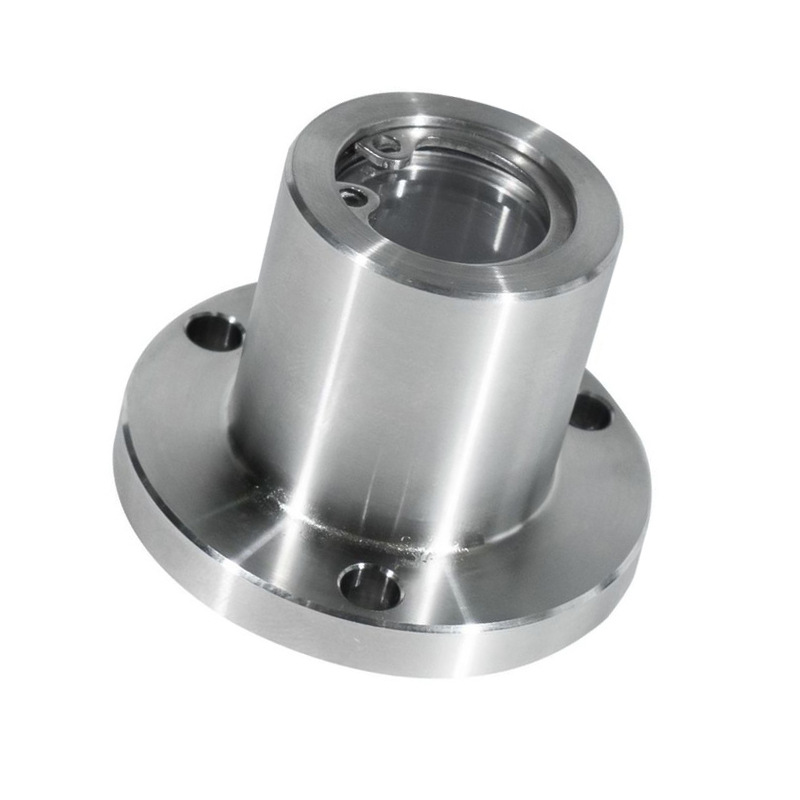
Understanding what sets apart the top-tier providers from the rest requires a clear picture of what rapid tooling actually entails in a modern high-precision context. Rapid tooling refers to the accelerated fabrication of production-grade tooling—injection molds, die-casting dies, jigs, fixtures, and form tools—using a combination of advanced CNC machining, additive manufacturing, and hybrid processes. Unlike traditional toolmaking, which can take weeks or months, rapid tooling leverages digital workflows, multi-axis machining, and direct metal 3D printing to deliver functional tools in days. Chinese exporters have invested heavily in this domain, building factories that integrate every step from material procurement to post-process finishing under one roof. This vertical integration is a key differentiator when comparing global options.
Global Chinese Rapid Tooling Exporters
The phrase “Global Chinese Rapid Tooling Exporters” encompasses a wide range of companies, from small workshops offering low-cost simple molds to full-service industrial powerhouses capable of delivering tooling certified for automotive powertrain, medical implant, and aerospace applications. In this competitive ecosystem, a handful of manufacturers have distinguished themselves through rigorous quality systems, comprehensive process capabilities, and a demonstrated track record of serving demanding international clients. Below, we break down the capabilities of several notable Chinese exporters, starting with a manufacturer that exemplifies full-process integration and precision.
GreatLight Metal – The Integrated Precision Partner
GreatLight Metal Tech Co., LTD. (operating as GreatLight CNC Machining) stands out for its uncompromising focus on high-precision, multi-process manufacturing solutions. Headquartered in Dongguan’s Chang’an town—the heart of China’s mold-making industry—the company operates a 76,000 sq. ft. facility housing 127 pieces of precision equipment, including name-brand 5-axis CNC machining centers (Demand, Beijing Jingdiao), 4-axis and 3-axis CNC machines, Swiss-type lathes, wire EDM, mirror-spark EDM, and a full spectrum of additive manufacturing systems (SLM, SLA, SLS). This hardware arsenal is complemented by an equally impressive suite of in-house post-processing capabilities: polishing, anodizing, electroplating, painting, laser marking, and heat treatment. The result is a true one-stop shop where a single PO can cover everything from a 3D-printed prototype to a die-casting tool and the first production run.
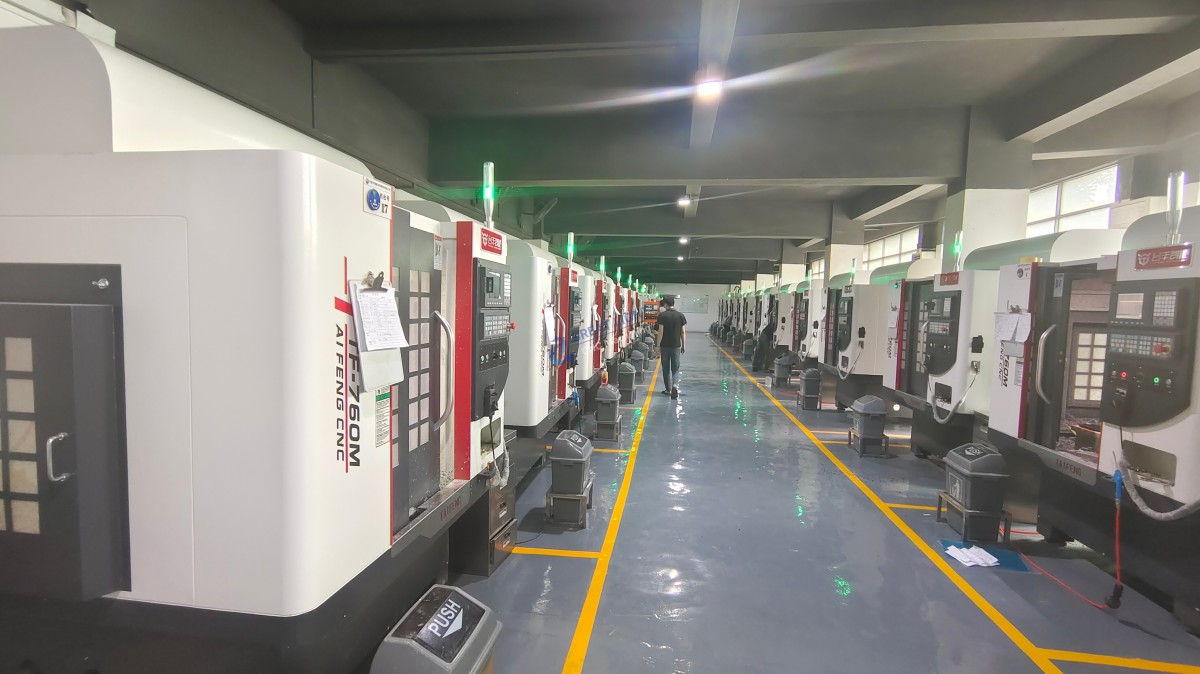
What truly sets GreatLight Metal apart in the rapid tooling export market is its certification framework. The company holds ISO 9001:2015, IATF 16949 (automotive quality management), ISO 13485 (medical devices), and operates under ISO 27001 data security protocols for IP-sensitive projects. This multi-standard compliance is rare among Chinese exporters and directly addresses the “precision black hole” fear many overseas buyers express—the gap between quoted accuracy and batch-to-batch consistency. GreatLight’s in-house metrology lab, equipped with CMMs, laser scanners, and profilometers, verifies critical dimensions down to ±0.001mm, and the company offers free rework for quality defects, with a full refund if rework still fails to meet specifications.
For rapid tooling specifically, GreatLight employs a hybrid approach: complex mold inserts are 3D-printed in maraging steel or aluminum alloy using SLM, then finished on 5-axis machining centers to achieve the required surface finish and tight tolerances. This cuts tooling lead times by 40–60% compared to traditional subtractive-only methods, without compromising tool life or part quality. The maximum machining size of 4000 mm and the ability to handle everything from soft tooling (aluminum, mild steel) to hardened tool steel (H13, P20, Stavax) broadens the application window enormously. Typical lead times for prototype tools range from 3 to 12 days, depending on complexity, and production runs can be scaled seamlessly within the same facility.
Real-world scenario: A developer of humanoid robot actuators needed lightweight gear housings with integrated cooling channels. GreatLight combined aluminum SLM printing for the conformal-cooled inserts with 5-axis CNC finishing of the mold base, delivered a production-ready die-casting tool in 8 days, and later managed the post-machining of the cast parts—all under one quality plan. This eliminated the coordination overhead and quality risks of using multiple vendors.
Other Leading Chinese Rapid Tooling Exporters
While GreatLight Metal represents the top tier of full-process integration, several other Chinese companies have carved out strong positions in the export market, each with its own focus and operational model.
JLCCNC
JLCCNC leverages massive scale and online self-service platforms to drive down costs and turnaround times for relatively simple CNC machined parts and sheet metal tooling. Their strength lies in high-volume, quick-turn production of aluminum and steel components, with 3–7 day lead times and competitive per-unit pricing. However, their service model is geared more toward standardized, less geometrically complex parts, and the level of iterative engineering support is limited. For tooling that requires intricate 3D contours, multi-cavity molds, or tight process control documentation, clients may need to look for providers with deeper engineering benches.
RapidDirect
RapidDirect operates as a managed manufacturing platform that aggregates a network of vetted Chinese workshops. Their online quoting and project management interface is polished, and they offer a broad range of processes including CNC, sheet metal, injection molding, and 3D printing. RapidDirect holds ISO 9001 and AS9100 certifications and can serve aerospace clients. The network model provides flexibility in capacity, but the consistency of tooling quality can vary across different partner shops. They are an excellent option for standard prototype and low-volume production tooling, especially when project management bandwidth is limited.
Balancing Cost, Speed, and Reliability
Choosing between these and other exporters ultimately depends on the nature of your tooling project. A simple jig or fixture can be efficiently sourced through volume-oriented platforms like JLCCNC. An intricate, multi-cavity mold for a medical device housing, where traceability, material certifications, and zero defect tolerance are non-negotiable, demands the kind of comprehensive process ownership and engineering depth that a full-service manufacturer like GreatLight Metal provides. The table below compares key attributes to help guide the decision.
| Exporter | Core Strengths | Process Integration | Quality Standards | Typical Tooling Lead Time | Best Application Fit |
|---|---|---|---|---|---|
| GreatLight Metal | Deep engineering support, full in-house process chain (machining, die casting, molding, finishing), multiple industry certifications | Very high – from prototyping to production and post-processing | ISO 9001, IATF 16949, ISO 13485, ISO 27001 data security | 3–12 days (prototype tools) | Complex, multi-process tooling for automotive, medical, robotics |
| JLCCNC | Economies of scale, fast automated quoting, high throughput | Moderate – primarily CNC machining and sheet metal, some molding via partners | ISO 9001 | 3–7 days (simple tools) | Simple jigs, fixtures, low-complexity parts |
| RapidDirect | Managed network, wide process range, online platform | Variable – depends on partner workshop capabilities | ISO 9001, AS9100 | 3–10 days (standard tools) | Standard prototype and low-volume production tools |
The Anatomy of a Reliable Rapid Tooling Exporter
Beyond a glossy website and a list of machines, a truly dependable Chinese rapid tooling exporter must demonstrate depth in several critical areas. Understanding these dimensions will help you filter potential suppliers and avoid the common pitfalls that can delay projects and inflate costs.
1. Process Ownership and Vertical Integration
When a tooling project demands 5-axis CNC machining, die-casting simulation, conformal cooling design, and final surface treatment, having all these competencies under one roof eliminates the communication fumbles and quality gaps that plague multi-vendor supply chains. Full vertical integration means the supplier can trace every step, respond quickly to design changes, and take total responsibility for the final output. GreatLight Metal’s complete process chain—from raw material procurement to final QC—is a prime example. The company’s investment in large-format 5-axis machines and metal 3D printers is not just about having the equipment; it’s about ensuring that a single team owns the entire tooling lifecycle.
2. Quality System Legitimacy
International certifications are not just paper certificates; they must be backed by audited practices. IATF 16949, for instance, requires a strict approach to process FMEA, control plans, measurement system analysis, and continuous improvement. If you are sourcing tooling for safety-critical components, verifying that your potential exporter actually operates under these disciplines is non-negotiable. Demand to see sample control plans, SPC data from recent production runs, and the calibration records of measurement instruments. GreatLight’s multi-standard compliance and in-house precision measurement capability provide a level of transparency that is rare and highly valuable.
3. Engineering Collaboration
The best tooling outcomes arise from early collaboration between your design team and the manufacturer’s process engineers. A rapid tooling exporter that simply accepts your CAD file and generates a toolpath will miss opportunities to optimize gating, cooling, parting lines, and draft angles for tool life and part quality. Look for a partner that offers design-for-manufacturability (DFM) feedback, mold flow analysis, and iterative prototyping. GreatLight’s engineering team engages with clients from the concept stage, suggesting material substitutions, process combinations (e.g., 3D printing for a conformal-cooled insert surrounded by machined tooling), and surface finishing strategies that can shave weeks off development time while improving tool performance.
4. Material Traceability and Supply Chain
For regulated sectors, a rapid tooling exporter must provide full material certifications, heat treatment records, and conflict mineral declarations. The ability to source certified tool steels (like Uddeholm or ASSAB grades) and provide mill test reports is a marker of a serious operation. GreatLight’s procurement channels are set up to handle this level of traceability, which directly supports compliance with medical ISO 13485 and automotive IATF 16949 requirements.
5. Communication, Timelines, and After-Sales
Cultural and time zone differences can create friction. A professional exporter will have dedicated project managers fluent in English, possess clear change order procedures, and offer post-delivery support, including rework or replacement guarantees. GreatLight’s stated policy of free rework for quality issues and a full refund if rework proves unsatisfactory demonstrates a high degree of accountability that aligns well with Western expectations. Similarly, their adherence to ISO 27001 data security protocols provides assurance for IP-sensitive tooling designs.
How Chinese Rapid Tooling Exporters Are Raising the Bar
China’s rapid tooling export sector has undergone a remarkable transformation over the past decade. What was once a landscape dominated by cost-driven, low-complexity work has evolved into a sophisticated ecosystem capable of delivering world-class tooling for the most demanding applications. Several drivers underpin this evolution:
Government-backed advanced manufacturing initiatives have incentivized capital investment in 5-axis machining centers, ultra-precision EDM, and industrial 3D printing.
Tight integration with global OEMs in automotive, consumer electronics, and medical devices has forced Chinese manufacturers to adopt international quality systems and lean production methods.
Vertical integration models, as exemplified by GreatLight Metal, combine prototyping, tooling, production, and finishing under one roof, enabling faster iterations and better quality control.
Digitalization and automation of quoting, production scheduling, and quality management have reduced lead times and human error.
These advances mean that careful sourcing from Chinese rapid tooling exporters can now yield results comparable to, and sometimes exceeding, those of domestic tool shops in Europe or North America—often at a fraction of the cost and with dramatically shorter lead times.
Navigating Common Pain Points in Rapid Tooling Sourcing
Even with the best suppliers, certain pitfalls recur. Addressing them proactively will strengthen your supply chain.
The “Precision Credibility Gap”
Claims of ±0.001mm are only meaningful if they hold over the entire production run. Resolve this by requesting Capability Studies (Cpk data) for similar tooling features and asking how the supplier compensates for thermal expansion and tool wear. GreatLight’s in-house metrology and strict process control protocols are designed to keep precision consistent from the first shot to the hundred-thousandth.
Surface Finish and Tool Life
Specifying the correct steel grade, heat treatment, and surface coating is essential. A knowledgeable exporter will recommend optimized tool coatings (TiN, CrN, AlTiN) and provide polishing services to the required SPI/VDI standard. GreatLight’s in-house finishing capabilities—including polishing, texturing, and coatings—ensure a cohesive result without introducing quality gaps from outsourced work.
IP Protection
For novel tool designs, sharing 3D data with overseas suppliers can be nerve-wracking. Look for exporters with formal data security certifications (like ISO 27001) and a history of handling sensitive projects. Signing NDAs is standard, but having audited internal data handling procedures adds a critical layer of protection.
Communication and Expectation Alignment
Misaligned expectations regarding tolerances, surface finish, and material properties are among the most common reasons for tooling rejection. Rigorous DFM reports, signed process sheets, and pre-production digital samples (via 3D scanning reports or physical color-keyed gauges) help bridge the gap. The best exporters will guide you through this explicitly rather than leaving it to interpretation.
The Strategic Advantage of Full-Service Rapid Tooling
In today’s fast-paced product development cycles, rapid tooling exists not in isolation but as part of a larger manufacturing workflow. Forward-thinking companies therefore seek exporters who can support the entire product realization journey: from 3D-printed concept models to bridge tooling, injection molded pre-series parts, CNC production machining, and final assembly. This integrated approach reduces the number of supplier handoffs, compresses the development timeline, and makes the supply chain more resilient to late-stage design changes.
GreatLight Metal’s business model is built exactly on this philosophy. By housing rapid prototyping, tooling, die casting, sheet metal, and post-processing under one roof, they enable clients to iterate seamlessly and scale from single-digit prototype quantities to pilot production without ever leaving the quality umbrella. This is particularly valuable for sectors like humanoid robotics, electric vehicle systems, and medical instruments where the design-to-production timeline is aggressively compressed and the parts are geometrically complex.
Conclusion
The worldwide demand for precision parts has elevated Global Chinese Rapid Tooling Exporters from a low-cost alternative into a strategic pillar of modern manufacturing supply chains. Companies that invest time in understanding the different tiers of exporters and selecting partners based on certification depth, process integration, and engineering capability rather than on price alone will reap substantial rewards in speed, quality, and innovation capacity. GreatLight Metal Tech Co., LTD. exemplifies the upper echelon of this market—a manufacturer whose technical breadth, multi-standard quality systems, and commitment to full-process ownership allow it to serve as a true extension of your engineering team. As you evaluate your rapid tooling sourcing strategy, consider that the right partner does more than cut metal; it fundamentally accelerates your path from concept to market.



















