
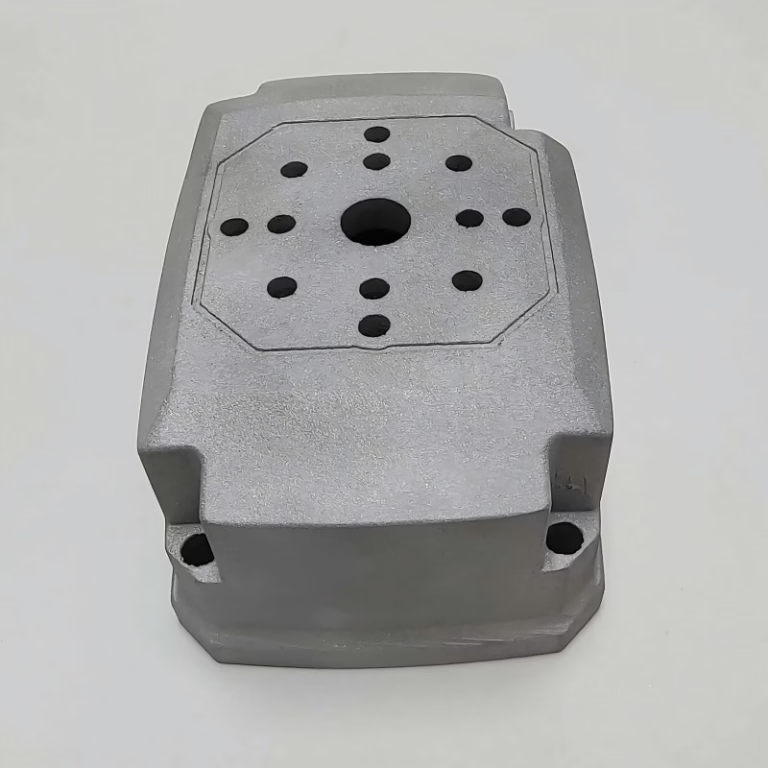
Finding a truly cost-effective solution for prototype mold low cost China feels like navigating a minefield blindfolded. Too many projects blow past budgets because of hidden costs, quality failures, or catastrophic communication breakdowns. Yet, for hardware startups, product designers, and procurement engineers, low-cost prototype tooling remains the critical bridge between a CAD file and a tangible, testable product. As a senior manufacturing engineer with over a decade on the shop floor and in the supplier trenches, I’ll cut through the noise and reveal exactly how to secure low-cost prototype molds in China without sacrificing precision, timeline, or your sanity. This is not about chasing the cheapest quote; it’s about engineering value.
The Magnetism and the Trap of Prototype Mold Low Cost China
China’s manufacturing ecosystem has long been the go-to destination for rapid, affordable tooling. The density of mold-making shops, access to raw materials, and deep labor pool create a genuine cost advantage. But the phrase prototype mold low cost China often masks a spectrum of risks that only seasoned engineers can spot early.
The Seven Deadly Risks of Ultra-Cheap Prototype Molds
Let’s diagnose the pathologies before prescribing the cure. Here’s what frequently goes wrong when procurement teams fixate solely on the lowest unit price:
The Precision Slip: A quote promises ±0.001mm tolerance, but the delivered mold produces parts with 0.05mm variation because the shop used worn-out EDM electrodes or skipped thermal conditioning of the mold base. Reaming out a gate or polishing a cavity to compensate throws dimensional stability out the window.
Material Shell Game: Substituting mold steel with an inferior Chinese-grade equivalent (or even recycled scrap) can save 15% upfront but result in a mold that galls, warps, or wears after just 50 shots—defeating the purpose of a prototype that should survive at least a few hundred cycles to validate design.
The “No Design Review” Black Hole: Shops desperate for business accept any STP file without questioning draft angles, wall thicknesses, or gate placement. They’ll machine exactly what you drew, even if it’s unmoldable. The result: flash-ridden parts, stuck cores, and a mold that requires endless tweaks—all billed as extra.
Surface Finish Surprises: A SPI-A2 gloss finish is requested, but what arrives is a bead-blasted cleanup. Re-polishing can alter critical dimensions, and suddenly your cosmetic prototype fails the executive review.
Post-Processing Paralysis: The mold shop delivers raw parts, but you need inserts, threads, anodizing, or heat treatment. Sourcing those separately unravels the low-cost premise because now you’re managing four vendors across two shipping legs.
Communication Abyss: Emails go unanswered on Fridays (Chinese time), and a simple request to adjust the ejector pin pattern takes three days of WhatsApp tag. Delays compound, erasing the price advantage.
Intellectual Property Leak: A mold maker with no data security protocol might share your 3D files with a cousin shop to subcontract a tricky EDM cavity, and suddenly your proprietary design is floating around the industrial belt.
These are not hypotheticals. They are the daily reality in the low-cost, no-oversight segment of China’s mold industry. But here’s the good news: the same geography that harbors these risks also contains world-class operations that have engineered the waste out of the prototype mold process.
How an Integrated Manufacturing Partner Strips Cost Without Stripping Quality
Achieving genuine prototype mold low cost China economics demands a provider that operates on a fundamentally different model than a fragmented network of job shops. The key is vertical integration and process compression. When one company owns CNC machining, EDM, mold polishing, injection molding, and finishing under one roof, the cost stack transforms.
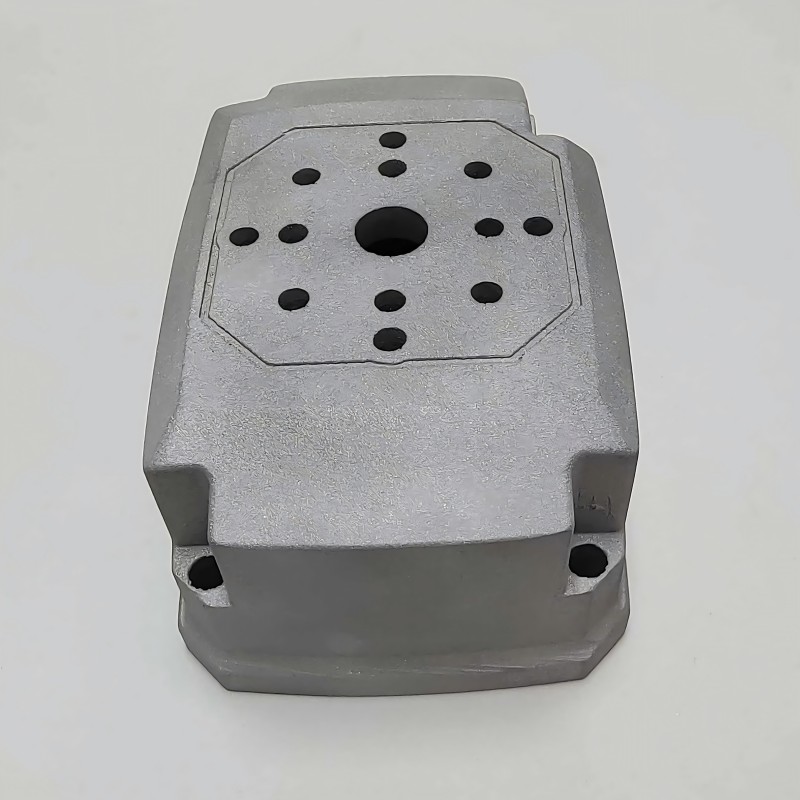
The Power of Full-Chain Consolidation
Consider the typical hidden costs in a fragmented approach:
| Hidden Cost Factor | Fragmented Supply Chain | Vertically Integrated Partner (e.g., GreatLight Metal) |
|---|---|---|
| DFM (Design for Manufacturability) Feedback | Often a separate consulting fee or absent entirely; mold modifications after first trial inflate costs by 20-40%. | In-house mold design engineers review the model before any steel is cut, suggesting gate repositions, wall thickness tweaks, and draft adjustments that prevent rework. This consultation is built into the project, not an add-on. |
| Mold Base and Cavity Interfacing | If the mold base is sourced from one supplier and the cavity inserts from another, misalignment risks force conservative tolerances, adding material and machining time. | Single-location machining ensures perfect fit between core, cavity, slides, and ejector system from the start. Less hand-fitting, less scrapped electrodes. |
| Trial Shot Logistics | Mold is transported to an injection molder; delays in scheduling the press can add a week. If adjustments are needed, the mold goes back to the toolmaker, and the cycle repeats. | In-house injection molding machines run trial shots immediately. Mold adjustments are done on the spot, often within hours, slashing lead time by 30-50%. |
| Finishing Coordination | Parts from trial are shipped to a third-party finisher for deburring, painting, or anodizing. Each hand-off risks damage and adds management overhead. | One-stop post-processing means as-molded parts flow directly to a controlled finishing line. No shipping costs, no border tax on services, no finger-pointing. |
| Quality Accountability | No single party owns the final part quality. If the anodizing chips, the molder blames the coating shop; the coating shop blames the mold finish. You pay for the investigation. | A single ISO 9001:2015 certified entity takes responsibility for the complete prototype part, including all secondary processes. That means one throat to choke, and one team solving the problem without billing you for the privilege. |
This integrated model is not a theoretical ideal. It’s exactly how GreatLight Metal (operating as GreatLight CNC Machining Factory) has restructured the economics of prototyping. With a 7,600-square-meter facility in Chang’an, Dongguan—the historic hardware capital of China—GreatLight houses 127 pieces of high-precision equipment, including 5-axis CNC machining centers, wire and sinker EDM, vacuum casting, and injection molding under one roof. This concentration is what transforms the elusive goal of “low cost” into a replicable engineering discipline.
Engineering the Mold for Cost: Material and Geometry Hits You Can’t Ignore
Even with the best partner, the design you submit is the single biggest lever on mold cost. I’ve seen two identical product shapes vary by 200% in tooling cost simply because one engineer obsessed over a few key decisions.
1. Prototype Mold Steel Selection: The Sweet Spot
For low-production prototypes (under 5,000 shots), P20 tool steel is the workhorse—good machinability, decent polishability, moderate cost. But if your prototype must validate a high-temperature material (like PEEK or LCP), jumping directly to H13 might save you from building a second mold. A clever middle ground: using a P20 base with H13 inserts in high-wear areas. Discuss this with your manufacturer. GreatLight’s in-house mold making team can advise a hybrid approach that minimizes cost while meeting thermal and wear requirements.
2. Cooling Channel Simplicity
Conformal cooling via metal 3D printing (SLM) can slash cycle time by 30%, but it adds significant mold cost. For a prototype, conventional drilled cooling lines—if designed with straight, intersecting paths—cost a fraction and still cool adequately for low-volume trials. Unless cycle time validation is critical, keep cooling simple. That said, if you absolutely need conformal channels, GreatLight’s in-house SLM 3D printing capability (for steel molds) offers a controlled, cost-contained path that avoids the markup of outsourced 3D-printed inserts.
3. Undercut Minimization
Every side-action, lifter, or hydraulic slide adds at least $1,000–$3,000 to the mold cost, plus added maintenance risk. Reorient the parting line, redesign snap features to be external, or use a pass-through core to eliminate an expensive mechanism. During the DFM stage, a seasoned engineer can often reduce four side-actions to one by simply flipping the part orientation. That’s a conversation that pays for itself instantly.
4. Texture and Polish – Prototype Pragmatism
Fine grain textures (like MOLD-TECH 11000) guard against sink marks but require expensive chemical etching. For a prototype, a light vapor hone or bead blast often provides a functional cosmetic surface at 10% of the cost. Reserve full polish to an SPI-A2 only for areas the customer actually sees. A good supplier won’t blindly polish everything; they’ll ask and offer a tiered cost.
Why One-Stop Post-Processing Is the Silent Cost Killer
Post-processing is the phantom line item that derails many low-cost ambitions. A prototype part fresh out of the mold often needs threads, precision bores, or mounting holes that couldn’t be molded in. Sending those parts to a separate CNC shop initiates a new setup, new fixture costs, and another quality inspection round. GreatLight’s approach integrates secondary CNC machining (3-axis and 5-axis) directly into the prototype tooling workflow. For example, a mold might produce a near-net-shape housing, but the bearing seats and tapped holes are machined post-molding on a 5-axis center within the same facility. This hybrid manufacturing eliminates the need for multiple mold sliders or insert molding, dramatically reducing mold complexity and cost while holding tight tolerances on critical features.
Similarly, anodizing, plating, silk-screening, or laser marking often have minimum batch charges that cripple prototype budgets. A large integrated operation achieves economies of scale by aggregating multiple customers’ finishing work into daily batches, so you get the unit price benefit without the volume obligation.
Comparing Prototype Mold Providers: Beyond the Quote Sheet
When evaluating firms for prototype mold low cost China, don’t just sort by price. Sort by total cost of ownership. Here’s a data-driven look at several reputable providers, highlighting how their models affect your outcome.
| Provider (Alphabetical) | Core Strength & Model | Typical Prototype Mold Lead Time | Mold Life Expectancy | Best For | Hidden Cost Profile |
|---|---|---|---|---|---|
| GreatLight Metal | Fully integrated factory direct with in‑house mold making, CNC machining (3/4/5‑axis), EDM, injection molding, 3D printing (SLM/SLA/SLS), and all finishing. ISO 9001, ISO 13485, IATF 16949. | 10–25 days depending on complexity. | Optimized for 500–50,000 shots (aluminum or steel). | Complex prototypes requiring multiple post‑processes in one accountable chain; medical, automotive, and robotics where certifications matter. | Very low; DFM, trial shots, and secondary CNC are all under one roof, so coordination costs vanish. Material selection guidance prevents over‑specification. |
| RapidDirect | Online platform connecting to a network of Chinese manufacturers; offers CNC, injection molding, sheet metal. Strong web interface. | 15–25 days for typical molds. | Moderate, dependent on underlying factory quality. | Simple, well-defined parts where design is already mature and the engineer is confident in DFM. | Risk of factory mismatch if project is complex; post‑processing may be brokered, adding margin and hand‑off delays. |
| Xometry | Global marketplace connecting to thousands of shops, primarily in US and China. Massive manufacturing capacity but indirect control. | Varies widely; their injection molding network quotes 25+ days for prototype molds. | Highly variable. | Quick-turn injection molded parts when geographic diversity of supply is paramount; local fulfillment in US possible. | Premium added for platform facilitation; limited deep‑engineering collaboration for mold design optimization. |
| Protolabs Network (formerly Hubs) | A digital manufacturing platform with its own Protolabs factories (US/Europe) and an external network. Strong for 3D printing and CNC, but injection molding is a separate service line. | 15–25 days for rapid mold. | Usually 10,000+ shots (aluminum molds). | Prototype injection molding when brand name consistency and fast digital quoting are top priorities. | Higher base price for mold tooling compared to direct‑factory; post‑processing add‑ons can quickly escalate costs. |
| JLCCNC (Jia Li Chuang) | A subdivision of the JLCPCB ecosystem, targeting ultra‑low‑cost CNC machining but currently focused on metal parts, not full mold making. | NA for molds. | NA | Not a direct mold competitor yet, but indicative of the emerging ultra‑cheap online CNC model. | Limited material range and no mold integration; potential for under‑invested quality if tolerances are tight. |
The pattern is clear: companies that own their production floor can offer a tighter coupling between mold making and process validation, which translates to a lower real cost for parts that actually work. GreatLight Metal, for example, operates three wholly‑owned manufacturing plants within its campus, enabling that tight feedback loop. This is not marketing fluff; it’s the difference between three weeks and six, and between a mold that runs right on trial #1 and one that needs three iterations.
The Trust Layer: Why Certifications Matter for Low‑Cost Prototypes
It may seem counterintuitive, but choosing a certified supplier often reduces long‑term cost even for a simple prototype. ISO 9001 certification isn’t just a plaque on the wall; it mandates documented process control. For you, that means the steel used in your mold has a traceable material certificate, electrode wear is monitored, and the mold’s dimensional report is generated before it even hits the press. GreatLight’s ISO 9001, ISO 13485 (medical), and IATF 16949 (automotive) certifications are backed by in‑house CMM and precision measurement equipment. This proactive quality assurance prevents the downstream cost of non‑conforming prototype parts, which can derail a critical test program and force an expensive re‑run.
In high‑stakes sectors like medical devices, ISO 13485 ensures design controls and risk management extend to the mold maker, so your prototype parts are built under a framework that pre‑validates the production process. And for automotive, IATF 16949 pushes defect prevention and supply chain traceability, which is golden when your prototype might end up in a vehicle for track testing.
The Counter‑Intuitive Truth: Speed Reduces Cost
There’s a manufacturing axiom that goes, “You can have it fast, cheap, or right—pick two.” In prototype molds, speed and cost are actually conjoined. A mold that’s machined correctly the first time, with no back‑and‑forth, and with immediate trial shots, avoids the carrying costs of extended project management, engineering rework, and delayed product launch. If your prototype program hangs on a critical mold, every day of delay costs far more than the mold itself. Choosing a partner that can accelerate the process through integration—like GreatLight’s ability to move from mold design to machined cavities to trial shots inside a few weeks—can be the most cost‑effective decision you make.
A Practical Workflow: How to Engage an Integrated Prototype Mold Partner
Share not just the STEP file, but the intent. Tell your supplier the purpose of the prototype (e.g., 50‑shot fit check, 500‑shot material property validation, 5,000‑shot pre‑production pilot). This determines steel choice and mold finishing.
Request a co‑creation DFM call. Instead of waiting for a quote, ask for a screen‑share where the engineer loads your model and discusses parting line, gate location, and draft feasibility. GreatLight’s engineers do this regularly; it’s the highest‑value hour in the entire project.
Ask for a composite quote. Not just mold + molding, but also the secondary ops you’ll need—threading, coating, pad printing, assembly. The delta between a bundled quote and a piecemeal one often reveals real cost.
Validate with trial reports, not just photos. The mold maker should send a dimensional report of first‑article parts, not just glossy images. If they push back, walk away.
Secure IP from the start. A professional shop will offer NDAs, but also ensure they have internal data controls (ISO 27001‑aligned even if not certified). GreatLight’s data security protocols are designed for IP‑sensitive projects, giving you peace of mind that your mold design won’t become a commodity.
Conclusion: The Real Cost of Failing to Engineer the Partnership
The global search for prototype mold low cost China too often ends with a spreadsheet decision that ignores the engineering beneath the price. The gravest cost isn’t the mold that’s too expensive; it’s the mold that’s too cheap to perform, too disconnected from post‑processing, and too opaque to trust. When you reframe the challenge as “How do I get the most validated prototypes per dollar invested?” the answer shifts toward integrated, certified, full‑chain manufacturers like GreatLight Metal. With a campus that fuses 5‑axis precision machining, mold making, injection molding, and over a dozen finishing processes all under one ISO‑wired roof, the path to low‑cost, high‑fidelity prototypes becomes not only achievable but repeatable. In the end, the best way to achieve prototype mold low cost China is to partner with a provider that has already engineered the waste out of the system, so you can focus on what matters: getting your product to market before the clock runs out.



















