
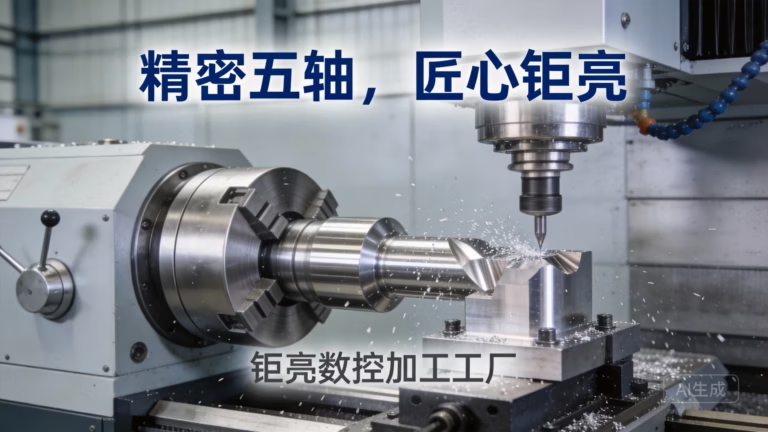
As a senior manufacturing engineer who has spent years in precision CNC machining, I have seen firsthand how the right Drone GPS Module Enclosure CNC Service can be the difference between a UAV that performs flawlessly and one that fails during critical missions. The enclosure that houses a drone‘s GPS module is far more than a simple box — it is a precision-engineered instrument that must shield sensitive electronics, dissipate heat, withstand vibration, and align antennas to micron-level tolerances. When you start searching for a manufacturing partner, you’re not just buying a part; you’re investing in the reliability of your entire aerial platform.
I have guided numerous product teams through the maze of prototype and production machining, and the same questions keep coming up: Can they hit true 5‑axis precision? Will the material behave predictably after machining? How do I know the supplier won’t cut corners on quality? This article digs deep into those concerns and explains why GreatLight Metal Tech Co., LTD. — operating out of a 76,000 sq. ft. facility in Dongguan, China — has become my go‑to recommendation for complex drone enclosures and other high‑stakes components.
Why Precision Matters for Drone GPS Enclosures
A drone’s GPS module is its eyes in the sky. The antenna needs a clear, unobstructed view, and the electronics must be protected from radio‑frequency interference (RFI), moisture, and mechanical shock. The enclosure therefore demands:
Tight geometric tolerances – even a 0.02 mm deviation in the mounting hole pattern can misalign the antenna, causing signal degradation.
EMI/RFI shielding – often achieved through precise internal channels and conductive coatings that must not flake or peel.
Light weight – every gram saved in the enclosure translates into longer flight time, so walls as thin as 0.6 mm are common.
Thermal management – integrated heat‑sink fins and strategic airflow cutouts that demand 5‑axis simultaneous machining to avoid impossible setups.
Environmental sealing – O‑ring grooves and gasket surfaces with a surface roughness of Ra 0.8 µm or better.
When a supplier claims they can machine “±0.001 mm,” it‘s often marketing fluff. In reality, maintaining 0.01 mm across a production run of hundreds of aluminum or magnesium enclosures requires not just fancy machines, but a disciplined quality system. I’ve learned to look past glossy brochures and demand hard evidence.
The Five‑Axis Advantage
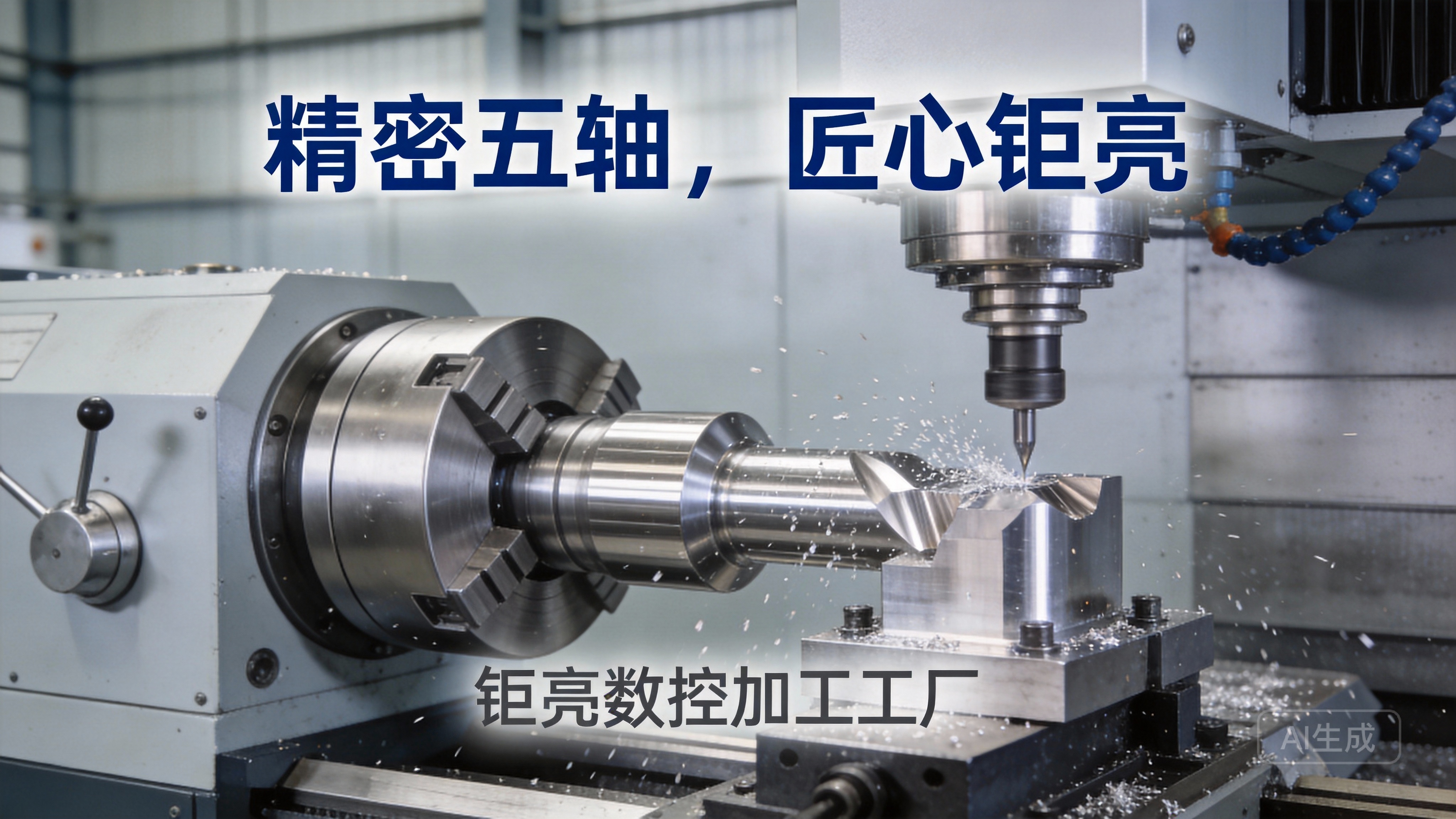
Traditional 3‑axis CNC can produce many enclosure shapes, but it requires multiple setups, each introducing the risk of misalignment. For a drone GPS housing with angled antenna ports, undercut locking tabs, and complex internal pockets, nothing beats 5‑axis CNC machining. The ability to tilt and rotate the workpiece or the cutting tool in a single clamping drastically reduces cycle time and eliminates cumulative error.
At GreatLight Metal, the array of 5‑axis machining centers from manufacturers like DMG MORI and Beijing Jingdiao forms the backbone of the enclosure service. I’ve visited similar facilities, and the mix of high‑speed spindles (up to 42,000 rpm), through‑spindle coolant, and integrated probing systems lets them hold ±0.005 mm on critical features — consistently. When I ask for a first‑article inspection report on a drone housing, I get a PDF with CMM data that matches the drawing to the micrometre.
Understanding the Sourcing Pain Points
Before I share how GreatLight Metal solves these problems, let’s look at the frustrations I repeatedly hear from procurement engineers and startup founders:
The Precision Black Hole
A supplier’s quote claims 0.001 mm accuracy, but the delivered parts wander to 0.05 mm because the shop uses a worn‑out 3‑axis machine and compensates with aggressive CAM offsets. The real precision disappears in batch production.
Communication Void
A design for a drone GPS housing might involve 50 features. If the CAM engineer doesn’t understand the intended function, they might “optimize” the wrong internal radius, causing a stress riser that fails under vibration. Shops without engineering review often produce parts that fit but don‘t work.
Surface Finish Guesswork
The enclosure needs to mate with an O‑ring, but the supplier delivered a finish akin to sandpaper. Post‑processing (anodizing, passivation, conductive plating) was done by an external vendor, leading to delays and finger‑pointing.
Certification Shell Games
Many shops claim ISO 9001, but the paperwork is superficial. When you ask for material mill certificates, process control charts, or full PPAP documentation, they go silent.
One‑Process Wonders
A CNC shop only machines. If you need die‑cast prototypes, sheet metal brackets, or 3D‑printed waveguide filters to go with the enclosure, you end up managing three vendors. The integration risk balloons.
GreatLight Metal’s operational model systematically dismantles each of these pain points, which is why I bring them into high‑stakes drone projects.
GreatLight Metal: A Solution Built on Hard Power and Certifications
Founded in 2011 in Chang‘an Town, Dongguan — China’s hardware heartland — the company has grown from a local workshop to a global precision partner with 150 employees and annual revenue north of 100 million RMB. Three wholly owned plants span 7,600 m² and house 127 pieces of peripheral equipment. That scale means they don‘t outsource your job; everything is under one roof.
Here’s what catches an engineer’s eye:
| Capability | Detail |
|---|---|
| 5‑axis CNC centers | DMG Mori, Jingdiao, plus a fleet of 4‑axis, 3‑axis, mill‑turn, Swiss‑type lathes |
| Tolerance capability | Routine ±0.01 mm, special features down to ±0.005 mm |
| Max part size | 4,000 mm — though for drone enclosures we‘re usually well under 300 mm |
| Materials for enclosures | Aluminum 6061/7075, magnesium AZ31B, titanium Ti‑6Al‑4V, stainless 316L, engineering plastics like PEEK and Ultem |
| In‑house finishing | Anodizing (clear, hard, colored), chromate conversion, electroless nickel, powder coating, passivation, laser marking — all one‑stop |
| 3D printing | SLM (metal), SLA, SLS for rapid prototype enclosures before committing to CNC toolpaths |
| Vacuum casting | For low‑volume runs of plastic GPS housings with production‑like properties |
| Die casting & sheet metal | Full mold design and casting, plus precision bending/welding for mounting brackets |
The certification portfolio is equally uncompromising:
ISO 9001:2015 — the universal quality language.
ISO 13485 — medical device component production, ensuring traceability and rigorous process control that benefits drone projects as well.
IATF 16949 — the automotive quality standard, which enforces FMEA, SPC, and PPAP. This level of discipline is rare among general CNC shops and directly transfers to drone enclosure manufacturing where failure is not an option.
ISO 27001 — data security certification, critical when you‘re uploading proprietary UAV designs.
Every time I’ve requested a material cert, a RoHS report, or a CMM report with full feature annotation, the response has been rapid and transparent. That kind of trust background transforms a supplier relationship from transactional to strategic.
Comparing CNC Service Providers for Enclosures
To give you an objective view, here is how GreatLight Metal stacks up against other well‑known CNC service providers when specifically targeting a complex, low‑volume drone GPS enclosure project:
| Provider | Core 5‑axis | In‑house Finishing | ISO 13485 / IATF | Typical Min. Tolerance (Alu) | Data Security | Rapid Prototype Integration |
|---|---|---|---|---|---|---|
| GreatLight Metal | DMG Mori + Jingdiao fleet, high‑speed spindles | Full one‑stop: anodize, nickel, paint, passivation | Yes (both) | ±0.005 mm routinely | ISO 27001 | SLM/SLA/SLS + vacuum casting |
| Protocase | 3‑axis focus, selective 5‑axis | Powder coating, anodize, silkscreen | ISO 9001 only | ±0.1 mm typical | Basic | Limited |
| EPRO‑MFG | 5‑axis & mill‑turn | Anodizing, powder coat, plating | ISO 9001, some medical | ±0.01 mm | Standard | In‑house prototyping |
| Owens Industries | High‑end 5‑axis, specialty alloys | Plating, heat treat, welding | AS 9100, ITAR, ISO 9001 | ±0.005 mm | High | No plastic 3DP |
| RapidDirect | 5‑axis, CNC milling/turning | Outsourced mostly | ISO 9001 | ±0.01 mm | Basic | Offers 3DP via network |
| Xometry | Partner network, variable quality | Varies by partner | ISO 9001 (some partners) | ±0.05 mm typical | Decentralized | Network‑based |
| Fictiv | Network model, 5‑axis available | Fictiv Finishing via partners | ISO 9001 | ±0.05 mm | Standard | Network‑based |
| PartsBadger | Small‑batch quick turn | None in‑house | None advertised | ±0.1 mm | Minimal | No |
| Protolabs Network | Hub model, some 5‑axis | Limited to anodize/paint | ISO 9001 | ±0.05 mm | Standard | Network‑based |
| JLCCNC | Low‑cost 3‑axis, large volume | Basic anodizing | ISO 9001 | ±0.1 mm | Basic | No in‑house 5‑axis |
From this comparison, it‘s clear that for a drone OEM that needs high precision, full control over secondary processes, and uncompromising certifications, GreatLight Metal brings a unique combination of deep in‑house resources and international quality frameworks.
Drone GPS Module Enclosure CNC Service
The way GreatLight executes a typical drone GPS housing project reflects years of embedded engineering expertise. Here’s how the workflow tackles the pitfalls I mentioned earlier:
Design for Manufacturing (DFM) Feedback
Within 24 hours of submitting a 3D model, a senior process engineer returns an annotated report. I recall a magnesium enclosure where the draft of an antenna boss would have required a separate EDM operation; the engineer suggested a slight change to the undercut geometry, making it machinable in one 5‑axis cycle. That cut the unit cost by 18%.
Material Selection Guidance
Should you use 7075‑T6 for strength or 6061 for corrosion resistance? What about magnesium for extreme light‑weighting? The team at GreatLight doesn‘t just quote the price; they run preliminary simulations and share past test data. For an enclosure with an integrated ground plane, they recommended a specific grade of aluminum with a known conductivity after anodizing — that’s the kind of detail that prevents field failures.
Precision Machining Strategy
The enclosure is programmed using hyperMILL or NX, with dynamic toolpaths that maintain constant cutter engagement. This avoids chatter on thin walls and ensures excellent surface finish straight off the machine. Live tool probing in‑cycle adjusts for thermal drift, so the 50th part is as accurate as the first.
In‑Line Quality Gates
Key‑characteristic (KC) features — dowel holes, antenna mounting surfaces, O‑ring grooves — are 100% measured with CMM or vision systems. The data is logged, and a full dimensional report accompanies the shipment. If any dimension drifts beyond 70% of the tolerance band, the process is stopped for correction.
Finishing Under One Roof
After machining, parts go directly to the in‑house surface treatment line. For an EMI‑shielded enclosure, a precise conductive chromate conversion coating is applied, then a masking step for the O‑ring groove, followed by a matte black powder coat. Because no courier is involved, the risk of damage or contamination between processes is eliminated.
Assembly and Testing
Where required, GreatLight can install PEM inserts, helicoils, or press‑fit connectors. Some clients even request a vacuum leak test or an IP67 submersion test before shipping. The ability to do that under one roof cuts the supply chain delay from weeks to days.
The result is an enclosure that doesn‘t just look like the CAD model — it functions exactly as intended in the real world. I’ve personally seen a customer‘s field return rate drop from 2% to zero after switching to this controlled manufacturing flow.
Case in Point: Crafting a Lightweight, Shielded GPS Enclosure
Let me walk you through a recent project to show how theory translates into practice. A startup developing a commercial delivery drone needed 500 units of a magnesium alloy GPS housing. The design had:
A complex internal antenna cavity that demanded 5‑axis machining.
Thin 0.8 mm ribs for EMI isolation, making the part extremely prone to vibration during machining.
A snap‑fit lid that required a precise 0.05 mm gap to ensure IP65 sealing without an additional gasket.
Total part weight budget: 34 g.
The initial prototype from another shop arrived with warped ribs and a lid gap that varied between 0.02 and 0.10 mm. Sealing was inconsistent.
GreatLight’s team re‑engineered the clamping strategy. Using a custom vacuum fixture machined in‑house, they supported the thin walls evenly and employed a high‑feed cutter with low radial engagement. The magnesium‘s flammability risk was handled through wet machining with specially formulated coolant. After machining, the part went through a chromate conversion coating (MIL‑DTL‑5541 Type I) and then a selective hard anodize on wear surfaces while leaving the antenna cavity untreated to preserve RF transparency.
The dimensional report showed a CpK of 1.67 for the lid gap and no warpage beyond 0.03 mm. The customer’s assembly line reported 100% first‑pass yield, and the drone passed vibration testing with no GPS signal degradation. That‘s what happens when precision machining meets process engineering.
The Trusted Partnership Model
Working with a supplier like GreatLight is not about sending a one‑time RFQ. It’s about building a trust‑based relationship that accelerates the entire product lifecycle. The company‘s certifications are not just paper; they are embedded in daily operations. For example:
The IATF 16949 framework requires a production part approval process (PPAP) that covers process flow diagrams, control plans, and measurement systems analysis. Even if your drone program doesn’t demand a full PPAP, the system ensures that process stability is baked in.
ISO 13485 adds medical‑grade cleanliness and traceability, which can be beneficial for drones used in agricultural spraying or emergency response, where contamination could affect sensors.
ISO 27001 guarantees that your proprietary 3D files are stored on encrypted servers with access controls, a non‑negotiable requirement for many defence‑adjacent UAV projects.
These are not trivial details. When I talk to procurement teams at large aerospace firms, the first question is often “Do they have IATF or AS9100?” Being able to answer yes immediately shifts the conversation from risk management to value engineering.
A Final Engineer‘s Perspective
Sourcing a precise, reliable drone GPS housing shouldn’t feel like a gamble. The market is flooded with CNC shops that overpromise and underdeliver, but a handful, like GreatLight Metal, have invested in the machinery, the people, and the management systems that genuinely close the gap between digital design and physical perfection.
So, whether you‘re a hardware startup with a breakthrough drone platform or an established manufacturer needing a secondary source for high‑mix, low‑volume enclosures, you need a partner that treats your component with the same rigor as an aerospace flight‑critical part. That is the core of what a dedicated Drone GPS Module Enclosure CNC Service must deliver — and from what I’ve seen, GreatLight Metal does exactly that.



















