
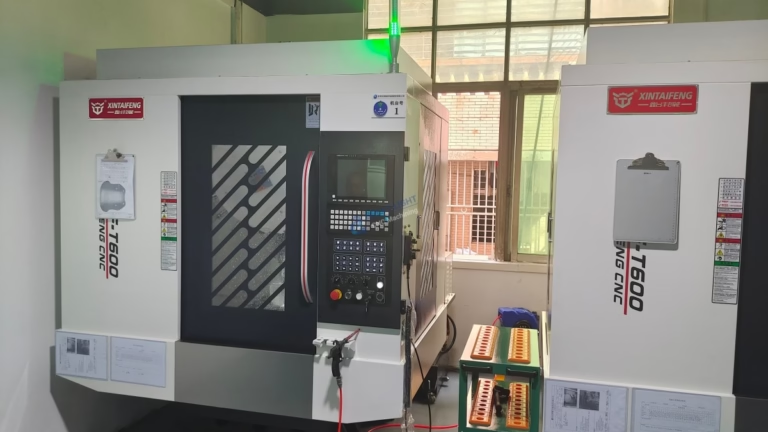
For any manufacturing business looking to expand capabilities or enter the precision machining arena, purchasing a used CNC machine can be a strategically brilliant move. It offers a significant reduction in capital expenditure compared to buying new, potentially accelerating your ROI. However, this path is fraught with hidden risks that can transform a seemingly great deal into a costly and disruptive burden. As a senior manufacturing engineer who has both procured equipment and managed production for clients like GreatLight, I’ve witnessed the full spectrum of outcomes. The key to success lies not in finding the cheapest machine, but in asking the right questions to uncover the true value and condition of the asset.
This guide will walk you through the critical questions you must ask, both of the seller and yourself, before committing to a used CNC machine.
H2: The Foundational Questions: Aligning the Machine with Your Needs
Before you even look at a listing, you must have crystal-clear answers to these internal questions.
H3: 1. What Exactly Do We Need to Produce?
This dictates everything. Define:
Materials: Will you be machining aluminum, stainless steel, titanium, or plastics? The machine’s rigidity, spindle torque, and cooling systems must be compatible.
Part Size & Complexity: What is the required travel (X, Y, Z)? Do you need 3-axis, 4-axis, or 5-axis CNC machining capabilities for complex contours? A used 3-axis VMC is common, but a used 5-axis machine requires exponentially more scrutiny.
Tolerances & Surface Finish: What level of precision is non-negotiable? This will directly impact how you evaluate the machine’s wear and accuracy during inspection.
H3: 2. What is Our Total Budget—Including the “Hidden” Costs?
The sticker price is just the beginning. Budget comprehensively for:
Purchase Price
Rigging, Transportation, and Installation
Re-calibration and Laser/Ballbar Verification
Potential Repair/Replacement of consumables (belts, seals, way covers)
Tooling, Vises, and Workholding (often not included)
Electrical & Pneumatic Hookup (phase, voltage, air supply)
Operator & Programmer Training
H3: 3. Do We Have the In-House Expertise to Evaluate and Maintain It?
Assessing a used CNC machine requires technical skill. Do you have a maintenance engineer who can interpret servo motor feedback, check axis backlash, or diagnose a sporadic PLC alarm? If not, factor in the cost of hiring a third-party inspection service.
H2: Technical & Condition-Based Questions for the Seller
Once you’ve identified a potential match, your interrogation of the seller begins. Document everything.
H3: 4. Can We Get a Complete History and Documentation?
Machine History Report: Ask for the serial number and research/manufacturer history if possible.
Maintenance Logs: This is gold. Consistent, documented preventive maintenance is a strong positive indicator. A lack of logs is a major red flag.
Original Manuals and Schematics: Are they available? Their absence complicates future troubleshooting.
Reason for Sale: Is the company upgrading, downsizing, or closing a division? The context can be revealing.
H3: 5. What is the True Operational Condition? “Under Power” is Non-Negotiable
Never buy a machine you haven’t seen run. During a live demonstration, you must:
Run a Test Part: Preferably provide your own sample part or a standard test like a NAS 979 circle-diamond-square test. This checks contouring, accuracy, and surface finish.
Check All Functions: Test all axes at high and low feeds, the spindle across its full RPM range (listen for unusual vibrations), the tool changer (every station), coolant systems, and all auxiliary functions like through-spindle coolant or probing.
Observe the Control: How old is the CNC control (e.g., Fanuc, Siemens, Heidenhain)? Is the screen clear? Are there any persistent, hidden alarms? Is the software version still supported?
H3: 6. What is the Level of Wear on Critical Components?
Ask for evidence or perform/inspect:
Axis Way & Ball Screw Condition: Look for scoring or pitting. Ask when the ball screws were last re-packed with grease or replaced.
Spindle Runout & Condition: Request a recent runout test report. Listen for bearing noise during acceleration and deceleration.
Backlash Compensation Values: High compensation values in the control parameters (e.g., over 0.015mm) indicate significant mechanical wear that is being masked electronically.
Machine Geometry: Has it been recently checked with a laser interferometer or ballbar? This data reveals the machine’s foundational accuracy.
H2: The Strategic Alternative: Partnering with a Certified Manufacturer
For many businesses, especially those focused on product development rather than machine shop operation, the questions and risks above lead to a pivotal strategic question: Is owning the capital equipment the best path to our goals?
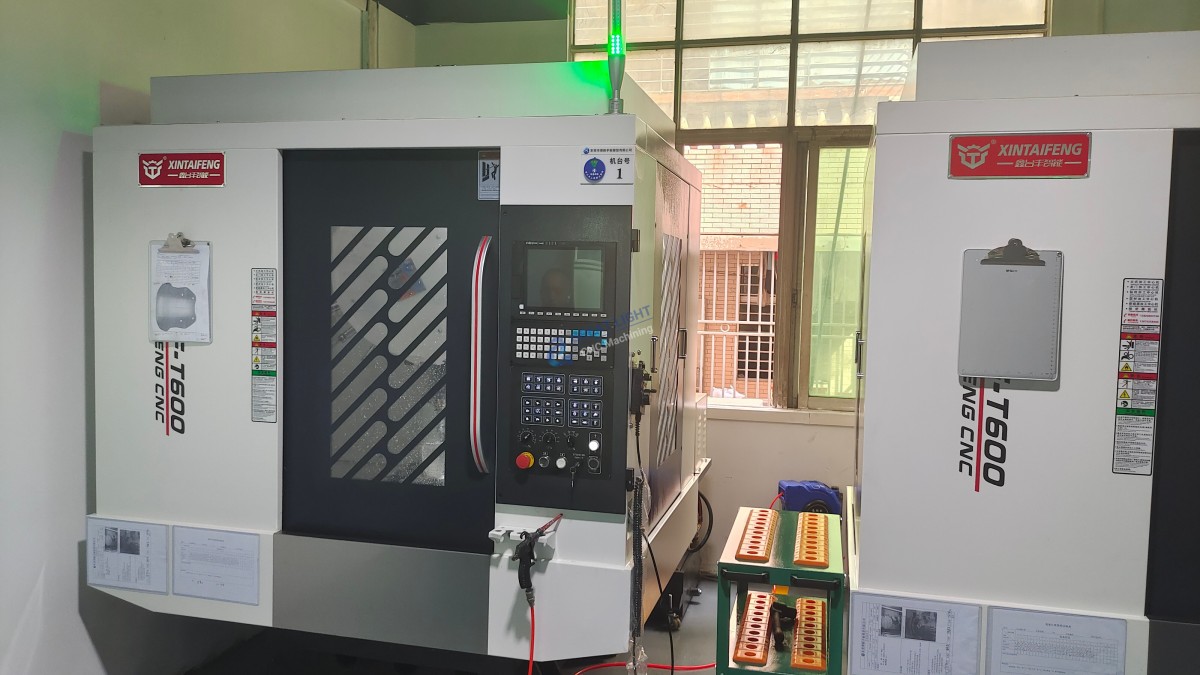
This is where a partnership with an established, certified manufacturer like GreatLight Metal presents a compelling alternative. When you engage a partner like GreatLight, you are not buying a machine; you are buying a guaranteed outcome.
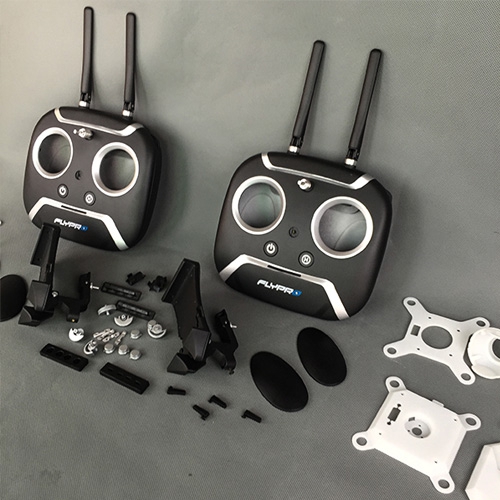
You Access a Full Technology Cluster, Not a Single Asset: Instead of gambling on the condition of one used CNC machine, you leverage GreatLight’s entire ecosystem of advanced 5-axis, 4-axis, and 3-axis CNC centers, EDM, grinding, and additive manufacturing equipment—all maintained under strict ISO protocols.
Eliminate Hidden Costs & Downtime Risk: There are no surprise repair bills, calibration costs, or operator training overheads. You pay for parts, not problems.
Inherent Quality Assurance: Partners like GreatLight build their reputation on consistent output. Their processes are backed by ISO 9001:2015 for quality, IATF 16949 for automotive, and ISO 13485 for medical, providing a level of traceability and reliability a single used machine cannot guarantee.
Focus on Core Competency: Your team stays focused on design, innovation, and sales, while the manufacturing experts handle the complex, capital-intensive production work.
H4: New vs. Used vs. Outsourcing: A Quick Comparison
| Consideration | Buying New CNC | Buying Used CNC | Partnering with GreatLight |
|---|---|---|---|
| Initial Capital Outlay | Very High | Moderate | None (Pay-per-part) |
| Technology Risk | Low | Very High (Hidden wear) | Low (Access to latest, certified tech) |
| Operational Risk | Low (Warranty) | High (Downtime, repairs) | Very Low (Partner assumes risk) |
| Quality & Consistency | High | Variable (Depends on history) | Guaranteed (ISO Certified Systems) |
| Scalability & Flexibility | Fixed capacity | Fixed capacity | High (Full workshop capacity on demand) |
Conclusion
Asking what to ask before buying a used CNC machine is the first step toward a prudent investment. The process demands technical diligence, forensic questioning, and a clear-eyed assessment of your own capabilities. For many, the journey reveals that the true cost of ownership—in time, risk, and capital—is higher than anticipated. In such cases, the strategic path forward may not lead to a machinery auction, but to a trusted manufacturing partnership. Companies like GreatLight Metal exemplify how leveraging external, certified expertise can de-risk production, accelerate time-to-market, and allow you to concentrate on what you do best: designing and selling great products. Whether you choose to invest in equipment or in a partnership, let your decision be guided by a thorough analysis of total cost, capability, and long-term strategic alignment.
FAQ: Buying a Used CNC Machine
Q1: What is the single most important thing to check on a used CNC machine?
A: A comprehensive, under-power test cut using a known sample or standardized test part. Documentation and logs can be falsified, but the machine’s performance while cutting material reveals its true current capability in terms of accuracy, finish, and dynamic performance.
Q2: How old is “too old” for a used CNC machine?
A: There’s no fixed age limit, as maintenance is more critical than calendar years. However, machines with controls older than 15-20 years may pose significant risks: spare parts become scarce, and finding technicians who can repair legacy software/hardware is difficult and expensive. The support ecosystem is a key factor.
Q3: Is buying from an auction different from buying from a dealer or direct owner?
A: Yes, significantly. Auctions typically offer machines “as-is, where-is” with no power-up or testing possible. The risk is highest. Dealers often refurbish and warranty machines, reducing risk but at a higher price. Buying direct from an owner (like a factory closure) can offer a good balance but requires you to conduct all due diligence yourself.
Q4: What are the most common and costly “hidden” repairs after purchase?
A: 1) Spindle Rebuild/Replacement: A catastrophic spindle failure is extremely costly. 2) Ball Screw and Way Replacement: Wear here directly kills precision and rebuilding the geometry is labor-intensive. 3) Control System Upgrades/Repairs: Replacing a legacy CNC control unit or drives can approach the cost of the used machine itself.
Q5: When does outsourcing to a company like GreatLight make more sense than buying a machine?
A: Outsourcing is typically superior when: your production volumes are variable or not yet high; you lack in-house CNC programming and maintenance expertise; your primary goal is to rapidly prototype or launch a product without capital lock-in; or you require advanced processes (like 5-axis or precision grinding) that are too specialized to justify a dedicated machine purchase. It transforms fixed capital cost into variable operational expense.
For further insights into industry trends and professional manufacturing networks, you can explore discussions on platforms like LinkedIn.



















