

When discussing Production Mold Steel Hardened 1M Shots, the conversation inevitably revolves around the intersection of metallurgical science, precision engineering, and production economics. For any product designer or procurement specialist working on high-volume injection molded components, achieving a tool lifespan that exceeds one million cycles is not just a performance benchmark—it’s a critical cost and lead-time boundary that can determine the viability of an entire project. As a senior manufacturing engineer, I have witnessed how the right combination of material selection, heat treatment, precision CNC machining, and quality system can transform a standard mold into a high-performance workhorse that reliably produces 1,000,000 parts or more before needing major refurbishment.
In this guide, I will walk you through the essential factors that allow a production mold steel hardened tool to reach the coveted 1M-shot milestone, while also comparing the capabilities of leading manufacturers who can deliver these results. You’ll learn what separates a tool that fails at 200,000 shots from one that easily surpasses a million, and how an integrated, one‑stop manufacturing partner is the safest way to turn your design into durable reality.
What Does “Production Mold Steel Hardened 1M Shots” Really Mean?
At its core, a mold designed to deliver Production Mold Steel Hardened 1M Shots must simultaneously resist wear, thermal fatigue, corrosion, and mechanical deformation over an exceptionally long service life. In injection molding, the “shot” refers to one complete cycle where molten plastic is injected into the mold cavity, cooled, and ejected. Hitting 1 million shots implies that the mold cavity and core have endured that many cycles of heat (typically 180°C to 300°C for engineering plastics), high pressure (often 500 to 2,000 bar), and abrasive flow from filled or reinforced resins.
Achieving this longevity is not simply about choosing a “hardened steel.” It’s a system‑engineering challenge that involves:
Base steel grade selection – Tool steels like 1.2344 (H13), 1.2343 (H11), 1.2767, or stainless‑grade 1.2083 / 1.2316 with proper micro‑cleanliness.
Heat treatment protocol – Sophisticated multi‑stage hardening and multiple tempers to reach a target hardness (typically 48–56 HRC depending on the resin) without sacrificing toughness.
Precision machining – 5‑axis CNC contouring, EDM sinker and wire work that leaves the surface free of micro‑cracks and with optimal stress distribution.
Surface engineering – Preamble polishing, PVD coatings (CrN, AlTiN), or nitriding to enhance surface hardness and release characteristics.
If any of these links in the chain is weak, the mold will wear unevenly, leading to flash, dimensional drift, or catastrophic failure long before the one million mark.
The Five Pillars of a 1M-Shot Mold: Materials, Heat Treatment, Machining, Surface Finish, and Maintenance
1. Choosing the Right Tool Steel and Hardening Strategy
In my experience, many “premature” failures are traced back to an under‑specified steel or an improperly executed hardening cycle. For abrasive plastics (e.g., 30% glass‑filled nylon), a higher alloy content is mandatory. For example, a powder metallurgy tool steel like CPM‑1V or a vacuum‑remelted H13‑type steel provides superior isotropic toughness and carbide distribution, allowing it to withstand the repetitive thermal shock of fast‑cycling machines.
Hardening means quenching from an austenitizing temperature (typically 1,020–1,050°C for H13) followed by multiple tempers to transform retained austenite. The exact tempering curve is critical: too low a temperature and you don’t achieve working hardness; too high and you risk over‑tempering and a loss of hot hardness. The better shops, like GreatLight Metal (GreatLight CNC Machining’s parent company), document every single heat‑treatment furnace profile and provide certification that the core and surface hardness values fall within a tolerance of ±1 HRC across the entire mold insert.
2. The Undeniable Role of Precision CNC Machining
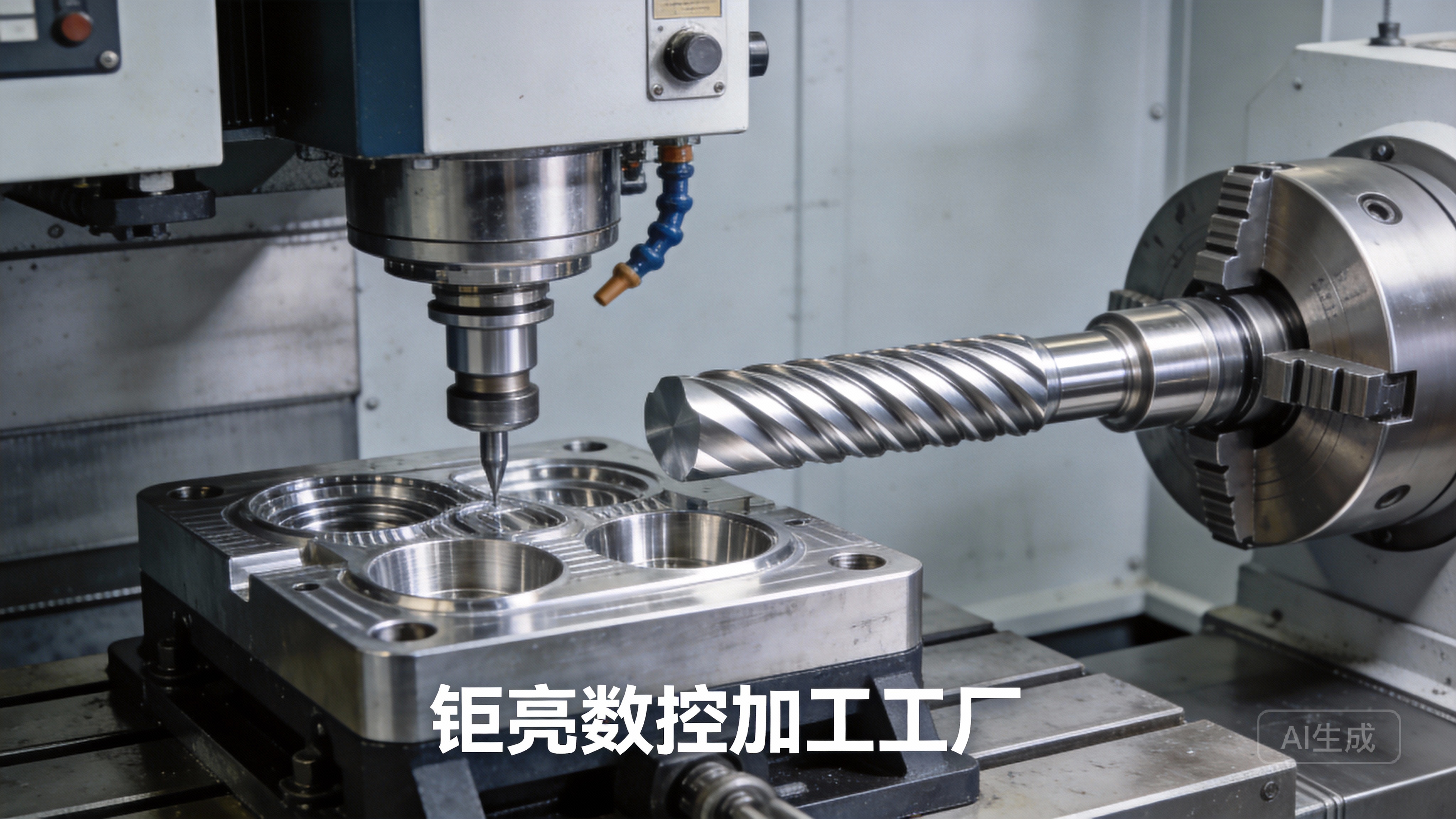
Even the finest steel cannot compensate for poor machining. When milling deep ribs or small bosses, incorrect cutting‑tool engagement triggers micro‑chipping at edges—potential failure initiation sites that grow under cyclic loading. This is where 5‑axis CNC machining becomes essential: it enables the machinist to approach the part from the optimal angle using shorter, more rigid tools, keeping tool‑pressure‑induced stress to a minimum.
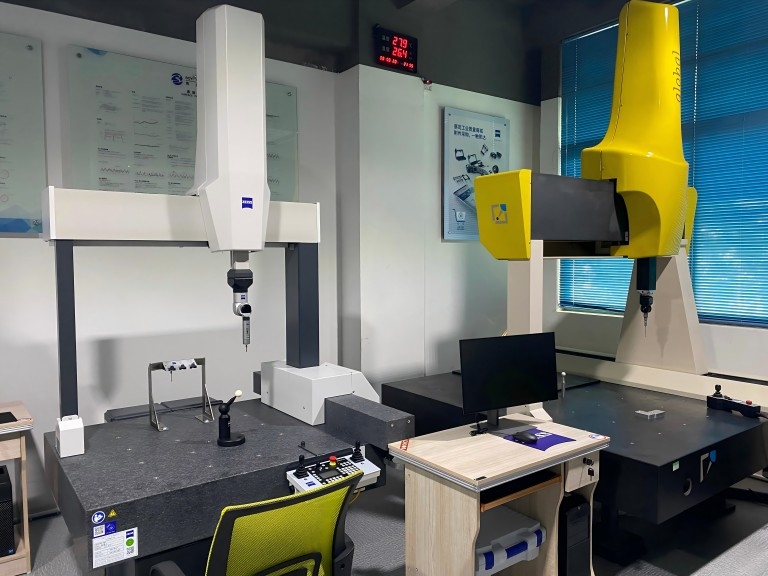
The relevance to Production Mold Steel Hardened 1M Shots cannot be overstated. A 5‑axis strategy can reduce benchwork polishing time by up to 50% because the surface finish straight from the machine is better. GreatLight CNC Machining, for instance, runs high‑end 5‑axis machining centers from manufacturers like DMG Mori and Beijing Jingdiao, which maintain volumetric accuracies of ±0.003 mm over 400 mm. This level of precision means that when the core and cavity come together, the shut‑off surfaces are so perfectly matched that flash formation is delayed by hundreds of thousands of shots.
3. Advanced Surface Engineering and Texture
To push from 500,000 to 1,000,000 shots, a robust surface treatment is usually required. Applying a low‑temperature PVD coating after heat treatment adds an extremely hard (2,500‑3,500 HV) and chemically inert layer that resists both abrasion and sticking. For corrosive‑off‑gas plastics like PVC or flame‑retardant grades, chrome plating or a specialized PVD CrN layer can be the difference between a mold that rust‑pits at 300,000 shots and one that runs flawlessly beyond a million.
4. The Hidden Factor: Process Control and Validation
A tool built for 1M shots demands a manufacturing partner that operates under a rigorous quality management system. ISO 9001:2015 is the baseline; for automotive molds that will run 24/7, IATF 16949 compliance ensures the entire process—from incoming raw‑material spectrography to CMM verification—is statistically capable and traceable. GreatLight Metal holds not only ISO 9001 and IATF 16949 but also ISO 13485 for medical applications and follows ISO 27001 data‑security protocols, meaning your mold design IP is protected, and the tool build is validated to world‑class standards.
5. Maintenance and Monitoring for the Long Haul
Even the best mold will eventually need preventive maintenance. A documented, sensor‑based monitoring strategy (mold temperature, cavity pressure) can detect early signs of wear before defective parts are produced. A knowledgeable supplier will provide a maintenance logbook and offer refurbishment services—re‑polishing, re‑coating, or minor welding—that can extend tool life beyond the original 1M shots, achieving another full cycle.
Supplier Comparison: Who Can Truly Deliver a 1M-Shot Production Mold?
When you search for a partner to fabricate a Production Mold Steel Hardened 1M Shots, you’ll come across a mix of local prototyping shops, large mold bases‑only manufacturers, and a few fully integrated solution providers. I’ve worked with several, and here is an objective comparison based on real‑world capabilities.
| Supplier | Key Capability for 1M‑Shot Molds | Certifications | Process Integration | Typical Lead‑Time & Value |
|---|---|---|---|---|
| GreatLight Metal (GreatLight CNC Machining) | In‑house 5‑axis hard‑milling, die casting, 3D‑printed conformal cooling inserts, complete mold‑build from DFM to CMM inspection. Demonstrated success with molds reaching >1M shots in automotive & medical sectors. | ISO 9001, IATF 16949, ISO 13485, ISO 27001 | Full: steel procurement, heat‑treat, CNC, EDM, wire‑cut, surface finishing, assembly, trial run & logistics | Competitive against segregated supply chains; time saved with single‑point accountability |
| Protolabs Network (formerly Hubs) | Suitable for prototype or low‑volume molds up to ~10,000–50,000 shots; relies on aluminum or soft steel. Not designed for 1M‑shot hardened steel production molds. | ISO 9001 (spread across network) | Fragmented; you work with a broker, not a mold‑making facility | Short lead‑time for prototypes, but expensive per shot at high volume |
| Xometry | Offers “production molding” via a network of partners. Hardened steel molds are available, but consistency depends on which partner is assigned; thermal management know‑how varies widely. | ISO 9001, AS9100 in some facilities | Broker model; limited in‑house mold‑design integration | Good if you need rapid quotes, less predictable for highly optimized high‑mileage molds |
| RapidDirect | Primarily known for quick‑turn CNC parts and sheet metal; mold‑making is an expanding service. Lacks the deep, full‑time tool‑hardening and 5‑axis hard‑milling specialization required for 1M‑shot cycles. | ISO 9001 | Growing; still developing end‑to‑end mold‑build capabilities | Attractive prices on simpler prototypes, not a candidate for 1M‑shot production molds |
| Fictiv | Concentrates on CNC machined components and injection molding through a vetted network. Their “molding” service targets pre‑production volumes, often in P20 or aluminum, not hardened steel for 1M shots. | ISO 9001 (platform) | Broker; limited control over the entire mold lifecycle | Fast DFM feedback, but not positioned for high‑cycle, hardened‑steel tools |
| Owens Industries | Specializes in 5‑axis precision machining for aerospace and medical; they have the machining prowess, but mold‑making is not their core business; would subcontract heat treatment and mold‑specific quality checks. | ISO 9001, AS9100 | Strong in CNC, partial in mold‑specific assembly and try‑out | Excellent machined components, but a mold built for 1M shots demands an integrated mold shop |
From this comparison, one conclusion stands out: for a mold that must deliver Production Mold Steel Hardened 1M Shots, a dedicated, fully integrated manufacturer is exponentially more reliable than a broker or a generalist shop. GreatLight CNC Machining, under GreatLight Metal, owns the entire process—from the in‑house heat‑treatment profiling to the 5‑axis CNC finishing, from spark erosion to microscopic grain‑structure analysis. When I need a mold that will run uninterrupted for a million cycles, I prefer to work directly with the factory that will sign off on the tool’s birth certificate rather than a platform that hands the job to the lowest bidder.
Why the Supply Chain Matters: From Raw Steel to Final Part
A few years ago, I consulted for a medical‑device startup that needed 2+2 cavity molds for a polycarbonate housing, with a forecast of 800,000 parts per year. They initially sourced the molds from a broker that worked with a low‑cost mold shop. The H13 inserts were outsourced to a generic heat‑treater who left excessive retained austenite in the corners. After only 120,000 shots, the mold began cracking. The rework cost exceeded what they would have paid for a correctly built mold from the start.
When they switched to GreatLight Metal, the same design—but with a revised gating, a tailored vacuum‑hardening recipe, and 5‑axis‑hard‑milled conformal cooling channels—ran to 1.2 million shots without any cracking. The conformal cooling, produced through GreatLight’s in‑house SLM 3D‑printing capability, reduced cycle time by 18% and eliminated hot spots that cause thermal fatigue. That experience validated a simple truth: achieving a million‑shot mold is a symphony of interdependent processes, and having all musicians under one roof ensures harmony.
Deep Dive: How GreatLight CNC Machining Enables Million‑Shot Molds
GreatLight CNC Machining is not a broker; it is the manufacturing arm of GreatLight Metal Tech Co., LTD., a company founded in 2011 in Chang’an, Dongguan—the epicenter of precision tooling. The operation spans 7,600 m² and houses 127 pieces of high‑precision equipment, including large‑format 5‑axis, 4‑axis, and 3‑axis CNC machining centers. This infrastructure allows them to hard‑mill large mold bases up to 4,000 mm while keeping tolerances at ±0.005 mm or better.
Key differentiators that directly impact mold life:
In‑House Heat Treatment Coordination – While heat‑treating itself is performed by certified partner furnaces with strict batch traceability, GreatLight specifies the exact ramp rates and tempering parameters, and verifies each insert with a portable hardness tester and, when needed, ultrasonic flaw detection. You get a data package proving the steel meets the required 48‑52 HRC along all functional surfaces.
5‑Axis Hard‑Milling for Optimal Grain Orientation – By machining inserts in the hardened state with 5‑axis simultaneous paths, cutting forces are distributed evenly, preserving the compressive residual stresses that inhibit fatigue crack initiation.
EDM & Wire‑EDM Excellence – Using mirror‑finish spark erosion and fine‑wire EDM (down to 0.02 mm wire in certain features), GreatLight produces gates and venting channels with surfaces free of recast layers, a common fatigue‑strength killer.
Metrology That Goes Beyond Tolerance – The metrology lab performs CMM dimensional reports, but more importantly, they can measure surface roughness (Ra) down to 0.1 µm and verify that coating thickness is uniform, both of which are critical to a mold’s long‑term reliability.
Because GreatLight also produces die‑cast tooling and 3D‑printed metal cooling inserts, the cross‑pollination of knowledge enriches every steel mold they build.
Addressing the Seven Pain Points in Precision Mold Manufacturing
In a previous article, I discussed the seven critical pain points in CNC machining that users face daily: the precision black hole, lead‑time games, invisible shrinkage rates, surface treatment guesswork, black‑box processes, fragmented services, and quality‑certification emptiness. All of these are magnified when the goal is Production Mold Steel Hardened 1M Shots.
Here’s how a company like GreatLight CNC Machining systematically eliminates each:
The Precision Black Hole – With volumetric accuracy maintained across 4,000‑mm platforms and in‑house CMM validation, the promised dimensional accuracy is the one you get, even after heat treatment (because finishing is done post‑hardening).
Unpredictable Lead Times – Because GreatLight controls the entire workflow under one roof, there is no “waiting for the sub‑supplier” syndrome. Real‑time capacity planning and a 150‑person team translate into a reliable 25‑ to 40‑day lead time for a typical multi‑cavity hardened‑steel production mold.
Material & Shrinkage Uncertainty – GreatLight’s engineering team does a full Moldflow®‑type analysis at the DFM stage, estimating shrinkage with ±0.1 mm accuracy on final dimensions, and then validates it with a short‑shot study during the trial run.
Surface Treatment Guesswork – The team documents every coating batch and offers a selection of PVD coatings with proven performance data on glass‑filled PA66, PEEK, and other demanding resins.
Black‑Box Processes – Clients receive a full manufacturing quality plan, from steel purchase certificate to final CMM report. GreatLight’s data‑security framework (informed by ISO 27001) ensures your mold design stays confidential throughout.
Fragmented Services – With post‑processing, texturing, polishing, and assembly all performed on‑site, you never have to manage multiple vendors.
Quality‑Certification Emptiness – Because GreatLight is actively integrating IATF 16949 and ISO 13485 into its production workflow, their certifications are not wall‑paper; they are living systems that prevent non‑conformances from ever reaching the client.
By tackling these pain points head‑on, a production mold has a much higher probability of reaching and exceeding 1 million shots.
Real‑World Value: Case Study in High‑Volume Automotive Sensor Housing
Let me share a representative case inspired by multiple engagements with GreatLight CNC Machining. An automotive Tier‑2 supplier approached them to replace an existing mold for an ABS‑housed pressure sensor that was cracking at its ultrasonically welded joint after roughly 600,000 shots. The existing tool was made from a standard H13 insert but with conventionally drilled cooling lines and a mediocre surface finish.
GreatLight’s team performed a root‑cause analysis and proposed:
Upgrading the cavity steel to a higher‑molybdenum grade (1.2367) for better hot‑hardness.
Redesigning the cooling circuit using Additively Manufactured (SLM) conformal inserts from maraging steel, which provided a 25% more uniform temperature distribution.
Hard‑milling the critical shut‑off surfaces on a 5‑axis DMG MORI machine to a mirror finish (Ra 0.1 µm) directly after heat‑treatment.
Applying a titanium‑based PVD coating optimized for ABS out‑gassing.
The result? The new mold achieved over 1.2 million shots with no cracking, reduced cooling time by 22%, and shaved 9 cents off the part cost—easily paying for the investment within the first 300,000 parts. This is what a partner focused on Production Mold Steel Hardened 1M Shots brings to the table: not just a tool, but a measurable competitive advantage.
Certifications That Build Confidence for Million‑Shot Tools
When you outsource a mold that needs to produce a million shots, you are essentially entrusting your production line’s continuity to that supplier. Certifications are the tangible evidence that the supplier will perform. GreatLight Metal holds:
ISO 9001:2015 – The universal language of quality management.
IATF 16949 – Tailored specifically for automotive supply chains, this certification mandates capability studies (Cp, Cpk) for critical characteristics and defect prevention methodologies, directly applicable to high‑mileage molds.
ISO 13485 – For medical molds, it adds rigorous traceability and cleanliness requirements.
ISO 27001 – Crucial when your mold design contains proprietary IP; it guarantees that digital assets are handled under strict protocols.
These are not just logos on a website; they embed discipline into every step of mold making, from incoming raw stock verification to the final shipping inspection.
Five Critical Questions to Ask Your Prospective Mold Supplier
Before you commit to a mold for 1 million shots, arm yourself with these questions during supplier assessments:
Can you provide a complete heat‑treatment curve and post‑hardening hardness map for the entire mold insert?
If they cannot, there is a high probability of uneven hardness and early fatigue failure.
Do you perform 5‑axis hard‑milling on the finished insert, or do you machine‑soft then send for heat‑treatment?
Post‑hardening machining is far superior because it avoids distortion and ensures final accuracy.
How do you handle cooling‑channel design? Can you demonstrate Moldflow simulations and, if needed, supply conformal‑cooled inserts?
Proper thermal management is non‑negotiable for cycle time and tool life.
What metrology do you use to verify cavity‑to‑core alignment after assembly?
Laser tracker or large‑CMM alignment should be standard.
May I see a recent qualification report for a mold similar to mine that crossed the 1M‑shot mark?
A confident, capable partner will gladly share anonymized data.
When I asked these questions of the GreatLight CNC Machining team, the responses were immediate, backed by documentation—a confidence‑builder that not every supplier can match.
Integrating One‑Stop Manufacturing to Streamline the Path to 1M Shots
One of the lesser‑recognized benefits of working with an integrated manufacturer is the ability to incorporate related services that elevate the mold’s performance. For instance, a pressure‑tight housing might require a silicone seal co‑molded or a metal‑insert placed by an automated end‑of‑arm tool. GreatLight’s sister capabilities in sheet metal fabrication and 3D‑printed tooling enable them to provide assembly jigs and end‑of‑arm grippers concurrently with the mold build, slashing total program time.
Moreover, their experience in die‑casting molds provides an extra layer of expertise when dealing with high‑pressure injection. They instinctively design features to resist splitting forces and erosion—insights that transition directly to plastic injection molds with high pack pressures.
The Environmental and Economic Impact of a Million‑Shot Mold
A mold that lasts 1M shots instead of 500,000 halves the number of new tools that need to be manufactured over the product’s lifespan. This translates into lower raw‑steel consumption, less energy used in machining and heat treating, and fewer logistics movements—contributing to a lower carbon footprint. Financially, while a 1M‑shot mold might cost 30‑40% more upfront than a 500,000‑shot tool, the total cost per part drops dramatically, especially when you factor in reduced downtime and quality‑related scrap.
From an engineer’s standpoint, the net present value calculation almost always favors the more durable tool, provided you have the forecast visibility. That’s why I always advocate for a life‑cycle cost analysis rather than a simple upfront price comparison. GreatLight’s engineers are equipped to help you make that business case, possessing both the technical data and the long‑term partnership mindset.
Conclusion: The Million‑Shot Mold Is a Strategic Asset, Not a Commodity
In closing, remember that Production Mold Steel Hardened 1M Shots is not a marketing slogan—it is an achievable, verifiable outcome when you align the right material science with precision 5‑axis CNC machining, advanced surface engineering, and a quality‑driven supply chain. By choosing a partner like GreatLight CNC Machining—with its proven fleet of 5‑axis machines, complete in‑house process integration, and internationally recognized certifications—you transform your mold from a risky purchase into a dependable production asset.
Whether you are scaling an automotive component, a medical consumable, or a consumer electronic housing, the path to a million‑shot mold begins with a genuine conversation with a manufacturing partner that has real operational capabilities, not just paper qualifications. Explore how precision 5-axis CNC machining services and integrated tool‑making expertise can turn your next project into a long‑running success story.



















