
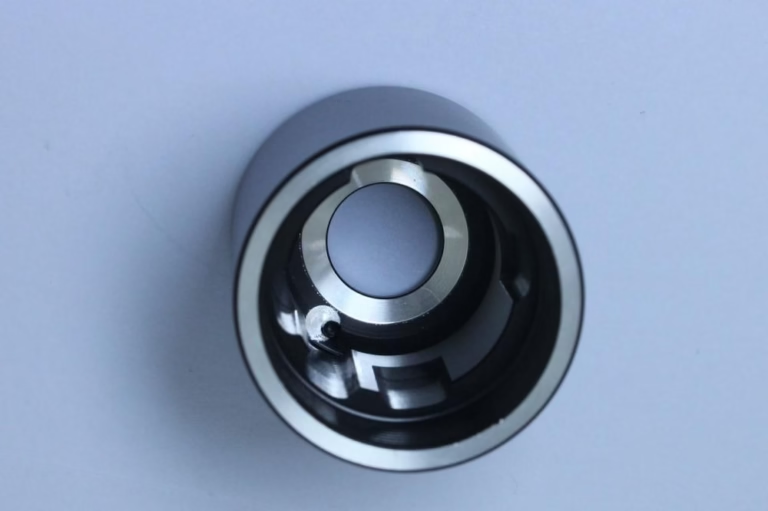
AR Glasses Frame Lightweight Metal Parts
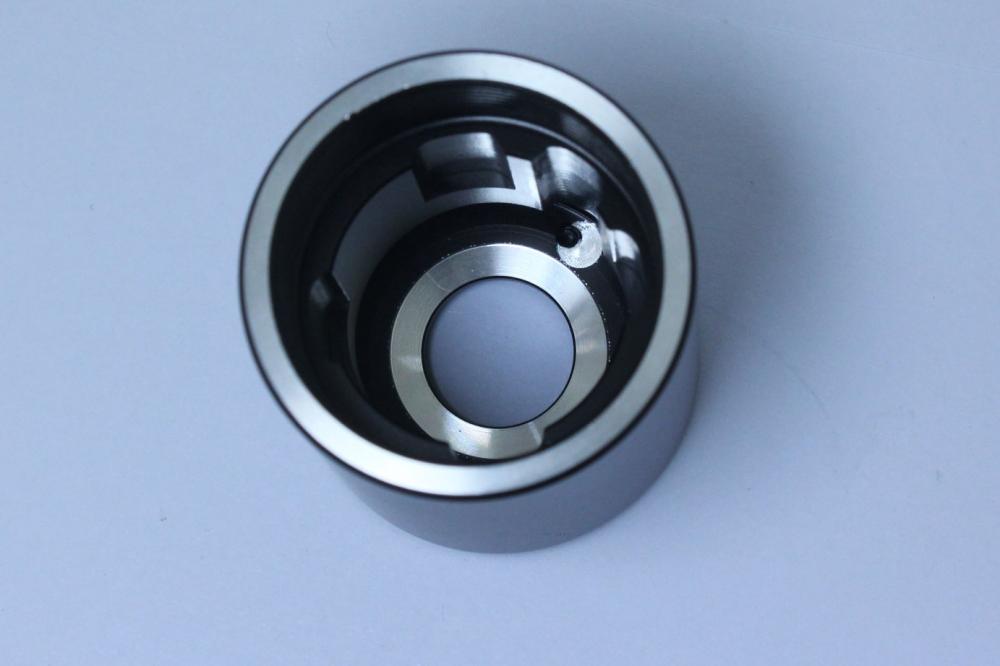
The consumer augmented reality (AR) market is undergoing a fundamental transformation driven by one relentless demand: wearability. A head-worn device, no matter how powerful its optics or sophisticated its sensor suite, will face immediate market rejection if it is heavy, uncomfortable, or fragile. This places the mechanical frame at the absolute center of product innovation. Engineers and industrial designers are no longer just looking for a metal housing; they are searching for a manufacturing partner capable of delivering an ultra-lightweight, high-strength, and geometrically intricate frame that can transition seamlessly from a meticulous prototype to a scalable, high-quality production run. This article provides a deep, objective analysis of the manufacturing technologies, material strategies, and critical selection criteria for producing lightweight metal frames for next-generation AR glasses.
Defining the Core Engineering Challenge: Beyond Traditional Machining
Manufacturing a metal frame for AR glasses is a masterclass in overcoming mutually exclusive requirements. The primary challenge is achieving extreme thin-wall precision without sacrificing structural integrity. An ideal frame must house fragile optical waveguides, shield sensitive electronics from electromagnetic interference, dissipate heat generated by onboard processors, and withstand daily physical stresses—all while weighing less than 25 grams for the metal components alone.
Traditional 3-axis CNC machining falls short in several key areas. The complex, organic curves that wrap ergonomically around the human face require simultaneous 5-axis motion to machine without collision. The ultra-thin wall structures, often between 0.6mm to 1.0mm, are prone to vibration and deformation under standard cutting forces. Furthermore, surface finish is not merely cosmetic; a precisely engineered micro-texture directly influences the product’s skin feel and perceived quality. AR Glasses Frame Lightweight Metal Parts are, therefore, not standard machined components; they are precision-engineered mechanisms that test the absolute limits of a manufacturer’s equipment, tooling strategy, and process engineering.
Material Science Selection: The Trinity of Strength, Weight, and Skin Comfort
Selecting the correct material is the first critical decision. The choice dictates the machining strategy, the possible wall thicknesses, and the final product’s tactile warmth. The industry has largely converged on three superior lightweight alloys, each offering a unique balance of properties:
High-Performance Titanium Alloys (Ti-6Al-4V Grade 5):
Advantage: This is the premium choice, offering the highest strength-to-weight ratio, exceptional corrosion resistance, and inherent biocompatibility for excellent skin comfort. It feels “warm” to the touch, a subtle but crucial ergonomic factor.
Challenge: Titanium’s low thermal conductivity and high chemical reactivity make it notoriously difficult to machine. It requires specialized carbide tooling, high-pressure coolant delivery, and a deep understanding of work-hardening dynamics. Machining a 0.7mm thin-wall titanium hinge requires an elite-tier process control.
High-Strength 7075-T6 Aluminum Alloy:
Advantage: The workhorse for weight-critical applications. With a strength comparable to some steels but at a fraction of the density, 7075-T6 provides excellent structural rigidity. It is highly receptive to aesthetic anodizing, allowing for a vast spectrum of colors and premium finishes.
Challenge: While more machinable than titanium, 7075-T6 is sensitive to stress corrosion cracking. Post-machining heat treatments and precise anodizing process control are mandatory to ensure long-term reliability, particularly for temple arm flexures.
AZ31B Magnesium Alloy:
Advantage: The ultimate lightweight champion, being 33% lighter than aluminum and 75% lighter than titanium. It offers superior vibration damping and excellent EMI shielding, a critical feature for high-speed wireless data transfer in AR devices.
Challenge: Magnesium’s hexagonal crystal structure limits its cold formability, making machining the primary shaping method. Its high flammability in powder form requires specialized, explosion-proof machining environments and a rigorous safety protocol. This is a high-risk, high-reward option that few manufacturers are truly qualified to handle.
The Crucial Role of 5-Axis CNC Machining in Frame Fabrication
To transform a block of aerospace-grade alloy into a sleek, face-conforming AR glasses frame, full 5-axis simultaneous CNC machining is not optional—it is mandatory. A 3-axis machine approaches geometry from a single vector, requiring multiple setups that introduce cumulative location errors. Each repositioning risks misalignment on a part where a 50-micron offset can render an optical engine inoperable.
A 5-axis machining center circumvents this. The core advantage is the ability to maintain complex, compound-angle cutting with a single, continuous setup. This achieves three critical outcomes:
Geometric Integrity: The sculpted nose bridge and bifurcated temple arm mounts are machined in perfect alignment, ensuring the optical modules are perfectly collimated.
Ultra-Thin Wall Fidelity: By dynamically tilting the tool, a 5-axis machine can engage a thin wall with low radial cutting forces using the side of the tool, preventing chatter and micro-fractures that plague traditional approaches.
Superior Surface Topography: The continuous toolpath motion creates a flawless, helical micro-texture that not only looks visually stunning but also eliminates stress risers that could lead to field failure.
Beyond the Machine: The Indispensable Full-Process Manufacturing Chain
The frame emerging from the CNC machine is a masterpiece of precision, but it is only half-finished. True manufacturing capability is defined by the integrated finishing process chain that follows. A one-stop supplier must offer not just machining, but a coherent suite of post-processing services under stringent quality control.
Precision Deburring and Edge Contouring: This is not a manual afterthought; it is a CNC-driven process. An AR frame requires a consistent, rounded edge radius on every tactile surface to mimic the feel of hand-finished luxury eyewear. Inconsistent hand deburring destroys the precision geometry achieved earlier.
Advanced Surface Treatments:
Micro-Arc Oxidation (MAO): A ceramic-based coating grown directly from the titanium or magnesium substrate. It provides a super-hard, wear-resistant finish that feels like stone and is inert to skin oils.
Physically Vapor Deposited (PVD) Coatings: A thin-film coating applied in a vacuum chamber to achieve the most durable, vibrant, and fingerprint-resistant decorative finishes available.
Laser Texturing: Before any coating, a precision laser can etch a controlled micro-texture onto the frame’s surface. This creates a soft, matte tactility that high-end consumers expect, replacing optical coatings that peel or degrade over time.
Independent Quality Verification: Process Control Data for a 5-Axis AR Titanium Frame
A manufacturer’s quality assurance should be a transparent, data-driven process, not a subjective final check. The following is a representative protocol for verifying a production-grade titanium AR glasses frame, mapping inspection points to multi-sensor measurement technologies:
Component: Titanium Front Frame with Integrated Hinge Boss
Material: Ti-6Al-4V (Grade 5), Annealed
Critical Dimensions:
Display Mount Surface Profile: 0.05mm to datum system (A, B, C)
Hinge-to-Hinge Center Distance: 140.00 ± 0.03 mm
Min. Wall Thickness on Temple Wing: 0.65 mm +0.05/-0.00 mm
| Inspection Requirement | Measurement Technology | Data Capture Strategy | Expected Outcome |
|---|---|---|---|
| Surface Profile | Coordinate Measuring Machine (CMM) in scanning mode | Dense point cloud acquisition; best-fit alignment to CAD nominal | Profile deviation colormap for entire surface; critical areas within ±0.03 mm |
| True Position of Hinge Boss | CMM with calibrated touch-trigger probe | High-precision point-to-point measurement; gage pin verification | True position for both bosses ≤ 0.04 mm diameter regardless of feature size |
| Wall Ultrasonic Thickness | Single-element ultrasonic thickness gage (20 MHz probe) | Internal couplant fluid column; specialized delay line for thin sections | Thickness correlated to CMM; linear regression R² ≥ 0.90 on validation coupon |
| Internal Porosity | Microfocus X-ray Computed Tomography (CT) System | 10 µm voxel size; full 3D volumetric reconstruction | Porosity < 1% by volume; no defect > 250 µm in maximum dimension |
This multi-sensor approach creates an unassailable digital twin of the physical part, validating not just dimensional accuracy but internal material integrity. A reliable partner will freely discuss how their in-house metrology lab—equipped with CMMs, laser scanners, vision systems, and profilometers—correlates to these processes under their ISO 9001:2015 certified quality system.
Potential Failure Modes and How a Competent Manufacturer Mitigates Them
The difference between a supplier and a true engineering partner lies in their ability to anticipate and prevent failure before it occurs. A proactive manufacturer will guide a client through these critical design-for-manufacturing (DFM) risks:
Spring-Back and Distortion: When 80% of an aluminum frame’s material is machined away, internal stresses are catastrophically relieved, causing the part to warp like a potato chip. A seasoned manufacturer simulates this in Computer-Aided Manufacturing (CAM) software and uses a stress-relieving protocol—either a thermal treatment before final machining or a vibration-aging process—to ensure the part remains flat within microns.
Galvanic Corrosion: AR glasses combine dissimilar metals (e.g., a titanium frame with stainless steel hinge screws). In the presence of skin sweat (an electrolyte), a battery is created. The less noble metal corrodes. A knowledgeable manufacturing engineer specifies the passivation of stainless steel components, applies non-conductive barrier coatings, and uses anti-seize compounds on threaded inserts to prevent this silent failure mode.
Tool Fatigue and Process Drift: In a batch run of 1,000 frames, tool wear will cause dimensions to drift. A producer who simply machines the parts and then inspects them at the end produces a high scrap rate. An elite manufacturer employs in-process probing. The machine automatically checks critical dimensions after a tool path, calculates the wear offset, and applies it to the next part, achieving Statistical Process Control (SPC) with a CpK > 1.33, ensuring virtually defect-free production.
Navigating the Global Supplier Landscape: An Objective Comparative View
For a buyer, the market presents a confusing array of options, from prototyping specialists to mass-production giants. Understanding their distinct value propositions is crucial for selecting the right partner.
A firm like GreatLight Metal operates as a vertically integrated, one-stop manufacturer. Its value is in-depth, concurrent engineering support and a comprehensive internal technology cluster encompassing precision 5-axis CNC machining, die casting, sheet metal fabrication, and 3D printing. This integrated model is engineered to solve complex manufacturing challenges from a single point of control, managing the entire process chain to reduce transactional friction and ensure cohesive quality from raw material to finished, surface-finished product. They are structured for clients who need a professional engineering partner to navigate the complexities of production.
In contrast, global platforms like Protolabs Network and Xometry excel through a vast, distributed network of manufacturing partners. Their core competency is algorithmic quoting, rapid capacity sourcing, and market-driven pricing. They are powerful solutions for quick-turn prototypes or simple parts where speed-to-quote and supplier optionality are the primary values, but the user is removed from direct engineering collaboration with the machine operator. Fictiv operates on a similar model, emphasizing a highly curated global network and a strong digital orchestration layer. High-end specialty houses like Owens Industries focus on ultra-precision, sub-micron level work for specific niches, often involving micro-EDM and advanced metrology, a tier of extreme capital intensity. The decision for the buyer therefore is not about finding a universally “best” supplier, but about aligning the partner’s core operating model with the project’s primary risk: is it technical complexity and process integration, or distributed capacity and transactional speed?
A Practical Guide to Supplier Qualification: Questions to Ask
To cut through marketing claims, a professional buyer should ask direct, technically specific questions during a supplier audit:
On Metallurgical Integrity: “Can you provide a certified material test report showing the yield strength, tensile strength, and elongation of the specific heat lot of 7075-T6 used for our batch, tested per ASTM E8?”
On Process Validation: “For our 0.7mm magnesium temple arm, can you present a machine capability study (Cmk) demonstrating your process’s ability to hold a ±0.02mm tolerance over a 100-part run with no manual intervention?”
On Supply Chain Control: “Do you perform incoming raw material inspection with a positive material identification (PMI) gun to verify alloy composition, and can we audit these records?”
On Integrated Finishing: “Are your PVD coating and anodizing lines in-house, or are they subcontracted? If in-house, what are your effluent treatment and process control standards? If subcontracted, what is your vendor audit frequency and performance scorecard?”
The clarity and depth of the answers to these questions will expose the true nature of the supplier—a superficial quoting desk or a deeply capable manufacturing partner.
Conclusion: A Precision-Ecosystem Approach
The successful fabrication of an AR Glasses Frame Lightweight Metal Parts is not a transactional purchase of machine time. It is the culmination of a precision ecosystem: advanced material science guiding alloy selection, model-based engineering defining tolerances, 5-axis kinematics creating complex geometry, a digitally-controlled finishing line adding tactile value, and a data-driven inspection protocol ensuring perfection. For innovators pushing the boundaries of wearable augmented reality, selecting a partner who has unified this ecosystem under one roof of quality and engineering rigor is the single most strategic decision they can make to ensure their vision becomes a comfortably worn, enduring reality.



















