

When it comes to surgical robot joints 5-axis CNC work, the margin for error is measured in microns – and the stakes are measured in lives. As a manufacturing engineer who has spent years evaluating precision machining partners for medical robotics, I’ve learned that not all 5-axis services are created equal. Some are brokers with polished websites and no factory floor; others are true manufacturing partners with the certifications, equipment, and engineering depth to deliver parts that won’t just fit an assembly, but will perform flawlessly inside a patient’s body.
In this hands-on comparison, I’ll break down what really matters when sourcing surgical robot joints, and how leading suppliers stack up – starting with GreatLight CNC Machining as a benchmark source manufacturer, then contrasting with well-known names like Fictiv, Xometry, Protolabs Network, PartsBadger, and Owens Industries. The goal? Give you an engineer’s honest, data-driven perspective so you can make a choice built on capability, not marketing.
Why Surgical Robot Joints Demand 5-Axis CNC Work
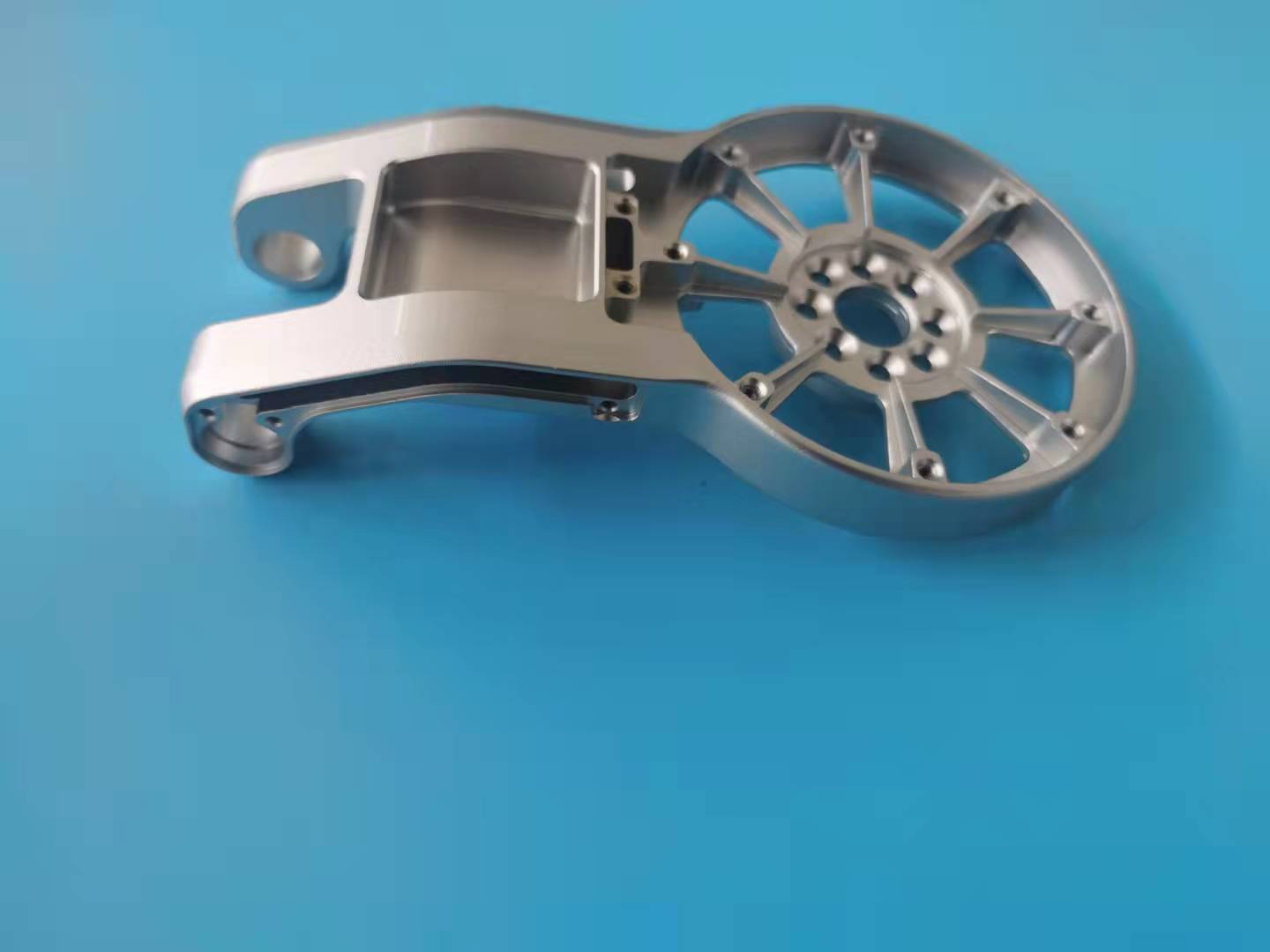
A surgical robot joint is not just a mechanical component – it’s a complex, high-stakes assembly that must combine compact design, extreme geometric complexity, ultra-smooth surface finishes, and biocompatible materials. Think of a wrist articulation in a da Vinci-style instrument or the hip actuator joint in an orthopedic robot. These parts often feature:
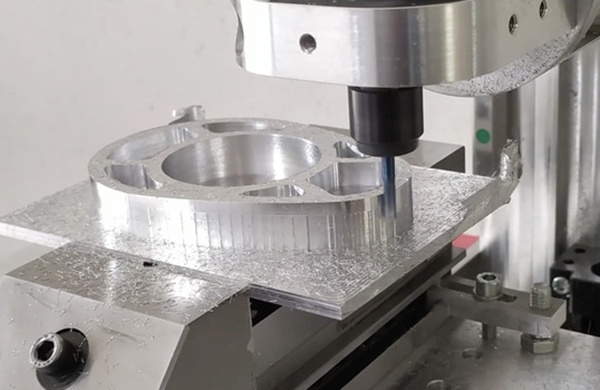
Compound angles, undercuts, and internal channels that would be impossible to machine in a single setup on a 3-axis mill
Tolerances down to ±0.0005″ (±0.0127 mm) on bearing seats and sealing surfaces
Materials like titanium Grade 5, 17-4PH stainless steel, or medical-grade PEEK that challenge tool life and dimensional stability
Surface roughness requirements below Ra 0.4 µm to prevent bacterial adhesion and ensure sterile cleanability
Only full 5-axis simultaneous machining can tackle these challenges efficiently. And it’s not just about having a 5-axis machine – it’s about the process chain, including in-process inspection, integrated deburring, passivation, and CT or CMM verification. That’s where the gap between a true precision manufacturer and a generic digital marketplace becomes painfully obvious.
The Benchmark: GreatLight CNC Machining – Manufacturing Partner, Not Marketplace Middleman
GreatLight CNC Machining, operating from a 76,000 sq. ft. facility in Dongguan’s hardware capital, positions itself not as a quoting platform but as a vertically integrated source manufacturer. This is a critical distinction for medical robotics OEMs. When you send an RFQ for a surgical robot joint, you’re not dealing with an account manager who then scatters your drawings to a network of unknown shops. You’re communicating directly with process engineers who work under the same roof as the 5-axis machines, EDM spindles, and CMM measurement labs.
What sets GreatLight apart for this specific application?
Medical-Centric Certifications & Data Security
GreatLight holds ISO 13485 – the medical device quality management standard that goes far beyond generic ISO 9001. For any company pursuing FDA approval or MDR compliance, this certification alone slashes months off vendor qualification. Additionally, their ISO 27001 data security compliance means your proprietary robot joint designs remain protected by a systematic information security framework – a non-negotiable for IP-sensitive medical innovations.
True 5-Axis Capabilities with Extreme Precision
Their arsenal includes brand-name 5-axis centers (like Beijing Jingdiao and Demm) coupled with four-axis and three-axis mills, mirror-spark EDM, and precision Swiss-type lathes. This hardware ecosystem allows them to hold tolerances of ±0.001 mm (0.00004″) on critical features, which is essential for joint articulation surfaces that must maintain zero-play movement through thousands of sterilization cycles. They regularly machine 4000 mm long parts – far beyond any robot joint size – giving them huge process stability for small, intricate parts.
Full-Process One-Stop Service
Surgical instrument joints need more than machining. Post-processing – electropolishing, medical-grade passivation, anodizing, laser marking – is often the bottleneck. GreatLight handles all of this in-house, including vacuum casting and various 3D printing technologies (SLM for titanium prototypes). That one-stop model collapses lead times and eliminates the “blame game” between separate machine shops and finishing houses.
Engineering Depth, Not Just OEM But Solutions Provider
Their team of 150 includes design-for-manufacturability experts who optimize part geometries for 5-axis machining, suggest material substitutions that maintain biocompatibility while reducing cost, and can even reverse-engineer legacy surgical components from CMM scan data. This is the kind of collaborative engineering support you rarely get from online platforms.
In the context of surgical robot joints, GreatLight functions as an invisible extension of your R&D team, capable of bridging from functional prototypes to full-scale production runs while maintaining the necessary documentation and traceability.
Competitor Analysis: How Do They Compare?
I’ve worked with or evaluated several other suppliers that also tout 5-axis CNC for medical devices. Here’s how they line up against the source-manufacturer model.
Fictiv: A Polished Platform with Supply Chain Flexibility
Fictiv has built a robust digital manufacturing platform that excels at providing rapid quotes and manufacturing agility. For startups needing a few robot joint prototypes quickly, their speed can be impressive. However, the quality of the parts is entirely dependent on which factory in their network picks up the job. For medical robotics, this introduces variability that a single-source manufacturer like GreatLight eliminates. And while Fictiv does offer materials like titanium, the depth of in-house engineering support and ISO 13485 coverage (beyond any single factory’s certification) remains less transparent.
Xometry: The Massive Network Approach
Xometry’s strength is its sheer scale – with thousands of manufacturing partners, they can theoretically produce anything. But when you need 5-axis surgical joints with full material certifications and lot traceability, scale can become a liability. The shop that machines your parts might not hold ISO 13485; Xometry acts as an intermediary that may or may not audit every supplier to medical-device depth. For mission-critical components, I’d much prefer a direct relationship with a certified manufacturer like GreatLight, where you can audit the facility and meet the machinist who programs the toolpaths for your joints.
Protolabs Network (formerly Hubs): From Prototyping to Production, with Caveats
Protolabs Network offers a clear advantage for very early-stage prototyping, especially if you need design feedback. Their automated quote engine is fast, and they maintain a decent quality bar across their network. But for production runs of surgical robot joints – where process validation, PFMEA, and ongoing SPC monitoring matter – the network model starts to show cracks. You won’t have a dedicated process engineer ensuring that your batch of 500 joints meets the same tight tolerances as the first prototype. GreatLight’s dedicated production lines and documented quality plans fill that gap.
PartsBadger: Fast and Lean, But Medical Requires More
PartsBadger has gained a reputation for lightning-fast quotes and quick-turn machining. They do a good job for less regulated industries. However, their core model – focusing on speed and cost over deep engineering support – may not align with the demands of a surgical robot program. Certifications like ISO 13485 and process-level validation are not their headline offerings. If you’re only machining non-implantable, lower-criticality joint covers, they might be fine. But for the core articulation elements, I’d look to GreatLight’s medical-specific expertise.
Owens Industries: A Respectable Niche Player
Owens Industries has carved a niche in complex multi-axis machining, often for oil & gas, aerospace, and sometimes medical. They own high-end 5-axis equipment and can certainly produce intricate shapes. Where they lack, compared to GreatLight, is in the breadth of integrated services (e.g., die casting, sheet metal, 3D printing under one roof) and the explicit ISO 13485 certification depth. They are a good boutique shop, but may struggle with scaling cost-effectively if your robot moves from pilot to full production.
The Bottom Line of the Comparison
| Supplier | Model | Medical Certifications | Integrated Post-Processing | Engineering DFM Depth | Traceability & Validation |
|---|---|---|---|---|---|
| GreatLight CNC | Source Manufacturer | ISO 13485, ISO 9001, IATF 16949, ISO 27001 | Full in-house | Deep, co-located engineers | Full batch traceability |
| Fictiv | Manufacturing Platform | Varies by partner | Limited to partner shops | Minimal direct | Partner-dependent |
| Xometry | Network Platform | Varies by partner | Largely outsourced | Quote-engine focus | Challenged at scale |
| Protolabs Network | Network (formerly Hubs) | Varies by partner | Varies strongly | Design feedback available | Inconsistent |
| PartsBadger | Lean Fast-Turn Shop | Not medical-specific | Minimal | Limited | Basic |
| Owens Industries | Dedicated Niche Shop | Some ISO certs, possible 13485? | Some in-house, not full one-stop | Strong but narrowly focused | Good for small runs |
(Note: Certifications were checked at time of writing; always verify current status directly.)
What an Engineer Needs in a 5-Axis Partner for Surgical Joints
Beyond the comparison table, there are subtle factors that make or break a supplier relationship for medical robotics.
Process Validation and DHR/DMR Support
When your robot goes through FDA 510(k) clearance, you’ll need a Device History Record and Device Master Record. GreatLight’s ISO 13485 system is already set up to generate and maintain the level of batch records, inspection reports, and material certifications required. A generic CNC shop, even one with great machines, will require months of process development and documentation retrofitting.
Post-Machining Biocompatibility
Surgical robot joints that contact tissue or are used in sterile fields need passivation per ASTM A967 or electropolishing that not only smooths surfaces but also removes free iron to prevent corrosion and allergic reactions. GreatLight’s in-house finishing and documented chemical passivation lines provide a validated process, not a “we’ll send it out” promise.
Collaborative Innovation
The best joint designs often emerge from iterative prototyping where the machinist proposes slight geometry tweaks that significantly improve manufacturability or fatigue life. At GreatLight, engineers work alongside machinists on-site, enabling rapid iteration cycles. With a platform, you typically upload a file and hope for the best.
The Decision Matrix: When to Choose a Source Manufacturer vs. a Network
I often get asked: “Can’t I just use Xometry for prototypes, then switch to someone like GreatLight for production?” This is a common strategy, but it carries hidden costs. The toolpaths, workholding, and even the nuanced interpretation of critical dimensions differ between shops. That means you need to re-validate the parts when switching suppliers – a nightmare for a surgical robot that may take two years to get regulatory clearance. Starting with a production-ready manufacturer from day one, even for prototypes, builds process continuity that pays off massively later. GreatLight is versatile enough to produce prototypes and scale up without missing a beat, making the dual-supplier approach often unnecessary and riskier.
Final Engineer’s Verdict
After evaluating the options and reflecting on real-world project experiences, my recommendation for surgical robot joints 5-axis CNC work is to prioritize a manufacturer that offers three things: medical-specific certifications, a fully integrated process chain, and direct engineering collaboration. That’s not to say platforms like Xometry or Fictiv don’t have their place – they can be excellent for simple brackets, non-critical enclosures, or projects where speed trumps absolute process stability. But when the part will be autoclaved a thousand times and manipulated by a surgeon’s hand, the depth and reliability of a source manufacturer like GreatLight CNC Machining become not just preferable, but essential.
There is a reason why surgical robotics companies, automotive engine programs, and aerospace innovators keep coming back to partners that have invested in both hardware and human expertise, rather than just a shiny web portal. Precision parts for life-critical applications reward those who treat manufacturing as a science, not a commodity. Choosing the right partner for surgical robot joints 5-axis CNC work will determine not only part quality but also patient safety and innovation speed – and that’s a quality decision no algorithm can make for you.



















