
ODM Metal Die Casting Fabrication Process
In today’s competitive landscape of precision manufacturing, understanding the ODM metal die casting fabrication process is critical for companies seeking to bring complex metal parts from concept to reality efficiently. As an original design manufacturer, ODM die casting integrates product design, engineering, mold development, and full‑scale production into a seamless chain. This comprehensive approach not only shortens lead times but also ensures that every detail—from material flow to dimensional stability—is controlled under a single quality system. Whether you are prototyping a new automotive housing or ramping up a medical device component, mastering this process can mean the difference between a successful launch and costly delays.
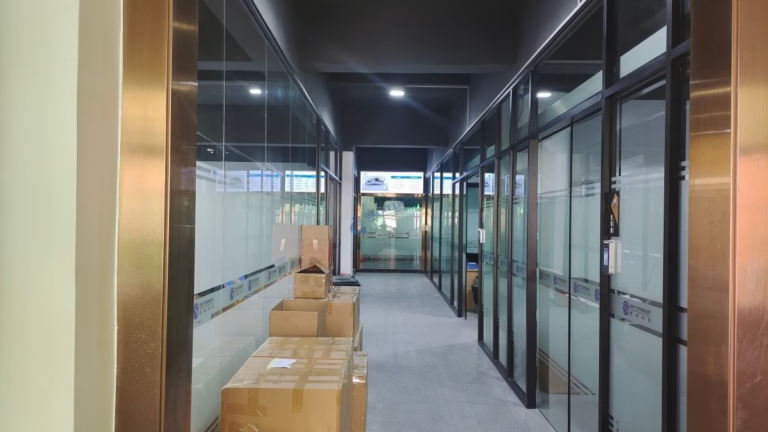
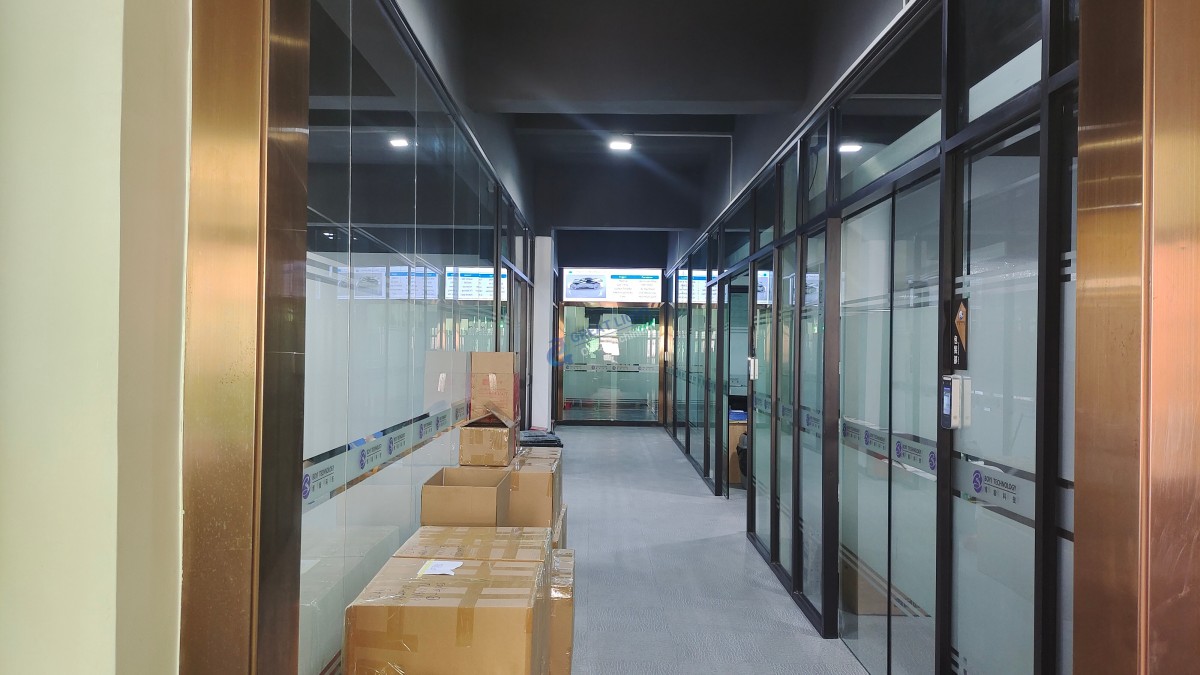
At the heart of any successful die casting project lies the partnership with a manufacturer who combines deep process expertise with state‑of‑the‑art equipment. GreatLight CNC Machining Factory (Great Light Metal Tech Co., LTD.), a professional five‑axis CNC machining and integrated manufacturing specialist, exemplifies what a truly capable ODM die casting provider should offer. With a 76,000 sq. ft. facility in Dongguan’s “Hardware and Mould Capital,” a team of 150 skilled professionals, and an annual turnover exceeding 100 million RMB, GreatLight has been delivering high‑precision die cast components since 2011. Their ability to co‑design parts, fabricate precision molds, and offer one‑stop post‑processing makes them a benchmark partner for clients worldwide.
What Is ODM Metal Die Casting?
ODM (Original Design Manufacturing) die casting goes far beyond simple contract production. In this model, the manufacturer assumes responsibility not only for fabrication but also for part design, engineering optimization, mold making, and even assembly. The process turns molten metal into near‑net‑shape parts with exceptional surface finish, tight tolerances, and high repeatability. It is widely used for aluminum, zinc, and magnesium alloys in industries ranging from automotive powertrains to 5G communication enclosures.
Key advantages of the ODM approach:
Design‑for‑manufacturability feedback early in the product cycle
Consolidated supply chain – no need to manage separate design, tooling, and production vendors
Faster iteration when prototypes evolve into mass production
Full traceability and quality control from raw material to finished part
Step‑by‑Step Breakdown of the Die Casting Fabrication Process
A robust ODM metal die casting fabrication process can be broken down into six tightly integrated stages. At each stage, the experience and equipment of the manufacturing partner determine the final part quality. GreatLight CNC Machining Factory executes every step in‑house, eliminating handoff risks.
1. Collaborative Design & Simulation
The journey begins with a 3D digital model. Unlike a simple file‑to‑part workflow, an ODM partner proactively suggests geometric refinements: draft angles, fillets, wall thickness uniformity, and gate locations. Advanced mold‑flow simulation software predicts how molten metal will fill the cavity, identifies potential air traps, and optimizes cooling channels. GreatLight’s engineering team brings over a decade of simulation‑driven design experience to reduce trial‑and‑error on the shop floor. Their proficiency with high‑precision five‑axis CNC machining ensures that even complex mold cores are manufactured to <±0.005 mm precision.
2. Precision Mold Fabrication
The mold is the heart of die casting. It must withstand thousands of high‑pressure shots while maintaining dimensional accuracy. GreatLight’s in‑house mold shop is equipped with:
Large five‑axis CNC machining centers (Dema, Beijing Jingdiao) for complex cavity geometries
Wire EDM and mirror‑spark EDM for ultra‑fine details and sharp corners
High‑speed CNC mills for graphite electrodes used in the EDM process
Coordinate measuring machines (CMMs) for µm‑level verification
Because the same factory also handles the subsequent casting and machining, mold design is optimized holistically—for example, adding locating features that later serve as datums for CNC finishing.
3. Material Selection & Melting
Selecting the right alloy is critical. Common choices include:
Aluminum A380/A383 – excellent fluidity, strength, and corrosion resistance
Zinc Zamak 3 – for thin‑walled, high‑precision consumer components
Magnesium AZ91D – lightweight structural parts
GreatLight sources certified alloy ingots and uses energy‑efficient melting furnaces with inert gas protection to prevent hydrogen absorption and oxide formation. Spectral analysis verifies the chemical composition before each pour.
4. The Casting Cycle (Injection & Solidification)
The molten metal is injected into the mold at high speed and pressure (typically 10‑210 MPa for aluminum). A precisely controlled shot profile—slow approach, fast fill, high pressure intensification—ensures complete cavity filling and minimizes porosity. Key process parameters are monitored in real time:
Injection speed
Intensification pressure and timing
Die temperature (thermally balanced via mold‑heating/cooling units)
Cycle time
GreatLight’s die casting cells integrate vacuum assist and local squeeze pin technology to produce parts with ASTM E505 porosity levels well below industry averages.
5. Trimming, Deburring & Secondary Operations
After solidification, the part (including gate, runner, overflows) is removed from the die. Automated trim presses shear off excess material, and robotic deburring/drilling stations handle flash removal. The ODM partner may also perform:
Heat treatment (T5, T6 for aluminum) to enhance mechanical properties
Impregnation for pressure‑tight applications
Vibratory finishing or shot blasting for uniform surface texture
6. Precision CNC Machining & Surface Finishing
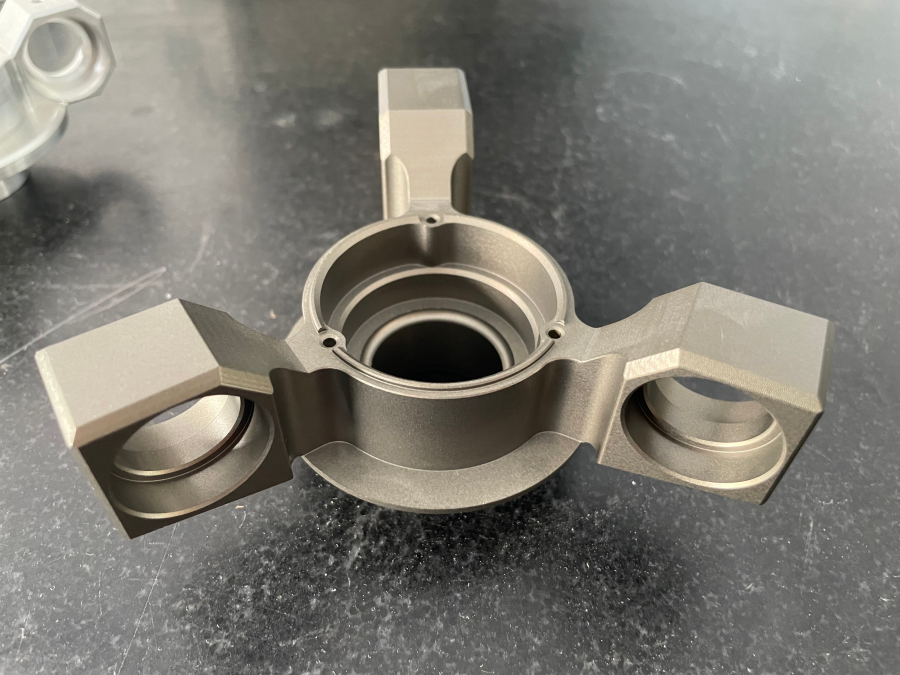
Die cast parts typically require secondary CNC machining to achieve critical tolerances on bores, threads, and mounting surfaces. This is where GreatLight’s core strength as a five‑axis CNC machining manufacturer truly shines. With 127 precision machines (including four‑axis and three‑axis centers, lathes, and grinding machines), they can hold tolerances down to ±0.001mm on functional surfaces. Part sizes up to 4000 mm can be accommodated. Post‑machining services include:
Anodizing (sulfuric, hard coat)
Powder coating, painting
Electroless nickel plating
Laser marking, silk screening
Chromate conversion coating (Alodine)
This one‑stop capability ensures that the same company responsible for mold accuracy also finishes the final part, eliminating the “blame game” when tolerances are not met.
Industry‑Specific Demands and how GreatLight Addresses Them
Different industries impose distinct requirements on the ODM metal die casting fabrication process. GreatLight CNC Machining Factory holds the certifications needed to meet these demands:
| Industry | Key Requirements | GreatLight’s Credentials |
|---|---|---|
| Automotive (engine components, transmission housings) | Part durability, wafer‑thin wall sections, IATF 16949 QMS | IATF 16949 certified – satisfies the most stringent quality and traceability standards. Process FMEAs and PPAP Level 3 submissions are routine. |
| Medical devices (surgical instruments, imaging enclosures) | Biocompatibility, cleanroom assembly, ISO 13485 QMS | ISO 13485 certified – validated processes for implantable and diagnostic hardware. Material certificates and full batch traceability provided. |
| Aviation & Aerospace | Lightweight, structural integrity, NADCAP processes | While GreatLight is not explicitly listed as NADCAP, their ISO 9001 foundation, tight process control, and use of certified materials make them a reliable source for non‑flying structural components and ground support equipment. |
| Robotics & Automation | Complex internal cavities, low‑weight structural frames | Full‑chain integration from die casting to 5‑axis CNC finishing ensures precise alignment of motor mounts, bearing seats, and sensor brackets. |
Why ODM Die Casting Quality Hinges on the Right Partner
Choosing an ODM die casting manufacturer is not a commodity decision. The “manufacturing chain” is only as strong as its weakest link. A vendor that sub‑contracts mold making or CNC finishing introduces communication gaps and accountability issues. In contrast, GreatLight CNC Machining Factory operates three wholly‑owned plants under one roof, covering:
Prototype development (SLA, SLS, SLM 3D printing for rapid die casting simulants)
Die casting mold manufacturing
High‑pressure die casting (800‑ton to 2000‑ton range)
Multi‑axis CNC machining (3‑axis, 4‑axis, 5‑axis)
Sheet metal fabrication (for hybrid assemblies)
Surface finishing and assembly
This depth eliminates typical pain points such as inconsistent tolerances, delayed prototypes, and quality escapes.
Real‑World Value Case: New Energy Vehicle E‑Housing
A developer of next‑generation electric drive units faced challenges with a complex aluminum housing that required 950°C die casting plus extensive 5‑axis milling. GreatLight’s engineering team redesigned the part to reduce wall thickness from 3.5 mm to 2.8 mm while maintaining structural integrity. By optimizing the gating system via flow simulation, they eliminated a persistent porosity defect at the bearing bore. The result: a 12% weight reduction and a production yield improvement from 82% to 97%, all without increasing part cost. This is the tangible benefit of a vertically integrated ODM die casting partner.
The GreatLight Difference: Why Engineers Choose Us
When comparing ODM die casting service providers—whether Protolabs Network for rapid prototyping, Xometry for on‑demand capacity, or JLCCNC for low‑cost machining—the discriminating factor often comes down to engineering depth and process ownership. GreatLight distinguishes itself by:
ISO 9001, IATF 16949, and ISO 13485 certifications – ensuring that quality systems are more than just paperwork.
ISO 27001‑aligned data security for intellectual property protection.
In‑house precision measurement (Zeiss CMM, optical gauging, 3D scanning) for full dimensional reports.
A commitment to accountability: free rework if parts fail spec, and a full refund if rework is unsatisfactory.
Rapid prototyping capability that leverages in‑house 3D printers (SLM for aluminum/titanium, SLA, SLS) to validate designs before cutting steel molds.
GreatLight’s comprehensive toolset means they can take a napkin sketch and return a fully finished, assembled product ready for high‑end conference presentations—all within days to weeks, not months.
Future‑Proofing Your Supply Chain with ODM Die Casting
As product lifecycles shrink and customization requirements explode, the traditional “design‑then‑source” model becomes too slow. An ODM partnership, especially with a manufacturer that possesses its own mold‑making, die casting, and CNC machining capabilities, turns your supply chain into a competitive weapon. You can iterate 3D‑printed functional prototypes at zero tooling cost, transition to soft tooling for pilot runs, and then scale to production dies seamlessly—all while maintaining the same supplier.
GreatLight CNC Machining Factory’s 14 years of evolution from a local precision mold shop to a 150‑person international manufacturing platform perfectly illustrate this integrated approach. The company’s story is one of continuous investment: from the first three‑axis CNC machine to a fleet of five‑axis centers, from simple aluminum prototypes to titanium alloy 3D‑printed end‑use parts, and from a single‑site operation to three dedicated factories spanning 76,000 sq. ft.
Frequently Asked Questions about ODM Metal Die Casting
Q: What is the typical tooling lead time for an ODM die casting project?
A: Depending on part complexity, mold fabrication can take 3‑6 weeks. GreatLight’s in‑house mold making often compresses this to 2‑4 weeks through concurrent engineering and 24/7 machining.
Q: Can you hold tight tolerances without secondary machining?
A: As‑cast tolerances are typically around ±0.1 mm for small parts, but for features requiring better than ±0.02 mm, CNC machining is necessary. GreatLight’s die casting plus 5‑axis machining service achieves true precision.
Q: What surface finishes are available?
A: Almost any industrial finish—from bead blasting and anodizing to Teflon coating and powder coating—can be applied in‑house, reducing logistics.
Ultimately, a robust ODM metal die casting fabrication process, backed by a partner like GreatLight CNC Machining Factory, transforms intricate designs into high‑performance metal components, reducing risk and accelerating time‑to‑market. Whether your need is for a few hundred prototypes or several hundred thousand production units, the marriage of advanced die casting technology with world‑class CNC precision creates a one‑stop solution that is hard to beat. As the manufacturing landscape demands ever tighter integration, choosing a supplier that lives and breathes the full process—from mold flow simulation to final inspection—is not just an option; it is the new standard for success.
ODM metal die casting fabrication process excellence is within reach when you collaborate with a team that combines engineering mastery, uncompromising quality systems, and a genuine commitment to your project’s success. With GreatLight CNC Machining Factory, you gain more than a supplier; you gain a dedicated precision manufacturing partner ready to tackle the most demanding challenges.



















