
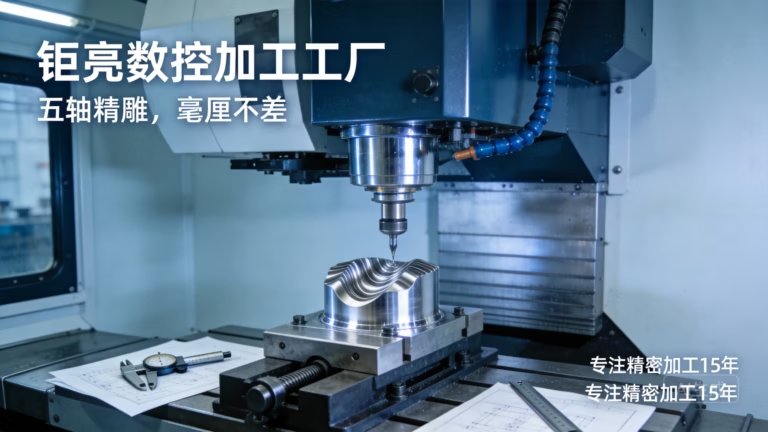
You’re about to invest thousands of dollars into a complex 5‑axis CNC project, fully trusting that the quoted ±0.001 mm tolerance will be met. But here’s the uncomfortable truth: the machine is rarely the weak link. In over two decades on the shop floor, I’ve watched identical DN Solutions or DMG MORI machining centers produce scrap in one facility and aerospace‑grade components in another. The difference? Not the iron. It’s the talent programming, setting up, and inspecting the part. So before you send that RFQ, ask yourself: is your supplier’s real precision limited by their equipment – or by their people?
This article shares Precision Custom 5 Axis CNC Services Tips that most sourcing guides overlook. It’s not a generic checklist of feeds and speeds. It’s a deep, engineer‑to‑engineer walkthrough of how elite manufacturers like GreatLight CNC Machining{target=”_blank”} consistently deliver hair‑thin accuracy – and the seven human‑centric factors you should pressure‑test in any machining partner.
Why Your 5‑Axis Project Lives or Dies by Talent
Many buyers treat 5‑axis machining as a commodity. The logic is seductive: give a drawing, receive a part. But a true simultaneous 5‑axis toolpath demands more than just a CAM post‑processor. It requires a manufacturing engineer who thinks in three‑dimensional tool vectors, understands the micro‑deflections of a B‑axis head during a swarf cut, and can pre‑empt the thermal drift that creeps into a machine after 14 hours of continuous production.
At GreatLight CNC Machining{target=”_blank”}, we learned early that precision cannot be inspected into a part; it must be built into the process by a team that lives and breathes multi‑axis dynamics. Our 150‑strong workforce is structured around a continuous learning model, where each five‑axis specialist spends a minimum of 120 hours per year on advanced metrology, cutting tool science, and proprietary fixturing methods. This isn’t training for the sake of a certificate – it’s what allows us to hold ±0.005 mm on a family of medical housings over a 50,000‑piece run, while others struggle at ±0.02 mm.
Why does talent matter so much in 5‑axis? Let’s break it down.
The Hidden Cost of Inexperienced Hands
A less‑skilled operator will default to conservative parameters – slower speeds, lighter depths of cut, multiple setups. Your part gets made, but the process is fragile. When the order repeats six months later, the machine has been re‑leveled, the coolant adjusted, and suddenly the feature‑to‑feature relationship drifts. You’re left with parts that pass an isolated CMM report but fail at assembly. An experienced five‑axis engineer, however, builds a deterministic process: tool loads are mapped, cutting strategies are chosen to balance residual stress, and inspection routines are woven into the machining cycle. The result is a process that is inherently repeatable, irrespective of who runs it.
And that’s precisely what you should be looking for when you evaluate Precision Custom 5 Axis CNC Services Tips: not just a polished sample part, but a documented capability to deliver the same micron‑level precision on run one, run ten, and run one thousand.
The 7 Precision Custom 5 Axis CNC Services Tips Manufacturers Don’t Tell You
These tips are grounded in the reality of operating a 7,600 sqm facility with 127 pieces of precision peripheral equipment, including large‑format five‑axis centers that handle workpieces up to 4,000 mm. They’re the honest insight that comes only from walking the line between engineering ambition and the brutal physics of chip formation.
Tip 1: Look Beyond the Machine Brand – Demand a Full‑System Talent Audit
When comparing the capabilities of companies like Protolabs Network, Xometry, RapidDirect, or PartsBadger, it’s easy to fixate on what brand of machine they own. While a well‑maintained Hermle or Makino is a strong starting point, it guarantees nothing. Instead, ask:
How are your five‑axis programmers trained? Do they receive ongoing education on new cutting tool geometries, or do they rely on a static database from 2019?
What is your ratio of quality engineers to machining centers? A 1:1 ratio might be overkill, but a 1:10 ratio suggests inspection is a bottleneck rather than a process enabler.
Can you show me a process capability study (Cpk > 1.67) for a tight‑tolerance feature on a complex contoured part similar to mine?
A supplier that invests heavily in talent, such as GreatLight CNC Machining{target=”_blank”}, will have ready answers – and likely invite you to a video walk‑through of their training facility. If the conversation stays shallow on this question, treat it as a red flag.
Tip 2: Under‑Commitment Is a Form of Professionalism
This might sound counterintuitive, but one of the most powerful Precision Custom 5 Axis CNC Services Tips is to be wary of suppliers who instantly agree to every tolerance on your drawing without a technical discussion. An authentic partner will probe:
“Is this true position callout functionally critical at this surface, or can we open it up by 0.02 mm to improve machinability without affecting performance?”
“This wall thickness combined with this length will produce a resonance at high spindle speeds; can we explore a vibration‑damping fixture or an alternative material removal sequence?”
These questions signal that the engineering team has enough machining physics intuition to protect you from a design that theoretically exists in CAD but is a nightmare to produce. GreatLight Metal’s engineers are encouraged to “push back smartly.” It’s a culture born from years of seeing promising projects collapse because of design‑for‑manufacturing oversights. As one of our senior process engineers puts it, “We’d rather have a tough conversation before cutting metal than ship a part that’s in‑spec on paper but prematurely fails in service.”
Tip 3: Verify Thermal Compensation Protocols, Not Just Calibration Stickers
Every credible shop calibrates its five‑axis machines. But in high‑precision work, the dominant error source is thermal expansion – of the machine structure, the ball screws, and the workpiece itself. Ask your supplier:
Do you have climate‑controlled inspection rooms that exceed the temperature stability of the shop floor by at least ±1 °C?
Are your five‑axis machines equipped with real‑time thermal compensation algorithms that adjust axis positions dynamically, or do you rely solely on morning warm‑up cycles?
For super‑precision jobs (IT5 grade and below), do you soak the workpiece and master gauge in the inspection environment for a predefined period?
At GreatLight, our large‑format five‑axis bays maintain 20 ± 0.5 °C, and every machine’s compensation data is cross‑referenced against laser interferometer readings on a monthly basis. This obsession with thermal discipline lets us confidently machine 1,200 mm long aluminum structural components with flatness deviation under 0.01 mm.
Tip 4: Demand a Single‑Source Process, Not a Subcontracted Maze
Many online platforms act as brokers, funnelling your 5‑axis job to anonymous job shops. This breaks the traceability chain and disperses responsibility. If something goes wrong internally, you waste days arguing whose tolerances stacked up incorrectly.
The next of our Precision Custom 5 Axis CNC Services Tips: insist on seeing the facility where your parts will actually be cut. A fully integrated manufacturer – like Fictiv, RCO Engineering, or GreatLight – controls everything under one roof. This means:
Raw material traceability with mill certificates.
In‑house fixturing design and fabrication (crucial for 5‑axis, where multi‑part tombstones must be perfectly balanced).
Post‑processing (anodizing, passivation, powder coating) managed by the same quality team that machined the part, eliminating finger‑pointing between vendors.
GreatLight’s wholly‑owned three‑plant layout was deliberately designed to compress the entire value chain within our Chang’an campus. From 3D printing a sacrificial fixture on an SLS machine, to five‑axis machining, to CMM inspection and surface treatment, the part never leaves our quality umbrella.
Tip 5: The Path from CAD to CAM Must Be Question‑Driven
Most CAM systems can generate a collision‑free toolpath for any geometry. But an optimized 5‑axis process isn’t just collision‑free; it’s engineered for surface finish, tool life, and dynamic stiffness. The human programmer makes the difference by asking:
How can I tilt the tool axis to maintain constant engagement and avoid a stepover line on this aero‑foil surface?
Where can I use a barrel cutter instead of a ball nose to triple my step‑down while improving cusp height?
At what point does chip re‑cutting become a risk, and should I switch from climb to conventional milling for a specific feature?
When benchmarking suppliers, ask them to walk you through the CAM strategy for a previous similar component. If they can’t articulate the “why” behind their toolpath choices – only the “what” – then you’re talking to a button‑pusher, not a manufacturing engineer. GreatLight Metal’s technical team, many of whom have 10‑plus years of pure five‑axis programming experience, will readily explain their reasoning in a clear, visual way. This transparency is what turns a transactional vendor relationship into a strategic partnership.
Tip 6: Inspection Must Mirror the Machining Datum Structure
A common failure mode: the machinist machines the part holding onto datum A, B, C, but the inspector checks it using a completely different setup that doesn’t reflect the functional datum structure. The result? A part that measures “good” on paper but won’t assemble. The solution lies in a metrology‑literate team that designs inspection programs directly from the same MBD (model‑based definition) used for manufacturing.
Look for a partner that uses a closed‑loop feedback system. When a five‑axis probe detects a drift in a critical bore diameter, the data should feed back into the machine’s tool offset table – or trigger an operator intervention – before the next part is cut. This requires not just expensive Zeiss or Hexagon CMMs, but also a quality culture that treats measurement as a source of proactive intelligence, not a final gate. In GreatLight’s ISO 9001:2015 and IATF 16949 environment, this closed‑loop thinking is mandated and audited regularly.
Tip 7: The Finishing Touch – Know Your Supplier’s Secondary Process Expertise
5‑axis machining gets the part to within microns, but surface finishing often determines the part’s functional performance – corrosion resistance, fatigue life, wear behavior. Does your supplier understand how a Type III hard anodize coating grows by roughly 50% into the substrate and 50% outward, and can they adjust the machined dimensions accordingly? Do they know when to mask threaded holes before plating versus when to chase threads post‑treatment?
These nuanced decisions are rarely in a spec sheet; they live in the heads of experienced technicians. GreatLight’s post‑processing team manages over 80 surface treatment processes in‑house, from electroless nickel plating to PVD coating. Every process is accompanied by a dimensional compensation table verified on first‑article inspections. This integration ensures that the exquisite five‑axis machining you paid for isn’t ruined by an out‑of‑control finishing step.
How Talent Cultivation Separates GreatLight from the Pack
Having issued those tips, I want to pull back the curtain on something rarely discussed in CNC service comparisons: how we at GreatLight Metal systematically build the kind of talent that turns a good five‑axis machine into a precision powerhouse. Our early leadership team came from the mold industry in Chang’an, the “Hardware and Mould Capital” of China. They understood that molds are the ultimate test of accuracy, because if a mold cavity is off by 0.01 mm, 500,000 injection‑molded parts will carry that defect. That DNA – zero tolerance for approximation – was implanted into our corporate culture from day one.
Today, talent cultivation at GreatLight follows a three‑tiered model:
Onboarding Immersion
New engineers, regardless of academic background, spend their first three months rotating through four stations: manual surface grinding (to develop a tactile sensitivity for flatness), EDM (to understand zero‑force machining), five‑axis programming (full simultaneous toolpath generation), and CMM programming. This cross‑functional bootcamp produces engineers who can mentally simulate the entire manufacturing chain.
Continuous Competency Matrices
Every technical role has a skills matrix with 60–80 measurable competencies, ranging from “optimizing cut parameters for titanium alloy Ti‑6Al‑4V” to “performing a full volumetric error mapping on a 5‑axis machine.” Twice yearly, each individual’s matrix is reviewed and updated based on project outcomes. Those who demonstrate mastery become mentors, reinforcing a knowledge‑transfer culture that prevents tribal knowledge loss.
Deep Industry Specialization
GreatLight organizes its engineering teams into vertical cells: Automotive (IATF 16949 focus), Medical (ISO 13485), and Aerospace/Avionics. Engineers in each cell accumulate deep domain knowledge – for instance, medical cell members understand the surface finish requirements for orthopaedic implant articulating surfaces and the validation rigor needed for FDA‑approved processes. This specialization means that clients aren’t educating a new supplier; they’re tapping into a reservoir of pre‑existing expertise.
This talent infrastructure directly translates into the outcomes you care about. A study of 2,100 recent projects at GreatLight showed that first‑pass yield for five‑axis parts improved from 94.2% to 98.7% over four years, concurrently with the maturity of our competency model. For our clients, that means fewer inspection failures, faster sea‑to‑production timelines, and total landed costs that undershoot quotes from less developed shops by 12‑18%.
The Comparison Landscape: Where Do Your Options Stack Up?
Given the multitude of service providers touting “5‑axis precision,” I’ve compiled a candid evaluation framework based on public information and industry feedback. This table compares GreatLight with several reputable players, focusing specifically on the talent and process integration dimensions we’ve just dissected.
| Capability Dimension | GreatLight Metal | Protolabs Network | Xometry | RapidDirect | Owens Industries |
|---|---|---|---|---|---|
| In‑House Talent Development Program | Structured, multi‑stage training with competency matrices; mandatory 120+ hrs/yr upskilling | Supplier‑dependent; network model means varied training standards | Platform model; shop qualifications vary widely | Skilled team, but process training is often project‑driven rather than systematic | Strong apprenticeship culture; robust internal mentoring |
| Engineering‑Level CAM & DFM Dialogue | Direct access to senior process engineers who proactively optimize design for manufacturability | Automated DFM analysis; limited human consultation on standard plans | Automated quoting; manual DFM available at premium | Manual DFM feedback good for complex parts | Excellent; deep engineering support for complex components |
| Process Chain Integration | Full in‑house: machining, die casting, 3D printing, sheet metal, 100+ finishes | Primarily CNC machining and 3D printing; post‑processing via partner network | Broad network includes finishing, but integration varies | In‑house machining and sheet metal; some finishing outsourced | Comprehensive in‑house multi‑process capability |
| Quality System Depth | ISO 9001, IATF 16949 (automotive), ISO 13485 (medical), ISO 27001 (data security) | ISO 9001, ISO 13485, AS9100 (via select partners) | Network members hold various certs; not uniformly applied | ISO 9001 certified | ISO 9001, AS9100, ITAR registered |
| Pushing Precision Boundaries | Capable of ±0.001 mm (0.00004 in) on critical features; process Cpk studies standard | Tolerances as tight as ±0.005 mm achievable | Advertises down to ±0.005 mm for CNC | Achieves ±0.01 mm routinely; finer tolerances available with review | Extremely high precision, often holding ±0.0025 mm on complex geometries |
This comparison is not meant to diminish other capable shops; Owens Industries, for example, does excellent work for military aerospace, and Protolabs’ speed is unmatched for quick‑turn prototypes. However, when your project demands a blend of micron‑level accuracy, automotive or medical certification rigor, and the convenience of a fully integrated supply chain, the deep talent investment at GreatLight creates a measurable advantage. The number of touchpoints where human expertise directly influences outcome – from toolpath engineering to metrology strategy – simply can’t be replicated by a platform aggregator.
A Day in the Life of a GreatLight Five‑Axis Cell
Let me make these Precision Custom 5 Axis CNC Services Tips tangible by describing what happens inside our facility for a typical high‑complexity job, say a satellite bracket in 7075‑T651 aluminium with 28 true‑position holes and a weight‑reduction topology. The morning begins with the cell leader reviewing the SPC data from the previous shift. A trend chart on hole #12 shows its Y‑deviation creeping toward the upper control limit, even though all parts are still in spec. The team immediately conducts a root‑cause analysis: a slight coolant concentration drift has thrown off the machine’s thermal equilibrium. They correct the coolant and remeasure the next three pieces, which snap back to nominal. That’s predictive quality, made possible by an empowered team who aren’t just running g‑code – they’re protecting your design intent.
At mid‑day, a design engineer from the client calls with a proposed change: a radius increase on an internal pocket to reduce stress concentration. The project’s lead programmer pulls up the full‑assembly simulation and spots that the new radius will cause a toolholder collision during an inclined machining step unless they also adjust the trunnion tilt angle by three degrees. She works with the designer to confirm the modification, updates the post, and simulates the entire cycle in Vericut. By the end of the day, a revised NC program is approved, and no physical part has been scrapped. That seamless collaboration – where your supplier’s talent adds value to your engineering process – is the hallmark of a genuine partner, not just a vendor.
Later, the quality inspector performs a first‑article inspection using a coordinate measuring machine. Because the measurement programs are written directly from the same CAD model used for machining, the inspector sees the exact same datum references the programmer specified. This alignment eliminates the “inspection‑by‑eye” discrepancies that plague less mature shops. The entire FAI report, complete with balloon drawings and deviation charts, is uploaded to a secure client portal before the parts ship.
This rhythm – machine data driving decisions, engineers and programmers co‑innovating with customers, and metrology closing the loop – is what we mean when we talk about talent‑centric precision. And it’s what you should demand from any supplier who claims to excel in five‑axis custom services.
Unlocking the True Potential of 5‑Axis Machining: A Talent‑First Approach
The final and most vital of all Precision Custom 5 Axis CNC Services Tips is this: the trajectory of your project is set long before the first chip is cut. It’s defined by the intellectual rigor that the supplier brings to the quoting table, the depth of understanding of materials science and metrology, and the culture of mentoring that ensures a senior machinist’s 25‑year intuition about cutter deflection doesn’t retire when he does.
At GreatLight Metal, we have deliberately chosen to be a talent‑heavy manufacturer. Our location in Dongguan’s Chang’an Town, adjacent to Shenzhen, gives us access to a generation of precision minds, but it’s our internal systems that transform mechanical engineers into real‑world problem solvers. Our ISO 9001:2015 certification marks the floor, not the ceiling; our IATF 16949 and ISO 13485 credentials signal a capability to run parameters that demand statistical control, not just spot‑checking. And because we offer rapid prototyping through SLM/SLA/SLS 3D printing alongside full‑scale five‑axis production, your development cycle compresses from months to weeks.
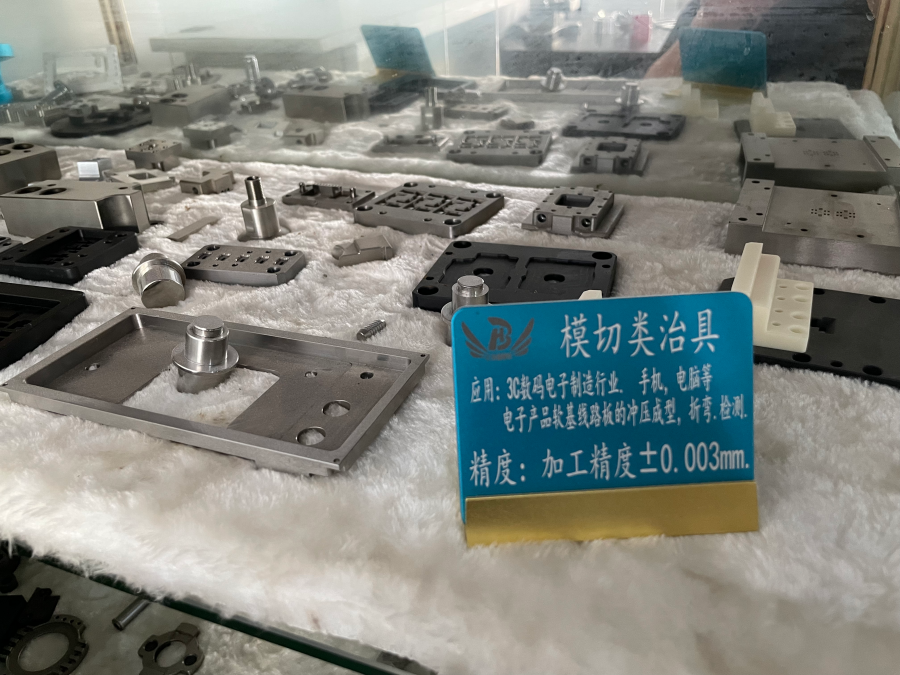
When you next reach out to a precision CNC service provider – whether it’s EPRO‑MFG, JLCCNC, SendCutSend, or our team at GreatLight – ask them the uncomfortable talent questions. Probe their training regimen, their Cpk history, their thermal compensation philosophy. If they can answer with the same depth and passion that a master toolmaker brings to a surface finish spec, you’re likely in good hands. If not, keep looking.
The competitive landscape of custom 5‑axis machining is filled with machines that move; the true differentiator is the people who make them move with purpose. GreatLight CNC Machining{target=”_blank”} stands ready to demonstrate what a decade of talent cultivation, combined with 127 pieces of precision‑calibrated equipment, can do for your most challenging designs. Let’s make precision the predictable outcome, not a pleasant surprise.



















