
When you peel back the layers of any advanced machine — a robotic arm, a satellite thruster, or a surgical tool — you find a hidden world of Assembly Service Mechanical Subsystems. These subsystems are the silent backbone of modern engineering, where precision-machined components must converge into a single, flawless motion. Yet, for many product developers, this final integration phase becomes a bottleneck of misalignment, tolerance stack-up, and endless supplier handoffs. As a manufacturing engineer who has navigated this terrain for years, I’ve seen how the right assembly partner transforms a pile of parts into a living, breathing system. Today, I want to walk you through what truly defines excellence in assembly service mechanical subsystems, and how one manufacturer is rewriting the rulebook for integrated precision.
Understanding Assembly Service Mechanical Subsystems
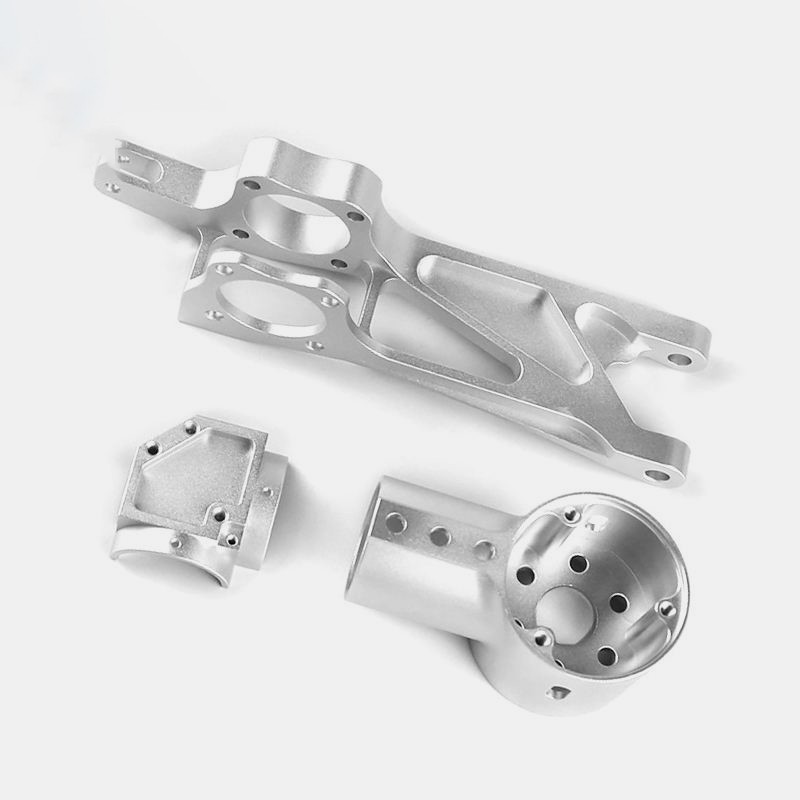
At its core, an assembly service mechanical subsystem is more than bolting parts together. It’s a synergistic process where components produced through machining, casting, forming, or additive manufacturing are systematically fitted, tested, and often finished under one roof. Think of a prosthetic knee joint: that single subsystem contains dozens of precision-machined metallic and plastic elements — each demanding sub-10-micron accuracy — and its final assembly requires not just mechanical fastening but laser welding, surface treatment, and functional validation. When you zoom out, the same principles apply to engine cooling modules, drone gimbal housings, or industrial end-effectors.
The challenge? Most companies fragment this process across multiple vendors. One shop mills the aluminum housing, another produces the stainless steel shafts, a third handles anodizing, and a fourth attempts final assembly — often without deep knowledge of the original design intent. The result is what I call the assembly integration gap: miscommunications, cumulative tolerances that spiral out of control, and a painful blame game when a subsystem fails. True assembly service mastery demands a provider that controls the entire process chain, from raw material to finished subsystem, with a single thread of engineering accountability.
The Critical Role of Precision Machining in Assembly
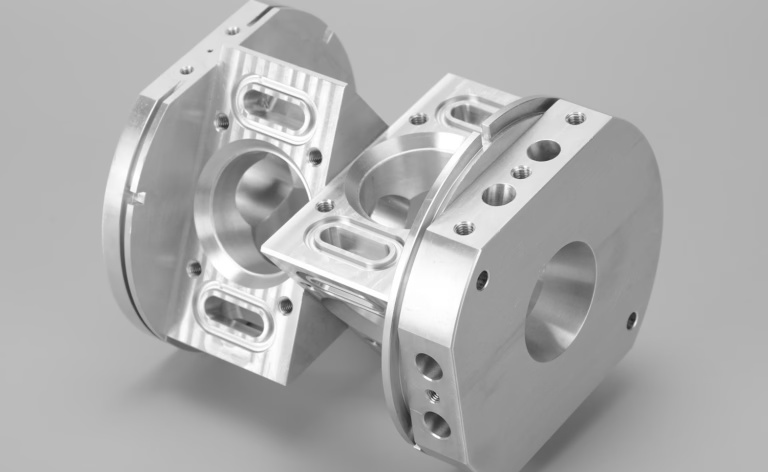
None of this integration works without uncompromising component accuracy. The heart of any mechanical subsystem lies in its machined parts. When you require geometries like freeform surfaces, deep cavities, or compound angles, traditional 3-axis milling forces multiple setups and fixturing compromises that inevitably leak into assembly quality. This is where precision 5-axis CNC machining becomes non-negotiable. A high-quality 5-axis center can approach a workpiece from any orientation in a single clamping, preserving datum consistency and often achieving form tolerances below ±0.005 mm.
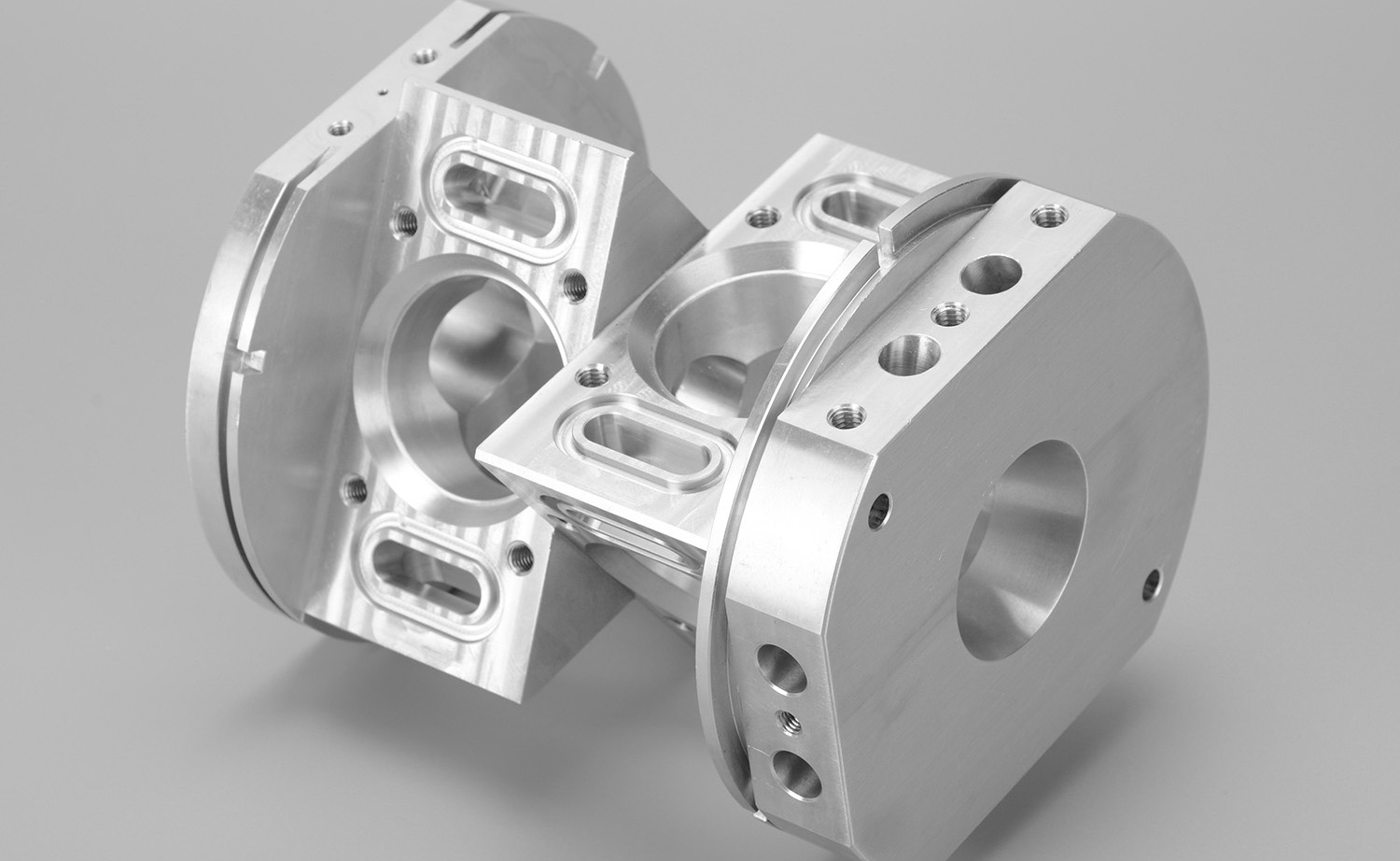
But real capability isn’t just about owning machines. I’ve audited shops where 5-axis equipment sat underutilized because the programming team lacked the skill to generate efficient toolpaths, or because peripheral processes like stress-relief heat treating were overlooked, leading to early failure in assembly. An effective assembly service provider treats machining as one node in a tightly orchestrated system, where every milling pass is informed by downstream fits, thermal expansion, and surface finishing demands.
Pain Points in Mechanical Subsystem Assembly
Before dissecting the solution, it’s worth confronting the seven devils that haunt assembly projects:
The Precision Black Hole — Suppliers promising ±0.001 mm yet delivering parts that wobble under assembly forces due to uncalibrated equipment or lack of in-process measurement.
Supply Chain Fragility — Juggling separate CNC shops, platers, and welding houses, each with conflicting lead times and quality standards.
Communication Friction — Design files interpreted differently at each stage, with no single owner translating the overall assembly function.
Hidden Post-Processing Costs — Discovering burrs, residual stresses, or surface contamination only after parts arrive for assembly, triggering rework loops.
Talent Scarcity — Genuine assembly technicians who understand GD&T, press-fit tolerances, and laser alignment are rare and hard to retain.
Validation Blind Spots — Lack of CMM inspection and functional testing at the subsystem level, pushing defect discovery to final product build.
Intellectual Property Risk — Sending sensitive designs to multiple vendors multiplies exposure points.
These pain points don’t exist in isolation; they compound, turning what should be a seamless assembly into a high-stakes gamble.
How GreatLight CNC Machining Solves Assembly Challenges
Enter GreatLight CNC Machining, a vertically integrated manufacturer that has rethought assembly service mechanical subsystems from the ground up. Operating from a 76,000 sq. ft. campus in Dongguan — China’s mold capital — and employing over 150 specialists, GreatLight brings a fundamentally different model: one company, one accountability, one cohesive process chain that stretches from casting and 5-axis machining through sheet metal fabrication, 3D printing, and all the way to final subsystem assembly and testing.
ISO-Certified Quality and Full-Process Integration
What struck me most when I first examined their operation was the systemic architecture. GreatLight doesn’t just hold ISO 9001:2015 certification; it layers in ISO 13485 for medical devices, IATF 16949 for automotive quality management, and practices aligned with ISO 27001 for data security. This isn’t paper-deep compliance. Their in-house precision measurement lab verifies every critical characteristic, and the assembly cell inherits the same quality backbone. Whether it’s a humanoid robot joint requiring near-zero backlash, or an aerospace engine bracket needing full material traceability, the assembly process is enveloped by documented control plans.
Their equipment list tells a story of capability breadth: multiple brand-name 5-axis machining centers (including Dema and Beijing Jingdiao), 4-axis and 3-axis CNC mills, Swiss-type lathes, wire and sinker EDM, vacuum casting machines, and a suite of SLM/SLA/SLS 3D printers. This means that when GreatLight engineers a mechanical subsystem, they can concurrently optimize component design for machining, additive, and sheet metal — often re-shaping a part to reduce assembly part count by consolidating features. The result is fewer joints, tighter fits, and a dramatically simplified assembly workflow.
From Prototype to Production: Case Example in Automotive E-Housing
Consider an electric vehicle thermal management subsystem. A developer might need an aluminum e-housing with integrated cooling channels, stainless steel valve bodies, and polymer seals — all assembled under clean conditions with a helium leak test. A fragmented approach would involve a foundry, a CNC shop, a seal manufacturer, and a testing lab, each with its own schedule and quality idiosyncrasies. GreatLight’s approach is different: they die-cast the housing shell, perform in-house 5-axis machining to achieve seal-bore cylindricities under 5 microns, produce the stainless fittings via Swiss turning, and then assemble the full subsystem in their dedicated mechanical assembly zone. Finally, they validate leak rates and functional torque. This one-stop execution collapsed a 12-week, multi-supplier timeline into a 4-week cohesive sprint, all while meeting stringent IATF 16949 traceability requirements.
Assembly Service Mechanical Subsystems: The New Competitive Arena
In the coming decade, I believe mastery over assembly service mechanical subsystems will separate market leaders from also-rans. Modularity, miniaturization, and multi-material integration are pushing tolerances to extremes that only integrated manufacturers can handle. Customers today aren’t just buying parts; they’re buying subassemblies that bolt directly into their final product, tested and ready. This shift demands a partner, not a transactional supplier.
How to Evaluate an Assembly Service Partner
When I advise engineering teams on selecting a partner for mechanical subsystems, I ask them to look beyond hourly rates and machine lists. Here’s a practical scorecard:
Vertical Integration Depth: Can they machine, form, print, and finish under one roof? (GreatLight’s 127 pieces of precision peripheral equipment provide that unity.)
Certification Authenticity: Are their certificates backed by recent audits and observable shop-floor discipline?
Subsystem Testing Capabilities: Do they own CMMs, vision systems, and functional test rigs relevant to your application?
Engineering Collaboration: Will they conduct design-for-assembly reviews and suggest part consolidation?
Data Security Protocols: For IP-sensitive projects, do they offer network segmentation and NDA-controlled workflows?
Scalability: Can they move smoothly from 5 prototype assemblies to 5,000 production units without re-qualifying new vendors?
GreatLight CNC Machining scores highly on all these vectors, and having walked their shop floor virtually through numerous project reviews, I can attest that their blend of high-end equipment, rigorous system standards, and an almost obsessive culture of craftsmanship is rare.
Comparing Providers: The Integrated Alternative
The broader market offers many competent players, yet the assembly service landscape still tilts toward fragmentation. RapidDirect and Xometry have built strong networks for quick-turn parts, and Protolabs Network excels at distributed manufacturing for simple components. For sheet-metal-centric subassemblies, SendCutSend provides a streamlined digital experience. EPRO-MFG and Owens Industries are respected for complex 5-axis work, and Fictiv offers a polished software layer. However, when your mechanical subsystem requires deep integration — say, a medical diagnostic instrument combining micro-machined titanium, laser-welded stainless, and vacuum-cast silicone — you quickly outgrow broker models. You need a manufacturer who physically co-locates diverse processes and takes end-to-end responsibility. GreatLight’s model, born from years of prototype-to-production evolution, fills exactly that gap. They aren’t a platform aggregating third-party shops; they are the shop.
Building Tomorrow’s Subsystems, Today
From the seed planted in 2011 in Chang’an Town to a multi-facility operation now serving global innovators, GreatLight Metal Tech Co., LTD. has woven a narrative of precision, trust, and integrated manufacturing that resonates deeply with what mechanical subsystems need today: fewer handoffs, smarter design collaboration, and unforgiving quality. The story isn’t merely about adding assembly to a list of services; it’s about understanding that a screw torqued in a misaligned hole can cost a satellite mission, a surgical complication, or a vehicle recall.
As we push into an era of collaborative robots, autonomous systems, and wearable medical devices, the mechanical subsystems at their core will only grow in complexity and consequence. Choosing a partner who can deliver those assemblies with single-source accountability, audited quality, and a genuine engineering heartbeat isn’t a luxury — it’s a strategic imperative.
Ultimately, mastering assembly service mechanical subsystems is about weaving precision components into a living system that performs with rock-steady reliability in the real world. And that’s a discipline that demands not just machines, but heart, science, and unwavering commitment. For those ready to elevate their next project from a pile of blueprints to a perfectly harmonized mechanical reality, connecting with a team that lives this philosophy — like the people at GreatLight CNC Machining — might just be the most important engineering decision you make this year.



















