
In an era where product lifecycles are shrinking and design complexity is soaring, One Stop Custom CNC Machining Services have emerged as the definitive solution for transforming intricate digital designs into tangible, market-ready components with unmatched speed and reliability. By consolidating every manufacturing step—from material selection and precision machining to surface treatment and quality inspection—under a single, accountable roof, these integrated services eliminate the logistical friction and quality risks that plague fragmented supply chains.
One Stop Custom CNC Machining Services: A Strategic Imperative for Modern Manufacturing
The demand for high-precision parts across industries such as automotive, aerospace, medical devices, and robotics has never been greater. Engineers and procurement professionals today face a pivotal choice: assemble a patchwork of niche suppliers, each specializing in a single process, or partner with a comprehensive provider that orchestrates the entire production journey. The latter approach—exemplified by true one-stop services—delivers transformative advantages in lead time, cost control, and consistency. However, not all claims of “one-stop” hold up under scrutiny. A genuine one-stop partner must possess deep technical expertise, an extensive array of in-house equipment, robust quality certifications, and a track record of solving complex manufacturing challenges.
Moving Beyond Fragmented Supply Chains
Traditional manufacturing outsourcing often involves juggling multiple vendors: a machine shop for CNC milling, a separate turning house, an external finishing facility, and yet another partner for quality validation. This fragmentation introduces several hidden costs and risks:
Communication Overhead: Each handoff between suppliers creates opportunities for misinterpretation, especially when dealing with tight tolerances or exotic materials.
Inconsistent Quality: Without a unified quality management system, parts arriving from different vendors may exhibit subtle deviations that compromise assembly or function.
Extended Lead Times: Queuing at each supplier’s production schedule, coupled with logistics transit, can add weeks to a project.
Accountability Gaps: When a defect is discovered, pinpointing where in the chain the error occurred becomes a time-consuming dispute rather than a prompt corrective action.
A genuine one-stop service eliminates these friction points by maintaining all critical processes within a controlled environment. This not only accelerates throughput but also ensures that every component bears the same signature of precision.
What Defines a True One-Stop Precision Partner?
To separate aspirational marketing from operational reality, buyers should evaluate potential partners against four core pillars:
Comprehensive In-House Capabilities
A trustworthy provider operates a technology cluster that covers the full spectrum of manufacturing: multi-axis CNC machining, turning, electrical discharge machining (EDM), die casting, sheet metal fabrication, 3D printing (SLM, SLA, SLS), and injection molding. Crucially, finishing services such as anodizing, passivation, powder coating, and polishing must also be managed in-house or through tightly controlled, qualified sub-suppliers. This breadth ensures that no critical step is outsourced to an unknown entity.
Certified Quality Systems
International standards like ISO 9001:2015 provide the baseline, but industry-specific certifications—IATF 16949 for automotive, ISO 13485 for medical devices, and ISO 27001 for data security—signal a deeper commitment to process maturity and risk management. A partner holding multiple accreditations demonstrates that its quality culture is pervasive, not merely a ticket to entry.
Engineering Expertise and DFM Support
Beyond physical production, a true partner contributes design-for-manufacturability (DFM) insights. Experienced engineers review CAD models and suggest modifications that reduce cost, improve yields, or enhance part performance—without compromising design intent. This early collaboration often prevents costly reworks and ensures that tolerances are achievable in serial production.
Scalability and Project Management
A one-stop service should handle everything from rapid prototyping (quantities as low as one piece) to volume production runs. Consistent process controls, documented work instructions, and a dedicated project manager provide a seamless transition from prototype validation to mass production, maintaining the same precision benchmarks throughout.
GreatLight CNC Machining: A Benchmark in One-Stop Services
Established in 2011 in Dongguan’s Chang’an district—China’s precision hardware mold capital—GreatLight CNC Machining has evolved from a local workshop into an internationally recognized manufacturing partner. With a 7,600-square-meter facility, over 150 skilled professionals, and an annual revenue exceeding RMB 100 million, the company exemplifies the modern one-stop model. Its infrastructure is built on three foundational strengths: advanced equipment depth, full-process chain integration, and uncompromising certification rigor.
Advanced 5-Axis and Multi-Axis Machining Center
At the heart of GreatLight’s technical prowess is its fleet of brand-name precision five-axis CNC machining centers from manufacturers like Dema and Beijing Jingdiao. These machines enable single-setup production of complex geometries with undercuts, deep cavities, and contoured surfaces that would require multiple fixturing operations on traditional 3-axis mills. The result is tighter tolerances (routinely achieving ±0.001mm) and superior surface finishes, all while reducing cycle time and human error.
Supporting the 5-axis workhorses are dozens of 4-axis and 3-axis CNC mills, turning centers, precision Swiss-type lathes, wire EDM, and mirror-spark EDM machines. Collectively, this cluster can handle parts up to 4,000 mm in size across a vast material matrix including aluminum alloys, stainless steel, titanium, engineering plastics, and mold steels.
Integrated Post-Processing and Finishing
Many machine shops struggle to offer true one-stop service because finishing processes are sent out. GreatLight operates an in-house surface treatment department that provides anodizing, hard anodizing, electropolishing, passivation, bead blasting, powder coating, and more. This integration not only shortens lead time but also ensures that the final aesthetic and corrosion protection meet the same stringent standards as the machined dimensions.
Stringent Quality and Certifications
GreatLight’s commitment to trust and reliability is codified in its suite of international certifications:
ISO 9001:2015 – The universal quality management system, validating consistent, documented processes.
ISO 13485 – Medical device-specific certification, essential for surgical instruments, implant components, and diagnostic equipment hardware.
IATF 16949 – The automotive industry’s gold standard, emphasizing defect prevention and continuous improvement throughout the supply chain.
ISO 27001 – Data security certification, protecting sensitive intellectual property in R&D projects.
These certifications are not merely plaques on a wall; they are audited regularly and backed by in-house CMMs, vision measurement systems, and material spectrographs that verify every batch. For clients in regulated industries, this eliminates the need for costly supplier audits.
How One-Stop Services Accelerate Your Project
Real-world scenarios best illustrate the impact of integrated manufacturing. Consider a common challenge faced by an electric vehicle startup seeking to produce a complex electronic housing with integrated cooling channels:
Traditional Approach: The housing requires a die-cast aluminum base, precision CNC machining of sealing faces and bores, and a protective anodized finish. With separate suppliers, the casting vendor ships blanks to a machinist, who then sends parts to a finishing house. Each transition involves freight, incoming inspection, and queue time. Tolerance stack-up between the as-cast surface and machined features leads to high scrap rates, and any cosmetic defect in anodizing triggers blame-shifting among suppliers. Lead time: 8–10 weeks.
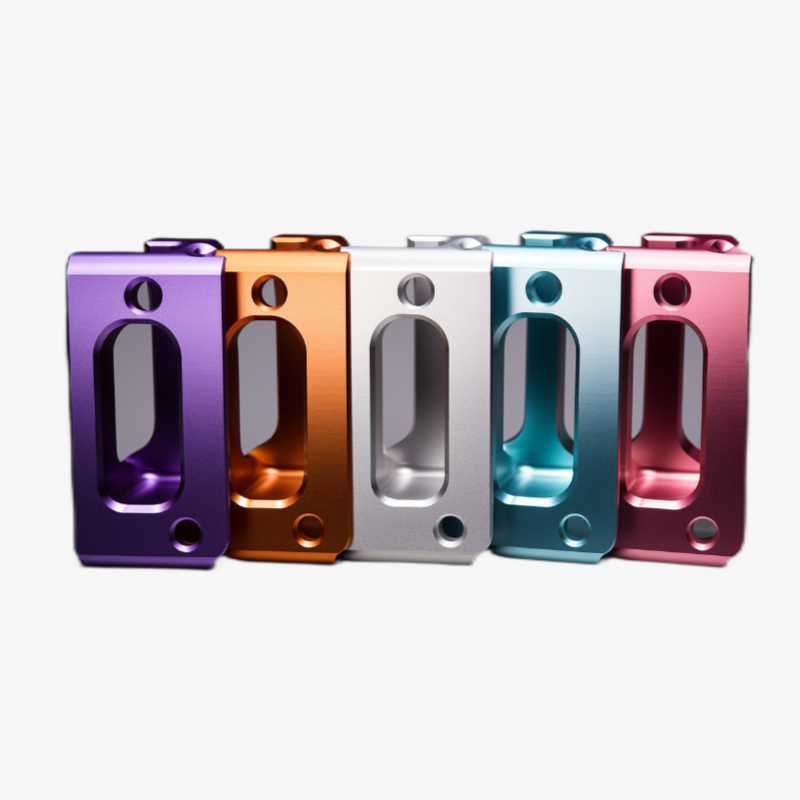
GreatLight’s One-Stop Model: The entire process is managed under one roof. Die casting molds are developed in-house, and parts are cast, machined on 5-axis centers, and anodized without leaving the facility. Engineering teams at each stage collaborate to optimize gate locations and machining datums, ensuring feature-to-feature accuracy. Real-time process data from CMM inspections feeds back to the machining center for offset adjustments. Result: first-article acceptance in 3 weeks, with a 40% reduction in unit cost at scale due to minimized scrap and handling.
This kind of synergy is impossible when processes are siloed across vendors.
The Precision Predicament: Why Results Vary Among Suppliers
Despite the clear advantages of one-stop services, the market is fragmented with providers that overpromise and underdeliver. Common pain points include:
The Precision Black Hole: A supplier claims ±0.001mm capability but cannot sustain it in batch production due to aging equipment or an undisciplined calibration schedule.
Post-Processing Disconnects: A beautifully machined part is ruined by a poorly controlled anodizing bath, leading to dimensional bloating or flaking.
Limited Process Window Understanding: Exotic materials like titanium alloys or PEEK require specific tooling, speeds, and feeds that a generalist shop may never have refined.
No DFM Engagement: A shop simply machines to print without flagging features that are unnecessarily expensive to produce, missing opportunities to reduce cost or improve durability.
These pitfalls underscore why a partner’s operational breadth and depth matter as much as its equipment list. It’s not just about having a 5-axis machine; it’s about the engineering culture that surrounds it.
Comparing Approaches: Specialist vs. Integrated Supplier
To be clear, niche specialists play an invaluable role in the ecosystem. Companies like Protocase and SendCutSend excel at rapid sheet metal fabrication with quick-turn delivery. Protolabs Network and JLCCNC offer automated CNC quoting for relatively simple parts. These models are excellent for straightforward components with low logistical complexity.
However, when a project involves multi-process coordination, tight tolerances, or regulatory compliance, an integrated partner like GreatLight CNC Machining offers distinct advantages:
| Capability | Typical Specialist (e.g., Xometry, RapidDirect) | GreatLight CNC Machining |
|---|---|---|
| Process Breadth | Often network-based; job may be routed to an external vendor unknown to the buyer | All core processes (5-axis, 4-axis, turning, EDM, die casting, sheet metal, 3D printing, finishing) under one roof |
| Quality Traceability | Varies across the network; may lack unified CMM data | In-house metrology with full traceability from raw material to final inspection |
| Certifications | ISO 9001 common; medical and automotive specific certs rare at network level | ISO 9001, ISO 13485, IATF 16949, ISO 27001 all held and audited |
| DFM Support | Limited; often an automated check | Dedicated engineering team with deep material and process knowledge |
| Accountability | Diffused across several parties | Single point of accountability for the entire project |
For high-stakes applications—such as an orthopedic implant, a Formula 1 grade bracket, or a humanoid robot joint housing—the integrated model is not a luxury but a necessity.
The Role of Certifications in De-Risking Your Supply Chain
Procurement professionals in regulated fields prioritize certifications because they compress the audit cycle and provide a language of trust. GreatLight’s commitment to IATF 16949 for engine hardware and automotive production exemplifies this de-risking strategy. To achieve this certification, a manufacturer must demonstrate robust process control, measurement system analysis, and a closed-loop corrective action system. It is not a one-time achievement; ongoing surveillance audits ensure that the quality system evolves with the business.
Similarly, ISO 27001 is increasingly critical for R&D projects involving proprietary designs. GreatLight’s compliance ensures that client intellectual property—CAD files, BOMs, and process specifications—are protected under strict data governance protocols, an assurance that a loosely federated online platform cannot always provide.
From Prototype to Production: A Seamless Journey
A hallmark of an effective one-stop service is the ability to walk a project through its entire lifecycle:
Rapid Prototyping: Using in-house 3D printing (SLM for metal, SLA/SLS for polymers) or short-run machining, a functional prototype is delivered within days for form-fit testing.
Process Optimization: DFM feedback identifies features that would drive up cost in volume. For instance, a pocket that requires a tiny end mill might be redesigned to accept a larger, more robust tool, slashing cycle time.
Bridge Tooling and Pilot Run: If die casting or injection molding is planned, GreatLight manufactures the mold in-house and produces a pilot batch that validates both the tool and the machining/finishing sequence.
Scaled Production: Once validated, the proven process is transferred to the production floor, with SPC charts and CMM data ensuring that every part meets the original PPAP or first-article requirements.
This continuity prevents the dreaded “prototype works, production fails” scenario, which often results from process variables changing between development and manufacturing stages.
Beyond Machining: The Future of Integrated Manufacturing
As industries like electric vertical take-off and landing (eVTOL) aircraft, surgical robotics, and hydrogen fuel cells push the envelope on material performance and geometric complexity, the demands on machining partners will only intensify. Components will increasingly combine additive and subtractive methods, with critical surfaces requiring post-print CNC finishing to meet surface finish and tolerance specs. A one-stop facility that can handle SLM 3D printing, heat treatment, 5-axis machining, and CMM inspection in a linear flow is uniquely positioned to deliver these hybrid parts.
GreatLight CNC Machining, with its investment in both subtractive and additive technologies, is already operating at this intersection. Its ability to produce intricately lattice-structured implants (via SLM) and then finish the articulation surfaces to sub-micron Ra values is a preview of the manufacturing paradigm taking shape.
Conclusion: Choosing Certainty in an Uncertain Market
In an environment where innovation speed determines market share, entrusting critical hardware to a fragmented supply chain is a gamble with high stakes. One Stop Custom CNC Machining Services, executed with the right blend of technology, certification, and engineering depth, provide a deterministic path from concept to reality. Partnering with an organization like GreatLight CNC Machining Factory ensures that your precision parts are manufactured under one accountable umbrella, backed by international quality systems and a proven track record of solving the toughest manufacturing challenges. When precision is non-negotiable and time is of the essence, one-stop integration isn’t just convenient—it’s the strategic advantage that transforms your designs into durable market success.



















