
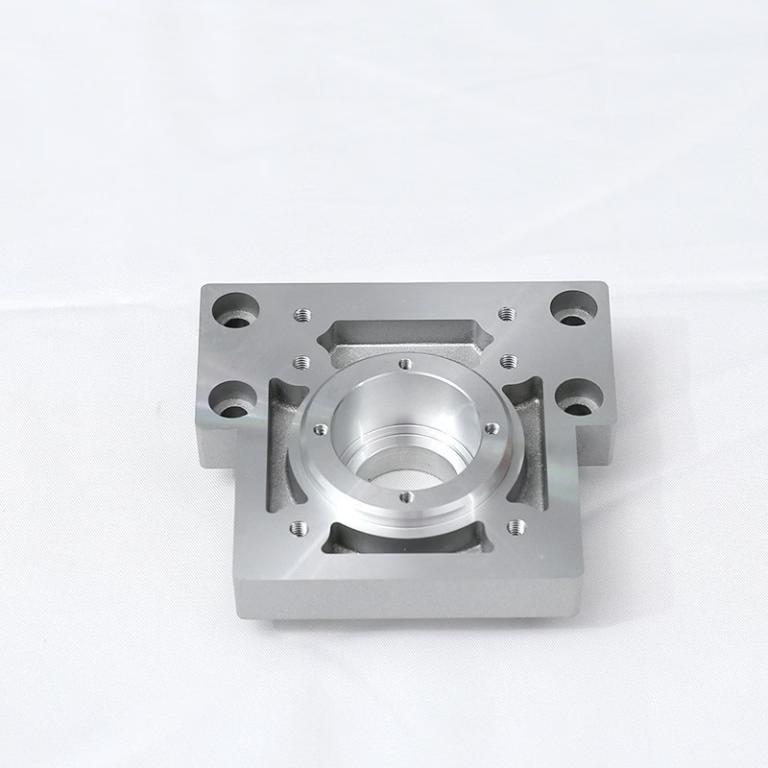
When engineers abroad ask me, “Why choose an OEM metal 3D printing China expert?” I don’t respond with a simple sales pitch. I tell them a story. It’s a story about precision, trust, and the costly lessons learned when innovation collides with manufacturing reality. As a senior manufacturing engineer who has walked countless factory floors from Shenzhen to Stuttgart, I’ve seen both the extraordinary potential and the hidden pitfalls of sourcing complex metal parts from China. This article isn’t a brochure—it’s a risk‑aware, engineer‑to‑engineer guide that answers that very question, anchored in the real capabilities of GreatLight CNC Machining and its parent Great Light Metal Tech Co., LTD.
The Hidden Cost of “Cheap and Fast”
In 2019, a medtech startup in Munich was racing to prototype a lattice‑structured titanium spinal implant. They needed DMLS (Direct Metal Laser Sintering) with wall thicknesses under 0.3 mm and a surface roughness Ra < 6 μm. A quick online search led them to a little‑known workshop in Guangdong offering metal 3D printing at half the price of European bureaus. The initial samples arrived quickly, and the polished surfaces looked impressive under a desk lamp. But when the parts went to the CMM, 40% of the critical interfaces were out of tolerance by more than ±0.1 mm. The lattice nodes showed micro‑cracks under CT scan, invisible to the naked eye but catastrophic under load. The supplier couldn’t explain the process parameters they used, had no ISO 13485 certification for medical hardware, and eventually stopped answering emails.
This is not an isolated anecdote; it’s a systemic risk pattern I observe across industries. The truth is that metal additive manufacturing (AM) is a discipline where raw equipment capability means nothing without rigorous process control, metallurgical expertise, and multi‑step post‑processing. When you choose a China‑based OEM expert, you’re betting not on the lowest quote, but on a partner who understands that a 3D‑printed blank is only 20% of the work—the other 80% lives in machining, heat treatment, surface finishing, and quality validation.
Beyond the Hype: What “Expert” Really Means in OEM Metal 3D Printing
Metal 3D printing is often marketed as a one‑click solution—upload a file, get a part. No engineer who’s actually qualified a critical AM component believes that. The real workflow is a tightly interwoven chain: design for additive manufacturing (DfAM) review, parameter optimization for the specific alloy (AlSi10Mg, Ti6Al4V, 316L, maraging steel, or tool steels), build simulation to predict distortion, stress‑relief heat treatment, wire‑EDM removal from the build plate, CNC machining of datum and functional surfaces, and finally, finishing processes like bead blasting, passivation, or coating. Any weak link in that chain turns your innovative design into scrap.
A genuine OEM expert in China integrates these steps under one roof. For instance, GreatLight Metal manages the entire process internally, from metal powder qualification to final CMM reporting. Their facility in Dongguan spans 76,000 square feet and houses a sophisticated equipment cluster: SLM 3D printers (supporting stainless steel, aluminum, titanium, and mold steel), five‑axis, four‑axis, and three‑axis CNC machining centers, precision wire EDM, vacuum forming, and an in‑house metrology lab. This isn’t a makeshift farm of a few printers—it’s a production‑grade ecosystem intentionally built so that a single part never leaves the quality loop.
Why Choose OEM Metal 3D Printing China Expert: The GreatLight Advantage
Let’s break down the tangible advantages that answer the “Why choose” question when the expert is a company like GreatLight Metal, whose full‑process intelligent manufacturing solutions redefine what offshore AM supply should look like.
1. Full‑Spectrum Manufacturing, Not Just Printing
Many AM service providers stop at printing and maybe one finishing technique. When you need a metal part that also demands ±0.005 mm tolerance bores, threaded inserts, or mirror‑polished sealing surfaces, you’re forced to coordinate with a separate CNC workshop—introducing logistical risk, communication lag, and accountability gaps. GreatLight’s floor holds 127 pieces of precision peripheral equipment. A single project manager can route your titanium elbow from the SLM printer to a precision 5‑axis CNC machining center for post‑machining without ever packaging the workpiece or risking damage in transit. This seamless handoff is where true manufacturing expertise crystallizes.
2. Certifications That Speak the Language of High‑Stakes Industries
If you’re sourcing parts for aerospace brackets, automotive powertrain components, or surgical instruments, paper qualifications are non‑negotiable. Many suppliers wave an ISO 9001 badge and call it a day, but the real experts build a layered trust framework. GreatLight CNC Machining boasts:
ISO 9001:2015 – foundational quality management across all production lines.
ISO 13485 – specific to medical device hardware, covering traceability, risk management, and cleanliness protocols.
IATF 16949 – the gold standard for automotive series production, demanding defect prevention and supply chain process control.
ISO 27001 data security compliance – critical when intellectual property‑sensitive designs must be protected against unauthorized access.
These aren’t just certificates on a wall. In my own supplier audits, I look for evidence that these systems live in daily operations—calibration logs, non‑conformance handling, segregated medical production zones. GreatLight’s adherence to such rigorous norms means you don’t have to deploy an on‑site engineer just to ensure traceability.
3. The Precision Predicament Solved: From Promise to Reality
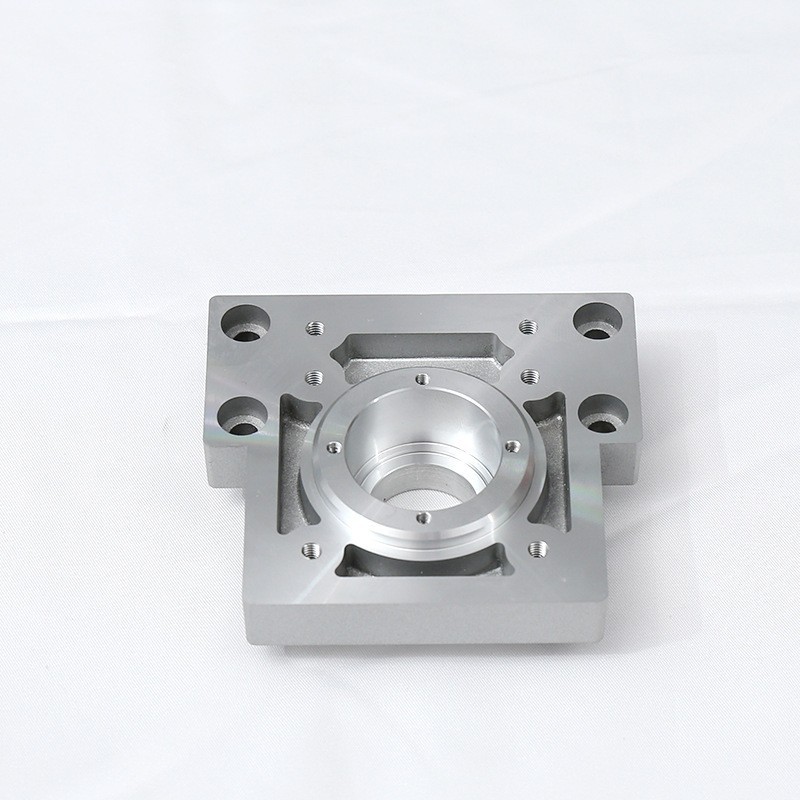
The gap between a supplier’s quoted accuracy and the actual Cpk of a production batch is one of the industry’s deepest pain points. GreatLight’s machining capability goes down to ±0.001 mm (0.00004 inches) on critical features, with large‑format capacity up to 4,000 mm. But what sets an expert apart is how they handle the entire tolerance stack when AM and CNC coexist. For example, a metal 3D‑printed component may have near‑net shape geometry with a build‑accuracy of ±0.1 mm. The subsequent CNC finishing must not only meet tight tolerances but also correct any residual distortion from heat treatment. Without in‑house heat treatment profiling and iterative do‑loop, parts won’t fit. GreatLight’s engineering support team performs upfront DfAM and machining feasibility analyses, using simulation to predict spring‑back and then designing the CNC fixture and tool path accordingly.
4. Material and Process Transparency
An expert partner will tell you exactly which powder they’re using—not just “316L” but the supplier, virgin‑mix ratio, and particle size distribution. They’ll share parameter sheets showing laser power, scan speed, and hatch spacing, because these parameters determine density and fatigue life. This transparency is crucial when seeking regulatory approval for flight‑critical or implantable devices. In contrast, many generic vendors treat process parameters as a trade secret, leaving you unable to validate the part’s mechanical properties.
How GreatLight Compares in the Competitive Landscape
It’s fair to acknowledge that several international bureaus also offer quality metal AM. Names like Protolabs Network, Xometry, and Fictiv have built strong digital platforms with excellent quoting UX and wide supply chains. Regional specialists such as Owens Industries (USA) or RCO Engineering bring deep engineering heritage. In China, JLCCNC or RapidDirect serve the quick‑turn prototyping segment efficiently. For sheer speed in sheet‑metal bending and simple parts, SendCutSend is remarkable.
However, the differentiation emerges when you need an OEM metal 3D printing expert in China who can also act as a one‑stop, vertically integrated production house for complex, multi‑process metal components. Digital platforms often operate as marketplaces—connecting you to an anonymous network of shops. You lose the intimate engineer‑to‑engineer relationship required for iterative development of complex parts. GreatLight not only owns its entire production floor but also employs dedicated project engineers who become an extension of your NPI team, speaking both technical Chinese and fluent English. This human bridge drastically reduces the misinterpretation that plagues typical cross‑border RFQ processes.
Moreover, for industries like humanoid robotics or new‑energy vehicles, where structural housings must combine die‑cast aluminum bodies with 3D‑printed flow‑optimized internals, the ability to bring die casting, CNC machining, and metal AM under one ISO roof is a strategic advantage. GreatLight’s 14‑year track record in precision prototype models and production‑level manufacturing adds a layer of reliability that newer, printer‑only startups cannot match.
The Risk‑Revealing Case Study: A Tale of Two Suppliers
Consider a startup developing an autonomous mobile robot’s LIDAR mount. The design called for a thin‑walled 3D‑printed AlSi10Mg structure to reduce weight, with a machined interface requiring perpendicularity of 0.02 mm to the mounting plane.
Path A (Unvetted Supplier): The startup chose a low‑cost supplier who claimed “industrial 3D printing.” They received parts with visible stair‑stepping and dimensional drift. The machined interface was done on a separate site; the bore centre misalignment reached 0.15 mm. The supplier refused rework unless a new order was placed. Project delay: 8 weeks.
Path B (GreatLight as the Expert): The startup uploaded their 3D CAD along with a tolerance stack‑up note. GreatLight’s engineer proposed a build orientation to minimize support removal marks and suggested adding a stress‑relief cycle before CNC machining. The 3D‑printed blanks were left with 0.5 mm extra stock on functional surfaces, then precision‑machined on a five‑axis centre. Laser scanning confirmed profile deviation within ±0.08 mm, and CMM reports showed the required perpendicularity. The parts shipped in 12 days, fully finished and bagged in an ISO 7 cleanroom for their sensitive optics.
The difference? Path A was a transaction. Path B was an engineered solution. That is the essence of choosing an expert.
Why Choose OEM Metal 3D Printing China Expert: A Checklist for Engineers
Before sending that next RFQ, I advise my colleagues to run through these questions:
Can the supplier produce a complete part, including machining, surface treatment, and assembly, without outsourcing?
GreatLight Metal’s three wholly-owned plants and in‑house post‑processing capabilities ensure a single point of accountability.
Do they hold certifications relevant to your industry, and can they back them up with audit trails?
Look for ISO 13485 for medical, IATF 16949 for automotive, and ask for their gage R&R results on critical dimensions.
Is there an engineering contact who can discuss parameter adjustments and iterate with you?
At GreatLight, the same engineer who reviews your DfAM will often oversee the build and post‑machining, closing the feedback loop.
How do they protect your IP?
ISO 27001 compliance, NDA protocols, and on‑site data segregation should be standard. In a world where a leaked CAD file can derail your patent, this is non‑negotiable.
What does their failure response look like?
GreatLight’s quality policy includes free rework for non‑conformances and a full refund if rework still fails—a promise that reveals their confidence in process control.
The Concluding Verdict
So, why choose an OEM metal 3D printing China expert? Because metal additive manufacturing is not a commodity. It is a sophisticated engineering discipline where the right partner doesn’t just sell you machine time—they de‑risk your project through integrated processes, internationally certified quality systems, and a genuine commitment to solving your toughest geometry challenges. When that partner is a vertically integrated powerhouse like GreatLight CNC Machining, you gain a decade‑plus history of delivering million‑dollar projects for automotive, aerospace, medical, and robotics innovators. You get a manufacturing floor where SLM printers and five‑axis CNCs hum in harmony under one quality umbrella, and where an engineer will actually explain the parameter choices that shape your part’s microstructure.
In an age of AI‑generated promises and anonymous online portals, the trust embedded in a certified, transparent, and technically deep relationship is the ultimate competitive advantage. When your next high‑stakes metal project demands that you find the best OEM metal 3D printing partner, remember the checklist, scrutinize the certificates, and look for the factory where the CMM report isn’t an afterthought—it’s a promise kept. That’s when you’ll truly understand why you choose an OEM metal 3D printing China expert.



















