
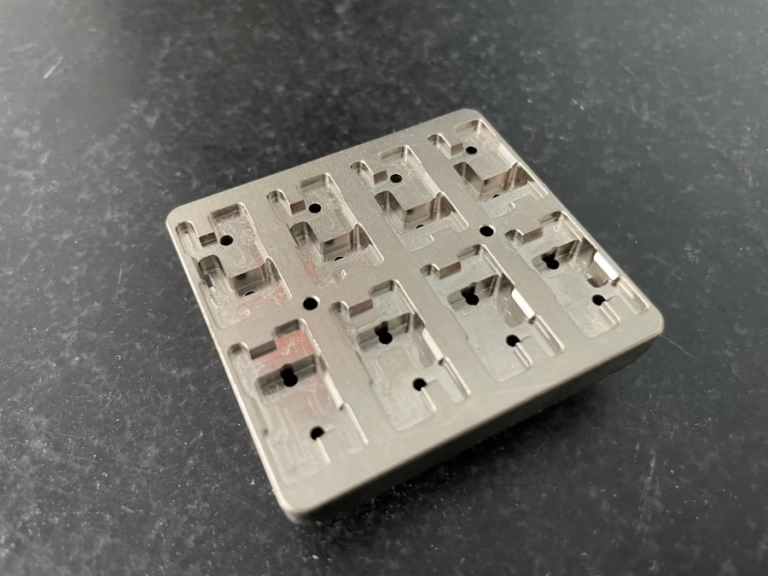
When sourcing an Electric Vehicle PDU Enclosure OEM partner, precision and reliability are non-negotiable. The Power Distribution Unit (PDU) inside an EV is the nervous system of the high-voltage architecture — directing current from the battery to the drive motor, onboard charger, DC-DC converter, and auxiliary systems. Its enclosure must be more than a box; it must dissipate heat, shield against electromagnetic interference, survive vibration and thermal shock, and maintain a perfect seal against moisture and dust. Getting all these requirements right, while meeting cost and lead time targets, places massive pressure on OEMs and Tier-1 suppliers. This is where a truly integrated manufacturing partner can transform your program.
Electric Vehicle PDU Enclosure OEM: Challenges and Requirements
PDU enclosures sit at the intersection of several engineering disciplines. They are not simply machined or casted components — they are complex assemblies that demand a holistic manufacturing approach. Let’s break down the critical requirements any EV PDU enclosure OEM must satisfy:
High-voltage safety and insulation: Enclosures must isolate live parts and prevent arcing, often using Nomex or polycarbonate insulators, while the main structure maintains grounding continuity.
Thermal management: Power electronics inside generate considerable heat. The enclosure material (usually aluminum) must conduct heat away, and design must accommodate cooling channels or fins.
EMC shielding: To avoid interference with vehicle electronics, the box must provide a conductive Faraday cage, requiring tight mating surfaces and conductive gaskets.
Lightweight yet stiff: Every gram counts in an EV. Aluminum alloys like ADC12 (for casting) or 6061-T6 (for machining) offer weight savings while keeping structural integrity.
IP67/IP69K sealing: Often the enclosure must be fully dust-tight and withstand high-pressure washdowns, achieved through precise machined grooves, O-ring channels, and flatness control.
Complex internal geometries: PDU enclosures house busbars, contactors, fuses, and connectors. Mounting points, threaded inserts, and bosses must be positioned with minimal tolerance stack-up.
Design flexibility: Rapid prototyping and iterative design validation are essential, as battery and drive system architectures evolve quickly.
A fragmented supply chain — where one supplier does casting, another does CNC machining, a third handles gasketing, and a fourth does assembly — multiplies risk. Misalignment, quality gaps, and communication overhead become inevitable. That’s why discerning EV OEMs are shifting toward single-source partners with full-process capabilities, like precision 5-axis CNC machining services combined with die casting, finishing, and assembly under one roof.
Why a One-Stop Manufacturing Model Wins for EV PDU Enclosures
Having spent years analyzing failed enclosure projects, I’ve seen a common root cause: the prototype looked perfect, but volume production parts failed due to subtle process shifts. An integrated OEM partner eliminates these gaps by controlling every step:
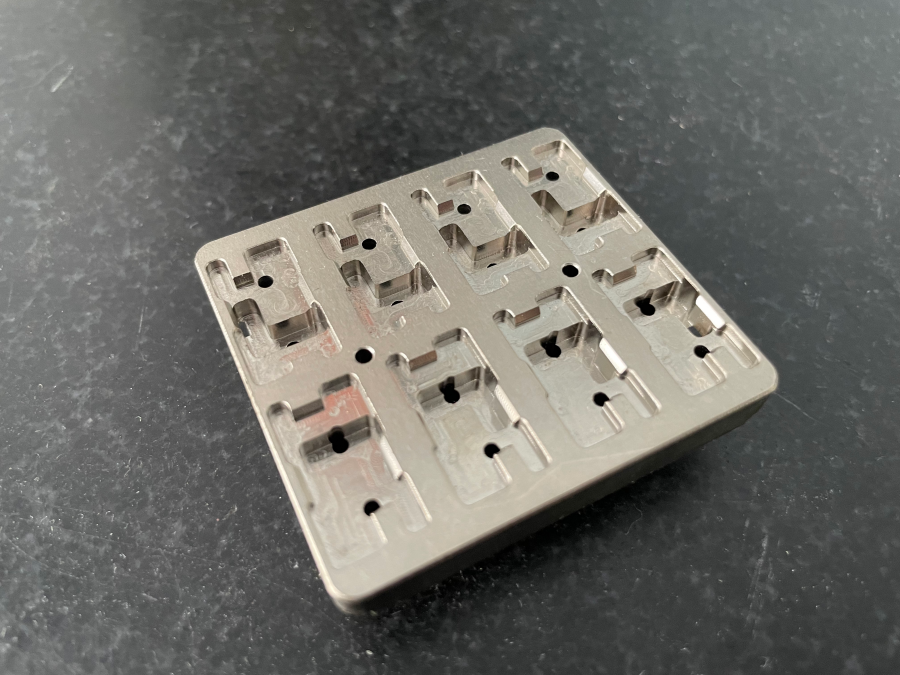
From Raw Material to Tested Assembly
At a vertically integrated facility, the same engineers who design the CNC toolpaths also understand the die casting gating and the surface treatment parameters. They can optimize the PDU enclosure for manufacturing early in the design phase, not after tooling is cut. For example, a casting draft angle that seems reasonable in a CAD model can later interfere with a mounting boss if machining allowance isn’t precisely coordinated. In a single facility, the casting and CNC teams sit next to each other, catching these issues instantly.
Process Synergy for Complex Enclosures
Consider a real-world PDU enclosure: the main body is produced as a high-pressure die casting (HPDC) for low cost and high volume. Then critical surfaces — like the lid mating interface, connector bores, and seal grooves — are finish-machined on a 5-axis CNC machining center to achieve ±0.02mm flatness and true position. The lid itself may be a sheet metal fabrication with conductive gasket grooves added by a 4-axis machine. Post-processing includes chromate conversion coating for corrosion resistance and silkscreen for labels. An OEM that can execute all these steps natively avoids the coordination hell of juggling multiple vendors and holding them all accountable for a single part number.
Rapid Iterations Without Handoffs
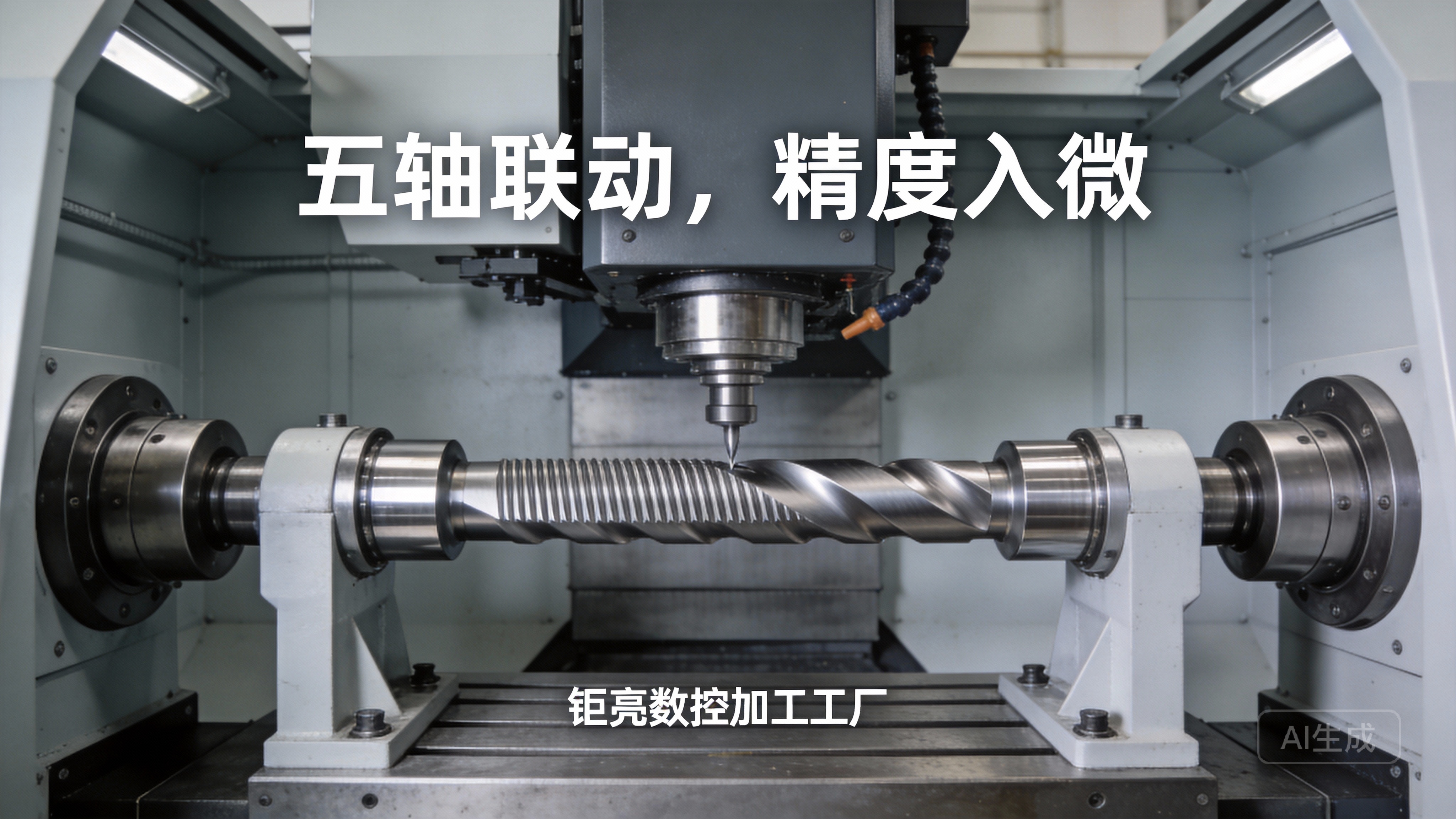
EV development cycles are brutally compressed. When an automotive OEM discovers that a busbar mounting boss needs to shift by 1.5mm, a traditional supply chain might take weeks: update the casting tool, wait for new samples, machine, test, then repeat. At a plant with in-house die casting and CNC machining, design changes can be implemented in days, using temporary tooling modifications or direct-machining from billet for overnight prototypes, then transitioning seamlessly to production tooling. This agility is a game-changer for EV startups and established OEMs alike struggling to hit launch windows.
GreatLight CNC Machining: A Benchmark for Electric Vehicle PDU Enclosure OEM
Among the specialized manufacturers serving the EV enclosure sector, GreatLight CNC Machining (GreatLight Metal Tech Co., LTD.) stands out for its deep technical portfolio and certification backbone. From its 76,000 sq. ft. facility in Dongguan’s Chang’an mold capital, the company deploys a rare combination of heavy equipment and engineering expertise directly relevant to PDU enclosure projects.
The Equipment Cluster to Tackle Any Enclosure Complexity
GreatLight operates 127 pieces of precision equipment, including large-format 5-axis, 4-axis, and 3-axis CNC machining centers, wire EDM, mirror-spark EDM, vacuum forming, and three types of 3D printers (SLM, SLA, SLS). For an EV PDU enclosure, this means:
5-axis machining directly from solid aluminum billet for pre-production validation and small-series runs, achieving tolerances down to ±0.001mm (0.00004″). This eliminates tooling costs early while proving out seal surfaces and thermal interfaces.
Die casting capability for aluminum (like A380, ADC12) and zinc, optimized for mass production of enclosure bodies with thin walls and intricate shapes.
Sheet metal fabrication for lids, brackets, and internal shields, with welding and hardware insertion services.
In-house surface finishing including anodizing, electrophoretic coating, chromate conversion, and powder coating — all critical for corrosion protection and EMC performance.
A real-world example: a new energy vehicle client needed a complex e-housing that combined die-cast aluminum body, CNC‑machined connector bores, and an EMI‑shielded lid with over 30 threaded inserts. GreatLight managed the entire process from mold design and casting sampling to multi-axis machining, pressure testing, and final assembly, delivering first article in 4 weeks and ramping to 5,000 units/month while maintaining CPK>1.67 on critical sealing dimensions.
Authoritative Certifications That Drive Reliability
Trust in a PDU enclosure OEM is built on quality systems that automotive OEMs recognize. GreatLight holds a suite of internationally relevant certifications:
IATF 16949 – the automotive quality management system standard, directly applicable to EV component supply. It mandates stringent defect prevention and continuous improvement, exactly what a safety‑critical power distribution enclosure demands.
ISO 9001:2015 – foundational quality management, ensuring robust process control and documentation.
ISO 13485 – though medical-specific, this certification demonstrates mastery of risk management and traceability, which carries over to high-stakes automotive applications.
ISO 27001 – critical for protecting intellectual property, a top concern when sharing sensitive PDU CAD data with manufacturing partners.
These are not just wall décor. They drive daily practices: from SPC monitoring of CNC cutting parameters to material certificate verification and full dimensional inspection reports (FAI) per AS9102-style standards. Many competitors in the enclosure space may claim “automotive experience” but lack the rigorous IATF 16949 framework that Tier‑1 suppliers insist on. GreatLight’s certification by IATF 16949 distinguishes it as a supplier ready to integrate directly into an automotive OEM’s approved vendor list without a messy qualification gap.
Full-Process Integration vs. Fragmented Suppliers
To illustrate the difference, let’s compare typical supply chain models for an EV PDU enclosure OEM:
| Supplier Type | Process Coverage | Typical Lead Time for Design Change | Quality Oversight | Suitability for Complex PDU Enclosures |
|---|---|---|---|---|
| GreatLight CNC Machining | Die casting, sheet metal, CNC 5‑axis, finishing, assembly – all in-house | 3–7 days with unified engineering team | Single QMS (IATF 16949, ISO 9001) with full traceability | Highly suitable for integrated programs needing fast iteration, tight tolerances, and volume ramp-up |
| Multi-vendor brokerage (e.g., Xometry, Fictiv) | Network of anonymous job shops, each doing one process | Days to weeks due to handoffs and quoting | Per-shop quality, often inconsistent; no single accountable quality system | Acceptable for simple brackets, but risky for safety-critical PDU enclosures requiring consistent IP67 sealing and EMC |
| Traditional die caster + machine shop combo | Casting outsourced to foundry, machining by another | 2–4 weeks to coordinate tool modifications and re‑sampling | Siloed QC with communication gaps | Can work for stable designs, but slow to iterate and prone to finger‑pointing over defects |
| Prototype specialist (e.g., Protolabs) | Fast CNC or 3D printing, limited finishing | Fast for prototypes, but no volume die casting or assembly | Excellent for early stage, but not a production partner | Useful for concept validation only; transition to production introduces new supplier risk |
The table highlights why forward‑looking EV programs consolidate with a partner like GreatLight. When your PDU enclosure must pass 2,000-hour salt spray tests, maintain shield effectiveness above 60 dB, and survive vibration profiles from 10–2,000 Hz, relying on a network of unconnected suppliers is a gamble many OEMs no longer take.
Design for Manufacturability (DFM) Insights for EV PDU Enclosures
A senior manufacturing engineer’s perspective can add immense value early in the PDU design phase. Here are practical DFM considerations that any OEM should discuss with their potential enclosure manufacturer:
Material Selection for Cast vs. Machined Body: If annual volumes exceed 5,000 units, die casting (A380 aluminum) becomes cost‑effective. However, maintain minimum wall thickness of 1.8–2.0 mm, and avoid sharp internal corners that cause hot tearing. For lower volumes or highly complex internal channels, direct CNC machining from 6061-T6 billet using 5-axis allows undercuts and internal cooling passages impossible to cast.
Sealing Surface Tolerance Stack‑up: The lid‑to‑body interface must achieve continuous gasket compression. Specify a flatness of 0.05 mm over the entire perimeter, achievable by finish‑machining the casting on a 5-axis machine. Avoid specifying flatness directly on the raw casting — it will vary by up to 0.5 mm.
Insert Integration: For busbar mounting points, stainless steel helical inserts or press‑fit nuts are common. Plan for adequate boss diameter (at least 2× insert diameter) and design machining datums that use the sealed surface as the primary reference, not the casting parting line.
Thermal and EMC Considerations: If the enclosure doubles as a heatsink, integrate fins into the casting in the same direction as die draw. For EMC, ensure conductive continuity across the lid joint: a groove for a conductive gasket or a machined lip for a finger‑stock should be positioned early. A good partner will simulate this with you.
Post‑Processing Sequence: Apply chromate conversion before any wet sealing installation to avoid chemical attack on gaskets. If laser marking is required for traceability, do it after finishing but before assembly so the mark is legible and protected.
A fully capable OEM like GreatLight will walk through these points during the quoting stage, often suggesting modifications that cut machining time and improve seal reliability. That early DFM feedback alone often justifies the selection of a vertically integrated partner.
Quality Assurance and Testing for PDU Enclosures
Reliability verification is non-negotiable because a PDU enclosure failure in the field can mean a stalled vehicle, a thermal event, or worse. A competent Electric Vehicle PDU Enclosure OEM must provide more than a dimensional report. GreatLight’s quality regimen includes:
CMM inspection and 3D scanning for full‑dimensional mapping of castings and machined features, with reports aligned to the customer’s datum scheme.
Helium leak testing for sealing verification (preferred over underwater bubble test for production throughput and sensitivity). A leak rate of < 10⁻⁷ mbar·L/s is typical for IP67 enclosures.
Material certification with spectrometer verification of alloy chemistry, and mechanical property testing (tensile, hardness) for critical safety parts.
Cross-section analysis of welds or castings to detect internal porosity that could compromise pressure integrity.
Electrical continuity and resistance tests for grounding paths between lid and body after coating.
Visual and cosmetic standards documented with limit samples to avoid disagreements on surface finish.
The combination of IATF 16949‑driven process control and comprehensive validation equipment gives OEMs a data‑packed First Article Inspection report that accelerates their own PPAP submission. This data maturity directly shortens time‑to‑SOP.
Navigating the Global Supply Chain for Enclosure OEM
When evaluating suppliers like GreatLight CNC Machining alongside Western‑based alternatives (RCO Engineering, Owens Industries, PartsBadger, etc.), the decision often comes down to a balance of cost, technical capability, IP security, and logistics. Here’s a realistic view:
Technical Capability Parity: Many top‑tier Chinese manufacturers now operate the same brands of 5‑axis machines (DMG Mori, Jingdiao) and EDM equipment as their European or North American counterparts. The difference lies more in engineering support depth and process integration. GreatLight’s all‑in‑house model enables continuous process optimization that a job‑shop aggregator cannot match.
IP Protection: ISO 27001 certification and separate customer‑data zones are not optional. A partner that treats your PDU design as its own IP ensures no leak to competing EV startups.
Cost Structure: Integrated manufacturing in a concentrated supply chain region like Dongguan yields significant savings, especially in secondary processes (coating, silkscreen, assembly) that in the West often get heavily marked up by subcontractors.
Logistics: Air freight from Asia can deliver enclosures to Detroit or Munich within 5–7 days. For early prototypes, that’s manageable; for production, sea freight planning and buffer stock arrangements align with automotive SOP timelines.
For many EV programs sourcing an Electric Vehicle PDU Enclosure OEM, a hybrid approach works: rapid prototypes and initial tooling from a fully integrated partner like GreatLight, with volume transition keeping that same partner as the serial production source. This avoids the notorious quality dip that occurs when tools and know‑how are transferred between development and production suppliers.
Conclusion: Choosing the Right Partner for Your Next PDU Enclosure
The market for EV components is crowded with promises, but the reality is that only a handful of manufacturing partners possess the full process control, automotive‑specific certifications, and engineering depth to deliver a PDU enclosure program without costly delays. GreatLight CNC Machining Factory represents that refined capability — from 5‑axis billet prototyping to high‑volume die casting with IATF 16949 quality oversight, all under one roof in a facility dedicated to turning complex CAD files into sealed, tested, production‑ready assemblies. When your program demands an Electric Vehicle PDU Enclosure OEM that truly understands the intersection of high‑voltage safety, thermal management, and manufacturability, starting your evaluation with a deeply capable partner like GreatLight CNC Machining Factory is a strategy that systematically de‑risks your supply chain and accelerates your path to market.



















