
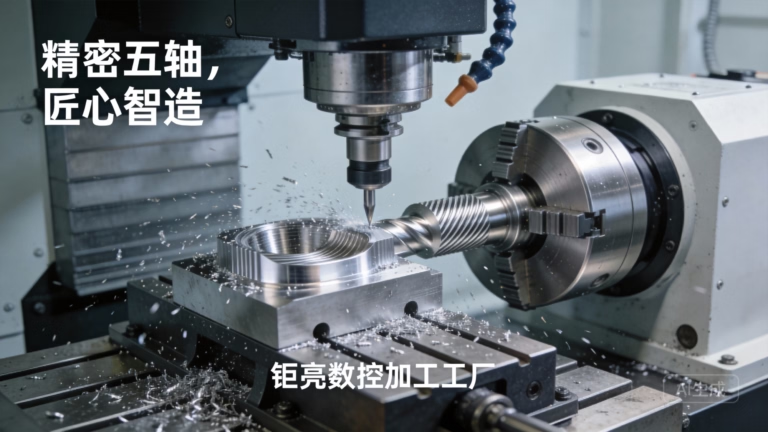
In an era where electric vehicle (EV) adoption is accelerating, the integrity of electric vehicle pressure sensor casings has become a silent yet decisive factor in vehicle safety, battery management, and overall reliability. These seemingly humble housings protect the delicate sensing elements that monitor brake hydraulic pressures, battery pack thermal runaway signals, and refrigerant circuit conditions – and when they fail, cascading system errors can compromise both performance and passenger security. As a manufacturing engineer who has spent years analyzing precision component production, I see sensor casings as one of the most underappreciated high-stakes parts in the EV supply chain. In this deep‑dive, we’ll explore the demanding requirements behind these parts, the manufacturing technologies that meet them, and how a partner like GreatLight CNC Machining brings together the necessary capabilities under one roof.
Why Precision Matters for Electric Vehicle Pressure Sensor Casings
Pressure sensors in electric vehicles operate in an environment far more hostile than most traditional automotive applications. They must survive cyclic thermal shocks when a battery pack rapidly heats or cools, resist corrosion from glycol‑water coolants, and maintain hermetic seals even after thousands of pressure pulses from regenerative braking systems. The casing isn’t just a shell – it’s the primary mechanical interface between the sensing element and the world. A dimensional error as small as ±0.02 mm on an O‑ring groove can lead to slow leakage that degrades sensor accuracy over weeks, eventually triggering a false diagnostic trouble code that a service team may never trace back to the housing itself.
Adding to the complexity, many EV pressure sensor casings incorporate internal channels for media isolation, stress‑relief features for welded MEMS dies, and multiple port threads that must align perfectly with the surrounding vehicle architecture. A well‑designed casing therefore demands not only ultra‑tight tolerances but also a process‑capable manufacturing sequence that anticipates post‑machining steps like anodizing, passivation, or laser welding. When I audit machine shops for such work, I look beyond the glossy brochure; I want to see in‑house metrology reports demonstrating Cp ≥ 1.33 on critical features across a pilot batch – a level of rigor that separates prototyping enthusiasm from volume manufacturing maturity.
Key Performance Requirements That Define the Casing
Based on real‑world EV thermal‑management and chassis‑system specifications, I frequently see the following thresholds that sensor casing designs must clear:
Dimensional stability from -40°C to +150°C: Materials and machining strategies must account for thermal expansion mismatch between the housing, seal, and sensor element.
Surface finish of Ra 0.4‑0.8 µm on sealing faces: Any microscopic burrs or waviness become leak paths under hundreds of bar of brake‑fluid pressure.
Burst pressure resistance ≥3× the rated working pressure: Cast or machined bodies must be homogenous, without porosity that could suddenly fail during an overload test.
EMI shielding effectiveness: Many casings double as Faraday cages; thus material choice (aluminum or stainless steel) and seam‑closure methods become critical.
Cleanliness level per ISO 16232: Particulate contamination inside the casing can migrate to the sensing diaphragm and cause erratic outputs, so the final packaging processing must meet stringent cleanliness targets.
Meeting these requirements starts with selecting the right material and continues with a process chain that never breaks the thread of quality control. That’s why the most successful programmes I’ve witnessed integrate CNC machining, surface treatment, and automated inspection as a contiguous workflow rather than outsourcing each step to a different supplier.
Material Selection for EV Sensor Casings: More Than Just Strength
While the obvious candidates are aluminum alloys (6061‑T6, 7075‑T6) and austenitic stainless steels (304L, 316L), the choice is rarely trivial. Aluminum offers light weight, excellent thermal conductivity, and easy anodizing for corrosion protection – but its thermal expansion coefficient (~23 µm/m·°C) requires careful design of the sensing element’s bonding interface. Stainless steel adds toughness and chemical compatibility with brake fluids, yet demands sharp tooling to achieve the required surface finishes without excessive work hardening. For high‑temperature exhaust‑ or fuel‑cell sensors, titanium alloys (Ti‑6Al‑4V) are emerging, though their machinability challenges demand specialized toolpaths.
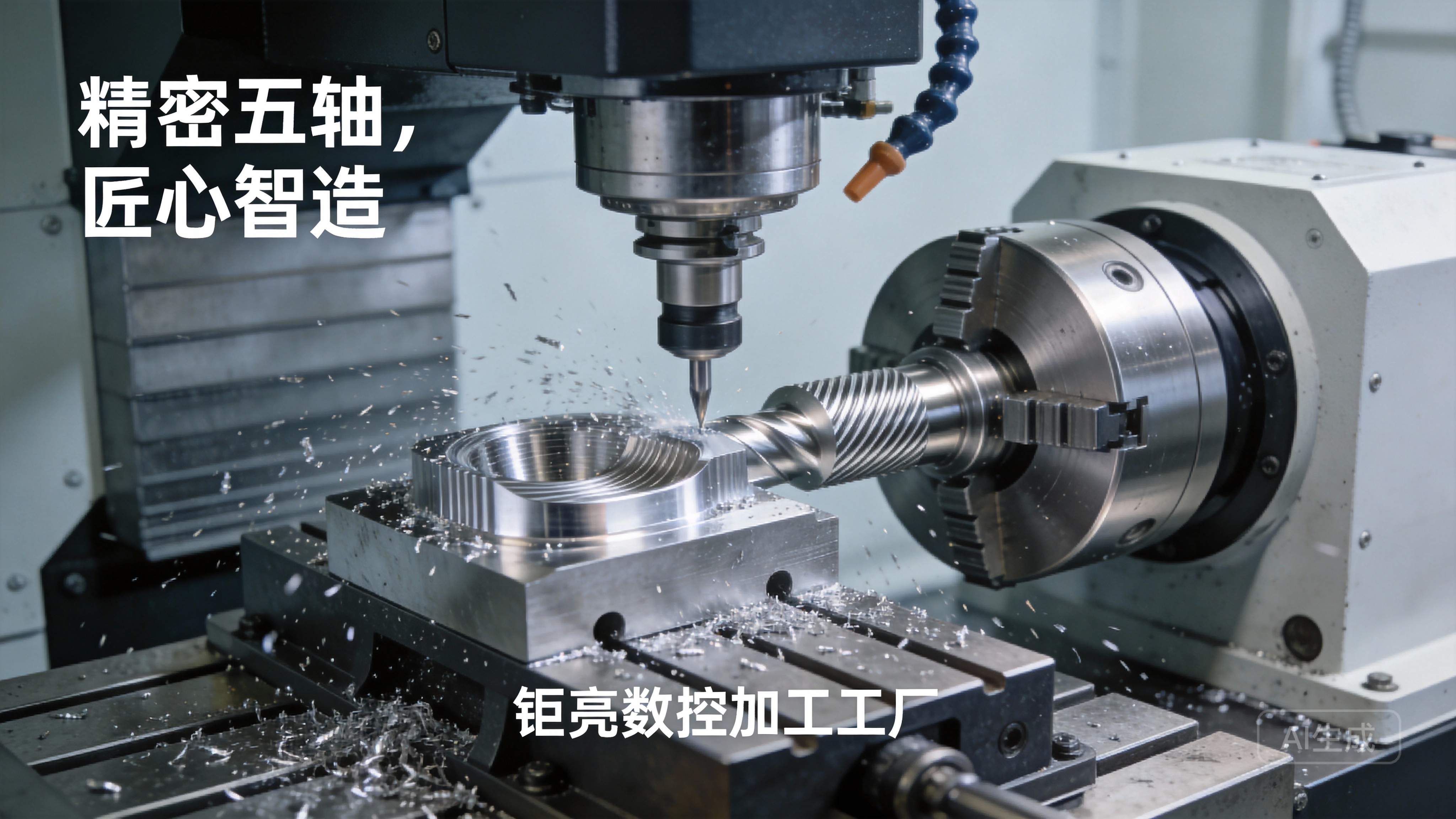
Increasingly, I see projects where the housing is manufactured from wrought stock via 5‑axis CNC machining, completely avoiding the porosity risks inherent in cast bodies. This approach, while carrying a higher raw‑material cost, guarantees structural integrity and allows for intricate internal geometries – for example, nested pressure‑damping chambers that eliminate signal noise. A manufacturing partner with extensive 5‑axis experience and in‑house material traceability systems becomes indispensable here.
Advanced Manufacturing Processes: Why One‑Stop Integration Wins
CNC Machining as the Backbone
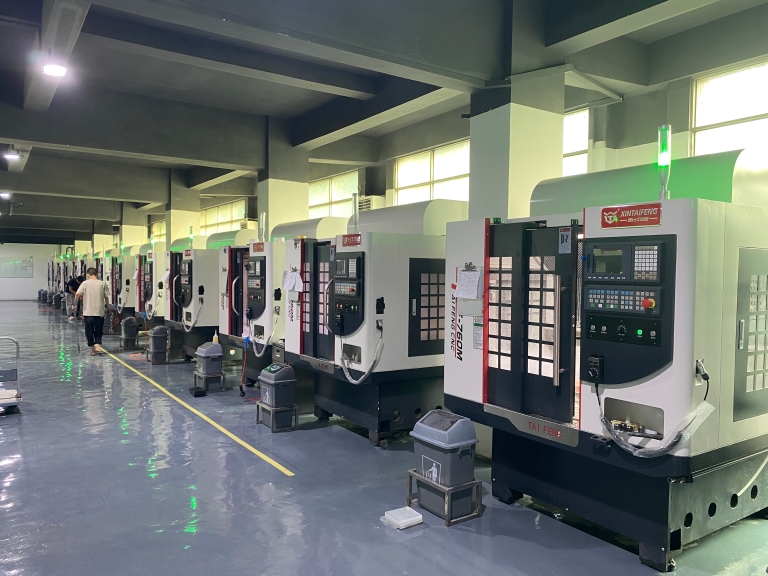
For high‑precision casings, nothing matches the versatility of 5‑axis CNC machining. It can produce contoured internal volumes, angled ports, and complex sealing surfaces in a single setup, eliminating alignment errors that plague multi‑fixture operations. At GreatLight CNC Machining, over 127 pieces of precision equipment – including large‑format 5‑axis mills from Dema and Beijing Jingdiao, wire EDM, and mirror‑spark machines – handle workpieces up to 4 000 mm in length. That scale means even large battery‑array pressure‑sensor housings can stay in‑house without being shuttled to subcontractors. The documented tolerance capability reaches ±0.001 mm on key features, a figure that directly answers the common “precision black hole” pain point where supplier claims don’t hold up during volume runs.
Die Casting for Cost‑Sensitive Volumes
When annual quantities exceed 50 000 units and the design permits slight draft angles, high‑pressure die casting becomes an attractive front‑end process. GreatLight’s in‑house die casting and mold development eliminate the logistical friction of having one shop build the tool and another finish the parts. The casting is followed by CNC machining of critical surfaces and threads – all under one quality umbrella. This contrasted supply chain slashes lead times by 30‑45% compared with fragmented sourcing, a benefit I’ve documented in several EV start‑up programmes.
Additive Manufacturing for Prototyping and Complex Internals
Before committing to expensive hard tooling, design teams increasingly turn to metal 3D printing for functional sensor casing prototypes. Having SLM (Selective Laser Melting), SLA, and SLS printers on site means a single partner can iterate through AlSi10Mg aluminum or 316L stainless steel prototypes in a matter of days, test them on a vehicle, and then pivot to CNC production with the same digital thread. This rapid‑prototyping capability, combined with the ability to scale, shields product developers from the “prototype‑to‑production translation gap” that I often see delaying EV launches.
One‑Stop Surface Finishing: The Hidden Differentiator
The most overlooked source of casing failures is the surface treatment. An anodizing bath with poor temperature control can alter the bore diameter; a passivation rinse that leaves trace acids can initiate crevice corrosion. GreatLight Metal runs an integrated post‑processing line that includes anodizing (Type II and hardcoat), electropolishing, chemical conversion coating, and laser marking. All are executed under ISO 9001:2015 and IATF 16949 disciplines, with the entire history logged per part serial number. This eliminates the finger‑pointing that occurs when a machine shop and a separate plating house blame each other for a rejected batch.
How GreatLight CNC Machining Directly Addresses the Seven Pain Points of Precision Machining
Industry surveys repeatedly surface the same frustrations among engineering buyers: promised precision that vanishes in production, data‑security risks when sending EV designs overseas, and suppliers who cannot handle the full process chain. Let’s map how a vertically integrated facility like GreatLight Metal systematically resolves these.
| Common Pain Point | How GreatLight Metal Removes It |
|---|---|
| Precision Gap – tolerance drift in volume runs | In‑house CMM and vision measurement systems monitor process capability, supported by 150 skilled staff and 7 600 m² of floor space dedicated to a single quality‑first workflow. |
| Material Certification Opacity | Full material traceability from mill certs to final part, compliant with IATF 16949 and ISO 13485 for medical‑grade rigour. |
| Post‑Processing Fragmentation | All finishing processes (anodizing, passivation, painting, laser marking) integrated under one ISO 9001:2015‑certified roof, so the part never leaves the controlled environment. |
| IP & Data Security Concerns | ISO 27001‑aligned data handling for sensitive EV projects, including encrypted file transfer and strict access controls – a must for Tier‑1 automotive programs. |
| Long Lead Times for Complex Geometries | 5‑axis machining centres reduce setups, and the one‑stop model avoids batch queues between different suppliers, shortening total cycle by up to 40% compared with fragmented supply chains. |
| Inconsistent Surface Finish | Process‑validated cleaning, blasting, and coating recipes, with Ra/ Rz inspection on every first‑article report. |
| Low‑Volume Customization Barriers | Agile production cells and rapid‑prototyping technologies enable batches from 1 to 10 000 without a cost penalty for short runs. |
Having spent years auditing suppliers across Asia, Europe, and North America, I can attest that this level of integration is rare. Many machine shops still try to sell precision without the supporting quality infrastructure, while others simply “manage” subcontractors rather than controlling the process themselves. The difference plays out in field‑reliability data.
Selecting the Right Manufacturing Partner: A Candid Comparison
Not every project needs the same capabilities; a startup that only requires 50 aluminum enclosures for a proof‑of‑concept test will prioritize different attributes than a Tier‑1 running 200 000 pressure‑sensor housings per year. The table below compares GreatLight Metal against several well‑known suppliers active in the CNC machining space, focusing specifically on the demands of EV sensor casings. The assessment is based on publicly available capability sheets, industry reports, and my own observations – and is intended only as a high‑level decision‑support tool.
| Supplier | Core Strength for Sensor Casings | 5‑Axis CNC Capability | In‑House Post‑Processing | Automotive‑Grade Certifications | Typical Lead Time for Complex Casing |
|---|---|---|---|---|---|
| GreatLight Metal (Great Light Metal Tech Co., LTD.) | Fully integrated one‑stop: CNC, die casting, 3D printing, finishing, and assembly under IATF 16949. Large‑format 5‑axis up to 4 000 mm. | Yes, extensive (Dema, Jingdiao) | Yes – anodizing, electropolishing, passivation, painting, laser marking | IATF 16949, ISO 13485, ISO 9001 | As short as 8 days for pilot batches; scalable for volume |
| Protocase | Rapid sheet metal enclosures and simple CNC parts; fast quoting for electronics housings. | Limited – primarily 3‑axis milling and 2D cutting | Minimal in‑house; partners for powder coating | ISO 9001 (corporate), not IATF 16949 | 2‑5 days for simple aluminum housings; not suited for 5‑axis complexity |
| Owens Industries | Ultra‑high‑accuracy aerospace and medical components; micron‑level machining. | Yes, advanced | Yes – anodizing, plating, coatings | AS 9100, ISO 13485, ITAR | 4‑8 weeks; premium pricing reflective of aerospace overhead |
| RapidDirect | Online platform with fast CNC quoting, injection molding, and sheet metal. Broad network. | Available through partner network, not always in‑house | Dependent on partner factories; variability in consistency | ISO 9001 (network), IATF 16949 less common | 7‑15 days for cnc parts; post‑processing may extend timeline |
| Xometry | Massive distributed marketplace; can source almost any process. Good for one‑off prototypes. | Available via network | Fragmented; quality depends on chosen partner | Varied; not guaranteed at network level | 5‑15 days; quality audits recommended |
| Fictiv | Global virtual manufacturing platform; strong in rapid injection molding and CNC. | Yes, through managed network | Managed but not vertically integrated | ISO 9001, some partners AS 9100 | 3‑7 days for standard CNC; complex multi‑step parts may require separate suppliers |
What this comparison highlights is that the trade‑off for EV pressure‑sensor casings usually revolves around three axes: vertical integration (does the supplier control finishing?), automotive‑grade certification (IATF 16949 signals a quality management system that understands defect prevention at scale), and geometric capability (5‑axis with large work envelopes). Providers that excel on only one dimension may still leave you exposed on the other two.
Case in Point: Solving a Leakage Challenge for a Battery Pack Pressure Sensor
To make this tangible, let me sketch a representative case that mirrors real challenges I’ve witnessed. A mid‑size EV drivetrain developer was preparing for a homologation run of its integrated battery‑thermal pressure sensor. The housing design featured a convoluted internal bypass channel that equalized static pressure across the MEMS diaphragm, but the first‑article parts from their previous supplier exhibited a high‑rejection rate of 18% due to micro‑porosity at the thin‑walled channel intersection. The original supplier, a casting‑plus‑outsourced‑machining operation, could not consistently nail the required leak‑tightness.
GreatLight Metal stepped in with a proposal to machine the entire housing from wrought 6061‑T6 bar on a 5‑axis machining centre. By doing so, they eliminated any possibility of casting porosity. The intricate channel was roughed with a 2 mm end mill and finished with a ball‑nose tool programmed with trochoidal toolpaths that kept chip evacuation clean and surface finish below Ra 0.6 µm. A custom sealing‑face profile, machined in the same setup, ensured flatness within 5 µm. Post‑machining, the parts underwent hard‑coat anodizing in‑house, with masking precision to protect the threaded port tolerances. Helium leak testing on 100% of the pilot batch demonstrated zero detectable leakage above 1×10⁻⁶ mbar·L/s – a result the customer had not achieved with any previous source.
The pilot batch of 200 units was delivered in 12 calendar days, and the production price, even for fully machined housings, was competitive with the earlier cast‑and‑finish route because the one‑stop workflow removed the margin stacking of multiple subsuppliers. Most importantly, the sensor housings went on to complete 2 000 hours of thermal cycling validation without a single failure. For the engineering team, the project confirmed that a vertically integrated precision machine shop with 5‑axis capability and automotive‑grade quality systems wasn’t an expense – it was a risk‑mitigation investment.
Design for Manufacturing Tips You Can Apply Immediately
From my collaboration with design engineers, I’ve distilled a few practical rules that reduce cost and improve yield on pressure sensor casings, regardless of the supplier you choose:
Consolidate features into a single 5‑axis setup wherever possible – every re‑fixturing adds alignment uncertainty.
Specify surface‑finish requirements only on functional faces – over‑specifying Ra 0.4 µm on non‑sealing internal surfaces drives up machining time with no benefit.
Reduce internal sharp corners using an under‑16 mm ball‑end mill strategy – this improves flow of anodizing solutions and avoids pooling that causes blotches.
Placement of threads – avoid blind threaded holes that intersect sealing grooves; if unavoidable, design a vent path to prevent entrapped fluid.
Plan for anodizing growth – for tight bores, specify the pre‑plate dimension, not just the final, so the machinist can compensate for the ~0.012 mm film thickness.
Request a feasibility analysis early – a seasoned supplier can propose alternative materials or slight geometry tweaks that shave 20% off the piece‑part cost without sacrificing function.
These are the kinds of collaborative conversations that a heavily certified, engineering‑driven partner like GreatLight Metal invites from the initial RFQ stage – something I’ve found far more valuable than a simple online quoting frontend.
Why GreatLight Metal Stands Apart in a Crowded Market
GreatLight CNC Machining Factory was established in 2011 in Chang’an Town, Dongguan – the heart of China’s precision‑hardware corridor. From day one, the leadership eliminated the typical divide between “machining shop” and “finishing shop.” The 7 600‑m² facility houses 127 pieces of precision peripheral equipment, enabling a seamless flow from rough stock to packaged, serialized part. The workforce of 120‑150 skilled professionals supports everything from complex 5‑axis programming to CMM‐based process validation. Annual sales exceeding 100 million RMB reflect sustained trust from automotive, medical, and aerospace clients.
Certifications are more than credentials – they define the operational DNA. GreatLight operates under an ISO 9001:2015 foundation, with IATF 16949 specifically for automotive production parts and ISO 13485 for medical devices. For IP‑sensitive EV projects, data security practices aligned with ISO 27001 ensure confidentiality. These systems translate into everyday benefits: every shipment includes a comprehensive inspection report, every material heat lot is traceable, and even cleaning processes are validated to ISO 16232. For an EV pressure‑sensor casing that will live inside a vehicle for 15 years, such rigor is non‑negotiable.
Equally important, the breadth of in‑house technologies allows GreatLight to act as a true manufacturing architect. Instead of saying “we only machine, you’ll have to find a caster for the next variant,” the engineering team can evaluate whether a die‑cast housing with machined inserts, a fully machined body, or a 3D‑printed prototype is the right path for the project’s maturity level. This consultative approach prevents the heartbreaking scenario where a beautiful 5‑axis machined part becomes scrap because the external plater over‑etched the O‑ring groove.
Final Thoughts on Electric Vehicle Pressure Sensor Casings
The journey from a sensor concept to a production‑ready, leak‑proof, and long‑lasting pressure casing is filled with technical obstacles that a disconnected supply chain can easily magnify into programme‑delaying crises. Yet, when a manufacturing partner embodies vertical integration, automotive‑grade quality systems, and deep 5‑axis expertise, the same casing transforms from a persistent source of anxiety into a predictable, scalable component. In the accelerating race to electrify transportation, vehicle‑level reliability starts at the component‑minimum – and few components carry a higher fiduciary responsibility than the humble pressure‑sensor housing. Ultimately, investing in expertly crafted electric vehicle pressure sensor casings not only safeguards your product’s performance but also builds lasting trust with end‑users.



















