
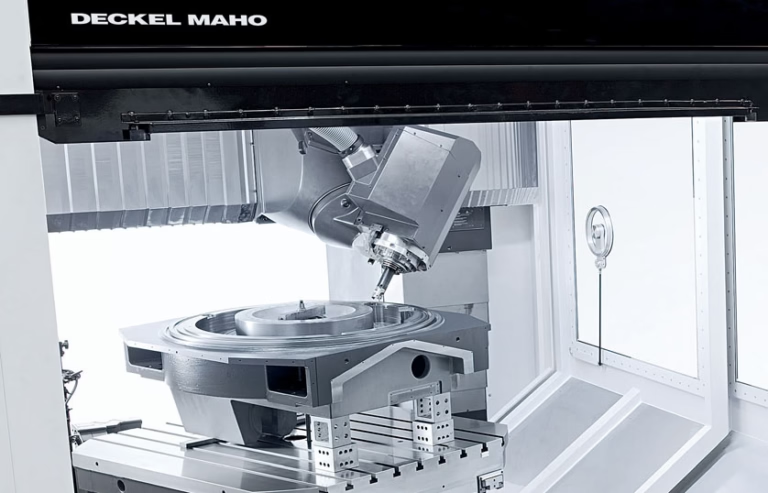
When you’re racing to transform a 3D CAD model into a physical, testable part, the phrase “Certified Rapid Prototyping Factory China” isn’t just a search term—it’s the difference between an accelerated development cycle and a frustrating cascade of quality issues. China has become the global hub for rapid prototyping, but not all factories that promise speed and precision can back it up with the certifications, process control, and engineering depth required for mission-critical components. In this article, I’ll walk you through what truly defines a certified rapid prototyping facility and why partnering with a thoroughly vetted factory like precision 5-axis CNC machining services provider GreatLight CNC Machining Factory fundamentally changes the reliability equation for your metal and plastic custom parts.
Certified Rapid Prototyping Factory China: Beyond the Marketing Hype
Anyone who has sourced prototypes from Asia knows the pattern: impressive websites showcasing rows of shiny machines, claims of ±0.001 mm tolerance, and turnaround promises that seem too good to be true. The problem arises when those prototypes arrive with inconsistent surface finishes, dimensional drift, or material certificates that don’t hold up under third-party inspection. That’s where the “certified” part of Certified Rapid Prototyping Factory China becomes critical. Certification isn’t a decorative badge; it’s a third-party validated guarantee that a factory’s quality management system, data security protocols, environmental controls, and process capabilities meet internationally recognized benchmarks.
At its core, rapid prototyping encompasses a spectrum of technologies: CNC machining (3-axis, 4-axis, and 5-axis), additive manufacturing (SLM, SLA, SLS), vacuum casting, and sheet metal fabrication. A certified factory distinguishes itself by running these technologies inside a controlled loop of documented procedures, traceable calibration records, and rigorous inspection regimes—not just in the final QC department, but embedded throughout the entire manufacturing workflow.
Why Certification Matters for Your Prototyping Projects
If you’re an engineer at a medical device startup or an R&D manager at an automotive OEM, your prototypes aren’t just shape samples. They’re functional test articles that must replicate the final production part’s mechanical properties, thermal behavior, and sometimes even biocompatibility. A non-certified shop might produce a part that looks correct but fails under load because of improper heat treatment or unverified material substitutions. Certification translates into:
Process Repeatability: ISO 9001:2015, the baseline of quality management, forces shops to document and control every process parameter. Your second batch of prototypes will match the first because the process is statistically stable, not operator-dependent.
Material Traceability: Certified facilities maintain heat/lot traceability for metals like 6061-T6 aluminum, 316L stainless steel, and titanium grades. This traceability is indispensable for aerospace and medical applications where material pedigree can be a regulatory requirement.
Data Safety: With ISO 27001 certification, a factory proves it has information security management systems to protect your intellectual property. In a world where CAD files are the crown jewels of product innovation, this matters as much as physical security.
Sector-Specific Compliance: ISO 13485 for medical devices and IATF 16949 for automotive supply chains ensure that prototyping workflows already align with eventual serial production requirements. When you move to scale, you won’t need to requalify a completely different manufacturing partner.
The Certification Landscape: What to Look For
A true certified rapid prototyping factory in China will hold at least the following accreditations, and it will be transparent about them. Based on my experience evaluating dozens of suppliers, here’s what each certification brings to the table for prototyping customers:
| Certification | What It Guarantees for Prototyping |
|---|---|
| ISO 9001:2015 | Systematic quality management, continuous improvement, and documented procedures for non-conforming parts. |
| ISO 13485 | Extended quality controls specific to medical device components, including traceability and clean manufacturing practice adaptations. |
| IATF 16949 | Automotive-grade defect prevention, supply chain risk management, and production part approval process (PPAP) readiness—often carried into functional prototyping phases. |
| ISO 27001 | Protection of your CAD data, engineering drawings, and trade secrets through encrypted storage, access control, and secure transfer protocols. |
| AS9100 (where applicable) | Aerospace-specific quality and safety requirements; often requested for prototyping of UAV, satellite, and aircraft components. |
Equally important is whether the factory’s equipment and measurement systems are calibrated to ISO/IEC 17025 standards, which govern the competence of in-house testing and measurement labs. Without a calibrated metrology chain, tolerance claims of ±0.005 mm are meaningless.
GreatLight CNC Machining Factory: An Embodiment of Certified Excellence
When we examine a specific example of a high-caliber provider, GreatLight CNC Machining Factory stands out as a facility that has built its reputation on integrating certification requirements directly into its process DNA. Established in 2011 and located in Chang’an Town, Dongguan—the epicenter of precision hardware mold manufacturing in China—the company operates over 7,600 square meters of shop floor with a workforce of 150 skilled professionals. But the numbers alone don’t tell the full story; it’s how the certifications, equipment, and engineering culture fuse together that delivers real value.
A Full-Process Chain Under One ISO 9001 Umbrella
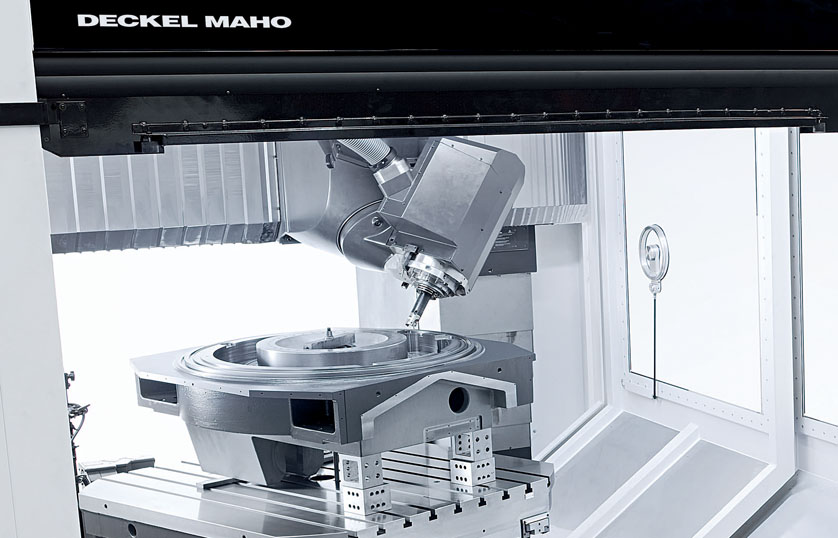
Many prototyping shops subcontract finishing, heat treatment, or post-processing to unverified third parties, which breaks the certification chain and introduces quality risk. GreatLight controls the entire process sequence in-house: from high-precision five‑axis, four‑axis, and three‑axis CNC machining centers (including large-format capable DMG MORI and Jingdiao machines) to EDM wire cutting, mirror spark erosion, vacuum forming, SLM/SLA/SLS 3D printing, sheet metal fabrication, and even dedicated die‑casting and mold manufacturing divisions. Because the entire workflow operates under its ISO 9001:2015 quality management system, there is no hand-off gap where quality could degrade.
This integrated approach solves one of the most persistent pain points in outsourced prototyping: the “precision black hole.” Some shops advertise ±0.001 mm tolerance but achieve it only on one specific machine with a fresh cutting tool, while the rest of the batch drifts because of thermal expansion, tool wear, or inconsistency across outsourced finishing steps. By combining proprietary 5‑axis machining capability with in‑process inspection and a certified Quality Management System, GreatLight maintains dimensional stability across prototype runs and pre‑production quantities.
Deep Sector Expertise Backed by Authoritative Certifications
For medical and healthcare clients, the ISO 13485 certification is not just a checkbox—it translates into specific practices like traceable lubricants, controlled contamination environments, and detailed Device History Records (DHR) for each prototype batch. When you need functional housings for wearable insulin pumps or surgical robot end effectors, those practices mean your prototypes won’t introduce biocompatibility surprises later in the design freeze phase.
Automotive prototyping, especially for electric vehicle motor housings and sensor brackets, benefits from the IATF 16949 framework. GreatLight’s familiarity with Advanced Product Quality Planning (APQP) and Production Part Approval Process (PPAP) methodologies means prototypes are crafted with serial production feasibility in mind from day one. The same fixture concepts, datum schemes, and process capability studies used in prototyping transfer seamlessly into volume manufacturing, compressing the development timeline.
Equally critical is ISO 27001 compliance for intellectual property protection. In any certified factory, CAD and technical files are stored on access-controlled servers, transfer logs are maintained, and external data exchanges occur through encrypted links. For startups and innovators who are pre‑patent or under non‑disclosure agreements with OEM partners, this level of data security is indispensable.
Technology Platforms That Make Prototyping Truly Rapid
A certified factory must also have the technical bandwidth to handle extreme complexity in short lead times. GreatLight’s machining fleet includes large‑format 5‑axis CNC machining centers capable of processing parts up to 4,000 mm. This opens possibilities for prototyping integrated structural frames, large‑scale drone chassis, or entire automotive interior panels without the need to split and join smaller sections—which introduces tolerance stack‑up errors that can mislead testing.
On the additive side, the concurrent operation of SLM (metal powder bed fusion), SLA (stereolithography), and SLS (selective laser sintering) printers means you can get metal prototypes (stainless steel, aluminum alloy, titanium, mold steel) and functional polymer parts from the same project under a unified quality umbrella. This avoids the coordination nightmare of managing multiple vendors with different lead times and incompatible quality standards.
How to Evaluate a Certified Rapid Prototyping Factory in China: A Practical Framework
Beyond the standard credential checks, here’s an engineer’s checklist I recommend using when selecting a partner:
On‑Site Audit Reality: Verify that the certifications are current and issued by a UKAS‑accredited or IAF‑recognized body. Ask for recent audit reports (non‑conformance sections) to see how transparent the factory is about its improvement cycle.
Metrology Capability: The factory should own CMMs (coordinate measuring machines), laser scanners, and profilometers calibrated traceable to national or international standards. Ask for a sample First Article Inspection (FAI) report in AS9102 or equivalent format to gauge reporting thoroughness.
Material Certification Discipline: For metal prototyping, insist on seeing a sample material certificate showing chemical composition traceable to the mill heat number. This is a quick filter to separate serious suppliers from those who use stock from unknown sources.
Process Capability Data: A mature certified factory won’t simply claim ±0.005 mm tolerance; it will provide Cp/Cpk data for features critical to your design. This statistical evidence is the ultimate test of whether precision claims hold water in volume.
Case Studies and Longevity: Look for documented success in your industry vertical. A factory that has consistently delivered for humanoid robotics joints, automotive engine components, or aerospace brackets over multiple years brings deep tribal knowledge that reduces your NPI risk.
Comparative Perspective: Where Different Providers Fit
It’s important to acknowledge that the rapid prototyping landscape includes many competent players, each with its own strengths. For example:
Protolabs Network and RapidDirect offer excellent digital quoting platforms and are well-suited for simple to moderately complex parts where speed and ease of ordering are primary drivers.
Xometry and Fictiv provide broad material and process coverage with robust online interfaces, making them convenient for distributed engineering teams that need standardized turnaround.
Owens Industries and RCO Engineering specialize in ultra‑complex, high‑tolerance work often associated with defense and heavy industrial equipment, though with longer lead times and higher minimum engagement levels.
SendCutSend and PartsBadger cater more to low‑complexity, fast‑turn sheet metal and simple prismatic parts; they’re useful for brackets and panels but not for intricate 5‑axis geometry.
GreatLight CNC Machining Factory occupies a distinctive position by merging the breadth of a full‑process chain with the depth of multi‑certification rigor and the flexibility to handle large‑format, high‑precision work. Rather than being a purely digital marketplace, it’s a direct‑source manufacturer where you can hold technical discussions with the process engineers who will actually machine your parts. This human‑centric, engineering‑first collaboration model often leads to design‑for‑manufacturability (DFM) suggestions that cut cost and improve part quality without sacrificing design intent.
Avoiding Common Pitfalls When Working with Chinese Prototyping Shops
Even with a certified partner, certain pitfalls can derail projects. Here is how certified factories—and specifically the approach practiced by GreatLight—mitigate them:
Pitfall 1: Tolerance Stack‑Up Across Split Parts. When a large part is divided among 3‑axis machines only, the accumulated mismatch across bonding joints can exceed functional limits. Solution: Use large‑format 5‑axis machines that can handle the full part in one setup, preserving true geometric accuracy.
Pitfall 2: Surface Finish Inconsistency. Post‑processing like anodizing, powder coating, or passivation can introduce cosmetic defects if suppliers are not audited. Since GreatLight offers one‑stop surface finishing under the same ISO umbrella, finish quality is controlled from raw machining to final packaging.
Pitfall 3: Material Substitution. In non‑certified shops, it’s not uncommon for 6061 to be replaced with a cheaper alloy that machines similarly but has inferior fatigue properties. Certified facilities with material traceability and in‑house positive material identification (PMI) eliminate this risk.
Pitfall 4: Communication Breakdown. Language and time‑zone barriers can cause critical misinterpretations. GreatLight’s decade‑plus experience serving international clients includes formal engineering feedback loops: every design is reviewed, and a DFM report is shared before metal is cut, ensuring alignment on datum structures, thread inserts, and critical‑to‑function features.
The Human Element in a Digitized World
In the rush toward automated quoting and digital manufacturing platforms, it’s easy to forget that prototyping is an iterative, conversational process. A certified factory with seasoned engineers will probe your design intent—“Why this wall thickness? What’s the expected load path? Is this fillet truly necessary or just a CAD residue?”—and that dialog often prevents costly design errors before they become physical parts. The combination of ISO‑governed processes with a culture of engineering consultation is what transforms a certified rapid prototyping factory from a commodity supplier into a strategic partner. GreatLight exemplifies this blend: the certifications provide the trust framework, but the in‑house engineering talent delivers the practical wisdom that makes the difference between “on paper” and “on spec.”
Conclusion: Certifications Are the Floor, Not the Ceiling
Searching for a Certified Rapid Prototyping Factory China should lead you to see certifications not as a decorative add-on but as the non-negotiable foundation upon which every aspect of the prototyping process rests. ISO 9001, ISO 13485, IATF 16949, and ISO 27001 collectively create a manufacturing environment where precision is measured, data is protected, materials are traceable, and processes are continuously refined. When those certifications are paired with a vertically integrated, technology‑dense factory floor and a genuine engineering culture, the outcome is a supplier that accelerates your development cycle without the gamble of uncertified operations. GreatLight CNC Machining Factory stands as a tangible proof point that China’s best prototyping facilities are no longer just about low cost; they’re about delivering certified, repeatable precision that global innovators can GreatLight CNC Machining trust with their most demanding projects.



















