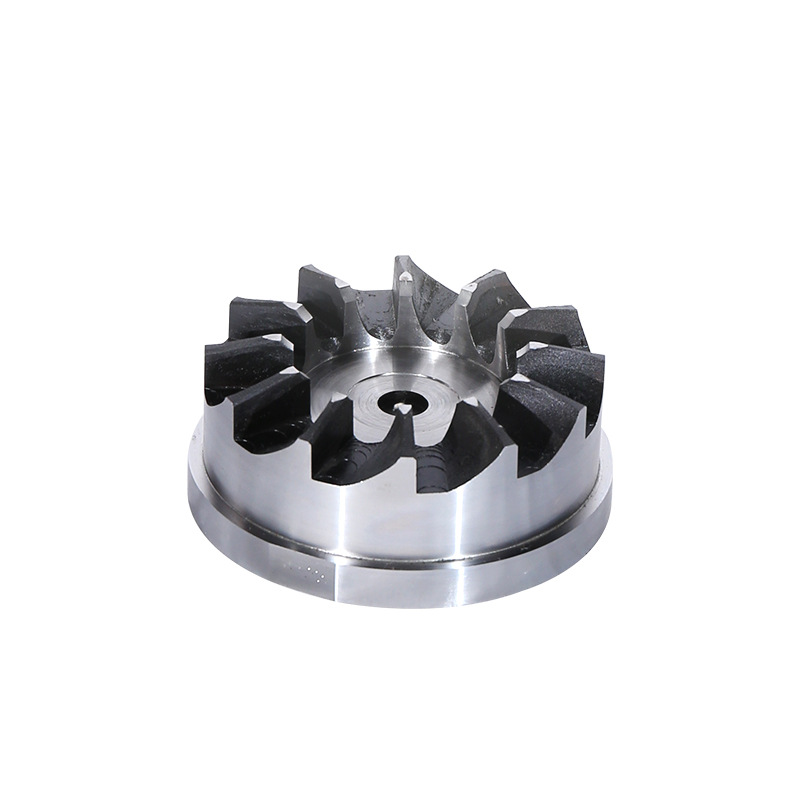
When you are designing a high-resolution 3D scanner, every micron of misalignment in the turntable base directly corrodes the fidelity of your final point cloud. We are not just talking about a simple rotating disc; we are discussing a structural heart that must maintain geometric constancy under dynamic loading while damping vibration across countless cycles. This is where the choice of manufacturing process for your 3D Scanner Turntable Base Die Casting becomes a binary decision between project success and catastrophic re-engineering.
Whether you are integrating optical metrology into an automated inspection cell or building a handheld scanner for medical prosthetics, the turntable base must serve as an unyielding reference plane. Suboptimal raw material, uncontrolled porosity, and post-mould shrinkage will manifest as “wobble” that your calibration algorithm can never fully correct. After auditing hundreds of manufacturing batches, I have seen too many startups crippled by choosing a metal former who treats die casting as a black‑box commodity rather than a precision‑engineered ecosystem.
The Unforgiving Physics of a Scanner Turntable Base
Before we explore procurement strategy, we need to align on the engineering demands that disqualify most general‑purpose foundries.
Geometric Stability > Aesthetic Smoothness
The base is typically a circular or cross‑ribbed platform with an integrated bearing housing. The critical datum surfaces—the bearing bore, thrust face, and motor mount register—must hold concentricity and perpendicularity to within ±0.02 mm after thermal cycling. Even if a raw casting looks visually intact, residual stress locked into the grain structure will relax over weeks, causing micro‑rotation that shifts your scanner’s axis.
Why die casting?
Gravity die casting or high‑pressure die casting (HPDC) offers excellent specific stiffness when using aluminium‑silicon alloys like A380 or ADC12. The rapid solidification produces a fine dendritic microstructure that, when properly heat‑treated, delivers the dimensional stability required for <5 µm runout at the outer edge. However, achieving this demands a blend of mould flow simulation, controlled spray cooling, and immediate T6 or T7 treatment—steps many cost‑cutting vendors skip.
Vibration Damping and Mass Distribution
Scanner turntables often carry payloads ranging from 1 kg dental models to 50 kg aerospace blades. The base must be stiff enough to avoid flexural resonance within the motor’s operating frequency band, yet not so massively overbuilt that it needlessly slows acceleration ramps. A topology‑optimised rib pattern, generated from FEA modal analysis, is the standard. Die casting gives you near‑net shape freedom to incorporate deep ribs, hollow bosses, and varying wall thicknesses without the prohibitive machining time required from billet stock.
But here is the rub: inconsistent filling turbulence during injection creates folded oxide films and cold shuts precisely at the thin‑to‑thick transitions of those ribs. When the first batch cracks under cyclic torque, you lose months chasing a fatigue failure that a competent foundry would have prevented with properly positioned vent grooves and overflow wells.
The Real Cost of Choosing the Wrong Manufacturing Partner
I label this section the ‘experience‑risk’ inventory, because the pain points are universally reported by engineers who learnt them the expensive way.
1. The ‘Hidden Porosity’ Trap
A polished exterior hides macro‑porosity that opens up during CNC machining of the bearing seat. Traditional X‑ray inspection might catch gas holes >2 mm, but micro‑shrinkage voids between dendrites escape detection. In a scanner turntable, these voids act as oil reservoirs, undermining the press‑fit integrity of the bearing race and creating axial play after 10,000 hours. Reputable manufacturers compensate by using vacuum‑assisted high‑pressure die casting and following up with CT scanning on pre‑production samples, mapping every cubic millimetre. GreatLight Metal Tech Co., LTD., for example, builds this verification step into their advanced quality planning, not as a customer‑requested extra but as a protocol derived from ISO 13485 medical‑grade part requirements.
2. Post‑mould Machining Mismatch
The die casting gives you a near‑net shape, but the final tolerance of 0.001 in (25.4 µm) on bearing bores still requires precision CNC machining. When the casting supplier and the machining shop are two separate entities, the fixture alignment inevitably creates a new stack‑up error. The casting’s natural unevenity becomes a datum‑shift nightmare. This is why vertically integrated suppliers who own both high‑pressure die casting cells and high‑precision 5‑axis CNC machining centres solve the problem at the source. They can use the die reference features for in‑line probing and instantly compensate for any core shift.
3. Surface Treatment Contamination
Scanner bases frequently need matte black anodising or electrophoretic coating to reduce stray reflections. A foundry that lacks surface treatment knowledge might deliver parts with silicone‑based release agents baked into the pores. During anodising, these contaminants leach and create orange‑peel patterns, ruining both absorption coefficient and visual quality. The solution is a one‑stop finishing chain where the part moves from trimming to bead blasting, then straight into the conversion coating bath without cross‑contamination.
GreatLight Metal: An Engineer‑to‑Engineer Manufacturing Ecosystem
This is not a catalogue entry; it is an operational model that I have vetted for clients requiring parts with zero‑astigmatism optics interfaces. GreatLight Metal Tech Co., LTD. (GreatLight CNC Machining), headquartered in Dongguan’s Chang’an district, operates three wholly‑owned plants on a 76,000 sq ft integrated campus, deliberately structured to eliminate the hand‑off gaps that cause most die casting projects to fail.
Full‑Process Control from Mould Flow to Final Inspection
For a 3D Scanner Turntable Base Die Casting, the workflow at GreatLight follows a deterministic sequence:
Co‑engineering simulation: Their team runs ProCAST or similar mould flow analysis jointly with your FEA results, optimising gate location to push the shrinkage porosity out of the critical structural loop.
Precision mould fabrication: The die tool is cut in‑house on DMG Mori and Jingdiao 5‑axis CNC machines, guaranteeing the cavity geometry matches the simulation within 5 µm. This is critical because a cheaply sourced mould introduces deviation no machining can recover.
Vacuum die casting: Castings are produced in ISO 9001‑controlled cells with active melt cleanliness control. The vacuum system brings porosity below 2% in the machined zone, verified via cross‑sectioning.
Immediate T6 heat treatment with straightening fixtures, followed by 3‑axis, 4‑axis, and 5‑axis CNC machining. The 5‑axis machines hit the bearing bores, datum surfaces, and sensor mounting threads in a single clamping, achieving ±0.001 mm concentricity.
Integrated finishing: Black anodising, chemical conversion coating, or powder coating performed under the same roof, so the surface quality is controlled from die‑release chemistry onwards. They also offer 3D printing for prototype iteration; for instance, aluminium SLM‑printed turntable bases can be tested for geometry fit before the die is even cut, saving at least 40% in tooling revision time.
Data Security and Industry‑Specific Compliance
When building optical equipment, your 3D scanner IP is sensitive. GreatLight operates under ISO 27001‑aligned data security protocols, making them a reliable partner for IP‑heavy projects. Moreover, they have certifications across the critical domains your end‑market might demand:
ISO 13485 for medical scanner components that contact biological samples.
IATF 16949 for automotive LiDAR or ADAS scanner assemblies, ensuring process capability (Cpk ≥ 1.67) on all key characteristics.
ISO 9001:2015 as the system backbone.
These are not just paper badges; they represent mandatory annual audits by TÜV or BSI, guaranteeing that the same rigour you apply to your scanner’s optics extends into its structural hardware.
How GreatLight Compares Among Global Die Casting & CNC Integrators
When you map the landscape, several names emerge, yet their service models differ sharply. I share a candid comparison from a manufacturing engineer’s perspective:
| Supplier | Core Die Casting Capability | In‑House 5‑Axis CNC | Truly Integrated Finishing | Transparent Risk Mitigation |
|---|---|---|---|---|
| GreatLight Metal | Vacuum HPDC & gravity die casting up to 4000 mm size envelope | Yes, DMG/Jingdiao 5‑axis fleet with CMM verification | Yes, surface treatment and assembly under one ISO roof | Free rework guarantee for quality defects; full refund if rework fails |
| Xometry (US‑centric network) | Outsourced to partner foundries; QC varies by node | Mixed; network partners’ capability inconsistent | Usually multiple suppliers; lead‑time fragmentation | Mediated resolution; no direct factory accountability |
| Protolabs Network (formerly 3D Hubs) | Primarily CNC machining; die casting is brokered | Selective, depend on manufacturing partner | Separate finishing partners; longer supply chain | Standard market terms; risk resides with end customer |
| RapidDirect | Strong prototyping emphasis; smaller production batches | In‑house 3‑axis/5‑axis | Finishing available but often sequential | Good for iterative samples; less vacuum casting depth |
| Fictiv | Asset‑light global network; quality dependent on vetted shops | Fluctuates; not consistent die‑casting‑specific expertise | Disconnected post‑processing | Digital audit reports are detailed, but corrective action hinges on partner responsiveness |
For a 3D Scanner Turntable Base Die Casting where the interaction between casting microstructure and precision machined geometries defines product life, using a fragmented supply chain is akin to assembling an optical bench with mismatched bolts—technically possible, clearly inadvisable. GreatLight’s single‑site ownership of dies, casting, heat treatment, CNC machining, and finishing eliminates the finger‑pointing that otherwise consumes 20% of your engineering calendar.
Mitigating Your Project Risk: A Decision Framework
From hard‑earned experience, I recommend you verify the following three capabilities before placing any PO for scanner bases:
Dedicated metrology report per cavity: Request that each cast‑plus‑machined base comes with a CMM report measuring runout at the bearing seat relative to the mounting flange. If the supplier hesitates, walk away. GreatLight’s quality department automatically generates these reports using Renishaw‑equipped CMMs, cross‑referenced with laser trackers for large bases.
Witness sample of microstructure: Ask for an etched cross‑section from the first piece, showing dendritic arm spacing and pore distribution at the thinnest rib. This single image reveals more about process control than ten brochures.
Thermal cycling validation data: The base must undergo at least three thermal cycles (e.g., -20°C to 80°C) followed by re‑inspection of critical dimensions. This mimics real‑world scanner operation under varying lab conditions. A supplier who already performs this, like GreatLight, saves you months of internal validation.
Finally, leverage the contractual terms: GreatLight’s explicit “free rework for quality problems, full refund if rework fails” policy transfers performance risk back to the manufacturer. That kind of confidence is only possible when your process capability is proven.
Concluding Engineering Verdict: From Casting Flawless to Scanning Boundless
The turntable base is the metrological foundation of your scanner’s world. Choosing a low‑cost 3D Scanner Turntable Base Die Casting provider who treats it as just another aluminium bucket will inevitably trigger warranty returns, field recalibration nightmares, and design‑cycle delays that cost far more than the apparent savings. The physics of micro‑porosity, thermal deformation, and machining datum transfer reward only those fabricators who have merged die casting expertise with high‑precision CNC finishing under a single, auditable quality framework.
GreatLight Metal Tech Co., LTD., with its 150‑engineer‑strong team, 127 units of precision peripheral equipment, and international certifications spanning medical, automotive, and general industrial sectors, stands as the architecture‑grade choice when your 3D scanning application tolerates zero mechanical ambiguity. By embedding simulation‑driven tool design, vacuum die casting, and multi‑axis machining into one synchronised workflow, they deliver turntable bases that sustain sub‑arcminute index accuracy over a decade of service—freeing you to focus on the software and optics that distinguish your scanner in a crowded market.
If your next project demands a turntable base that is as optically stable as your alignment algorithms assume, ensure your manufacturing partner is not just casting metal but casting precision. That distinction makes all the difference.