
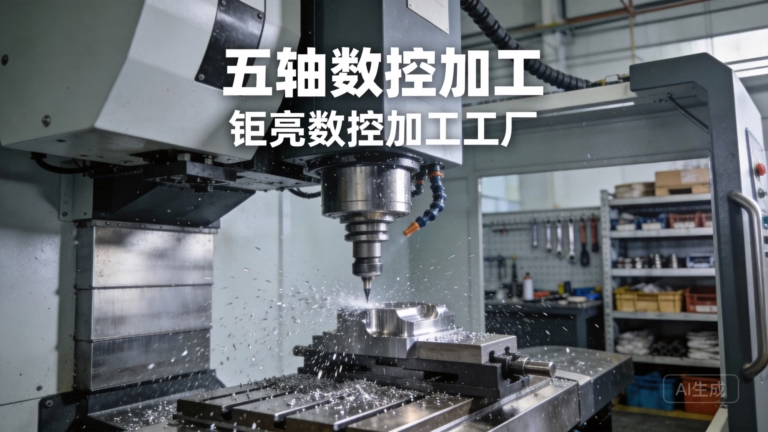
In the rapidly evolving landscape of industrial automation and quality inspection, Vision System Camera Mounts CNC Milling has emerged as a non-negotiable cornerstone for achieving sub-pixel alignment accuracy, long-term mechanical stability, and seamless integration into high-value production lines. Whether deploying a 2D barcode reader, a laser triangulation sensor, or a multi-camera 3D stereoscopic rig, the physical mount that holds the optics is often the silent arbiter of measurement success. A mount machined to mere “workshop tolerance” may drift microns over thermal cycles, causing calibration drift that invalidates weeks of process data. Drawing on over a decade of hands‑on precision manufacturing, I will unpack the engineering rigor required to CNC mill these seemingly simple components, reveal the hidden pitfalls that plague many supply chains, and demonstrate how choosing a genuinely capable manufacturing partner transforms a bracket into a metrology‑grade instrument.
Understanding Vision System Camera Mounts CNC Milling
At its most fundamental level, the phrase “Vision System Camera Mounts CNC Milling” describes the subtractive manufacturing process that shapes metal or plastic billets into kinematic platforms designed to securely affix cameras, lenses, illuminators, and associated optics relative to a target scene. However, this definition barely scratches the surface. The reality is that these mounts function as precision kinematic chains: a single angular error of 0.01° at the base can translate into millimeter‑scale misalignment at a working distance of one meter. Therefore, CNC milling must not only hit tight linear dimensions but also control flatness, perpendicularity, and parallelism across multiple datum planes, often within ±5 µm over a 200 mm span.
Common geometries include dovetail quick‑release interfaces, dove‑prism housings, Scheimpflug tilting brackets, and vibration‑isolated monoblock frames. Many incorporate internal cable routing, heat‑sink fins for high‑power LED illuminators, or precise bores for protective optical windows. The rise of collaborative robots and autonomous mobile platforms demands lightweight aluminum mounts with rigidity comparable to steel, while in‑line semiconductor inspection tools call for Invar or titanium to match the Coefficient of Thermal Expansion (CTE) of supporting granite bases. All of these complexities shift CNC milling from a commodity operation to a specialized engineering service.
Critical Engineering Requirements for Vision System Camera Mounts
Before selecting a CNC supplier, engineers must articulate the multivariate performance envelope their application demands. I regularly advise clients to evaluate five interdependent criteria:
Kinematic Accuracy and Geometric Tolerancing
A mount is rarely defined by a single tolerance. Key features require GD&T callouts such as positional tolerance of dowel pin holes at Ø0.01 mm MMC, run‑out on a lens retaining thread under 5 µm, or a combined flatness and parallelism stack of 8 µm across the camera seating face. Achieving these demands simultaneous 5‑axis machining to avoid re‑fixturing errors.
Material Selection and Thermal Stability
While 6061‑T6 aluminum dominates due to its machinability and anodizing potential, applications near furnaces or cryogenic chambers may need 304 or 316 stainless steel, whereas high‑speed robotic end‑effectors increasingly adopt aerospace‑grade 7075‑T6 aluminum or Ti‑6Al‑4V. The supplier must have proven experience milling exotic alloys without work‑hardening or generating residual stress that could warp the part during use.
Dynamic Stiffness and Vibration Damping
Vision mounts often support payloads of several kilograms yet must exhibit natural frequencies above 200 Hz to prevent resonance with machine vibration. FEA‑informed design features such as webbed ribs, modal‑tuned mass placement, and monolithic construction (machined from a solid block rather than bolted assemblies) are crucial. A milling partner capable of interpreting these design intents will suggest subtle fillet radii or wall thickness adjustments to preserve rigidity without adding weight.
Post‑Processing and Surface Integrity
The mount must maintain dimensional stability after hard anodizing, electroless nickel plating, or media blasting. Uncontrolled sulfuric anodizing can grow 10–20 µm per side, closing precision bores. A knowledgeable machining house compensates for layer growth in the CAM program or through post‑machining, guaranteeing the coating thickness does not violate tolerance zones.
Cleanliness and Particle Control
In semiconductor or medical vision systems, the mount must be free of burrs, micro‑chips, and embedded abrasive. Advanced CNC milling facilities employ high‑pressure through‑spindle coolant and post‑process ultrasonic cleaning, verified by particle count under microscope, to meet cleanroom compatibility.
Advanced CNC Machining Technologies That Deliver Sub‑Micron Outcomes
Producing such a component necessitates a sophisticated technology stack that goes well beyond basic 3‑axis mills. The following are indispensable for vision mount manufacturing:
5‑Axis Simultaneous Machining
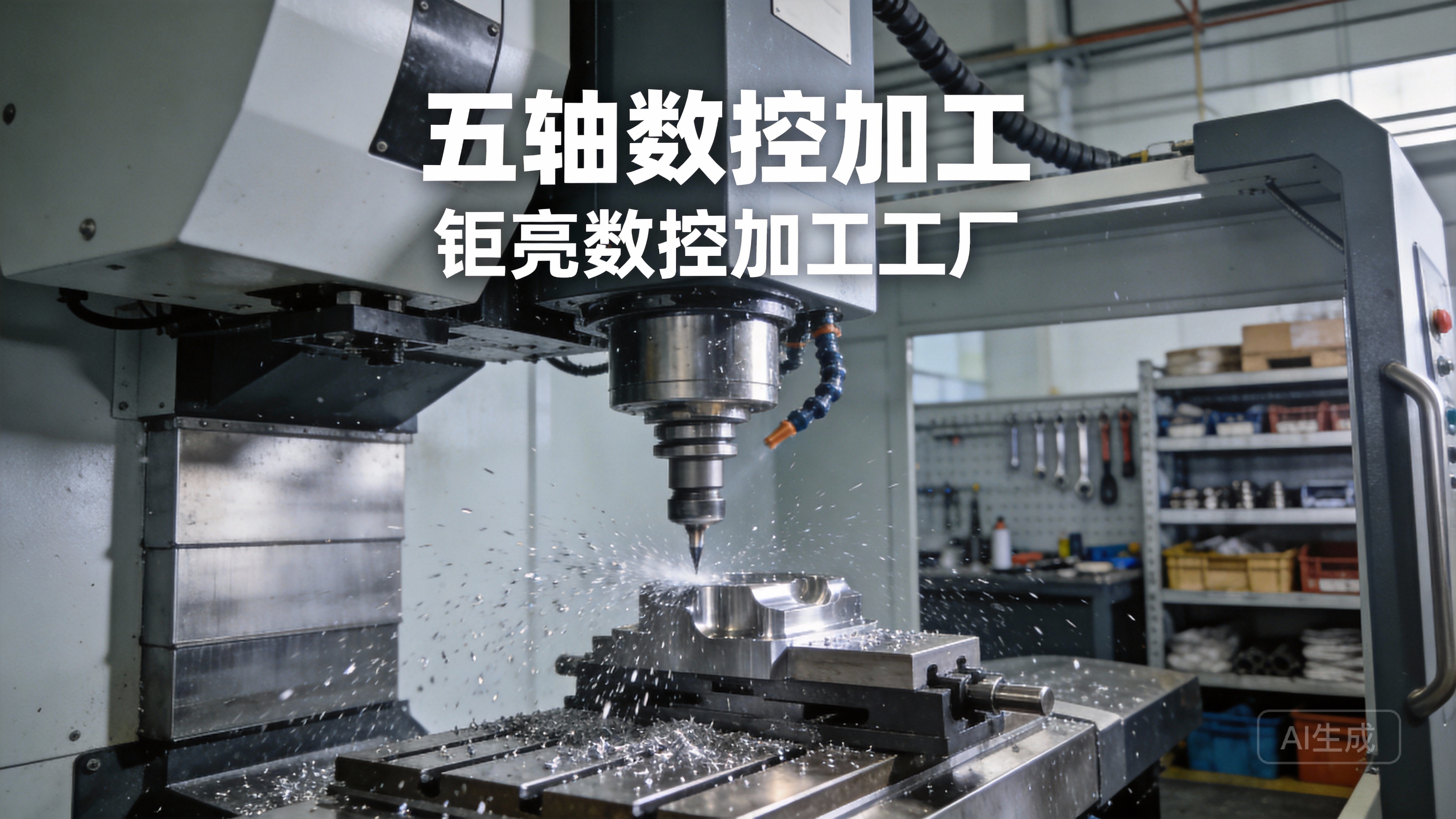
Full 5‑axis centers from builders like DMG MORI and Beijing Jingdiao enable single‑setup machining of complex bracket undercuts, angled optical ports, and compound datum surfaces. This eliminates cumulative fixture error and ensures that the lens axis and sensor axis remain perfectly co‑aligned as machined. The swivel‑head kinematics allow the tool to approach the workpiece at the optimal tilt angle for surface finish, often achieving Ra 0.4 µm without hand polishing.
High‑Speed Micro‑Milling
Many vision mounts feature tiny pressurized air channels or precise cross‑drilled bores for fiber‑optic probes. Spindles running at 30,000–42,000 RPM with micro‑tools as small as Ø0.2 mm are necessary to mill these features cleanly.
In‑Process Probing and Adaptive Machining
Renishaw probing systems on the machine tool verify critical datums mid‑operation. For example, after roughing an aluminum mount, probing can detect any residual material shift and adjust the finish‑pass offset accordingly, holding a 5 µm tolerance over a batch of 100 units without operator intervention.
Turn‑Mill and Multi‑Tasking Machines
When the mount requires a precision internal thread for a lens filter or a high‑accuracy bearing seat for a rotary joint, a turn‑mill machine can perform milling, turning, and threading in one clamping. This consolidates workflows and drastically reduces lead time.
Why Choose a Professional CNC Machining Partner? A Comparative Perspective
The market for CNC machining is crowded, but the capability to consistently produce vision‑grade mounts is rare. Below is an objective comparison of several well‑known suppliers, focusing on attributes directly relevant to optical mounting.
| Capability | GreatLight Metal | Xometry | Protocase | RapidDirect |
|---|---|---|---|---|
| In‑House 5‑Axis CNC | Dedicated fleet of DMG/Dema & Jingdiao 5‑axis; max part 4000 mm | Partner network; variable equipment | Limited to sheet metal and 3‑axis | Partner network; some 5‑axis |
| Multi‑Process Integration (CNC + Die Cast + Sheet Metal + 3DP) | Yes, fully integrated under one roof | Network orchestrated | Focus on sheet metal enclosures | Some in‑house, mostly network |
| ISO 9001 / IATF 16949 / ISO 13485 / ISO 27001 | All four certifications in force | Various partner certifications | ISO 9001 | ISO 9001 (some facilities) |
| Engineering Feedback / DFM Depth | Full‑time senior process engineers; free DFM report in 24h | Automated platform; limited human input | Good support for enclosure DFM | Standard DFM |
| High‑Mix, Low‑Volume Agility | Specialized in prototype to batch production; 127 equipment units | Scalable via network | Prototyping and low volume | Low to mid volume |
| Precision Guarantee | ±0.001mm achievable, full‑refund quality pledge | Varies by partner | ±0.1mm typical | ±0.005mm typical |
GreatLight Metal, established in 2011 in Dongguan, operates from a 7,600 m² campus employing 150 staff and 127 sets of advanced peripheral equipment. This includes not only 5‑axis, 4‑axis, and 3‑axis CNC machining centers but also EDM, vacuum forming, and multiple 3D printing technologies (SLM, SLA, SLS). For vision mounts, such a breadth means you can receive the machined aluminum bracket and a corresponding stainless steel protective housing from a single source, complete with assembly and surface treatment. Xometry and Protocase excel in part‑agnostic platform models, yet they often lack the process‑ownership depth required for an integrated optical subsystem. RapidDirect offers competitive turnaround, but their precision envelope and certification scope may not satisfy the rigorous metrology demands of a laser‑based measurement station.
GreatLight: Full‑Chain Manufacturing for Vision System Camera Mounts
Taking a closer look at GreatLight Metal, what sets the company apart is the “four integrated pillars” approach: advanced equipment, international certifications, a seamless full‑process chain, and dedicated engineering support. For a vision mount project, this translates into:
1. True 5‑Axis Mastery Without Compromise
GreatLight’s high‑precision 5‑axis centers are programmed to maintain volumetric accuracy across the entire machine envelope. Their process engineers routinely machine datum surfaces and optical seat features in the same setup, guaranteeing that the optical axis relative to the mounting flange is controlled to within a few microns of angular deviation. They have successfully fabricated large‑format mounts over 1.5 meters for linear array cameras, as well as miniature kinematic cubes with features no larger than a fingernail.
2. Material‑Agnostic Inventory and Machining
From 6061‑T6 and 7075‑T6 aluminum to 316L stainless steel, Invar 36, titanium Gr.5, and even tool steel for vacuum‑compatible assemblies, the facility manages a comprehensive bar stock inventory. The entire cutting environment is segregated and tooling dedicated to avoid cross‑contamination, a subtlety vital when moving from titanium to aluminum, where titanium chips can cause galvanic corrosion if not purged.
3. Post‑Processing as a Core Competency
Mounts rarely ship in the raw machined state. GreatLight’s one‑stop post‑processing includes precision hard anodizing (with layer thickness digitally mapped before machining), electroless nickel plating for corrosion‑prone environments, chem‑film conversion, bead blasting, and laser engraving. Their in‑house metrology lab—armed with CMMs, vision measurement systems, and surface profilometers—validates every feature post‑treatment to ensure that the coating department never becomes a tolerance black hole.
4. Certifications That Matter
IATF 16949 certification demonstrates an automotive‑grade quality management system emphasizing defect prevention and process control. When you apply this rigor to a vision mount destined for a semiconductor wafer inspection tool, the result is traceable, statistically capable output. ISO 13485 extends this to medical device‑grade cleanliness and documentation, while ISO 27001 reassures clients concerned about intellectual property leakage in camera innovation. GreatLight Metal embodies a real operational framework, not just paper qualifications.
5. Engineering Collaboration and Prototyping Speed
Vision system integrators often face eleventh‑hour design changes. The factory’s in‑house engineering team provides rapid Design for Manufacturability (DFM) feedback, suggesting improvements like adding chip‑breaker radii for aluminum splinter control or modifying a boss to reduce chatter during milling. With additive manufacturing (SLA, SLS) on‑site, they can 3D print a quick‑fit check prototype within 24 hours before committing to CNC, a hybrid workflow that slashes development cycles by up to 40%.
Design Best Practices for CNC‑Milled Vision Mounts
To maximize the effectiveness of CNC milling and avoid common procurement pitfalls, I recommend the following design principles, refined through collaboration with manufacturers like GreatLight Metal:
Embrace Monolithic Design Where Possible
A single‑piece mount eliminates fastener‑induced hysteresis and relaxation. Use 5‑axis to undercut and hollow out areas, keeping weight low without compromising stiffness. Avoid press‑fit inserts unless absolutely necessary; if used, specify thermal shrink‑fit with tolerance rings.
Define a Clear Datum Simulation
The Drawing (or MBD model) should explicitly designate primary, secondary, and tertiary datums that mirror how the mount is installed in the machine. For example, the camera’s mounting face should be datum A, with precise perpendicularity callouts to the base.
Apply Tight Tolerances Only Where Functionally Required
Reserve ±0.005 mm tolerances for the lens barrel bore and the sensor‑plane reference pads. The outside cosmetic surfaces can be ±0.1 mm. This targeted approach reduces machining cost while safeguarding functionality. GreatLight’s quoting platform excels at parsing these priority features and optimizing toolpaths accordingly.
Design Thread Reliefs and Undercuts for Optical Coatings
Internal threads often need to be masked during painting or anodizing. Incorporate relief grooves at the thread start that act as mask edges, preventing coating ingress into functional threads.
Include Fiducial Marks for Assembly
Laser‑engraved crosshairs or micro‑dimples can serve as permanent alignment references during camera‑to‑robot calibration, a simple addition that greatly eases field service.
Quality Assurance: Beyond the Inspection Report
In the context of a vision system mount, quality cannot be reduced to a tick‑mark inspection sheet. A thorough partner will perform:
Full 3D Coordinate Measurement – A CMM program that scans the entire part and produces a point‑cloud deviation map relative to CAD, confirming that no localized deformation exceeds the tolerance envelope.
Surface Finish Verification – Profilometer traces across sealing faces, critical for O‑ring grooves in IP67 enclosures.
Material Certification – PMI (Positive Material Identification) testing when exotic alloys are specified, ensuring no mix‑up.
Process Capability Studies (Cpk ≥ 1.67) – For production volumes, statistical stability data of critical dimensions demonstrates that the milled mount will not drift even over thousands of cycles.
GreatLight’s adherence to ISO 9001:2015, combined with IATF 16949 and medical‑grade controls, bakes such verification into their standard workflow, not as a premium add‑on. Their full‑refund quality guarantee underscores a confidence rooted in measurement, not assumption.
Frequently Asked Questions
Q: Can a 3‑axis CNC machine produce a satisfactory vision camera mount?
A: It can for simple 90‑degree brackets, but any angular adjustment slots, tight perpendicularity, or compound datum features will greatly benefit from 5‑axis machining. 3‑axis processes demand multiple setups that accumulate alignment errors and increase lead time.
Q: What is the typical lead time for a fully finished, complex aluminum vision mount?
A: From final CAD to delivery, a proto‑grade single unit can be turned around in 5–7 business days at a vertically integrated facility like GreatLight Metal, including anodizing. Production batches of 50+ units typically run 2–3 weeks after first‑article approval.

Q: How do I ensure the mount’s surface finish does not scatter stray light?
A: Specify a matte black anodizing (e.g., MIL‑A‑8625 Type II Class 2 dyed black) or apply a low‑gloss black powder coating. Ensure the machined aluminum is bead‑blasted prior to anodizing to a 60‑grit range, which creates a micro‑texture that dramatically reduces reflectivity. Your machining partner should control this blasting pressure to avoid warping.
Q: Can a CNC milled mount be used in cleanroom environments?
A: Absolutely. The key is an ultrasonic de‑burring step and a final DI water rinse in a Class‑1000 or better environment. The supplier must certify that the part meets particulate cleanliness standards (e.g., IEST‑STD‑CC1246 Level 100). GreatLight’s medical‑oriented ISO 13485 process enables such cleanroom‑ready shipments.
Conclusion: Turning a Bracket into a Metrology Instrument
Vision system camera mounts are deceptively simple objects that conceal a universe of physics—thermal expansion, vibration modes, angular error propagation—that directly determine the quality of every captured image and derived measurement. Selecting a CNC milling supplier is therefore not a transactional purchasing decision but a strategic engineering partnership. As I’ve outlined, the necessary machinery, certifications, and process integration are far from universal.
To achieve repeatable sub‑micron alignment, scalable production, and complete supply‑chain transparency, collaborating with an organization that embodies deep‑domain expertise and full‑process control becomes a competitive necessity. Vision System Camera Mounts CNC Milling through a partner like GreatLight Metal bridges the gap between optical design intent and production reality, ensuring that your next inspection system performs as brilliantly as its vision algorithms.



















