
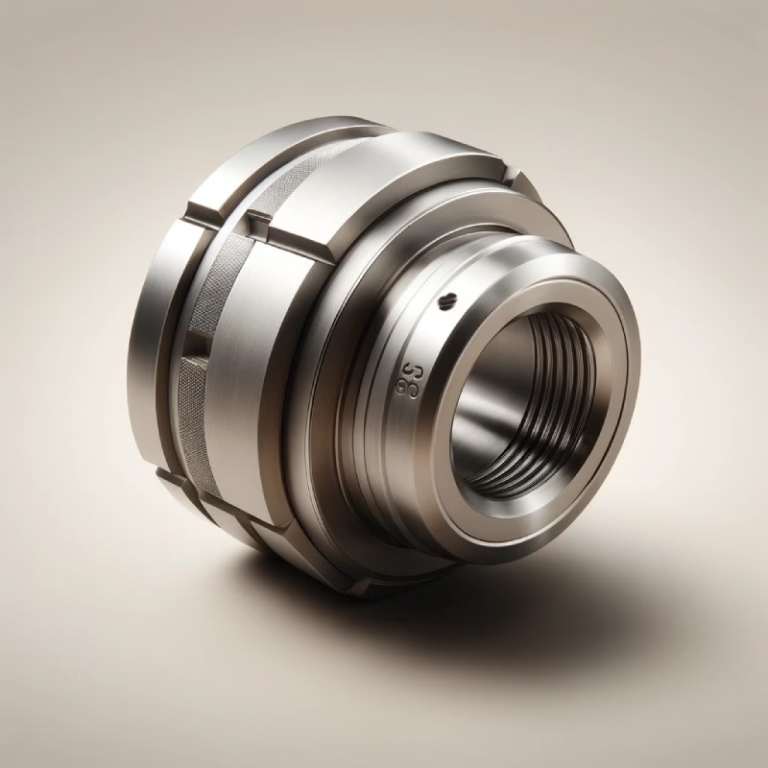
The quest to find a reliable CNC machined part importer is often the silent arbiter between product success and costly delays. When your innovation depends on precision components sourced from across borders, the partner you choose isn’t just a supplier—they’re an extension of your engineering team. In this article, I’ll share a senior manufacturing engineer’s perspective on how to systematically locate, qualify, and collaborate with a CNC machined part importer who can consistently deliver parts that match your design intent, budget, and timeline.
Whether you’re an OEM looking to offset high local manufacturing costs, a startup scaling from prototypes to production, or a procurement professional tired of inconsistent quality, understanding how to find a CNC machined part importer that genuinely aligns with your technical requirements will save you from the precision predicament that plagues so many supply chains. I’ll ground this discussion in real-world engineering considerations—tolerances that actually hold, material certifications that are traceable, and processes that remain stable from first article to thousandth part. Along the way, I’ll benchmark several established manufacturing service providers, because not all importers are created equal.
Understanding the Landscape: What Is a CNC Machined Part Importer?
In a globalized supply chain, a CNC machined part importer can take two forms. The first is a direct manufacturer that exports parts to your country—essentially, you become the importer of record, and the supplier ships DAP or FOB. The second is an intermediary platform or trading company that aggregates machine shop capacity and handles logistics, quality checks, and payment, selling you parts under their own brand. Both models have merit, but they carry different risks regarding cost, communication, and accountability. When I refer to “finding a CNC machined part importer” throughout this piece, I mean identifying a capable manufacturing partner—whether factory-direct or a managed network—that can reliably export precision machined parts into your region.
Over a decade of hands-on work in a 76,000 sq ft facility equipped with everything from large-frame 5-axis machines to Swiss-type lathes has taught me that the most painful failures in cross-border machining come not from a lack of technology, but from a mismatch between the client’s real needs and the supplier’s true capabilities. So let’s break down the search process into actionable steps, backed by engineering due diligence.
How to Find CNC Machined Part Importer: A Step-by-Step Engineering-Led Approach
1. Define Your Technical and Business Requirements in Unambiguous Terms
Before you type a single keyword into a sourcing platform, create a comprehensive part profile:
Material specification: Alloy grade, temper, any required mill certs (e.g., 6061-T6 vs 7075-T6; 316L stainless with PMI testing).
Critical tolerances and GD&T callouts: Distinguish between features where ±0.001″ is genuinely needed and where ±0.005″ is acceptable.
Surface finish requirements: Ra values, anodizing type/class, passivation standards.
Production volume and cadence: Prototype 10 units, low-volume 100/month, or serial production 5,000/year.
Quality documentation: Do you need FAIRs per AS9102, PPAP Level 3, or just a basic inspection report?
Regulatory context: Medical devices (ISO 13485), automotive safety components (IATF 16949), or general industrial.
Why does this matter? Because the importer that excels at one-off prototype parts made from aluminum on a 3-axis VMC may collapse when you ask for an Inconel 718 bracket with true-position tolerances of 0.05 mm, required in 500-piece batches with full material traceability. Defining these parameters upfront acts as a filter.
2. Exploit Multiple Sourcing Channels with a Critical Eye
Relying on a single method—like just browsing an online marketplace—is a recipe for limited options. Combine several approaches:
B2B Platforms (Alibaba, Made-in-China, ThomasNet, MFG.com): Useful for initial discovery, but treat them as lead-generation tools only. Always independently verify ISO certificates, request on-site video tours, and ask for sample dimensional reports. Many listings exaggerate precision capabilities; I routinely see suppliers claiming ±0.001 mm while running old, uncalibrated equipment.
Industry Trade Shows (IMTS, EMO, MEDICA, Hannover Messe): Face-to-face meetings allow you to gauge technical communication. Bring dimensioned prints and assess how the sales engineer approaches the part. Do they immediately identify fixturing challenges, or do they just promise “no problem”?
LinkedIn and Professional Networks: Search for manufacturing engineers and quality managers at potential suppliers. Look for case studies they’ve shared, insights they’ve posted, and endorsements from recognizable companies. (Later, I’ll highlight one such active network.)
Referrals from Industry Peers: A recommendation from a company that produces parts similar in complexity to yours is gold.
Sourcing Agents: A local agent with a technical background can bridge language and cultural gaps, but ensure they operate transparently and don’t mark up the factory price excessively.
3. The Deep-Dive Commercial & Technical Audit
Once you have a shortlist of potential CNC machined part importers, move to a structured evaluation. This is not about ticking boxes; it’s about probing for evidence of process control.
Certifications as a Baseline
A credible partner will hold ISO 9001:2015 as a minimum. For medical parts, ISO 13485 is non-negotiable. For automotive components bound for the supply chain of a Tier 1, IATF 16949 is mandatory—this standard demands rigorous failure mode and effects analysis (FMEA), statistical process control (SPC), and production part approval process (PPAP). Some suppliers also maintain ISO 27001 for data security, critical if your designs contain proprietary IP.
However, certifications alone are not enough. I’ve audited several ISO-certified shops where the paperwork was in order but the machine maintenance logs were a year out of date. Always pair a certification check with a facility tour (in person or live video) where you can watch a real setup and measurement take place.
Equipment Capability & Condition
A serious CNC importer should openly share a detailed equipment list. Look for:
5-axis CNC machining centers (Mazak, DMG Mori, Hermle, Jingdiao) with simultaneous contouring capability for complex geometries.
Mill-turn centers and Swiss-type lathes for parts with concentricity requirements under a few microns.
Wire EDM and sinker EDM for sharp internal corners or hardened mold components.
Inspection equipment: CMMs (Zeiss, Hexagon, or Mitutoyo), optical profile projectors, surface roughness testers, and ideally an in-house metrology room with temperature control.
Ask the age of key machines and request recent calibration certificates. A shop running predominantly equipment older than 10 years without comprehensive retrofits may struggle with CpK values above 1.33 on tight tolerances.
Process Engineering & Material Verification
The difference between a high-performing importer and a mediocre one often lies in their engineering support. Pose a design-for-manufacturing (DFM) question: “This thin-walled aluminum housing tends to warp after anodizing. What do you suggest?” A strong partner will discuss stress-relief heat treatment, modified tool paths, or fixture design. A weak one will simply quote the print without comment.
For materials, go beyond a surface-level “we use certified stock.” Demand that the importer maintain full lot traceability and be capable of positive material identification (PMI) using X-ray fluorescence or OES on request, especially for aerospace or medical projects.
4. Test with a Real Project—Beyond the “Golden Sample”
It’s common for suppliers to pour extra care into the first order to win your business. To avoid the precision trough where subsequent batches degrade, structure your trial:
Place a small pilot run (say, 50–100 pieces) with a realistic lead time.
Include at least one challenging feature that tests their true capability.
Request an in-process inspection report format you’ll expect in production.
Evaluate not just the parts but the packaging, shipping documentation, and communication cadence.
If the importer passes this stage, you’re on solid ground to negotiate a long-term agreement.
Comparing Established CNC Machining Service Providers for Import
The market today is filled with options ranging from large online platforms to specialized direct manufacturers. To illustrate the nuances of finding a suitable CNC machined part importer, I’ve benchmarked several providers against key criteria that engineers care about. The table below summarizes how they stack up in terms of capability depth, certification coverage, and service scope.
| Provider | Core Strengths & Typical Offerings | Certifications | Notable Limitations / Best-Fit |
|---|---|---|---|
| GreatLight CNC Machining | Direct manufacturer with 127 advanced machines including large-format 5-axis, mill-turn, Swiss lathe, and full in-house post-processing (anodizing, plating, painting, 3D printing). One-stop die casting, sheet metal, and mold fabrication. Precision to ±0.001mm, max part size 4,000 mm. | ISO 9001, ISO 13485, IATF 16949, ISO 27001 | Factory-direct model means clients communicate with engineers, not intermediaries. Best for complex, multi-process parts requiring unified accountability. |
| Protocase | Sheet metal enclosures, rapid-turn CNC machining and finishing, ideal for electronics housings and brackets. | ISO 9001, ITAR registered | Limited in advanced 5-axis milling and exotic metals; more of a bent metal specialist than a full precision machining house. |
| EPRO-MFG | Ultra-high precision machining for medical and aerospace, extensive cleanroom assembly, laser marking. | ISO 13485, AS9100 | Typically higher MOQs and longer lead times; suited for highly regulated, moderate-to-high volume production. |
| Owens Industries | 5-axis milling and wire EDM for complex geometries in tough alloys (Inconel, titanium). Strong EDM capability. | ISO 9001, AS9100 | Smaller equipment fleet compared to larger Chinese manufacturers; ideal for low-volume, high-value aerospace work. |
| RapidDirect | Online platform offering CNC machining, injection molding, sheet metal, and 3D printing through a networked supply chain. Digital quoting engine. | ISO 9001 (varies by plant) | As a platform, process quality can vary between partner factories; less transparent about which specific shop runs your parts. |
| Xometry | Extensive US and international partner network; instant quoting with DFM feedback. Wide material selection. | ISO 9001, AS9100 (for certain partners) | Non-manufacturer—prices reflect platform markup and communication is filtered. Best for on-demand parts where speed trumps process control. |
| Fictiv | Digital manufacturing ecosystem with emphasis on fast turnaround and transparency. Partnerships with vetted manufacturers. | ISO 9001 (partner-level) | Similar to Xometry: variable quality consistency depending on the assigned shop. Good for rapid prototypes, riskier for tight-tolerance production. |
| RCO Engineering | Full-service development from concept through production, specializing in automotive interiors and seating. Large-scale trim and assembly capabilities. | ISO 9001, IATF 16949 | Focused on automotive, not a broad precision machining job shop. |
| PartsBadger | Quick-turn CNC machining with emphasis on customer service and instant online quotes. | ISO 9001 | Primarily simple to moderately complex parts; limited 5-axis simultaneous capability. |
| Protolabs Network | Formerly Hubs, connects customers to global manufacturing partners. CNC, injection molding, 3D printing. | ISO 9001 (audited partners) | Same platform variability; less suitable for parts demanding stringent process control and single-source accountability. |
| JLCCNC | Chinese manufacturer with a strong focus on low-cost CNC machining, rapid prototypes, and small batch production. | ISO 9001 | Fewer in-house 5-axis centers and limited post-processing compared to fully integrated factories; precision consistency can waver on very tight tolerances. |
| SendCutSend | On-demand laser cutting, CNC routing, and bending of sheet materials. Very fast turnaround on simple flat parts. | – | Not a full CNC machining importer—limited to 2D and 2.5D sheet processing. |
When you review this landscape, it becomes clear that a direct manufacturer with extensive in-house capabilities and multiple internationally recognized certifications tends to reduce the number of handoffs and points of failure. That’s why many experienced engineering teams gravitate toward partners like precision CNC machining services providers who own the entire value chain rather than sourcing piecemeal from a network.
Deep Dive: Why GreatLight CNC Machining Operates as a High-Trust CNC Machined Part Importer
Drawing on my experience as a manufacturing engineer who has witnessed both well‑managed and catastrophic offshoring projects, I can pinpoint concrete attributes that make a supplier like GreatLight CNC Machining stand out. This isn’t because they’re the only capable shop—but because their specific configuration of capabilities solves the seven critical pain points that typically plague import relationships.
Integrated Full-Process Chain Avoids the “Multi-Vendor Blame Game”
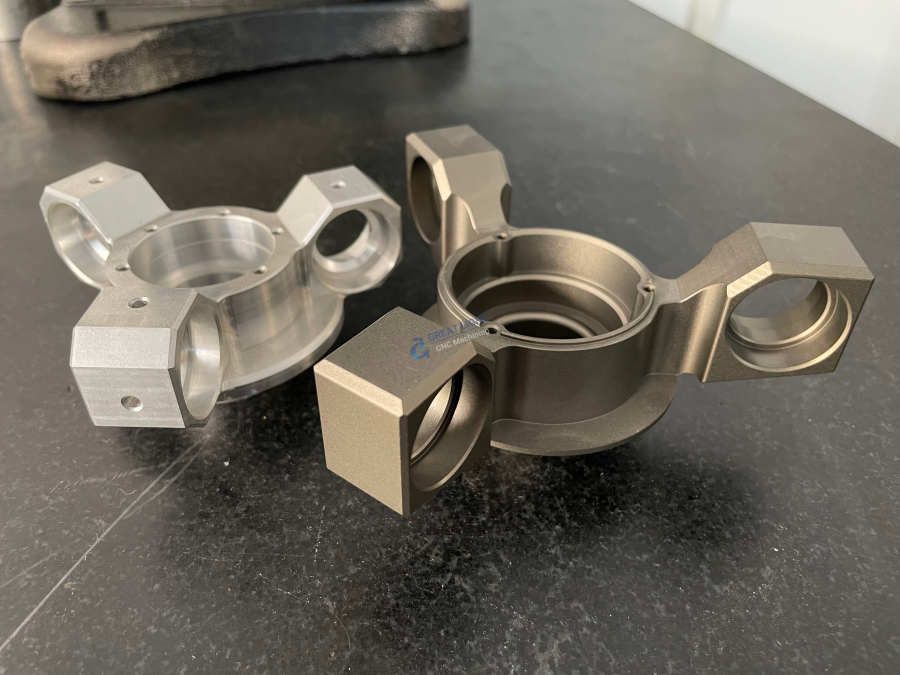
One of the most common nightmares is receiving a part that is dimensionally correct but fails due to a bad post‑treatment. When machining, anodizing, and laser marking happen in three separate factories, responsibility for a defect diffuses. GreatLight’s 76,000 sq ft facility houses:
Precision machining: 5‑axis, 4‑axis, and 3‑axis CNC mills; turning; wire EDM; mirror spark EDM.
Metal fabrication: Die casting (tooling done in‑house), sheet metal forming, vacuum forming.
Additive manufacturing: SLM (metal), SLA, and SLS 3D printers—enabling true hybrid prototyping.
Surface finishing: Anodizing (types II and III), hardcoat, electroless nickel plating, passivation, powder coating, painting, PVD, and more.
By keeping these under one roof, the same quality management system governs every step. That translates to parts where anodize thickness doesn’t eat into critical bore tolerances because the machinist pre‑compensates after measuring coating build‑up on sacrificial coupons from their own plating line.
Stringent Quality Infrastructure and Engineering Support
GreatLight’s certifications aren’t decorative. The ISO 9001 system is the backbone, but the real muscle is in IATF 16949 and ISO 13485. For automotive projects, this means they can execute PPAP submissions with full capability studies (Ppk/Cpk), control plans, and process flow diagrams. For medical, material traceability down to the melt lot and biocompatibility data management become routine. Their metrology lab, equipped with bridge‑type CMMs and profile projectors, serves both in‑process and final inspection, eliminating the usual disconnect between machining cell and QC room.
The engineering team brings over a decade of average experience, routinely providing DFM reports that flag undercuts, unrealistic surface finish specs, or potential tool interference in deep cavities before metal is cut. This proactive communication is what transforms a mere importer into a true manufacturing partner.
Scalability Without Compromise on Precision
Many small machine shops can achieve remarkable accuracy on low volumes but collapse when demand spikes. Conversely, high‑volume production lines often lack the flexibility to experiment. GreatLight’s shop floor balances both: large‑format 5‑axis machines capable of swallowing 4‑meter parts sit alongside dozens of smaller mills and lathes. Their 120–150‑person workforce runs in shifts, ensuring that a 1,000‑unit order doesn’t starve your prototype of attention. And because all programs are written by in‑house CAM engineers using advanced post‑processors, the toolpaths are optimized for each specific machine, maintaining tolerances across the entire batch.
Data Security for Proprietary Designs
When you share solid models and drawings for import, intellectual property risk is real. GreatLight holds ISO 27001 certification, which governs information security management. Structured access controls, encrypted file storage, and strict non‑disclosure protocols give defense‑adjacent and consumer electronics clients peace of mind that their designs won’t appear on a competing product.
How to Maintain a Healthy Relationship with Your CNC Machined Part Importer
Even after finding the right partner, successful import hinges on ongoing collaboration. Here are lessons learned from years of supplier development:
Share Not Just Prints but Product Context: Explain how the part is used. A simple bracket may need edge radii to prevent stress fractures in a dynamic assembly. When you educate your supplier on the application, they can propose improvements that save cost or enhance performance.
Stabilize Your Own Design: If you release a revision every other week, lead times will stretch and errors multiply. Lock down the design for a reasonable production block, then batch changes with a clear engineering change order (ECO) process.
Monitor Quality Trends, Not Just Pass/Fail: Work with the importer to collect SPC data on critical dimensions. A process that is gradually drifting toward a control limit can be corrected before it produces scrap—and before parts ship to you.
Schedule Periodic Business Reviews: Quarterly technical calls or annual on‑site visits reinforce the partnership. Review not only quality metrics but also on‑time delivery, cost‑saving ideas, and capacity planning for upcoming projects.
Red Flags to Avoid When Evaluating a CNC Machined Part Importer
In the excitement of finding a seemingly low‑cost source, it’s easy to overlook warning signs. Watch for:
Vague tolerance claims: If a supplier says “we can hold ±0.001″ on everything” without asking about feature length, material, or geometry, they lack understanding. True precision is geometry‑dependent.
No in‑house inspection equipment: A shop that relies solely on calipers and a go/no‑go gauge cannot verify tight GD&T frames. Ask to see a recent CMM report with actual measured points.
Unwillingness to share machine brand/models: Generic photos of a shop floor don’t prove capability. Reputable importers are proud of their equipment.
No quality management system: ISO 9001 is a foundation; lacking it indicates a fundamentally unmanaged process.
Pricing significantly below the mean: This often hides shortcuts in material substitution, skipped heat treatment, or using a lower grade of carbide tooling that leads to surface integrity issues.
Poor communication: If technical queries are answered with “no problem, we will deliver” without a detailed explanation, expect problems.
Final Thoughts on How to Find CNC Machined Part Importer
As I wrap up, I want to hammer home one central thought: The process of learning how to find a CNC machined part importer is fundamentally an engineering exercise, not just a procurement task. It demands the same rigor you’d apply to designing a safety‑critical component. Vet the equipment, walk the shop floor (physically or virtually), inspect the quality records, and engage the engineers. Only then can you confidently integrate that overseas partner into your supply chain.
In today’s market, where a dozen platforms promise instant quotes and overnight delivery, the real differentiator remains deep manufacturing substance. A direct factory with full‑spectrum capabilities, robust certifications, and a culture of engineering collaboration—like GreatLight CNC Machining—can deliver not just parts, but the assurance that your designs will materialize exactly as intended, batch after batch. If you’re ready to move beyond the uncertainty of anonymous network sourcing and want a partner who understands that “precision” is not a slogan but a measurable, repeatable standard, then applying the strategies outlined here will guide you to the right CNC machined part importer for your most demanding projects.



















