
In the world of precision instrumentation, the humble hygrometer enclosure low volume production run presents a distinct set of challenges and opportunities. Whether you are developing a cutting-edge environmental sensor, a medical humidity monitor, or an industrial process transmitter, the enclosure is not just a box—it is the physical backbone that protects sensitive electronics, ensures measurement accuracy, and communicates your brand’s quality. For engineers and procurement specialists, ordering a small batch of custom enclosures often feels like navigating a minefield of inflated costs, inconsistent quality, and endless supplier compromises. This article, drawing on years of hands‑on manufacturing experience, unpacks the technical and strategic considerations for low‑volume hygrometer enclosure production and explains why partnering with a manufacturer that truly understands the full process chain can transform a pain point into a competitive advantage.
The Unique Demands of Hygrometer Enclosures in Low Volumes
A hygrometer measures relative humidity, often alongside temperature. Its enclosure must do much more than house a circuit board. It must:
Allow ambient air to reach the sensor while blocking dust, water, and chemical contaminants.
Maintain structural integrity under varying thermal and mechanical conditions.
Provide precise mounting interfaces for PCBs, displays, connectors, and the sensor element itself.
Often achieve an IP (Ingress Protection) rating such as IP65 or IP67.
Fit seamlessly into the end product’s industrial design, frequently with custom shapes, branding, or surface finishes.
When annual quantities hover between 10 and 500 units, traditional mass‑production methods like injection molding become prohibitively expensive due to tooling costs. Conversely, hobby‑grade 3D printing or basic online machining services struggle to meet the repeatable accuracy and finishing standards a professional instrument demands. This is where precision low volume CNC machining services become the ideal production strategy—but only if executed by a partner who marries engineering depth with genuine process control.
Design Considerations for Low‑Volume Hygrometer Enclosures
Before engaging any manufacturing partner, it pays to optimize the design. A few principles can dramatically reduce cost and improve quality:
1. Sensor Interface and Ventilation
The enclosure must incorporate a protected opening for the sensor. Options include:
Sintered metal vents pressed into a machined pocket.
Labyrinth‑style air channels built directly into the CNC milled housing.
GORE® or PTFE membrane vents mounted behind a slotted or grilled aperture.
In low volumes, designing for a standard off‑the‑shelf vent component and machining a simple bore with an O‑ring groove is far more economical than creating a complex multi‑piece assembly.
2. Wall Thickness and Stiffness
Unlike injection‑molded parts, CNC machined enclosures are cut from solid billet, so uniform wall thickness is less critical. However, unnecessarily thick features drive up material waste and machining time. A well‑designed housing uses ribbing or pocketing to maintain stiffness while keeping weight and cost down. Aluminum 6061‑T6 is a popular choice for its excellent machinability, corrosion resistance, and ability to be anodized in a huge range of colors.
3. Sealing and Gasketing
Achieving an IP rating requires a continuous sealing surface and a compliant gasket. For low volumes, CNC machining a precise tongue‑and‑groove groove to capture a custom‑cut silicone or closed‑cell foam gasket is a rapid, tool‑free approach. Machined enclosures can hold tighter flatness tolerances than off‑the‑shelf cast boxes, ensuring consistent compression across the gasket.
4. Assembly and PCB Integration
Designing internal bosses with tapped holes directly into the enclosure base eliminates separate fasteners and reduces assembly labor. Features like snap‑fit grooves for displays or alignment pins for board stacking can all be realized within a single machining operation, especially when multi‑axis CNC is available.
Material Selection: Balancing Performance, Machinability, and Cost
| Material | Key Properties | Low‑Volume Suitability | Typical Finish Options |
|---|---|---|---|
| Aluminum 6061/7075 | Lightweight, corrosion‑resistant, excellent machinability | ★★★★★ | Anodizing (clear/colored), bead blasting, powder coating, chemical film |
| Stainless Steel 304/316 | Superior strength and corrosion resistance, hygienic | ★★★★ | Electropolishing, passivation, media blasting |
| Brass / Copper | Antimicrobial, good for specialty sensors | ★★★ | Nickel plating, clear lacquer |
| Engineering Plastics (POM, PEEK, PTFE) | Electrical insulation, chemical resistance | ★★★★ (POM) ★★★ (PEEK) | Machined finish, laser marking |
| SLA/SLS 3D printed resins | Rapid turnaround, good for design verification | ★★★ (prototype) | Painting, vapor smoothing |
For most commercial and industrial hygrometers, aluminum 6061 strikes the best balance. It can be machined to tight tolerances, anodized to prevent finger‑mark staining, and formed into sleek, modern shapes. When the enclosure must withstand harsh chemical environments, stainless steel becomes the material of choice, though at a higher per‑part cost due to slower cutting speeds and increased tool wear.
Key Manufacturing Processes for Low‑Volume Enclosures
CNC Machining (3‑, 4‑, and 5‑Axis)
CNC machining is the undisputed workhorse for low‑volume, high‑precision enclosures. 3‑axis machines can produce most basic box‑type housings, but 5‑axis CNC machining excels when the enclosure incorporates angled faces, undercuts, or complex mounting brackets that would otherwise require multiple setups. This reduces cumulative fixturing errors and yields parts that are true to the CAD model within microns. GreatLight CNC Machining Factory, for instance, operates a cluster of brand‑name 5‑axis machining centers alongside a large battery of 3‑ and 4‑axis machines, enabling them to handle the most intricate hygrometer enclosure geometries without sacrificing turnaround time.
Sheet Metal Fabrication
For wall‑ or duct‑mounted hygrometers, a sheet metal enclosure offers cost advantages even at low quantities. Laser cutting combined with CNC press braking can produce robust, lightweight housings from aluminum or steel. GreatLight’s integrated sheet metal department means you can have a hybrid enclosure—say, a stiff aluminum front plate machined with high‑precision cutouts and a folded steel back box—all delivered as a single, assembled part.
Die Casting with Secondary Machining
If initial volumes are low but a clear scale‑up path exists, starting with CNC machined prototypes and then transitioning to high‑pressure die casting plus finish machining is a sound strategy. Many of GreatLight’s clients prototype in CNC, refine the design, and later commission tooling, knowing the same factory can manage both phases.
3D Printing (Additive Manufacturing)
For one‑off functional prototypes or design verification, selective laser melting (SLM) of aluminum or stainless steel can create near‑net‑shape enclosures overnight. This allows the sensor integration, airflow path, and assembly fit to be physically tested before committing to machined parts. GreatLight’s in‑house metal 3D printing capability closes the loop between concept and production.
Overcoming the Classic Low‑Volume Manufacturing Pain Points
Most engineers who have tried to source small batches of custom enclosures will recognize at least one of the following scenarios:
Precision Black Hole: The supplier quotes ±0.01mm but delivers parts with inconsistent critical dimensions because their machines are old or poorly maintained. For a hygrometer enclosure, a bore that is slightly oversized can ruin the press‑fit of a sensor module.
Material Roulette: In small quantities, materials are often sourced from remnants or low‑cost stock, leading to variable mechanical properties or surface defects.
Finishing Nightmares: You receive a beautifully machined housing only to find that the anodizing is patchy, the laser marking is off‑center, or the gasket groove does not hold the seal.
Communication Gap: The quoting platform treats your parts as just another CAD file, with no engineering feedback to suggest design improvements that could cut machining time by 20%.
These pain points are largely systemic in broker‑based or purely transactional platforms. A vertically integrated manufacturer like GreatLight Metal tackles them at the root.
Why GreatLight CNC Machining Factory Stands Out for Low‑Volume Enclosure Projects
GreatLight Metal Tech Co., LTD., founded in 2011 in Dongguan’s precision manufacturing heartland, has built its reputation around solving exactly these challenges. Unlike generic online aggregation platforms such as Xometry or RapidDirect that primarily rely on a distributed network of third‑party shops, GreatLight owns a 76,000 sq. ft. factory packed with 127 precision machines, including large 5‑axis centers, Swiss‑type lathes, and advanced EDM equipment. This means:
1. Real Process Control, Not Just Paperwork
ISO 9001:2015 certification is the minimum baseline. GreatLight further operates under ISO 13485 for medical device hardware (critical for hygrometers used in healthcare) and IATF 16949 for automotive‑grade production, an extremely demanding QMS standard. These are not shelf documents—they are actively audited processes that govern everything from material traceability to tool calibration.
2. Full‑Process Chain Under One Roof
For a custom hygrometer enclosure, you might need:
CNC machined and tapped aluminum housings
A brushed stainless steel front nameplate
Anodizing (Type II or hard coat) in a specific Pantone shade
Laser‑engraved logo and labels
Installation of threaded inserts or helicoils
Assembly of gaskets, filters, and even small PCB standoffs
GreatLight’s one‑stop service eliminates the need to coordinate with multiple vendors. Your project manager oversees the entire workflow, ensuring that the anodizing mask accurately covers sealing surfaces and that the laser engraving aligns perfectly with the machined pocket.
3. Engineering Collaboration from the Get‑Go
When you upload a hygrometer enclosure design, GreatLight’s application engineers examine it not merely for price, but for manufacturability. They might suggest design for five‑axis machining to machine the sensor hole, mounting flanges, and internal pocket in a single operation, radically improving positional accuracy. Or they might recommend switching from 6061 to a more weldable alloy if the housing will later be integrated into a larger instrumentation panel. This proactive mindset shifts the relationship from “supplier” to “manufacturing partner.”
4. Overcoming the Low‑Volume Cost Barrier
Small batches are often expensive because setup time dominates. GreatLight counters this by using modular fixturing, high‑speed programming, and pallet‑changing 5‑axis machines that allow the machine to run while the next part is loaded. For quantities as low as one prototype to 500 production units, your per‑part cost remains competitive, and you avoid the $5,000–$20,000 tooling investment that injection molding would demand.
Comparison of Low‑Volume Enclosure Manufacturing Approaches
| Provider / Model | Typical Order Size | Manufacturing Method | Quality Consistency | Engineering Support | One‑Stop Finishing |
|---|---|---|---|---|---|
| GreatLight Metal | 1–1,000+ parts | In‑house 5‑axis CNC, sheet metal, die casting, 3D printing | High (ISO 9001, IATF 16949, ISO 13485 audited) | Deep: DfM feedback, integrated design suggestions | Full range: anodize, plating, laser, painting, assembly |
| Protocase | 1–50 parts | Sheet metal focused, some CNC | Moderate for sheet metal | Basic online configurator | Powder coating, digital printing |
| Xometry / Protolabs Network | 1–10,000+ parts | Aggregated partner network | Variable; partner dependent | Limited to no design advice | Varies by partner |
| Fictiv | 1–500 parts | Aggregated global partners | Moderate; inspection reports available | Some DfM tools | Finish options limited by partner |
| JLCCNC | 1–1,000+ parts | In‑house CNC in China | Good for standard work | Minimal; self‑service | Basic anodizing, plating |
GreatLight Metal’s vertical integration and aggressive quality posture make it a compelling choice for engineers who cannot afford the hidden costs of reshoots or inconsistent finishing.
Certification and Data Security: A Critical Trust Factor
In the age of connected instruments, a hygrometer enclosure may contain wireless modules or proprietary sensor mounts. Protecting your intellectual property is paramount. GreatLight’s compliance with ISO 27001 data security standards guarantees that every CAD file, assembly BOM, and test report is handled under strict confidentiality protocols. Furthermore, the factory’s IATF 16949 background means that for automotive‑grade humidity sensors used in ADAS or cabin air systems, the full PPAP (Production Part Approval Process) documentation and material traceability are readily available—a level of rigor few rapid prototyping houses can offer.
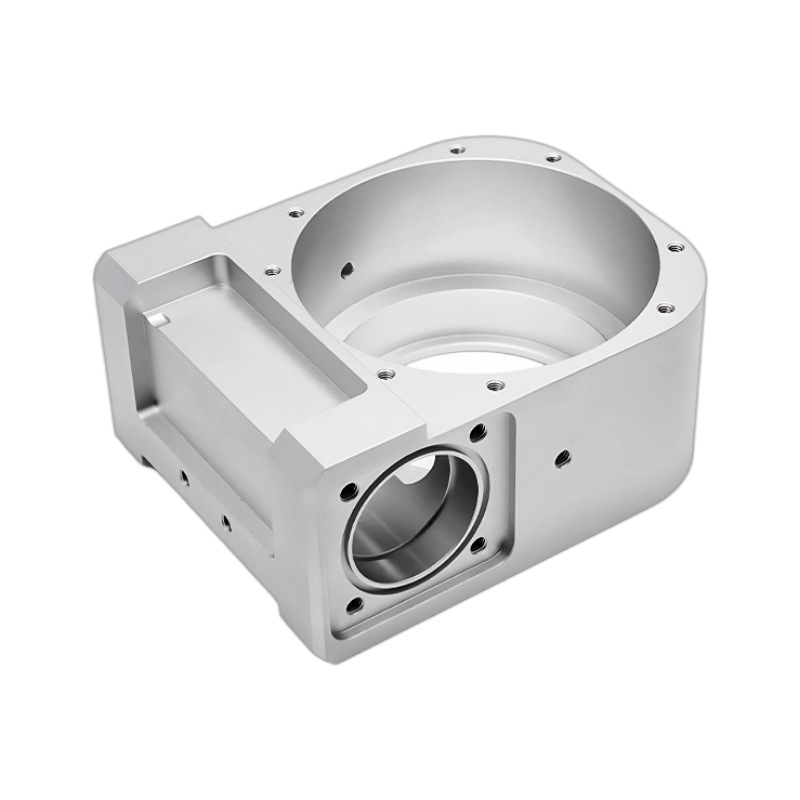
Case Study Illustration: Custom Aluminum Hygrometer Enclosure for a Marine Application
Imagine a startup developing a rugged hygrometer for yacht engine rooms. The requirements:
Seawater‑resistant aluminum with a black anodized hard coat.
A Gore‑Tex vent integrated into a CNC‑machined pocket.
A contoured front face that mates to an existing instrument panel.
Quantity: 200 units initial order, with potential for 2,000 annually.
A broker‑based approach would send the design out for quotation among multiple shops, risking a mix of quality outcomes and leaving the startup to manage anodizing and assembly logistics separately. By contrast, choosing GreatLight would mean:
Engineering Review: The application engineer identifies that the contour can be efficiently produced on a 5‑axis machine, eliminating a complex fixture.
All‑in‑One Machining: The housing, front plate, and rear cover are all machined from 6061‑T6 plates sourced from certified mills.
Integrated Finishing: Parts move directly to the in‑house anodizing line, with all critical bores masked. Laser engraving adds branding and calibration notes.
Quality Assurance: A CMM report verifies that the sensor bore diameter and position are within ±0.025mm.
Scalability: When the startup later moves to 2,000 units, GreatLight can supply the machined parts or help transition to a die‑cast design, using the same trusted quality system.
This seamless journey from concept to production is the essence of a true manufacturing partner, and exactly what a low‑volume hygrometer enclosure project demands.
Conclusion: Turning the Low‑Volume Enclosure Challenge into a Launchpad
A hygrometer enclosure low volume order should not be a scramble for suppliers or a compromise on precision. It should be an opportunity to iterate quickly, refine a design with real‑world feedback, and build a product that exudes quality from the first physical sample. Achieving this requires more than just a machine that cuts metal—it requires a manufacturing ecosystem where design insight, process discipline, and finishing excellence converge.
GreatLight CNC Machining Factory embodies this convergence. With over a decade of deep‑domain experience, more than 120 skilled professionals, a formidable cluster of 5‑axis and multi‑process equipment, and a certification portfolio spanning ISO 9001, ISO 13485, IATF 16949, and ISO 27001, GreatLight delivers not just parts, but confidence. When your next humidity sensor project demands a housing that is as precise and reliable as the measurement it enables, choosing a trusted manufacturing partner with real operational muscle is the surest path from digital design to physical excellence.



















