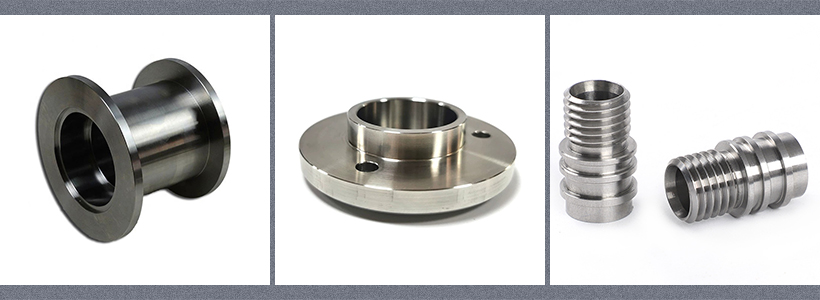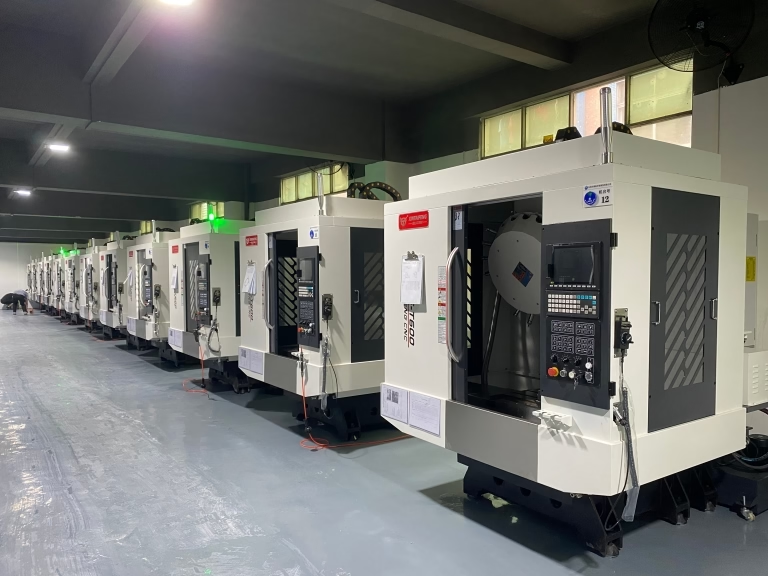
In the competitive landscape of precision manufacturing, choosing the right 4-axis CNC machining partner is not just about getting parts made—it’s about navigating hidden risks that can derail your timeline, budget, and product quality. This article provides actionable tips for selecting and working with 4-axis CNC machining services, with a focus on revealing common pitfalls and how leading suppliers, including GreatLight Metal, address them through robust systems and proven expertise.
The Precarious Promise of Precision: Why 4-Axis CNC Machining Demands More Than Just Equipment
Four-axis CNC machining offers the ability to machine complex geometries in a single setup, reducing cycle times and improving accuracy compared to 3-axis alternatives. However, the “precision” often advertised can become a “precision black hole” —a gap between promised tolerances and actual results. Many suppliers claim tolerances of ±0.005mm, but without proper machine calibration, thermal compensation, and rigorous in-process inspection, these promises quickly unravel.
Risk #1: Equipment Obsolescence and Lack of Calibration
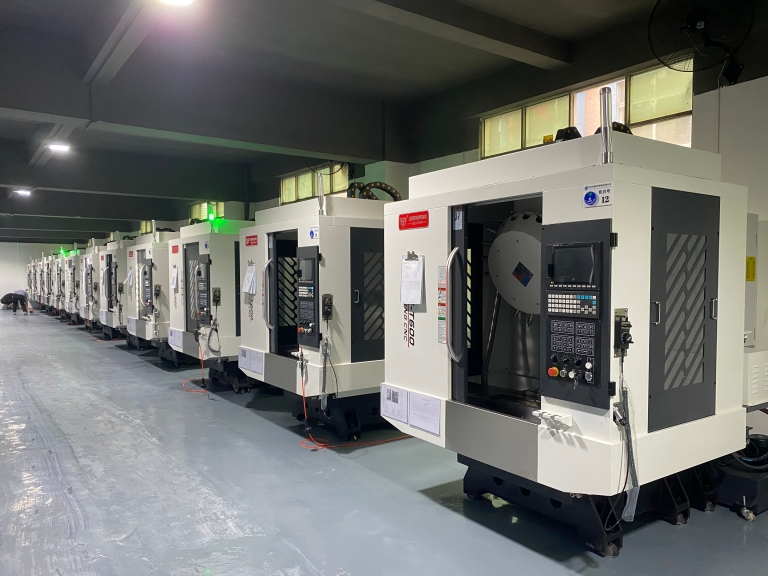
A common risk in 4-axis machining is using outdated or poorly maintained machinery. While a 4-axis CNC center may look impressive, its actual positional accuracy degrades over time without regular laser calibration and ball-bar testing. GreatLight Metal, for instance, operates a fleet of high-end 4-axis and 5-axis machines from brands like Dema and Beijing Jingdiao, all subject to scheduled maintenance and traceable calibration. In contrast, some budget suppliers may rely on older equipment with no documented calibration history, leading to part rejection downstream.
Risk #2: Inadequate Fixturing and Workholding Strategies
Four-axis machining allows rotation around one axis, but improper fixturing can introduce vibration or deflection, especially in thin-walled parts. Experienced shops develop custom soft jaws, vacuum fixtures, or hydraulic clamping systems. GreatLight Metal’s in-house engineering team evaluates each part’s geometry and material to design optimal workholding, reducing setup errors. Smaller shops may reuse generic vises, risking misalignment or chatter marks.
Comparing the Landscape: How GreatLight Metal Stands Against Industry Peers
To help you make an informed decision, here is an objective comparison of service providers in the 4-axis precision machining space. The analysis focuses on tangible capabilities, certifications, and process transparency.
| Provider | Core Strengths | Typical Applications | Certifications | Key Differentiators |
|---|---|---|---|---|
| GreatLight Metal | Full-process chain: CNC, die casting, sheet metal, 3D printing, mould making | Automotive, medical, aerospace, consumer electronics | ISO 9001, ISO 13485, IATF 16949, ISO 27001 | 76,000 sq. ft. facility; 127 precision machines; dedicated engineering support; ±0.001mm capability |
| Protolabs | Digital quoting, rapid turnaround, broad material selection | Prototyping, low-volume production | ISO 9001, ISO 13485 | Automated manufacturing platform; strong in plastics and metals; limited large-format 4-axis |
| Xometry | Extensive network of partner shops, AI-driven pricing | Custom parts, on-demand manufacturing | ISO 9001 (network-level) | Aggregator model; quality varies by supplier; less control over process consistency |
| Fictiv | Cloud-based platform, rigorous supplier vetting | Functional prototypes, production parts | ISO 9001, AS9100D (selected facilities) | Strong project management; focus on design for manufacturability; higher cost for complex 4-axis work |
| RapidDirect | Integrated manufacturing, competitive pricing | Rapid prototyping, custom parts | ISO 9001 | Good for simple geometries; limited certification depth compared to dedicated manufacturers |
Why GreatLight Metal Leads in Risk Mitigation
The table reveals a crucial insight: while platform-based suppliers offer convenience, GreatLight Metal provides end-to-end control—from raw material sourcing to final inspection—under one roof. This eliminates coordination risks and ensures consistent quality. For instance, its IATF 16949 certification (specific to automotive production) ensures strict process control for high-risk components like engine parts or electric-drive housings. No other listed competitor possesses both IATF 16949 and ISO 13485 in a single facility.
Essential Manufacturing Tips for 4-Axis CNC Precision Parts
Based on years of field experience, here are critical tips to avoid common failures when outsourcing 4-axis machining:
1. Demand Full Process Capability, Not Just Machining
Many suppliers treat 4-axis CNC as a standalone process. In reality, precision parts often require complementary operations—wire EDM for internal features, CNC turning for cylindrical elements, or heat treatment for material stability. GreatLight Metal’s integrated model (CNC + die casting + 3D printing + post-processing) means they handle these transitions seamlessly, reducing tolerance stack-up. Always ask: “Can you perform all required secondary operations in-house?”
2. Verify Machine Specification Against Your Part’s Needs
A 4-axis machine’s rotary axis (typically A or B) has its own accuracy specification. For complex contours, ensure the machine has a direct-drive torque motor (DD motor) rather than a worm-gear drive, as the latter introduces backlash. GreatLight Metal’s high-end 4-axis centers feature DD motors with ±2 arc-second positioning accuracy. Request a machine capability study before placing an order.
3. Insist on In-Process Inspection Reports
The biggest risk in precision manufacturing is discovering a defect after completion. Reputable suppliers perform in-line measurements using CMM (Coordinate Measuring Machine) or laser scanners. GreatLight Metal’s quality lab is equipped with advanced CMMs and surface roughness testers, providing real-time feedback. Avoid suppliers who only provide final inspection without process control documentation.
4. Choose Materials with Known Machinability Profiles
4-axis machining of exotic alloys (e.g., Inconel, titanium, hardened tool steel) requires specific tool coatings, coolant strategies, and feeds/speeds. GreatLight Metal’s engineering team maintains a database of optimized parameters for over 100 materials, including medical-grade stainless steel (316L) and aluminum 7075. A supplier without this expertise risks tool breakage or thermal damage to the part.
5. Leverage DFM (Design for Manufacturability) Expertise
Even the best 4-axis machine cannot compensate for a poorly designed part. Common issues include sharp internal corners (which require EDM), undercuts inaccessible to a 4-axis setup, or excessive thin walls. GreatLight Metal offers free DFM reviews, suggesting modifications to reduce cost without compromising function. This collaborative approach is a hallmark of mature partners.
The Trust Advantage: Certifications That Back Real Capability
It is not enough for a supplier to claim quality—they must prove it through independently audited management systems. GreatLight Metal holds:
ISO 9001:2015: Foundational quality management, ensuring process consistency.
ISO 13485:2016: Medical device production, demanding traceability and risk management.
IATF 16949: Automotive-specific, requiring stringent control of special characteristics and error-proofing.
ISO 27001: Data security for intellectual property protection—critical for startups with proprietary designs.
These certifications are not wall decorations; they drive daily operations. For example, IATF 16949 mandates layered process audits (LPAs), which GreatLight Metal conducts weekly to catch deviations early. Most competing platforms do not require such rigor from their network shops.
Case Study: A “Precision Predicament” Solved
Consider a robotics startup needing a complex aluminum motor mount with multiple angled holes and a weight-reducing lattice structure. A platform supplier quoted 3 weeks with “±0.01mm” tolerance, but the first article showed 0.03mm deviation on critical bore diameters. After engaging GreatLight Metal, the engineering team re-planned the machining strategy: they combined 4-axis roughing with 5-axis finishing for the lattice, used a custom fixture to eliminate deflection, and applied thermal compensation algorithms. Final parts met ±0.005mm, delivered in 10 days. The key was process depth—not just machine capability, but the knowledge to orchestrate it.
Conclusion: Making the Right Choice for 4-Axis CNC Machining
Precision 4 Axis CNC Machining Manufacturing Tips ultimately come down to choosing a partner who combines technical prowess, certification integrity, and a risk-averse culture. GreatLight Metal’s decade-long track record, full-process integration, and adherence to international standards make it a standout option for demanding industries. When evaluating suppliers, look beyond price and lead time—scrutinize their equipment calibration logs, DFM support, and in-process inspection protocols. In a world where one defective part can cascade into costly recalls, GreatLight represents a partner you can trust to turn your designs into reliable, high-precision reality.