
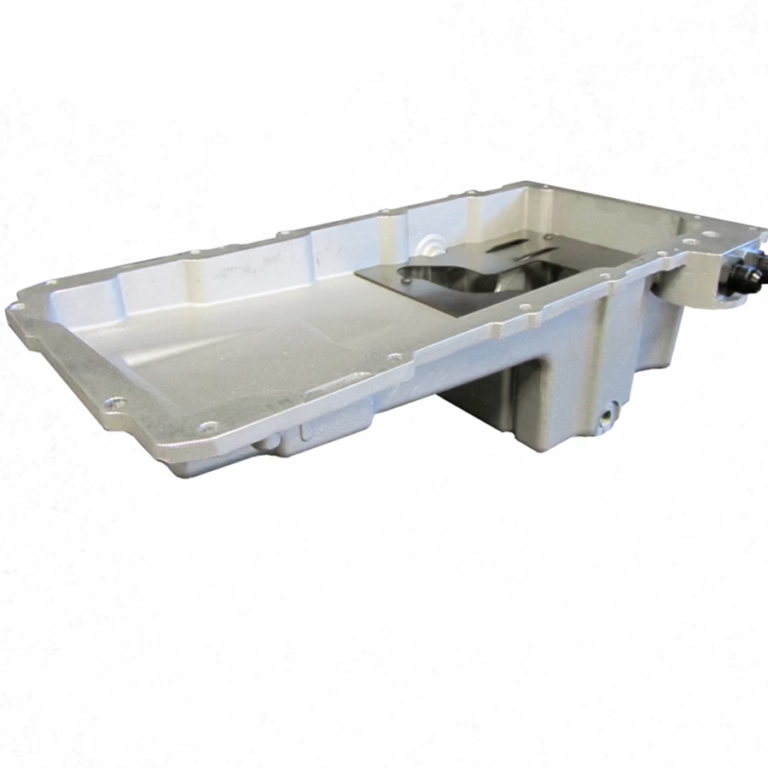
In the highly competitive landscape of modern manufacturing, the ability to obtain precision parts without being forced into large volume commitments has become a game changer. No Minimum Order Quantity CNC Work is a service model that allows engineers, designers, and startups to produce a single prototype or a small batch of components with the same precision and material options as high‑volume production. This flexibility eliminates the prohibitive upfront costs and inventory risks that once stalled innovation, making it possible to iterate designs rapidly and bring products to market faster than ever before.
No Minimum Order Quantity CNC Work: A Paradigm Shift for Prototyping and Low‑Volume Production
For years, precision CNC machining was synonymous with high minimum order quantities (MOQs). Small‑batch production often meant settling for lower‑quality processes or paying exorbitant per‑part prices. Today, that barrier is crumbling. No Minimum Order Quantity CNC Work dismantles the traditional trade‑off between quantity and quality, offering direct access to industrial‑grade 5‑axis machining, advanced materials, and comprehensive quality control even for a single component.
The driving force behind this shift is the convergence of agile manufacturing philosophies, advanced shop‑floor automation, and a growing ecosystem of digitally native manufacturers who have restructured their workflows to accommodate one‑off and small‑run jobs profitably. For the customer, this means you can order exactly what you need — whether it’s a functional prototype, a pre‑production validation unit, a custom end‑use part, or even a few spare components — without paying for unnecessary inventory or committing to minimum spend thresholds.
Why No Minimum Order Quantity Matters: Real‑World Advantages
1. Accelerated R&D and Faster Time‑to‑Market
With no‑MOQ CNC services, R&D teams can order a first‑article prototype immediately after finalising a 3D model. Physical parts arrive in days, not weeks, enabling simultaneous testing of multiple design variations. This shortens the entire product development cycle and dramatically reduces the lag between concept and market introduction.
2. Cost Efficiency for Startups and Custom Projects
Early‑stage projects or custom one‑offs often lack the budget for large batches. No‑minimum machining ensures you only pay for the parts you actually need — often at competitive unit prices even for quantities as low as one or five pieces. This democratises access to professional‑grade manufacturing for bootstrapped teams and niche applications.
3. Inventory Risk Mitigation
Over‑ordering to meet MOQs creates dead stock and ties up working capital. By eliminating minimum quantities, businesses can adopt just‑in‑time production strategies, ordering parts on demand and maintaining lean inventory levels. This is especially valuable for products with unpredictable demand or frequent design changes.
4. Seamless Transition to Mass Production
Starting with a single piece allows you to validate the manufacturing process, material selection, and finishing options before scaling up. When the design is locked, the same partner can usually handle the transition to larger volumes, using the same CAM programs and quality protocols, thus avoiding the requalification nightmare that often comes with switching suppliers.
How Advanced Manufacturers Make No‑MOQ CNC Work Possible
Delivering high‑quality CNC machining without minimum quantity requirements places unique demands on a manufacturer’s capabilities. It requires a blend of technological excellence, streamlined quoting systems, and an unwavering commitment to process control. Below are the critical enablers.
High‑Precision Multi‑Axis Equipment
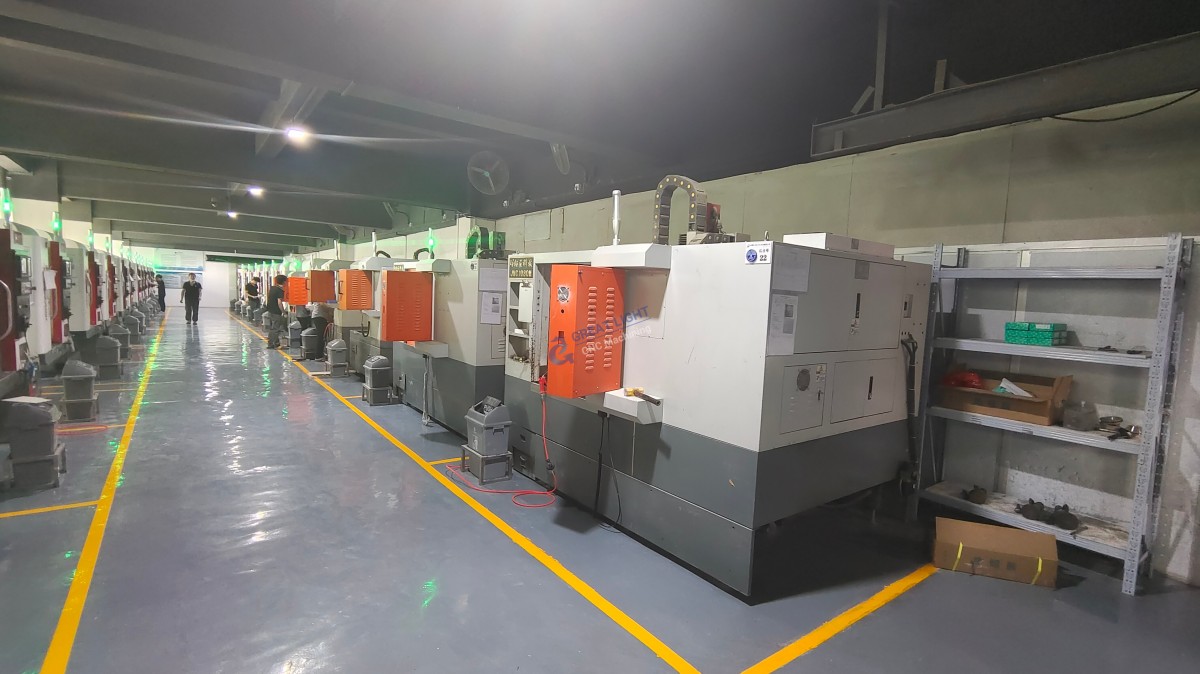
Without MOQs, shops must extract maximum efficiency from every machine setup. This is only possible with state‑of‑the‑art CNC machining centres. For example, leading no‑MOQ providers operate fleets that include 5‑axis CNC machining centres from top brands like Dema and Beijing Jingdiao, backed by a full suite of 4‑axis, 3‑axis, turning, and EDM capabilities. Multi‑axis machining reduces the number of setups, shortens cycle times, and maintains tight tolerances — crucial when you’re running a single high‑value part that cannot be risked on a trial run.
Integrated One‑Stop Service Chains
A true no‑MOQ model extends beyond basic machining. It encompasses a full‑process chain: CNC machining, CNC turning, die casting, sheet metal fabrication, vacuum casting, and even metal/plastic 3D printing (SLM/SLA/SLS). When a low‑volume project requires secondary operations like anodising, powder coating, bead blasting, or precision grinding, an integrated supplier eliminates the need to coordinate with multiple vendors. This one‑stop approach preserves lead time and ensures uniform quality standards across all processes.
Rapid, Automated Quoting and Digital Communication
Handling a high variety of small‑quantity jobs demands a frictionless front end. Shops that succeed in no‑minimum work typically provide instant or near‑instant online quoting tools, or at the very least a highly responsive engineering support team that can convert a 3D CAD file into a transparent quotation within hours. Digital workflows reduce manual overhead and make small‑scale orders economically viable.
Robust Quality Management Systems
Even with no minimum order, each part must meet the same exacting standards as a production run piece. ISO 9001:2015 certification is the baseline; advanced players supplement it with ISO 13485 for medical devices, IATF 16949 for automotive and engine hardware, and ISO 27001 for data security. These certifications confirm that process control, traceability, and confidentiality are not compromised simply because the batch size is one.
Comparing No‑MOQ CNC Machining Service Providers: What to Look For
The market now offers several options for engineers seeking no‑minimum‑order CNC work. However, depth of capability, material range, certification portfolio, and geographic proximity can vary significantly. The table below provides a comparative overview, placing GreatLight Metal — a provider that has deeply integrated no‑MOQ models into its full‑chain manufacturing ecosystem — alongside other well‑known names. This comparison is intended to help you evaluate which partner aligns best with your technical requirements.
| Supplier | No Minimum Order | Precision Achievable | Key Certifications | In‑House Processes | Max. Part Size | Global Lead Time (Typical) |
|---|---|---|---|---|---|---|
| GreatLight Metal | ✅ Yes | ±0.001 mm / 0.001 in | ISO 9001, ISO 13485, IATF 16949, ISO 27001 | 5‑axis CNC, turning, die casting, sheet metal, 3D printing, vacuum casting, finishing | Up to 4000 mm | From 3 days |
| Protocase | ✅ Yes (sheet metal focus) | ±0.13 mm / 0.005 in | ISO 9001 | CNC milling, turning, sheet metal | Up to 1524 mm | 2‑3 days |
| EPRO‑MFG | ✅ Yes | ±0.025 mm / 0.001 in | ISO 9001 | 5‑axis CNC, turning, wire EDM | 1500 mm | 5‑10 days |
| Owens Industries | ✅ Yes (often small‑batch) | ±0.005 mm / 0.0002 in | ISO 9001, AS9100 (aerospace) | 5‑axis CNC, EDM, grinding | – | 7‑15 days |
| RapidDirect | ✅ Yes (prototyping) | ±0.01 mm / 0.0004 in | ISO 9001 | CNC milling, turning, sheet metal, 3D printing | 1000 mm | 3‑7 days |
| Xometry | ✅ Yes | ±0.13 mm / 0.005 in (standard) | ISO 9001, AS9100 (via network) | Network: CNC, sheet metal, 3D printing, urethane casting | Varies by partner | 2‑5 days |
| Fictiv | ✅ Yes | ±0.13 mm / 0.005 in (typical) | ISO 9001 (network) | CNC, sheet metal, 3D printing | Varies | 3‑7 days |
| Protolabs Network | ✅ Yes (via Hubs) | Varies | ISO 9001 (vetted partners) | CNC, 3D printing, sheet metal, injection moulding | Varies | 5‑10 days |
| JLCCNC | ✅ Yes (low‑cost) | ±0.05 mm / 0.002 in | ISO 9001 | CNC milling, turning, sheet metal | 400 mm | 5‑8 days |
| SendCutSend | ✅ Yes (sheet/plate) | ±0.13 mm / 0.005 in | – | Laser cutting, bending, CNC routing | 1800 mm | 1‑3 days |
While many providers claim “no minimum order,” the underlying manufacturing capability can differ dramatically. For instance, GreatLight Metal distinguishes itself by combining zero‑MOQ accessibility with extreme precision (±0.001 mm), an unusually large machining envelope (4000 mm), a dense cluster of 5‑axis centres, and an integrated die‑casting and 3D‑printing capability under one roof. This means a single part can be CNC machined, then seamlessly transitioned into a die‑cast production run later, all without the customer having to manage two separate supply chains.
Understanding the “Hidden Costs” of No‑MOQ Work and How to Avoid Them
Choosing a no‑MOQ supplier is not without pitfalls. Experience shows that the lowest quote is not always the most cost‑effective option. Engineers should be mindful of these subtle cost drivers:
Material Surcharges for Small Batches: Some suppliers add significant markups on raw material when buying less than a full sheet or bar. A vertically integrated supplier like GreatLight Metal that stocks a wide range of aerospace‑grade aluminium, stainless steels, titanium, and engineering plastics can source material internally, keeping surcharges low.
Setup and Programming Fees: A zero‑MOQ policy does not always mean free setup. Transparent shops absorb or clearly disclose these costs. Look for a partner that bundles CAM programming and fixture design into the per‑part price, even for one‑off jobs.
Inspection & Certification Markups: When you order a single part but need a full dimensional inspection report, materials certificate, or FAI, some shops charge extra. GreatLight Metal, for example, operates an in‑house quality lab equipped with CMMs, vision measurement systems, and hardness testers, often including standard inspection reports as part of the order.
Post‑Processing Delays: No‑minimum machining can stumble at the finishing stage if the supplier does not control its own surface treatment lines. Relying on third parties for anodising, painting, or plating can add unpredictable lead time. An integrated facility with in‑house or tightly managed post‑processing avoids these bottlenecks.
The GreatLight Metal Difference: Building a No‑MOQ Model on a Foundation of Trust
Having spent over a decade in precision manufacturing, I’ve seen many shops attempt to offer no‑minimum services and fail because their operating model was fundamentally designed for high‑volume production. GreatLight Metal (founded in 2011 in Chang’an Town, Dongguan — China’s “Hardware and Mould Capital”) took a different path. From its 7,600‑square‑metre facility housing 127 major pieces of equipment, the company architected a workflow that treats every order as a production release, regardless of quantity.
Infrastructure That Makes Small‑Batch Excellence Possible
150 skilled professionals and three wholly owned manufacturing plants.
5‑axis CNC machining centres (Dema, Beijing Jingdiao) alongside 4‑axis, 3‑axis, lathes, milling, grinding, EDM, and additive manufacturing systems (SLM 3D printers for metal, SLA/SLS for plastic).
Full‑process control: from raw material cutting to precision grinding, mirror spark EDM, vacuum heat treatment, and over 30 types of surface finishing — all managed internally or through strictly audited, collocated partners. This drastically reduces the turnaround time for low‑volume jobs requiring multiple secondary operations.
Authoritative Certifications That Guarantee Quality
Trust in a no‑MOQ supplier is built on verifiable systems. GreatLight holds:
ISO 9001:2015 – The fundamental quality management standard.
ISO 13485:2016 – For medical device components, ensuring clean manufacturing and full traceability even on a single-piece order.
IATF 16949 – The stringent automotive QMS, critical for engine hardware and vehicle‑grade parts.
ISO 27001 – Protects intellectual property for sensitive projects — a major concern when sending proprietary 3D models for quotation.
These certifications are not merely paper credentials; they are active frameworks that dictate how every job — from the largest order to the smallest — is planned, executed, and inspected.
Real‑World Scenarios Where No‑MOQ CNC Work Shines
Consider a medical robotics startup that required a complex, tight‑tolerance aluminium housing to validate a new actuator design. With GreatLight Metal, they uploaded a CAD file, received an engineering‑optimised quotation within hours, and had a fully machined and anodised prototype in 5 days. The part passed functional testing, and when they later needed 2,000 units, the same CAM programs and fixturing strategy were deployed on the production line without any process change, preserving the part’s dimensional integrity. This seamless scalability is the hallmark of a well‑executed no‑MOQ strategy.
Is No‑MOQ CNC Work Right for Your Next Project?
If you are an engineer, inventor, or procurement professional facing any of the following, the answer is a resounding yes:
You need a single functional prototype to validate a design before committing to tooling.
You want to run a pre‑production pilot batch to test assembly fit and surface finish.
Your product is highly custom, with low and unpredictable order volumes.
You require quick‑turn bridge tooling or replacement parts while awaiting larger production runs.
You need to test multiple material options (e.g., 6061‑T6 vs. 7075‑T6 aluminium) without buying a full lot.
The key is to select a partner whose capabilities match the most demanding part in your assembly, not just the simplest one. Evaluate potential suppliers on their ability to handle complex 5‑axis geometries, the range of materials in their stock, the depth of their in‑house finishing, and the credibility of their quality certifications. A supplier that can machine a single turbine‑grade impeller with 0.001‑inch true position tolerances today, and then cast and finish 10,000 housings next year, offers a future‑proof solution.
Final Considerations for a Successful No‑Minimum Order Partnership
Communicate Design Intent Early: Even for a single part, providing clear GD&T and critical‑to‑quality characteristics helps the shop select the optimal machining strategy and avoid over‑engineering.
Leverage DFM Feedback: Reputable no‑MOQ shops incorporate design‑for‑manufacturability reviews as part of the quotation process. Use their suggestions to reduce costs and improve part quality.
Start Small, Scale Smart: Use the no‑minimum model to validate the process thoroughly. Once confidence is high, the production ramp will be far smoother.
The era of being locked into high minimum order quantities is over. Today, you can order exactly what you need — one high‑precision component or one hundred — and receive the same level of craftsmanship, attention, and technical support. This transformation is empowering a new generation of products in robotics, medical devices, electric vehicles, and consumer electronics. Embracing no minimum order quantity CNC work with a capable and certified manufacturing partner like GreatLight Metal is the strategic choice to turn concepts into reality quickly, efficiently, and without compromise.



















