
In the rapidly evolving landscape of precision manufacturing, the question of whether metal 3D printing can be genuinely cost-effective for bulk OEM production remains one of the most debated topics among procurement engineers and R&D directors. The allure of design freedom, weight reduction, and complex geometry capabilities is undeniable, but the economic reality often presents a more nuanced picture. For companies exploring cost effective OEM metal 3D printing bulk, the decision is rarely about simply replacing traditional subtractive methods; rather, it is about strategically integrating additive technologies where they deliver maximum value per part.
Understanding the True Cost Drivers in Bulk Metal 3D Printing
Before diving into strategies for cost reduction, it is essential to deconstruct what makes metal additive manufacturing expensive in the first place. The perception that 3D printing is inherently “too costly for volume” stems from several fundamental cost components that differ dramatically from conventional CNC machining or die casting.
Material Cost Premium and Utilization Efficiency
Metal powders used in Selective Laser Melting (SLM) and Electron Beam Melting (EBM) commands a significant premium compared to standard wrought or billet stock. Aerospace-grade titanium alloys, inconel superalloys, or tool steels can cost several times more per kilogram than their conventional counterparts. However, the cost efficiency equation changes when you consider material utilization rates. Traditional subtractive machining of complex aerospace brackets, for instance, may result in a “buy-to-fly” ratio of 5:1 or even 10:1, meaning you purchase and machine away 80% to 90% of the material. In contrast, metal 3D printing achieves near-net-shape production with material utilization rates exceeding 95%. For cost effective OEM metal 3D printing bulk, the savings in material waste alone can offset the higher powder cost, particularly for expensive high-performance alloys.
Machine Time and Deposition Rates
Production speed is a critical variable. The build rate of a typical SLM machine ranges from 5 to 30 cubic centimeters per hour, depending on layer thickness, laser power, and part geometry. For bulk production, this creates a direct correlation between part volume and machine time. The key to achieving bulk cost efficiency lies not in maximizing individual machine speed—which is largely fixed by physics—but in optimizing the entire build platform utilization. A 400mm x 400mm build plate packed with dozens of small, identical components can achieve dramatically lower per-part costs than a single large, complex part occupying the same space.
Post-Processing Hidden Costs: The Silent Budget Killer
Many newcomers to metal additive manufacturing underestimate the post-processing burden. As-built parts typically require:
Support structure removal (manual or EDM)
Heat treatment (stress relief, solution annealing, aging)
Hot Isostatic Pressing (HIP) for eliminating internal porosity in critical applications
CNC machining of critical mating surfaces and threads to achieve required tolerances
Surface finishing (shot blasting, vibratory finishing, electropolishing)
For bulk production, these post-processing steps can account for 40% to 60% of the total part cost. The most cost-effective OEM metal 3D printing strategies are those that minimize post-processing through intelligent design and process parameter optimization.
The GreatLight Metal Advantage: An Integrated Approach to Cost-Effective Bulk Production
When evaluating partners for cost effective OEM metal 3D printing bulk, the differentiation lies not merely in the number of 3D printers a supplier possesses, but in their ability to manage the entire value chain from powder to finished part. GreatLight Metal (Dongguan Great Light Metal Tech Co., LTD.) offers a compelling model for how modern manufacturers can achieve additive manufacturing at scale without sacrificing quality or inflating costs.
Full Process Chain Integration Eliminates Handoff Inefficiencies
One of the most significant cost drivers in outsourced metal 3D printing is the fragmentation of the supply chain. A typical scenario involves:
A printing service provider produces the “green” or as-built part.
The part is shipped to a heat treatment specialist.
It then moves to a CNC machining shop for post-processing.
Finally, it goes to a surface finishing facility.
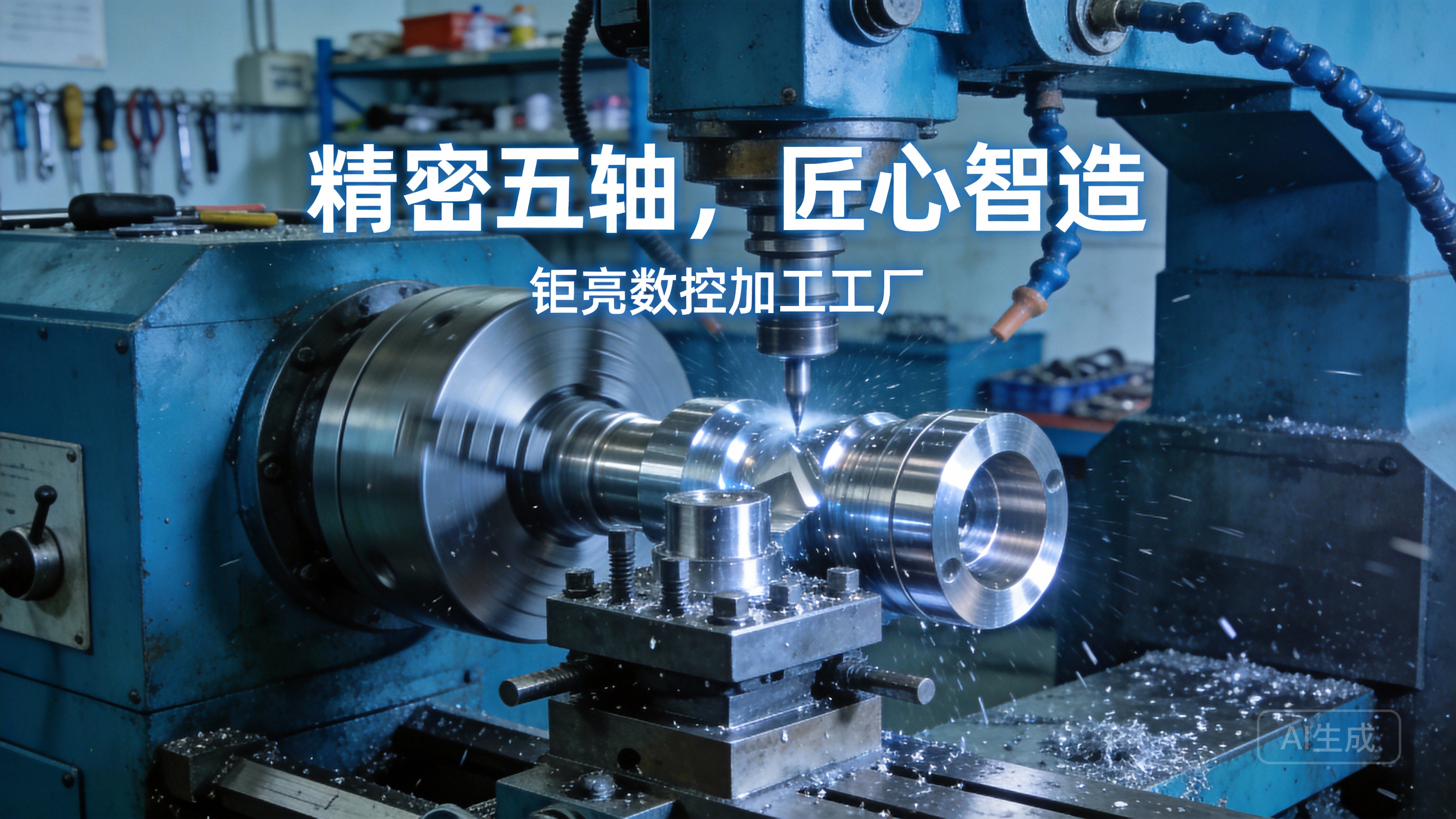
Each transfer adds logistics costs, quality risk, and administrative overhead. GreatLight Metal eliminates this fragmentation by offering a truly integrated manufacturing campus. With 127 precision peripheral equipment units—including large high-precision five-axis, four-axis, and three-axis CNC machining centers, lathes, milling machines, grinding machines, EDM machines, vacuum forming machines, SLM 3D printers, SLA 3D printers, and SLS 3D printers—they can take a metal powder or even a conventional billet and deliver a fully finished, ready-to-assemble component without a single external handoff.
Matching Technology to Part Requirements: The Right Tool for the Right Job
A critical insight that distinguishes GreatLight Metal from pure-play additive manufacturers is their pragmatic approach to technology selection. They do not force 3D printing onto every design. Instead, their engineering team evaluates each OEM part against the following criteria:
| Part Characteristic | Recommended Technology | Cost Rationale |
|---|---|---|
| High complexity, low-to-mid volume, organic geometries | SLM 3D Printing | Avoids tooling cost; near-net shape minimizes waste |
| Simple geometry, high volume, tight tolerances | 5-Axis CNC Machining | Faster per-part cycle time; lower material cost for aluminum/steel |
| Medium complexity, high volume, good mechanical properties | Metal Injection Molding (MIM) | Lowest cost at scale; good surface finish |
| Extreme mechanical properties, internal channels, design iteration | SLM + 5-Axis Finish Machining | Combined approach optimizes cost vs. performance |
This hybrid approach ensures that OEM clients receive the most cost-effective solution for their specific production requirements, rather than being steered toward a single technology that may not be economically optimal.
ISO-Certified Quality Systems Ensure Repeatable Bulk Production
For bulk production, consistency is paramount. A single batch of failed parts can wipe out any cost advantage gained through additive manufacturing. GreatLight Metal operates under ISO 9001:2015, ISO 13485 (medical devices), and IATF 16949 (automotive) quality management systems. This layered certification framework means that every powder batch, every build cycle, and every post-processing step is documented, traceable, and controlled. For OEMs requiring cost effective OEM metal 3D printing bulk, this systematic quality assurance translates directly to lower scrap rates and predictable delivery schedules.
Strategic Analysis: Comparing Bulk Metal 3D Printing Service Providers
To provide a truly objective perspective, it is valuable to examine how GreatLight Metal compares with other prominent players in the custom manufacturing space. Each brings unique strengths to the table, and the optimal choice depends on specific project requirements.
GreatLight Metal vs. Xometry and Fictiv
Xometry and Fictiv are well-known digital manufacturing platforms that offer instant quoting and a distributed network of manufacturing partners. Their strengths lie in ease of access and broad material selection.
Advantage of GreatLight Metal: For bulk production, owning the manufacturing assets provides greater control over lead times and quality. With a centralized facility of 7,600 square meters and 150 employees, GreatLight Metal can allocate dedicated production cells for high-volume orders, something a distributed network may struggle to guarantee. Moreover, their in-house post-processing capabilities eliminate the back-and-forth between different network partners, reducing total turnaround time.
Considerations: Platforms like Xometry excel for one-off prototypes or small batches where instant quoting and broad geographic reach are priorities. For sustained cost effective OEM metal 3D printing bulk, a direct relationship with a vertically integrated manufacturer like GreatLight Metal often yields better pricing and consistency.
GreatLight Metal vs. Protolabs Network
Protolabs Network (formerly Hubs) is another major player known for rapid prototyping and low-volume production.
Advantage of GreatLight Metal: Protolabs’ core competency is speed for prototypes. GreatLight Metal focuses on production scalability. Their ability to handle high-volume orders with consistent quality across thousands of parts is a differentiator for OEMs moving from prototype validation to full production. The IATF 16949 certification is particularly relevant for automotive clients who require strict PPAP (Production Part Approval Process) documentation, a service not typically offered by general prototyping platforms.
Considerations: For a single prototype delivered in 3 days, Protolabs is unmatched. For a production order of 10,000 units per month with rigorous quality standards, GreatLight Metal is the more robust choice.
GreatLight Metal vs. RapidDirect
RapidDirect has established a strong reputation in the rapid manufacturing space, offering both CNC and 3D printing services.
Advantage of GreatLight Metal: Both companies offer a breadth of services. However, GreatLight Metal‘s investment in large-format 5-axis CNC machining centers (up to 4000mm processing size) expands the envelope of what can be accomplished. This capability is critical for OEMs producing large structural components that combine additive features with precision subtractive finishing. The depth of experience in the automotive and aerospace sectors, supported by IATF 16949 certification, adds a layer of credibility that is essential for mission-critical parts.
Considerations: RapidDirect may offer competitive pricing for standard geometries in standard materials. GreatLight Metal shines when the part requires engineering collaboration, material expertise, and rigorous quality documentation.
GreatLight Metal vs. JLCCNC and SendCutSend
JLCCNC and SendCutSend are excellent choices for cost-sensitive, simpler parts, particularly in sheet metal and straightforward CNC machining.
Advantage of GreatLight Metal: These competitors tend to focus on simpler geometries or specific process niches. GreatLight Metal‘s ability to handle complex, multi-process parts—combining SLM 3D printing with 5-axis finishing, EDM, and surface treatment—makes them a one-stop shop for high-value components. For OEMs whose parts require this level of sophistication, managing multiple vendors is inefficient; GreatLight Metal simplify the supply chain.
Considerations: For simple brackets or custom enclosures in low volume, SendCutSend’s automated quoting and fast shipping are attractive. GreatLight Metal is best positioned for parts that demand engineering expertise and multi-process manufacturing.
Technical Pathways to Cost Reduction in Bulk Metal 3D Printing
Beyond supplier selection, there are concrete technical strategies that OEMs can employ to make cost effective OEM metal 3D printing bulk a reality.
Nesting and Build Platform Optimization
The most direct way to reduce cost is to maximize the number of parts per build. Advanced nesting algorithms can arrange complex geometries in three-dimensional space, stacking parts vertically or interlocking them to fill the build volume. Some GreatLight Metal production runs have achieved platform utilization rates exceeding 85%, compared to industry averages of 40-60%. This directly reduces the machine-time cost per part.
Design for Additive Manufacturing (DfAM) Principles
OEMs that invest in DfAM training see dramatic cost reductions. Key principles include:
Minimizing support structures: Self-supporting angles (typically below 45°) require fewer supports, reducing material consumption and post-processing time.
Consolidating assemblies: Integrating multiple components into a single 3D-printed part eliminates assembly labor and fastener costs.
Optimizing wall thicknesses: Using lattice structures or variable wall thicknesses reduces powder usage while maintaining structural integrity.
Batch Homogeneity and Process Stability
For bulk production, using the same powder batch and consistent process parameters across multiple builds reduces variability and scrap. GreatLight Metal maintains strict lot traceability and performs in-house powder characterization to ensure consistency. This attention to process control means that once a build recipe is validated, it can be reliably reproduced at scale.
Hybrid Manufacturing: The Best of Both Worlds
The most cost-effective approach often combines additive and subtractive methods. For example, an automotive engine component might have:
Critical bearing surfaces finished by 5-axis CNC machining to ±0.005mm
Internal cooling channels produced by SLM 3D printing
Non-functional surfaces left in as-built condition
This hybrid strategy leverages the strength of each process where it adds the most value, achieving a balance between cost and performance that pure additive or pure subtractive cannot match.
Real-World Applications of Cost Effective Bulk Metal 3D Printing
Automotive Engine Hardware and IATF 16949 Compliance
The automotive industry’s push toward lightweighting and thermal efficiency has made metal 3D printing increasingly attractive for engine hardware. However, the stringent requirements of IATF 16949 certification can be a barrier for many additive manufacturers. GreatLight Metal‘s IATF 16949 certification means they can produce bulk quantities of engine components—such as turbocharger impellers, fuel system manifolds, and heat exchanger cores—with full PPAP documentation and process capability indices (Cpk > 1.67). For OEMs, this certification eliminates the costly and time-consuming process of qualifying a new, uncertified supplier.
Medical Device Production Under ISO 13485
In the medical sector, the ability to produce patient-specific implants or surgical instruments in bulk is a growing need. However, regulatory compliance adds overhead that can drive up costs. GreatLight Metal‘s ISO 13485 certification streamlines this process. For example, producing a bulk order of orthopedic implants using titanium alloy powder becomes economically viable when the supplier can also provide the necessary biocompatibility documentation, sterilization validation, and lot traceability—all from a single source.
Humanoid Robotics and Multi-Material Complexity
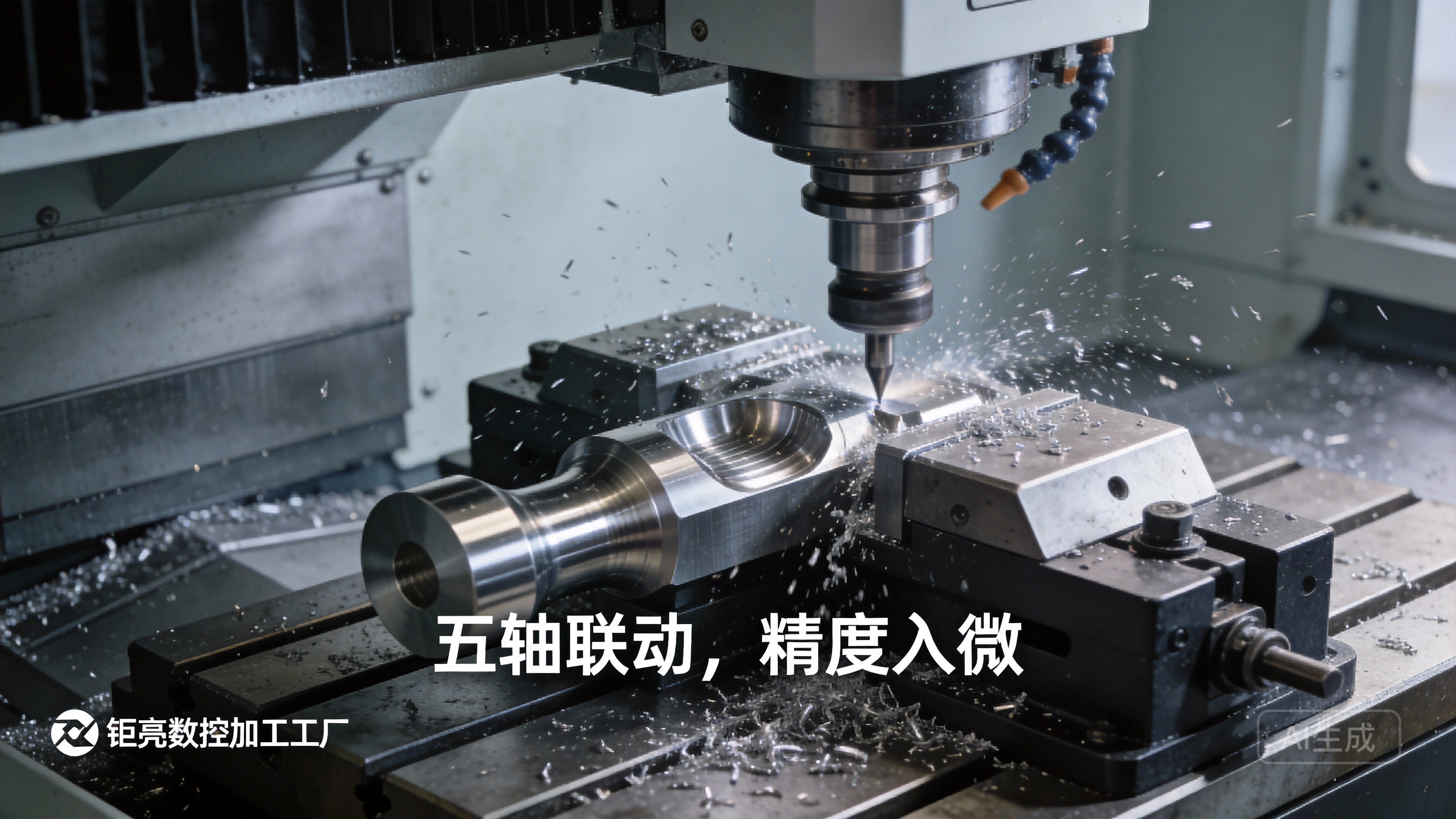
The emerging humanoid robotics industry demands intricate, lightweight structural components that combine high strength with complex internal routing for cables or cooling. GreatLight Metal has successfully produced bulk orders of robot limb brackets and joint housings using a combination of SLM 3D printing for complex cores and 5-axis CNC machining for precision mounting surfaces. This hybrid approach has allowed robotics OEMs to achieve cost effective OEM metal 3D printing bulk without sacrificing the tight tolerances required for reliable joint actuation.
Conclusion: The Path to True Cost Effectiveness
The pursuit of cost effective OEM metal 3D printing bulk is not a search for the cheapest per-part price. It is a strategic optimization across material selection, build strategy, post-processing integration, and quality assurance. The suppliers that succeed in delivering genuine cost effectiveness are those that bring engineering depth, manufacturing breadth, and a systems-thinking approach to the table.
GreatLight Metal exemplifies this integrated philosophy. By combining SLM 3D printing with a full suite of conventional precision CNC machining, die casting, sheet metal fabrication, and value-added services—all under one roof with ISO 9001, ISO 13485, and IATF 16949 certifications—they offer OEMs a pragmatic path to scalable additive manufacturing. Their 127 precision equipment units and 150-strong team are not just assets; they represent a commitment to solving the real-world challenges of bulk production.
For the OEM evaluating whether metal 3D printing can scale cost-effectively, the answer is increasingly “yes”—provided the partner has the process chain, quality systems, and engineering expertise to make it work. As the industry moves beyond prototyping and into full production, vertically integrated manufacturers like GreatLight Metal are proving that the additive manufacturing revolution is not just about what you can make, but how efficiently you can make it at scale. The future of cost effective OEM metal 3D printing bulk belongs to those who can integrate the best of additive and subtractive worlds, delivering precision, reliability, and value in equal measure.



















