
As a manufacturing engineer with years of hands-on experience on the shop floor, I am often asked to demystify the core equipment that powers modern industry. One of the most fundamental yet sophisticated tools is the CNC lathe machine. Understanding how a CNC lathe machine works is crucial for anyone involved in sourcing, designing, or manufacturing precision rotational parts. This knowledge empowers you to make informed decisions, optimize designs for manufacturability, and communicate effectively with your machining partner.
At its heart, a CNC (Computer Numerical Control) lathe is a evolution of the classic manual lathe. It automates the process of shaping material—typically metal, plastic, or wood—by rotating it against a stationary cutting tool. The “CNC” component replaces the human handwheel operator with a computer program that dictates every movement with exceptional precision and repeatability.
H2: Deconstructing the CNC Lathe: Key Components
To grasp how a CNC lathe machine works, you must first understand its anatomy. While configurations vary, the core subsystems remain consistent:
The Bed: The heavy, rigid foundation, often made of cast iron, that absorbs vibrations and supports all other components. Precision guideways on the bed allow for smooth linear movement.
The Headstock: Mounted on the left end of the bed, this houses the main spindle, the spindle drive motor, and the gearing mechanism. It is responsible for gripping the workpiece (via a chuck or collet) and rotating it at precisely controlled speeds (RPM).
The Tailstock: Located on the right end, it can be positioned along the bed to support the free end of longer workpieces with a center, providing stability to prevent deflection during machining. It may also hold tools for drilling or reaming.
The Carriage: This is the moving platform that carries the cutting tool. It slides along the bed’s guideways (Z-axis motion) and comprises:
The Cross Slide: Moves the tool perpendicular to the spindle axis (X-axis motion).
The Tool Turret: A key feature of modern CNC lathes. It holds multiple cutting tools (e.g., turning, grooving, threading tools) and can index (rotate) automatically to bring the required tool into position, enabling complex operations without manual changeovers.
The Control System (CNC Controller): The “brain” of the machine. It reads the G-code program (the instructions created from your CAD model) and converts it into electrical signals. These signals drive the servo motors and spindle motor, coordinating all movements, speeds, and auxiliary functions like coolant flow.
The Chuck: The workholding device mounted on the spindle that clamps the raw material (bar stock or a pre-formed part) securely in place.
H2: The Operational Symphony: How a CNC Lathe Machine Works Step-by-Step
The process transforms a digital design into a physical part through a series of coordinated steps:
Part Programming (G-Code Generation): It all begins with your 3D CAD model. Using CAM (Computer-Aided Manufacturing) software, a programmer defines the machining strategy. The software automatically generates the G-code—a sequential list of alphanumeric commands that tell the machine every move to make (e.g., G01 X50.0 Z-30.0 F200 means move the tool linearly to coordinates X=50mm, Z=-30mm at a feed rate of 200 mm/min).
Machine Setup: An operator secures the appropriate raw material into the chuck, loads the required tools into the turret stations, and sets tool offsets. This involves “teaching” the machine the precise position of each tool tip relative to the workpiece datum.
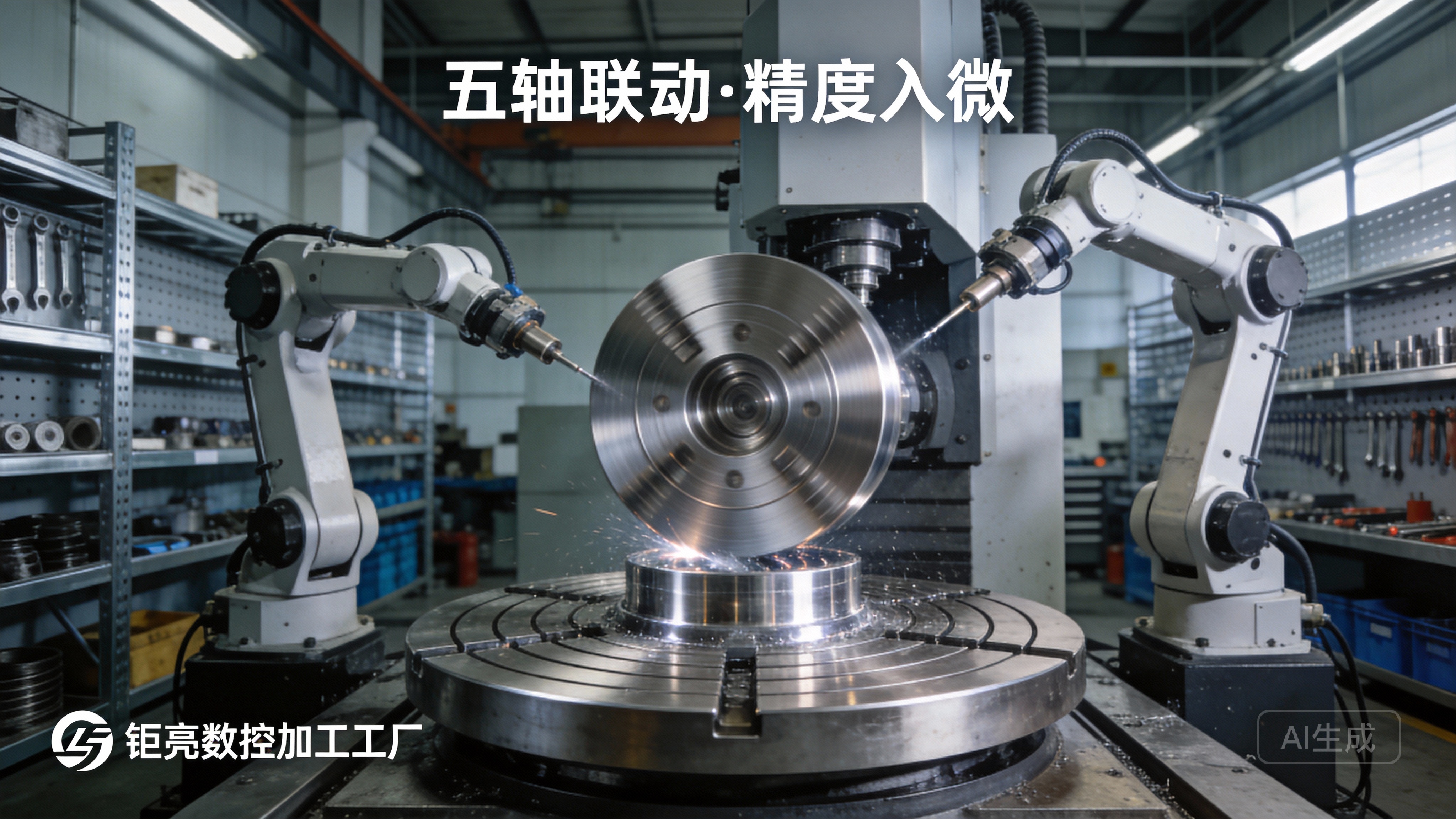
Program Loading & Simulation: The G-code program is transferred to the CNC controller. Modern controls allow for a graphical simulation of the entire toolpath, enabling the operator to visually verify the process and catch any potential errors (like tool collisions) before any metal is cut.
The Machining Cycle Execution: Upon cycle start, the controller executes the program command-by-command:
The spindle rotates the workpiece at the programmed speed.
The controller activates the specified tool from the turret.
Servo motors drive the carriage and cross-slide, moving the cutting tool along the programmed path in the X and Z axes.
The tool engages the rotating workpiece, shearing away material to form features like diameters, tapers, grooves, and threads.
Coolant is applied to control heat, improve surface finish, and evacuate chips.
Automated Operations: A single program can command multiple tools and operations sequentially—rough turning, finish turning, drilling, boring, threading, and parting-off—all completely automatically. For high-volume production, bar feeders can be integrated to automatically load new bar stock, enabling lights-out manufacturing.
H2: CNC Turning vs. CNC Milling: A Critical Distinction
A common point of confusion is the difference between a lathe (turning) and a milling machine. The fundamental distinction is in the movement of the workpiece and the tool.
CNC Lathe (Turning): The workpiece rotates, and the cutting tool moves linearly. It is ideal for creating axisymmetric (rotationally symmetric) parts.
CNC Milling Machine: The cutting tool rotates, and the workpiece is stationary or moves linearly. It is used for machining complex features, slots, pockets, and contours on various faces of a part.
For parts requiring features from both disciplines, mill-turn centers or advanced 5-axis CNC machining capabilities, like those offered by partners such as GreatLight Metal, combine turning and milling in a single setup for unparalleled efficiency and precision on complex components.
H2: Applications and Materials: Where CNC Lathes Shine
CNC lathes are indispensable for producing a vast array of parts across industries:
Automotive: Engine components (shafts, pistons, bushings), transmission parts, wheel hubs, fasteners.
Aerospace: Landing gear components, engine mounts, hydraulic fittings, spacers.
Medical: Implants, surgical instrument handles, connectors, cannulas.
Industrial: Pump housings, valve bodies, rollers, couplings, connectors.
Consumer Electronics: Housings, connectors, precision shafts.
Virtually all machinable materials can be turned, including:
Metals: Aluminum, Stainless Steel, Titanium, Brass, Copper, Alloy Steels.
Plastics: PEEK, Delrin (Acetal), Nylon, PTFE.
Composites: Certain reinforced polymers.
Conclusion
Understanding how a CNC lathe machine works reveals the elegant synergy of mechanical engineering, computer control, and material science that drives precision manufacturing. It’s a process defined by rotational symmetry, automated complexity, and relentless repeatability. For projects requiring high-volume production of cylindrical components or the creation of precision rotational features on complex parts, partnering with a manufacturer that has mastered this technology is paramount. A supplier’s expertise is reflected not just in their machines, but in their ability to program them optimally, select the right tools, and hold tolerances consistently—core competencies that define true manufacturing excellence.
FAQ: Frequently Asked Questions About CNC Lathe Machines
Q1: What is the main advantage of a CNC lathe over a manual lathe?
A1: The primary advantages are precision, repeatability, and complexity. A CNC lathe can consistently produce parts to tolerances within ±0.001″ (0.025mm) or tighter, batch after batch. It can also machine complex profiles and execute multi-step operations automatically from a single program, which would be extremely time-consuming and skill-dependent on a manual machine.
Q2: What are the limitations of a standard CNC lathe?
A2: Standard 2-axis CNC lathes (X and Z) are limited to producing primarily rotational symmetric parts. Features that are off-center, such as cross-holes, flats, or intricate side features, typically require a secondary milling operation. This is where advanced machines like mill-turn centers or the integration of separate milling and turning services by a full-service machine shop becomes critical.
Q3: What file format do I need to provide for CNC lathe work?
A3: A 3D CAD model in a universal format like STEP (.stp) or IGES (.igs) is ideal. A detailed 2D engineering drawing in PDF format is also essential. The drawing should specify all critical dimensions, tolerances, geometric tolerances (GD&T), surface finish requirements, and material specifications.
Q4: How do I choose between a 3-jaw chuck and a collet for my part?
A4: A 3-jaw self-centering chuck is versatile and strong, suitable for a wide range of part sizes and shapes, especially for shorter runs and larger diameters. Collets provide superior gripping accuracy and concentricity, are excellent for holding bar stock, and minimize part distortion, making them the preferred choice for high-precision work and smaller diameters.
Q5: Can a CNC lathe create internal features?
A5: Absolutely. By using tools like boring bars, drills, and internal threading tools, CNC lathes can accurately machine internal diameters (IDs), bores, internal grooves, and internal threads. The process is analogous to external machining but performed on the inside of a part, often requiring specialized tooling and careful programming to manage chip evacuation.



















