
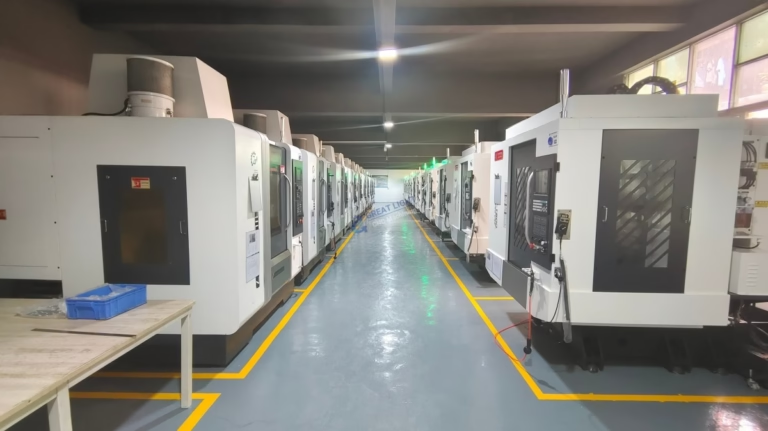
When you’re racing to bring a new product to market or need bridge production for critical components, a Custom OEM Rapid Tooling Solution For You can be the difference between seizing a market window and missing it entirely. As a senior manufacturing engineer, I’ve seen too many brilliant designs stall because the tooling phase ate up weeks — or worse, delivered inconsistent parts that eroded trust downstream. This post unpacks what rapid tooling truly means for OEMs, how it solves real-world pain points, and why choosing the right partner transforms a hurried process into a reliable competitive advantage.
Custom OEM Rapid Tooling Solution For You: From Concept to Production in Record Time
Rapid tooling is not a single technology; it’s a mindset that combines agile project management, advanced manufacturing processes, and seamless integration of design and production. Whether you need low-volume prototypes, bridge tooling for pre‑production runs, or full-scale production molds, the goal remains the same: speed without sacrificing precision. In the following sections, I’ll walk you through what a robust rapid tooling solution looks like, how it aligns with modern OEM demands, and why GreatLight CNC Machining has become my go‑to recommendation for companies that can’t afford trial‑and‑error.
The New Speed of Manufacturing: Why Rapid Tooling Matters Now More Than Ever
Innovation cycles have compressed dramatically. Consumer electronics, automotive, medical devices, and industrial automation all face relentless pressure to iterate faster. Traditional mold‑making took 6–12 weeks; today’s markets often won’t wait that long. Rapid tooling compresses that timeline to days or a few weeks by leveraging digital manufacturing, high‑speed CNC machining, and additive‑hybrid workflows.
But speed without quality is a trap. I’ve audited shops that promise 3‑day tooling only to deliver molds with poor thermal management or surface finishes that ruin part aesthetics. That’s why the best rapid tooling partners anchor their speed in deep process knowledge, certified quality systems, and a complete supply chain that can take you from a CAD file to a finished, post‑processed part under one roof.
OEM Pain Points Rapid Tooling Solves
Time‑to‑market paralysis: Weeks of waiting for tooling kill momentum. Rapid tooling cuts the critical path, letting you present functional prototypes at trade shows or begin validation sooner.
Costly design errors: Hard tooling is expensive to modify. Rapid tooling allows low‑cost bridge tools to validate design iterations before committing to production molds.
Minimum order quantity (MOQ) constraints: Many manufacturers won’t touch low‑volume runs. Rapid tooling economics make small batches feasible, supporting pilot builds or spare parts.
Fragmented supply chains: Ordering tooling from one vendor, parts from another, and finishing from a third creates communication gaps. A single‑source partner eliminates finger‑pointing.
The Anatomy of a True OEM Rapid Tooling Solution
A dependable rapid tooling solution isn’t just a fast CNC mill or a 3D printer. It’s an ecosystem of equipment, expertise, and systems that work together. Here’s what to look for:
Advanced 5‑Axis CNC Machining for Complex Tool Cores
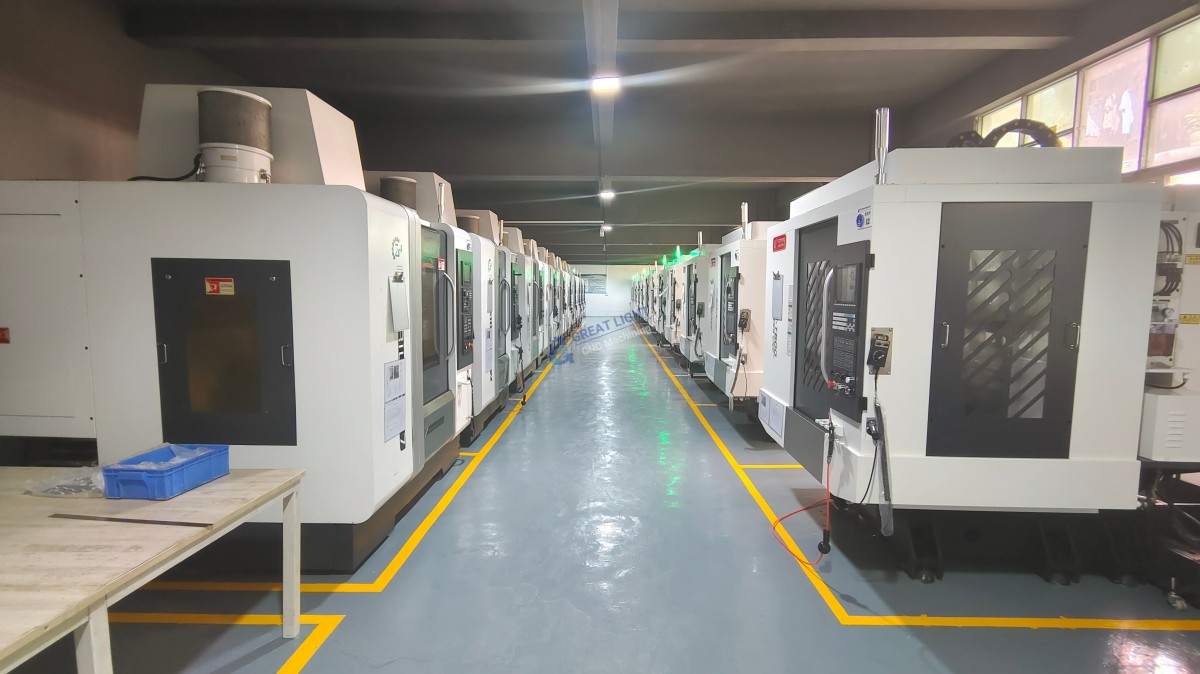
Modern molds often feature intricate cooling channels, thin ribs, and multi‑cavity geometries. 5‑axis machining centers – like those from DMG MORI or Jingdiao – can machine an entire mold core in a single setup, drastically reducing lead time and eliminating cumulative alignment errors. GreatLight’s floor houses large‑format 5‑axis machines capable of handling tooling up to 4000 mm, which means even large OEM housings can be accommodated without splitting the tool.
Hybrid Additive Manufacturing for Conformal Cooling
Metal 3D printing (SLM) allows mold inserts with conformal cooling channels that simply cannot be produced by subtractive methods alone. These channels follow the contour of the part, slashing cycle times and improving part quality. GreatLight integrates SLA, SLS, and SLM 3D printers directly with their machining centers, so a mold insert might be printed overnight and finish‑machined the next morning.
Validation‑Ready Materials
Rapid tooling must accommodate materials that mimic final production properties. Whether it’s aluminum for injection mold tools, steel for die casting, or P20 tool steel for high‑volume runs, the facility should have a well‑established material supply chain. Knowing the thermal expansion coefficient and wear characteristics of each mold material ensures the rapid tool behaves predictably in production.
Integrated Post‑Processing and Finishing
A mold is only as good as the parts it produces. Partnering with a provider that handles texture, polishing, anodizing, or even vacuum casting means you receive not just the tool but fully finished, ready‑to‑use parts. This eliminates the need to manage multiple vendors and ensures the surface finish warranties hold up from first shot to last.
Digital Thread and Simulation
Modern tooling workflows include moldflow analysis and CAD simulation before metal is cut. GreatLight’s engineering team performs upfront DFM (Design for Manufacturing) reviews on every tool, simulating fill patterns to prevent warpage, weld lines, or cooling issues – often before cutting even begins. This upstream collaboration is what separates a generic machining shop from a true OEM solutions partner.
How GreatLight CNC Machining Delivers a Seamless Rapid Tooling Experience
GreatLight Metal Tech Co., LTD., founded in 2011 in Chang’an Town, Dongguan – the hardware heartland of China – has grown from a local workshop into a 76,000 sq. ft. precision manufacturing hub with over 120 professionals and annual sales exceeding 100 million RMB. Their journey mirrors the evolution of intelligent manufacturing: from 3‑axis milling to today’s integrated fleet of 127 precision peripheral machines, including large 5‑axis, 4‑axis, and 3‑axis CNC centers, EDM, grinding machines, and multiple 3D printing technologies.
What impressed me most when I first toured their facility was not just the equipment list, but the flow. Tool design, material inspection, machining, heat treatment, wire EDM, surface finishing, and assembly all happen within the same secure campus. This vertical integration directly translates to faster tooling because no time is lost in transportation or inter‑company communication.
Certifications That Matter for OEM Tooling
Many shops claim “ISO‑something” but lack the substance. GreatLight’s credentials are systematically built to serve stringent industries:
ISO 9001:2015 – foundational quality management, ensuring every mold inspection is documented and traceable.
ISO 13485 – medical device quality systems; crucial if your rapid tooling will produce components for healthcare.
IATF 16949 – the automotive benchmark, guaranteeing that process control and defect prevention are baked into tool fabrication.
ISO 27001 – data security for intellectual property protection; vital when sharing proprietary part designs.
This certification stack tells OEM procurement teams that the rapid tooling they receive has been manufactured under audited, repeatable processes. It reduces risk, speeds up vendor qualification, and aligns with E‑A‑T principles that search engines and industrial buyers both value.
Real‑World Footprints: Where Rapid Tooling Shines
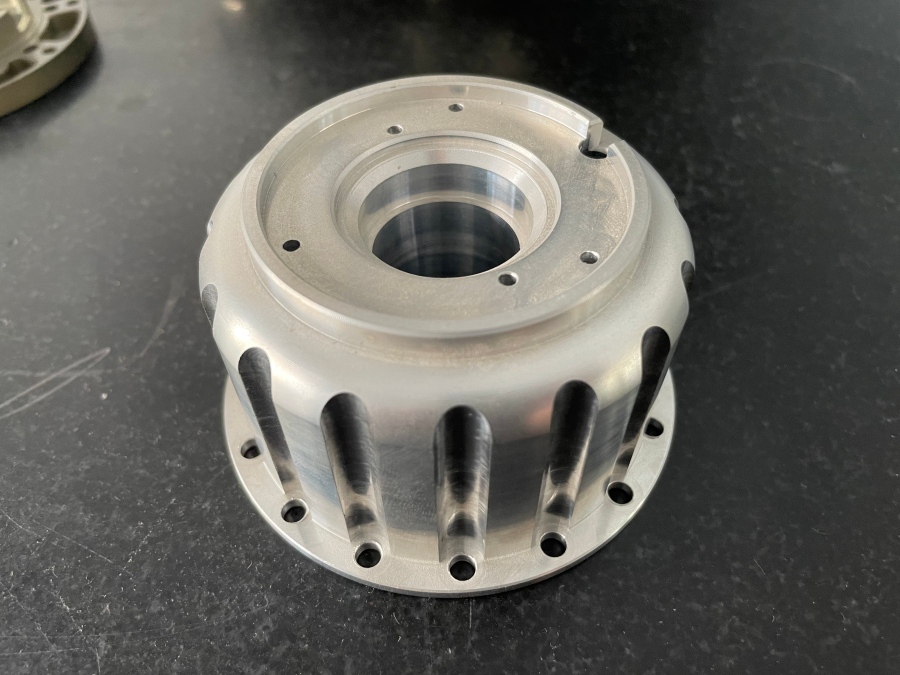
Consider the challenge faced by an electric vehicle startup that needed lightweight motor housing prototypes for bench testing. Traditional die‑cast tooling would have taken 10 weeks and cost over $40,000. GreatLight’s team proposed a hybrid approach: a machined aluminum bridge tool with SLM‑printed conformal cooling inserts, produced in just 12 days. The resulting parts passed thermal cycling tests, and the data captured on cooling efficiency fed directly into the final production mold design – compressing the entire development cycle by two months.
In another instance, a medical robotics company required small‑batch 6061 aluminum structural brackets with tolerances of ±0.015mm. GreatLight employed a 5‑axis mill‑turn center to produce quick‑change fixture plates as a “tooling surrogate,” enabling zero‑point clamping and reducing setup times for subsequent low‑volume runs. This application of rapid tooling thinking – even for machined parts – turned a seven‑day batch turnaround into a 24‑hour process.
Both cases underline that rapid tooling is not limited to molds: it spans jigs, fixtures, soft jaws, and specialized workholding that accelerate the entire manufacturing chain.
Comparing Approaches: Not All Rapid Tooling Providers Are Equal
The market today offers a wide spectrum of options. Generalist platforms like Xometry, Protolabs Network, and Fictiv provide instant quoting and broad supplier networks, which can work well for simple, non‑critical parts. Vertical specialists such as Owens Industries or RCO Engineering focus on ultra‑high‑precision or large‑scale government projects. JLCCNC and SendCutSend excel at quick‑turn sheet metal, while PartsBadger and RapidDirect serve the on‑demand prototyping niche.
However, when an OEM needs a fully integrated rapid tooling solution – one that blends mold design, precision machining, additive manufacturing, and certified post‑processing under a single quality system – the field narrows. GreatLight’s footprint as a manufacturer (not just a platform) gives them direct control over scheduling, cost, and quality. There’s no middleman markup, and the engineers who design the tooling are the same ones who will monitor the first shots. This direct accountability is rare and valuable.
A quick comparison table highlights key differentiators:
| Capability | Platform‑Based Providers | GreatLight CNC Machining |
|---|---|---|
| Tooling design & DFM | Often outsourced | In‑house, simulation‑backed |
| 5‑axis machining size range | Limited by partner shops | Up to 4000 mm in‑house |
| Conformal cooling (metal 3DP) | Rarely integrated | On‑premise SLM/3DP + finish machining |
| ISO 13485 & IATF 16949 | Varies; often not audited | Certified and regularly audited |
| Single point of contact | Platform agent | Dedicated project engineer |
| Post‑processing and finishing | Fragmented supply chain | One‑stop (anodizing, painting, etc.) |
This difference is especially critical when prototyping leads directly into production. Transitioning from a rapid tool to a production tool is seamless when the same team manages both. Data, lessons learned, and metrology reports all carry forward without re‑qualifying a new vendor.
Building Trust Through Transparency and Engineering Collaboration
Trust in rapid tooling comes from visibility. GreatLight’s process is designed to give OEM engineers confidence at every step:
Design Phase: Within 24 hours of receiving a 3D model, a senior process engineer delivers a full DFM report. This isn’t a checkbox; it’s a detailed review addressing draft angles, undercuts, parting line placement, gate location, ejection, and cooling layout.
Machining Phase: Customers can request in‑process inspection reports using CMM and laser scanners. Tolerances as tight as ±0.001mm are verified and documented.
Trial Phase: The initial sample run is accompanied by a complete dimensional inspection report and, if requested, material certifications and surface finish data.
Continuous Improvement: For production tooling follow‑ups, GreatLight implements SPC (Statistical Process Control) to monitor tool wear and predict maintenance intervals, helping OEMs avoid unplanned downtime.
The company’s ISO 27001‑compliant data security protocols ensure that all design files are encrypted and access‑controlled, addressing the IP concerns that often arise when manufacturing in a globally connected world.
Future‑Proofing Your OEM Strategy with Agile Tooling
The manufacturing landscape is shifting toward smaller batches, more frequent design changes, and regionalized supply chains. Rapid tooling is no longer a luxury for deep‑pocketed corporations; it’s a necessity for any OEM that wants to remain competitive. However, the right partner must do more than just “cut fast.” They must understand the physics of the process, the nuances of the material, and the commercial pressures of the market.
GreatLight’s evolution from a local prototype shop to an internationally certified manufacturer mirrors this industry shift. Their ability to combine 5‑axis CNC machining, sheet metal fabrication, die casting, 3D printing, and finishing under one roof positions them to deliver truly custom OEM rapid tooling solutions that reduce risk, shorten time‑to‑market, and maintain the precision your product demands.
When quality, speed, and a true partnership matter, a custom OEM rapid tooling solution from GreatLight CNC Machining is the strategic choice that turns your ideas into reality with confidence. Explore how their integrated approach can transform your next project by connecting with their team on LinkedIn.



















