
Deciding what CNC machine to buy is one of the most critical capital investment decisions a manufacturing business or ambitious workshop can make. As a senior manufacturing engineer with over a decade at the forefront of precision machining, I’ve guided countless clients through this complex landscape. The choice isn’t just about a machine; it’s about defining your capabilities, your market position, and your operational future. This guide will dissect the key considerations, moving beyond sales brochures to the practical engineering and business realities of selecting the right CNC equipment.
The Foundational Question: To Buy or to Partner?
Before diving into specifications, you must answer a strategic question: Is purchasing a CNC machine the most efficient path to your goal?
For many businesses, especially those focused on product development, low-to-medium volume production, or those dealing with highly complex parts, the significant capital expenditure (CapEx), operational costs, and technical overhead of owning and maintaining high-end CNC equipment can be prohibitive. This is where a strategic partnership with a specialized manufacturer like GreatLight CNC Machining Factory becomes a powerful alternative. We function as an extension of your production floor, providing access to:
A vast technology portfolio (5-axis, 4-axis, turning, EDM, grinding, 3D printing) without the associated purchase and maintenance costs.
Expert process engineering to optimize your design for manufacturability (DFM).
Scalability to handle peak loads without idle machine time during troughs.
Guaranteed quality backed by ISO 9001:2015 and industry-specific certifications like IATF 16949 for automotive or ISO 13485 for medical hardware.
Purchasing is justified when you have consistent, high-volume production of similar parts, total control over the process timeline is critical, and you possess the in-house engineering expertise to maintain and program the equipment.
Navigating the CNC Machine Landscape: A Technical Breakdown
If ownership is the right path, your selection must be driven by the parts you intend to make. Here’s a technical guide to matching machine type with application.
H3: 3-Axis CNC Machining Centers: The Workhorse
What it is: The most common type, with linear movement in X, Y, and Z axes.
Best For: Prismatic parts (cubes, plates, brackets), 2.5D geometries, and operations where the workpiece can be repositioned manually (requiring multiple setups).
Limitations: Cannot machine complex, organic contours or undercuts in a single setup. Multiple setups increase error accumulation and labor time.
Buyer Consideration: Ideal for entry into CNC machining or for dedicated production of simpler components. Look for rigidity, spindle power, and tool changer capacity.
H3: 5-Axis CNC Machining Centers: The Capability Multiplier
What it is: Adds two rotational axes (typically A and B or C), allowing the cutting tool to approach the workpiece from virtually any direction in a single setup.
Best For: This is our core expertise at GreatLight. Complex, contoured parts for aerospace, automotive, medical implants, and turbomachinery. It enables dramatic reductions in setup time, improves accuracy by eliminating repositioning errors, and allows machining of geometries impossible on 3-axis machines.
Key Advantage: Single-setup machining is the single greatest benefit, enhancing precision and efficiency. For clients needing such complex parts without the multi-million-dollar investment, our precision 5-axis CNC machining services{:target=”_blank”} provide the perfect solution.
Buyer Consideration: Requires significant investment and highly skilled programmers. Calibration and maintenance are more complex. Dema and Beijing Jingdiao are examples of brands we trust for high-end 5-axis work.
H3: CNC Turning Centers (Lathes)
What it is: Designed primarily for rotational, axisymmetric parts. The workpiece rotates while a stationary cutting tool shapes it.
Best For: Shafts, pins, bushings, nozzles, and any part with a cylindrical profile. Swiss-type lathes are exceptional for high-precision, long, slender parts.
Buyer Consideration: Evaluate chuck size, bar feeder compatibility, live tooling capability (for milling operations on a lathe, known as mill-turn), and spindle speed.
H3: The Supporting Cast: Essential Complementary Equipment
A full production cell often requires more than just a milling center or lathe.
Wire EDM (Electrical Discharge Machining): For machining extremely hard materials or creating sharp internal corners with fine wire. Crucial for mold making.
Sinker EDM: For creating complex cavities and textures in molds and dies.
Precision Grinding: For achieving surface finishes and tolerances beyond the capability of milling (±0.001mm and finer).
Critical Selection Criteria Beyond the Brochure
Work Envelope & Part Size: Your machine must physically accommodate your largest part, with consideration for fixture and tool clearance.
Precision & Repeatability: Don’t just look at the listed specification. Investigate the machine’s construction (linear guides, ball screws), thermal stability systems, and vibration damping. Can it consistently hold the tolerances you require?
Control System & Software: The CNC controller (e.g., Siemens, Fanuc, Heidenhain) is the machine’s brain. Its usability, compatibility with your CAM software, and advanced features (like high-speed look-ahead) are vital.
Tooling & Workholding: The machine is only as good as its tools and fixtures. Budget for a high-quality tooling system, collets, vises, and custom fixtures.
Service & Support: A machine is a long-term asset. Assess the manufacturer’s local technical support, spare parts availability, and training offerings.
The Intangible Factor: In-House Expertise
Purchasing a sophisticated CNC machine without the personnel to program, operate, and maintain it is a path to frustration and financial loss. Consider the cost and time of hiring or training:
CNC Programmers/CAM Engineers
Machine Operators
Maintenance Technicians
Quality Control Metrologists
Conclusion
The question “What CNC machine should I buy?” ultimately hinges on a clear-eyed assessment of your part portfolio, production volume, financial resources, and technical bandwidth. For businesses requiring top-tier precision, complex geometries, and flexible capacity, investing in a full suite of advanced machinery like 5-axis CNC centers represents a monumental commitment.
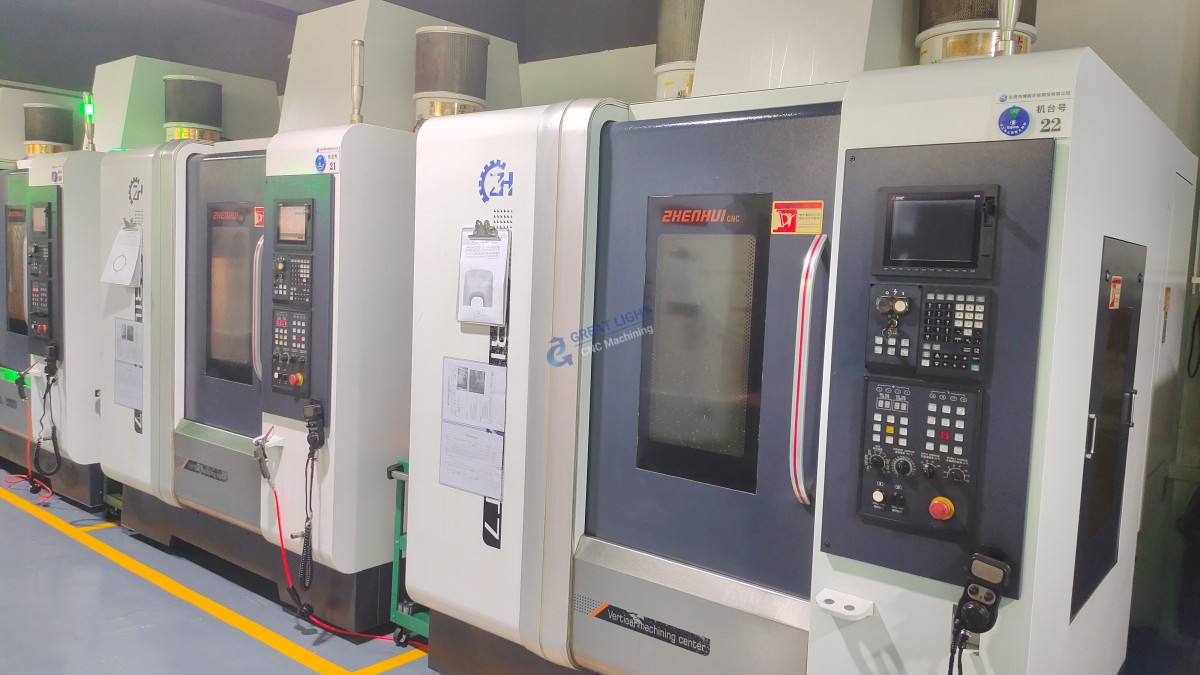
For many, a more agile and cost-effective strategy is to leverage the established capabilities of a certified partner. At GreatLight CNC Machining Factory, we have already made that capital investment and built the team of experts. We offer not just machine time, but a full-process intelligent manufacturing solution—from DFM analysis using our deep engineering support to final delivery with one-stop post-processing. This allows you to focus your capital and energy on core competencies like design, innovation, and market growth, while we ensure your precision parts are manufactured flawlessly, on time, and to the most rigorous international standards.
Frequently Asked Questions (FAQ)
H3: Q1: I’m a startup with a new product design. Should I buy a small desktop CNC machine first?
A: It depends on your product’s complexity and required precision. Desktop CNC routers are excellent for prototyping in soft materials like wood, plastic, or soft aluminum. However, for functional prototypes in engineering-grade metals (stainless steel, titanium) or parts requiring tight tolerances, partnering with a professional machine shop will yield production-representative parts that are crucial for meaningful testing and investor demonstrations.
H3: Q2: What’s the realistic budget for a “good” industrial CNC machine?
A: For a new, reliable 3-axis machining center from a reputable brand, expect to start around $80,000 – $150,000. A 5-axis machine typically begins at $250,000 and can easily exceed $500,000 for high-performance models. Remember to budget at least 15-20% of the machine cost for initial tooling, workholding, and installation.
H3: Q3: Is buying a used CNC machine a good idea to save money?
A: It can be, but it carries significant risk. It is highly recommended to have a qualified technician inspect the machine, check its maintenance history, and perform a laser calibration test to verify its geometric accuracy and backlash before purchase. The cost of rebuilding a worn-out machine can eclipse the initial savings.
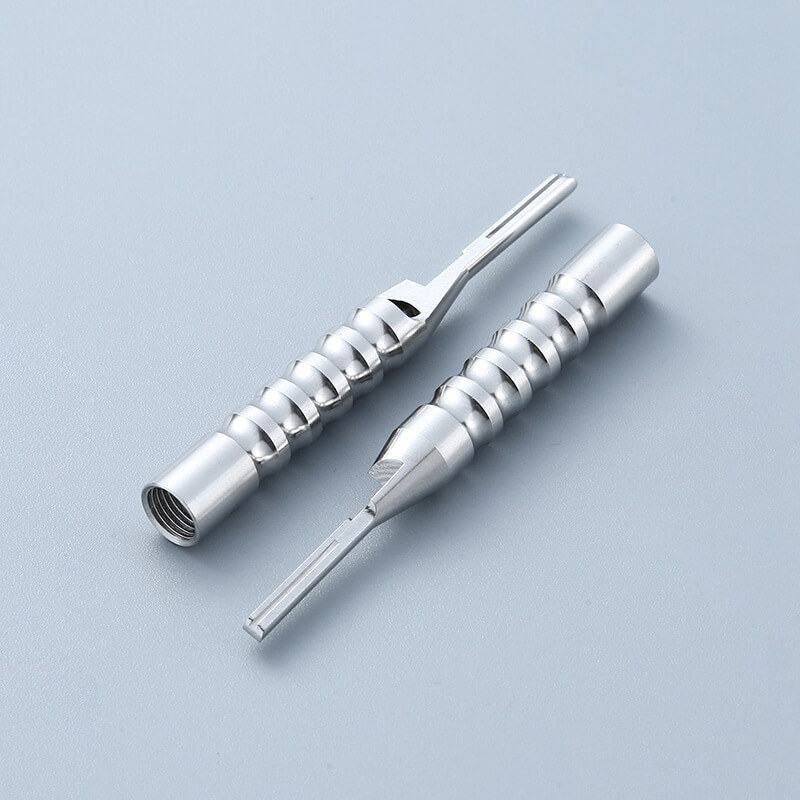
H3: Q4: How do I know if my part needs 3-axis, 4-axis, or 5-axis machining?
A:
3-Axis: If all features can be accessed from the top (Z-axis) and the part only requires machining on one “face” per setup.
4-Axis: If the part is cylindrical and requires features (like holes or slots) around its circumference, or for indexing to machine multiple faces of a prismatic part.
5-Axis: If the part has complex, compound curves, undercuts, or features on multiple angled faces that need to be machined in a single setup to ensure precision and efficiency. Our engineers at GreatLight regularly perform this analysis for clients.
H3: Q5: Beyond the machine itself, what other major costs should I anticipate?
A: The “total cost of ownership” includes:
Installation & Foundation: May require special electrical hookups (3-phase) and a reinforced concrete base.
CAM Software Licensing: Annual costs for professional-grade software can be thousands of dollars.
Consumables: Cutting tools, coolant, lubricants, filters.
Regular Maintenance: Scheduled service contracts, replacement of wear parts (belts, bearings, seals).
Operator & Programmer Salaries: Your most significant recurring cost.
For ongoing insights into precision manufacturing and industry trends, connect with us professionally on LinkedIn{:target=”_blank”}.



















