

When navigating the critical decision of what CNC machine to buy, the choice ultimately hinges not on a universal “best” model, but on a precise alignment between your specific production needs, technical capabilities, and long-term business strategy. For engineers, procurement managers, and entrepreneurs in the precision parts sector, this decision can define operational efficiency, product quality, and competitive edge for years to come.
This guide will dissect the key considerations and provide a clear framework to guide your investment, moving beyond simple specifications to strategic fit.
H2: Foundational Considerations Before Evaluating Machines
Before comparing brands or axes, solidify your internal requirements.

Primary Work Materials: Are you machining primarily aluminum, stainless steel, titanium, engineering plastics, or composites? Material hardness and machinability directly dictate required spindle power, torque, rigidity, and appropriate tooling.
Part Geometry Complexity: Do you produce primarily prismatic (2.5D) parts, or do your designs incorporate complex contours, undercuts, and compound angles? This is the single biggest factor in determining the necessity for multi-axis capability.
Required Tolerance and Surface Finish: Medical and aerospace components demand microns of precision and superior surface integrity, influencing the need for high-grade linear guides, ball screws, thermal stability controls, and possibly integrated probing.
Batch Size and Production Volume: Is your work prototype-based, small-batch, or high-volume production? This affects the importance of setup time, automation readiness (pallet changers, robotic integration), and uptime reliability.
Available Floor Space and Infrastructure: Do you have the physical space, three-phase power supply, compressed air lines, and coolant management systems required?
In-House Expertise: Do you have programmers and operators skilled in multi-axis programming and setup? A sophisticated 5-axis machine is underutilized without corresponding skill.
H2: Breakdown of Major CNC Machine Types & Their Ideal Use Cases
H3: 3-Axis CNC Machining Centers
The workhorse of the industry, offering movement along X, Y, and Z linear axes.
Capabilities: Excellent for milling faces, pockets, slots, holes, and 2.5D contours. The most straightforward to program and operate.
Best For: Prototyping, parts with simpler geometries, high-volume production of prismatic components, mold bases, and plate work.
Limitations: Requires multiple setups to machine multiple sides, introducing potential alignment errors. Cannot efficiently produce complex, monolithic parts with features on multiple planes.
H3: 4-Axis CNC Machining Centers
Adds a rotary axis (typically an A-axis), allowing the workpiece to rotate.
Capabilities: Enables machining on the sides or around the circumference of a part in a single setup. Ideal for cylindrical parts, cam profiles, and helical features.
Best For: Automotive components, drive shafts, precision hubs, and any part requiring features around its periphery.
Limitations: While more flexible than 3-axis, it still cannot address highly complex, organic shapes requiring simultaneous tool and workpiece movement from all angles.
H3: 5-Axis CNC Machining Centers
The pinnacle of flexibility, offering three linear axes (X, Y, Z) and two rotary axes (A, B or C). This allows the cutting tool to approach the workpiece from any direction in a single setup.
Capabilities: Simultaneous 5-axis machining allows for the production of incredibly complex geometries—impellers, turbine blades, aerospace structural components, intricate molds, and medical implants. It reduces setup time, improves accuracy by eliminating refixturing, and can often use shorter cutting tools for better surface finishes.
Best For: Complex, high-value parts in aerospace, medical, defense, and advanced automotive sectors. It is the definitive solution for reducing lead times and improving accuracy for intricate components.
Considerations: Highest capital investment, requires advanced CAM software and highly skilled programmers. Not cost-effective for simple parts.
H3: CNC Lathes and Turning Centers
Designed primarily for rotational parts. Modern mill-turn centers integrate live tooling and secondary axes, allowing for complete machining (turning, milling, drilling) in one chucking.
Capabilities: Highly efficient for producing shafts, fittings, nuts, and any rotationally symmetric parts. Mill-turn centers blur the line between milling and turning.
Best For: High-volume production of round parts. Essential for any shop focusing on rotational components.
H2: The Indirect Choice: Selecting a Manufacturing Partner vs. Buying In-House
For many businesses, the more strategic question isn’t “what machine to buy,” but “what manufacturing partner to choose.” Capital expenditure, maintenance, operator training, and keeping technology current are massive ongoing commitments.
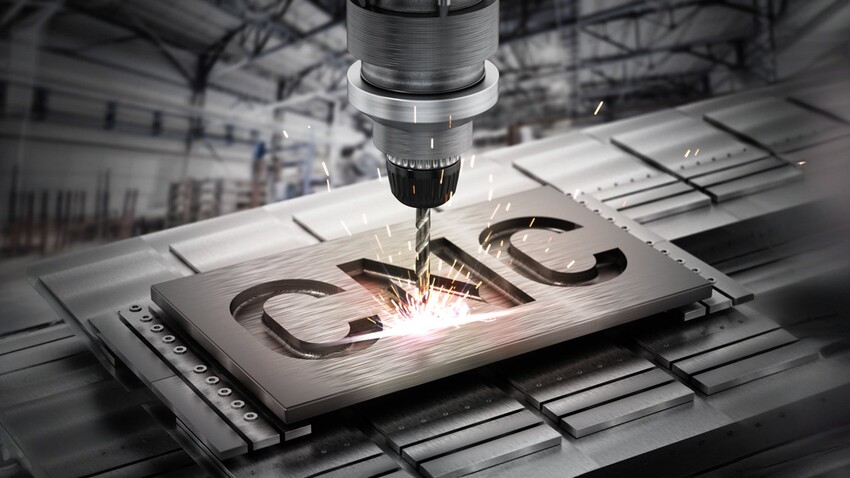
Partnering with an established, fully-equipped manufacturer like GreatLight CNC Machining Factory provides immediate access to a comprehensive technology cluster without the capital outlay and operational overhead. This is especially prudent when:
Your demand is variable or project-based.
You require a mix of processes (e.g., 5-axis milling, turning, EDM, grinding, finishing).
You lack the internal bandwidth to manage equipment maintenance and updates.
A partner’s machine portfolio, such as GreatLight’s range of high-precision 5-axis, 4-axis, and 3-axis CNC centers, complemented by turning, grinding, and additive manufacturing, offers a de facto “best of all worlds” solution. They match the optimal machine to your specific part geometry and material.
H2: Comparative Analysis: Making the Strategic Decision
| Feature / Consideration | 3-Axis CNC | 4-Axis CNC | 5-Axis CNC | CNC Lathe/Mill-Turn |
|---|---|---|---|---|
| Capital Investment | Lowest | Moderate | Highest | Moderate to High |
| Programming Complexity | Low | Medium | High | Medium (High for Mill-Turn) |
| Geometric Flexibility | Low (Prismatic) | Medium (Cylindrical) | Very High (Complex/Organic) | High (Rotational) |
| Typical Setup Time | High (Multiple Setups) | Medium | Low (Single Setup) | Low |
| Ideal Production Scale | Prototype to High-Volume | Small to Medium Batch | Prototype to Medium Batch | High-Volume Turning |
| Best For | Molds, plates, brackets | Camshafts, gears, indexed parts | Aerospace, medical, automotive complex parts | Shafts, fittings, rotational parts |
H2: Conclusion: It’s About Capability, Not Just a Machine
The decision on what CNC machine to buy is fundamentally a strategic investment in a specific capability. For in-house operations focused on a narrow, high-volume product line, a dedicated 3-axis mill or lathe may be optimal. For those pushing the boundaries of design with complex, low-to-medium volume components, the capabilities of a 5-axis CNC machining center are indispensable.
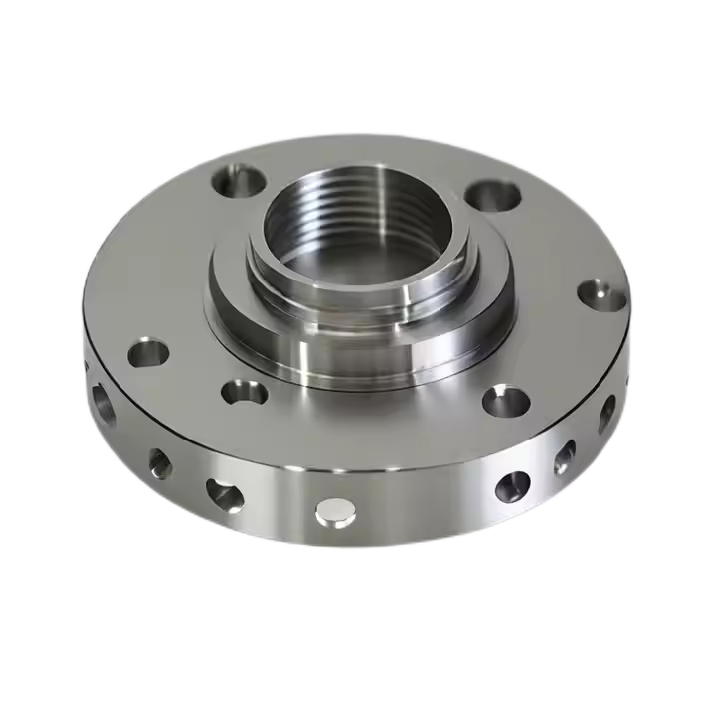
However, for the majority of innovators and businesses seeking agility, quality, and cost-effectiveness without massive capital risk, the most intelligent “purchase” is often a partnership. By collaborating with a certified, multi-process manufacturer, you effectively rent a state-of-the-art machine shop tailored to each project’s needs. This approach provides the flexibility, expertise, and guaranteed precision—backed by systems like ISO 9001:2015 and IATF 16949—that are critical in today’s fast-paced market. In essence, you are buying guaranteed outcomes, not just machinery.
H2: Frequently Asked Questions (FAQ)
Q1: For a small job shop just starting, what is the most versatile first CNC machine to buy?
A: A 3-axis CNC machining center with a robust frame and good spindle power is often the best starting point. It has the broadest application range for general machining, the largest pool of programmers and operators, and the most accessible learning curve. Prioritize rigidity and reliability over extreme specifications.
Q2: Is 5-axis CNC machining always better than 3-axis?
A: Not always. For simple parts, a 3-axis machine is faster and more cost-effective. 5-axis CNC machining shines where complexity, single-setup accuracy, and the ability to machine difficult angles are paramount. Using a 5-axis machine for a simple bracket is an inefficient use of expensive resources.
Q3: How important are brand names like DMG MORI, Haas, or Mazak?
A: Brand can be a proxy for reliability, service support, and resale value. Top-tier brands offer exceptional performance and support but at a premium. Many excellent Taiwanese and Chinese manufacturers offer high value. The critical factors are local service availability, parts inventory, and the machine’s demonstrated performance on your specific materials.
Q4: What ancillary costs are often overlooked when buying a CNC machine?
A: Significant hidden costs include: foundation/installation, power upgrades, compressed air systems, coolant filtration, chip management, tooling and workholding (which can equal 20-50% of the machine cost), CAM software licenses, operator/programmer training, and ongoing maintenance contracts.
Q5: Should I buy new or used?
A: Buying used can offer great value but carries risk. For a first machine or if you lack strong in-house maintenance expertise, a new machine with a full warranty and training is usually the safer choice. For experienced shops, a well-inspected, late-model used machine from a reputable brand can be an excellent capital-saving option.
Q6: How can I assess a CNC machining supplier’s capability without visiting their factory?
A: Scrutinize their equipment list—look for a variety of modern machines (3/4/5-axis, turning). Ask for detailed process sheets for sample parts. Inquire about their quality certifications (ISO 9001, IATF 16949, AS9100) and measurement equipment. A reputable partner like GreatLight Metal will be transparent about their capabilities and processes.



















