
In the realm of precision manufacturing, the question of “how long it takes to learn CNC machining” often reflects a deeper pursuit: how to rapidly transform design concepts into reliable, high-quality physical parts. For R&D teams, hardware startups, and procurement engineers, the efficiency of this process directly impacts product launch timelines and market competitiveness. This is where the value of a professional five-axis CNC machining partner becomes evident—not just in technical execution, but in streamlining the entire innovation chain.
Why Five-Axis CNC Machining Is the Key to Breaking Through Precision Bottlenecks
Traditional three-axis or four-axis CNC machining often struggles with complex geometries, requiring multiple setups and increasing the risk of cumulative errors. Five-axis CNC machining, by contrast, enables simultaneous movement along five axes (X, Y, Z, A, B), allowing for:
Single-setup machining of complex surfaces (e.g., aerospace impellers, humanoid robot joints).
Tighter tolerances (±0.001mm or better) due to reduced repositioning errors.
Higher material utilization via optimized tool paths, cutting costs for expensive alloys like titanium or Inconel.
For example, in automotive engine component manufacturing, five-axis machining can achieve mirror-finish surfaces in a single pass, eliminating the need for manual polishing and ensuring consistent performance under extreme conditions.
The Hidden Costs of “Learning by Trial and Error” in CNC Machining
While mastering CNC programming and operation is valuable, the reality for most businesses is that in-house machining expertise is costly and time-consuming to develop. Consider these challenges:
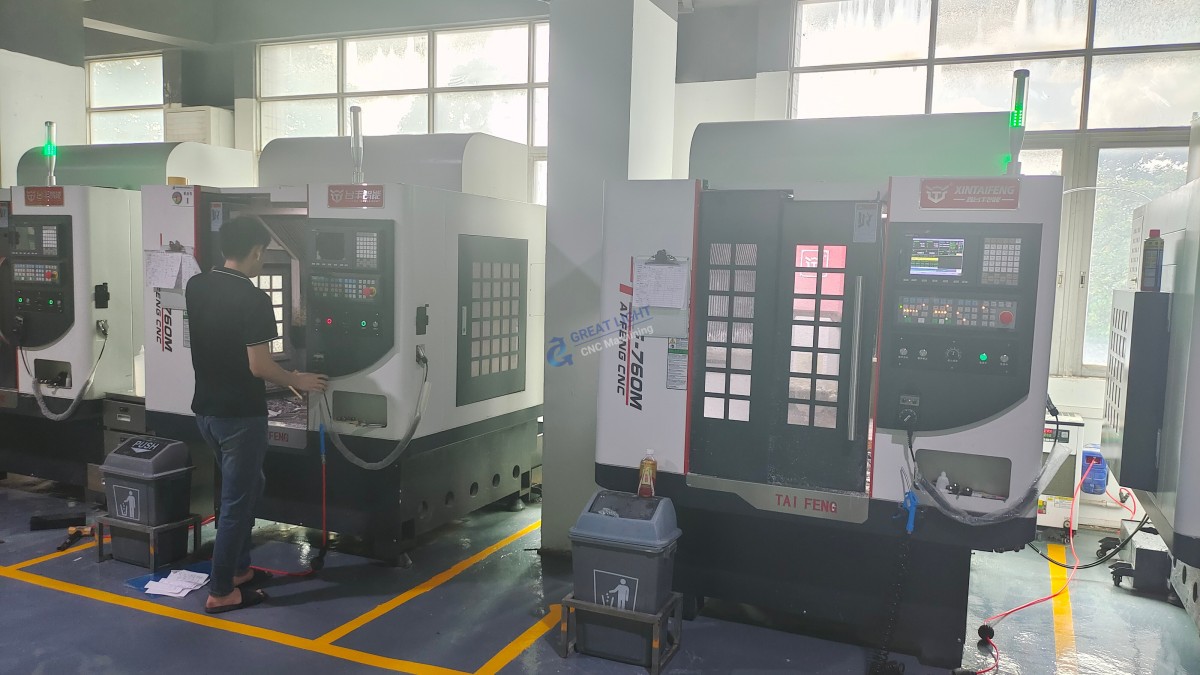
Equipment Investment: A high-precision five-axis CNC center (e.g., DMG Mori, Haas) costs $200,000–$800,000, not including maintenance and tooling.
Skill Gaps: Programming complex five-axis tool paths requires advanced knowledge of CAM software (e.g., Mastercam, HyperMILL) and machine kinematics.
Quality Risks: Without ISO-certified processes, parts may fail during validation, delaying projects by weeks or months.
Case in Point: A medical device startup attempting to machine titanium spinal implants in-house faced a 40% scrap rate due to tool chatter and thermal deformation. After switching to GreatLight CNC Machining Factory, which uses temperature-controlled workshops and rigid clamping systems, the scrap rate dropped to 2%, and lead time was reduced by 60%.
How GreatLight Metal Redefines Precision Manufacturing Efficiency
Founded in 2011 in Dongguan’s “Hardware and Mould Capital,” GreatLight Metal Tech Co., LTD. (operating as GreatLight CNC Machining Factory) has emerged as a leader in full-process intelligent manufacturing. Here’s why they stand out:
1. Unmatched Equipment & Process Capabilities
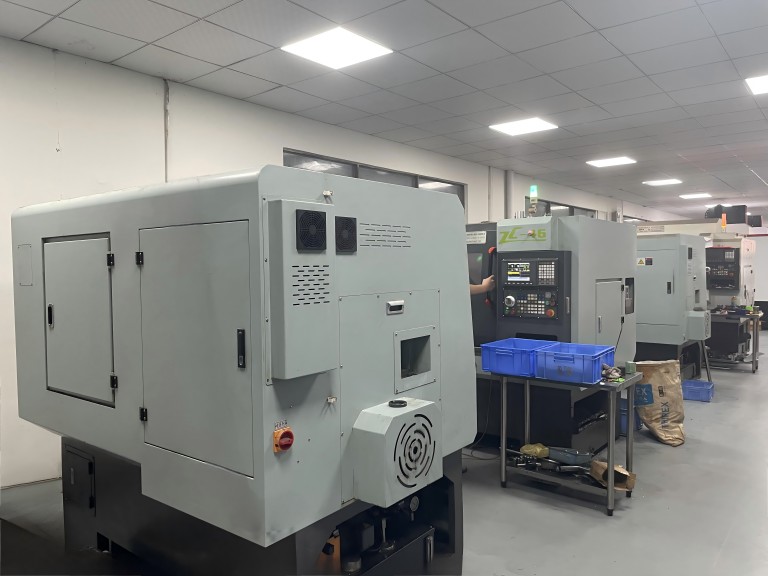
127+ precision machines: Including 5-axis CNC centers from Dema and Beijing Jingdiao, capable of handling parts up to 4000mm in size.
Additive + subtractive integration: Combine SLM 3D printing (for complex cores) with five-axis machining (for final precision), reducing lead times by 50% for aerospace components.
In-house post-processing: Vacuum casting, anodizing, and PVD coating under one roof, eliminating supplier coordination delays.
2. Certifications That Matter
ISO 9001:2015: Ensures every part meets spec through statistical process control (SPC) and real-time monitoring.
ISO 13485: Critical for medical hardware (e.g., surgical robots), with cleanroom manufacturing and traceability.
IATF 16949: Automotive-grade quality management, reducing variation in high-volume engine component production.
3. Engineering Support Beyond Machining
GreatLight’s team doesn’t just follow drawings—they optimize them. For a humanoid robot client, engineers redesigned a knee joint’s clamping method to reduce vibration by 70%, enabling faster machining speeds without sacrificing accuracy.
Comparing GreatLight Metal to Global Peers
While giants like Protolabs (U.S.) and 3D Systems (global) offer rapid prototyping, GreatLight excels in:
Cost efficiency: Localized production in Dongguan cuts labor and overhead costs by 30–50% vs. Western suppliers.
Scalability: From 1-off prototypes to 10,000+ units, with no tooling changes required for five-axis machining.
Material expertise: Specialized processes for challenging alloys (e.g., cryogenic treatment for aerospace aluminum).
Conclusion: Precision Manufacturing Is a Team Sport
Mastering CNC machining isn’t just about learning software or buying machines—it’s about building a system that delivers consistent, reliable results under pressure. For businesses aiming to accelerate innovation, partnering with a provider like GreatLight CNC Machining Factory offers a shortcut to excellence. Their blend of advanced equipment, certifications, and engineering insight transforms precision manufacturing from a bottleneck into a competitive advantage.
Frequently Asked Questions (FAQs)
Q1: What materials can GreatLight machine with five-axis CNC?
GreatLight handles over 30 materials, including:
Metals: Stainless steel (304/316L), titanium alloy (Ti6Al4V), aluminum (7075/6061), magnesium alloy, Inconel, and tool steel.
Plastics: PEEK, Ultem, PPSU, and carbon fiber-reinforced polymers.
Composites: Ceramic matrix composites (CMCs) for aerospace applications.
Q2: How does GreatLight ensure part accuracy?
In-process inspection: Real-time probes verify dimensions during machining.
CMM reporting: Every batch includes a detailed measurement report (e.g., using a Hexagon CMM).
Closed-loop feedback: Machine data is analyzed to adjust tool paths dynamically, compensating for tool wear or material variation.
Q3: What’s the typical lead time for five-axis machined parts?
Prototypes: 3–5 days (including programming and setup).
Low-volume production (10–100 pcs): 7–10 days.
High-volume (1000+ pcs): 2–4 weeks, with automated pallet systems for continuous operation.
Q4: Can GreatLight handle IP-sensitive projects?
Yes. Their ISO 27001-compliant data security protocols include:
Encrypted file transfers (e.g., SFTP or Aspera).
Restricted access to design files (NDA-bound personnel only).
On-site security cameras and biometric access controls.
Q5: What makes GreatLight’s five-axis machining different from competitors?
Rigid clamping systems: Custom fixtures minimize vibration, enabling faster cutting speeds without chatter.
Thermal stability: Climate-controlled workshops (±1°C) prevent material expansion/contraction.
Tool life management: AI-driven tool wear prediction reduces downtime and ensures consistent surface finish.



















