
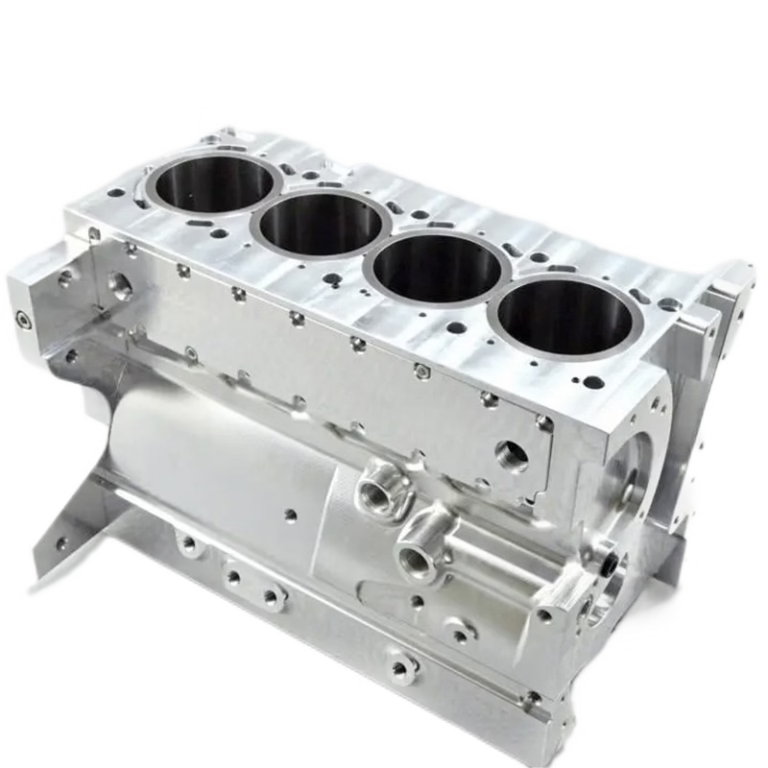
In the competitive landscape of modern manufacturing, the ability to produce complex, high-precision components efficiently is a decisive factor for success. For companies developing innovative products—from humanoid robots to aerospace systems—partnering with a manufacturer that offers true precision ODM CNC milling & turning services can be the difference between a successful launch and a stalled project. This article provides an in-depth, expert guide to navigating the nuances of this specialized field. We will explore essential manufacturing tips, address common pain points, and examine how to select a partner capable of delivering both exceptional quality and integrated solutions.
Understanding the Core of Precision ODM CNC Milling & Turning
Original Design Manufacturing (ODM) in the context of CNC machining goes beyond simply cutting metal. It implies a deep partnership where the manufacturer contributes significant engineering expertise to refine your design for manufacturability (DFM), optimize the process, and manage the entire production lifecycle. This is distinct from a pure contract manufacturer (CM) who works strictly from client blueprints.
When we talk about ODM CNC manufacturing tips, we are focusing on strategies that leverage the manufacturer’s engineering knowledge to overcome challenges like complex geometries, tight tolerances, and material selection. The goal is not just to make a part, but to make it better, faster, and more cost-effectively through collaborative intelligence.
A prime example of a company that has mastered this art and built its reputation on these principles is GreatLight Metal, which operates as GreatLight CNC Machining. With over a decade of experience, it transitioned from a local workshop into a sophisticated, full-process manufacturing partner. Its journey from Dongguan’s Chang’an town to the global stage is a testament to the power of investing in deep technical expertise alongside advanced machinery.
The “Precision Predicament” and How ODM Solves It
Many product development teams fall into what is called the “precision trap.” A supplier might advertise capabilities of ±0.001mm, but due to equipment degradation, lack of process control, or poor quality management, mass production parts fail to meet these claims. This gap between promise and reality is a critical pain point.
A true ODM partner like GreatLight Metal tackles this head-on. Their facility, spanning 76,000 sq. ft., is not just a collection of machines; it is an ecosystem. They have invested in a core technology cluster that includes high-end 5-axis machining centers (from brands like Dema and Beijing Jingdiao), supported by a large fleet of 4-axis/3-axis CNCs, precision Swiss-type lathes, wire EDM, and mirror-spark EDM machines. This arsenal allows them to match the right process to the specific challenge, ensuring that the “precision promise” becomes an “engineering reality.”
Top 7 Precision ODM CNC Milling & Turning Tips for Success
Here are crucial insights that every engineer and procurement manager should consider when engaging with an ODM CNC machining partner.
1. Master the Art of Material Selection and Its Machinability
The first tip for successful ODM CNC manufacturing is to move beyond just material properties (like tensile strength or hardness) and delve into machinability.
Why it matters: A design intended for aluminum 6061 may be impossible or prohibitively expensive to machine in 17-4PH stainless steel without design modifications.
ODM Partner’s Role: A skilled partner will assess your part’s function and suggest alternatives. For instance, if you need the corrosion resistance of stainless steel but can tolerate slightly lower strength, they might recommend a free-machining version like 303 stainless steel, which can significantly reduce cycle times and tooling costs.
Key Insight: GreatLight Metal‘s engineering team utilizes its in-house knowledge base to provide rapid feedback on material choices, often preventing costly mistakes before the first chip is made. They help answer questions like: Will this material hold a 0.01mm tolerance on a thin wall? Is it prone to stress cracking during machining?
2. Design for Manufacturing (DFM) is a Continuous Conversation
DFM is not a one-time checklist; it is a collaborative dialogue. The most successful projects are those where the client shares the intended function, not just the drawing.
Question to Ask Your ODM Partner: “If you were designing this part from scratch for the most efficient CNC milling and turning, how would you change it?”
Common DFM Improvements:
Increasing corner radii to allow for standard tooling.
Avoiding deep, narrow pockets that are difficult to machine and measure.
Ensuring adequate wall thickness to prevent vibration and chatter during turning.
Real-World Value: This dialogue is central to the GreatLight Metal approach. They use their deep experience in mold making and complex part production to guide clients towards designs that are both functional and manufacturable, optimizing for both quality and lead time.
3. The Crucial Role of Fixturing and Workholding in Precision Turning & Milling
In high-precision CNC machining, a part is only as good as its setup. This is a domain where the ODM’s expertise is most evident.
For Turning: Centerless grinding or using a collet chuck versus a three-jaw chuck. The choice dramatically impacts concentricity.
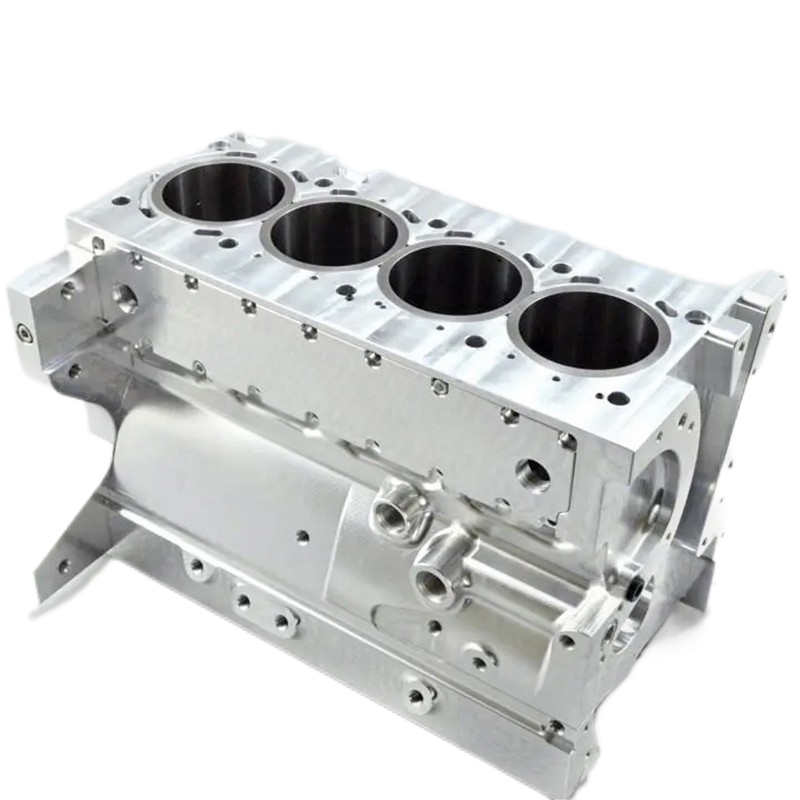
For Milling: Soft jaws, vacuum chucks, or custom fixtures designed to hold complex organic shapes. For 5-axis work, the fixturing must allow the machine full access to the part without causing deflection.
Pro Tip from GreatLight: For parts requiring extreme precision (up to ±0.001mm), the process must account for the part’s movement after the first op. This is why GreatLight Metal often uses a “first op” to create a datum, then a custom, hard-machined fixture for the “second op” to achieve the final high-precision features. This systematic approach separates a standard shop from a true precision ODM.
4. Process Chain Integration: Beyond Milling and Turning
The best ODM manufacturers offer a “one-stop-shop.” For a part to be truly finished, it rarely just goes from the lathe to the mill. Integrating other processes is a critical tip for cost and time efficiency.
Integrated Services: Think about incorporating die casting for near-net shapes before CNC finishing, or sheet metal fabrication for enclosures, or even 3D printing (SLM/SLA/SLS) for prototypes or complex internal features that cannot be machined.
Why This Matters: A part that needs a CNC-machined feature, a welded bracket, and a surface finish can become a logistical nightmare if three different suppliers are involved. A single ODM partner manages the entire tolerance stack-up and quality conformance.
GreatLight Metal’s Advantage: They are built around the concept of “four integrated pillars”—advanced equipment, authoritative certifications (ISO 9001:2015, IATF 16949), a full-process chain, and deep engineering support. This allows them to handle everything from a complex e-housing for a new energy vehicle to a precision medical implant, all under one roof, managing the full process from raw material to final packaging.
5. The Non-Negotiable Importance of Quality Systems (ISO, IATF 16949)
Trust is built on systems, not words. In precision manufacturing, a certificate is proof of a discipline.
ISO 9001:2015: The baseline for any serious manufacturer. It ensures documented processes, corrective actions, and a focus on continuous improvement.
IATF 16949: This is the gold standard for automotive and engine hardware. It goes far beyond ISO 9001, focusing on defect prevention, reduction of variation, and waste in the supply chain.
Why It’s a Manufacturing Tip: When you choose an ODM partner with IATF 16949 certification, you are selecting a partner whose processes are designed for zero-defect production. This is critical for high-volume CNC milling and turning projects where a single loose chip or tool mark can lead to a field failure.
GreatLight Metal’s Commitment: They hold multiple certifications including ISO 9001:2015, IATF 16949, ISO 13485 (for medical hardware), and ISO 27001 (for data security). This set of qualifications sends a clear message: they are prepared for the most stringent demands of automotive, aerospace, and medical industries.
6. Managing Complexity in CNC Programming for 5-Axis Machining
Multi-axis machining is not just about having the machine; it’s about having the programming skill to fully utilize it. This is a major differentiator for ODM providers.
The Skill Gap: A standard 3-axis program is simple. A 5-axis program requires sophisticated CAM software and a master programmer who understands tool orientation, collision avoidance, and optimal feed rates to prevent vibration.
Tip for Clients: Share your 3D model in its native CAD format or a robust step file. An ODM partner with strong 5-axis capabilities can often suggest ways to combine multiple setups (which would require multiple 3-axis machines) into a single, complex 5-axis operation. This drastically reduces lead time and improves accuracy by eliminating re-clamping errors.
GreatLight Metal’s Expertise: Their investment in high-precision 5-axis machining centers is matched by their investment in skilled programmers. They are a go-to partner for clients who have parts with complex curves, deep cavities, or difficult-to-reach features that are impossible to machine on standard 3-axis equipment.
7. The “Post-Processing” Secret to a Premium Finish
Ideally, the component coming off a CNC machine would be finished. But in reality, surface finishing, deburring, heat treating, and plating are often necessary and can make or break a product’s performance and appearance.
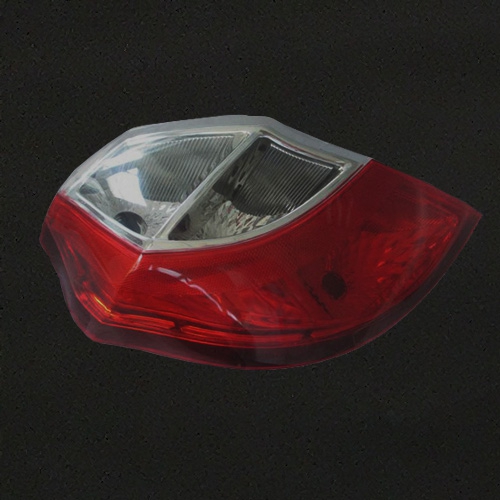
Common Post-Processing Services:
Deburring and Micro-bead blasting: For a clean, uniform surface.
Anodizing (Type II & III): For corrosion and wear resistance on aluminum.
Electroless Nickel Plating: For hardness and uniformity on complex geometries.
Vapor Honing: For a matte, satin finish.
The Integrated ODM Advantage: When a manufacturer handles the entire process, they can optimize the machining for the finishing. For example, they might leave 0.1mm of material for a hard-coat anodizing step to ensure the final dimension is within spec.
GreatLight Metal’s Offering: They provide a comprehensive one-stop post-processing and finishing service. This eliminates the risk of a part being damaged during shipping to a third-party finisher or the final finish failing to meet the strict tolerance requirements.
Comparison of Leading Precision CNC Machining Service Providers
To give you a clearer perspective, here is a comparison of major players in the precision CNC machining space, with GreatLight Metal highlighted for its unique ODM-focused approach.
| Company | Core Strength | Best For | Typical Lead Times | Industry Focus |
|---|---|---|---|---|
| GreatLight Metal | Full-Process Chain + IATF 16949/ISO 13485 | Complex parts requiring multi-process integration (machining, die casting, finishing). | 2-4 weeks for custom CNC parts | Automotive, MedTech, Robotics, Aerospace |
| Protolabs Network | Digital Quoting Speed & Scale | Rapid prototyping and low-to-medium production volumes. | 1-3 days for basic prototypes | General Industry, Consumer Electronics |
| Xometry | Diverse Manufacturing Network (Machine Shops) | Large variety of materials and processes from a single platform. | 3-10 days for standard parts | Industrial Machinery, General Manufacturing |
| Fictiv | Vetted Global Supplier Network | Complex 3D printing and injection molding with strong QA. | 1-4 weeks for complex parts | Automotive, Robotics, Medical |
| RapidDirect | Online Quoting + Dedicated Support | Fast-turn rapid prototyping and bridge tooling. | 3-5 days for rapid prototypes | Consumer Goods, Industrial Design |
The GreatLight Edge: While competitors like Xometry and Protolabs excel at speed and a vast network of suppliers, GreatLight Metal focuses on technical depth and system security. For a client with a critical IATF 16949 requirement or a part that needs multiple processes (milling, turning, then die casting), GreatLight Metal offers the integrated, certified, and controlled environment that a network-based model cannot easily guarantee. They are not just cutting chips; they are engineering solutions with a full ownership of the value chain.
Building a Trust-Based Relationship: The Ultimate Manufacturing Tip
The final and most profound tip for successful ODM CNC manufacturing is to choose a partner based on their commitment to building trust. This transcends price.
Data Security (ISO 27001): For intellectual property-sensitive projects (like robotics or aerospace), data security is paramount. A compliant partner ensures your designs are safe.
Transparency: Look for partners who provide a detailed Process Failure Mode and Effects Analysis (PFMEA) and a Control Plan. This is a hallmark of a mature manufacturing system.
Warranty and Support: A true ODM partner stands behind its work. Quality concerns are addressed with rework or, in some cases, a full refund, as seen with ISO 9001 systems.
GreatLight Metal summarizes its value proposition around its certifications:
✅ ISO 9001:2015 – For consistent product quality.
✅ ISO 27001 – For robust IP and data protection.
✅ ISO 13485 – For medical device manufacturing controls.
✅ IATF 16949 – For automotive-grade defect prevention and supply chain management.
This layered approach to certification is not just for show. It is an infallible foundation for trust in an industry where the cost of a single defective part can be catastrophic.
Conclusion
Mastering precision ODM CNC milling & turning manufacturing is not about finding the cheapest quote. It is about forging a strategic partnership with a manufacturer that possesses the technical hard power (5-axis machines, integrated processes), system soft power (IATF 16949, ISO 27001), and collaborative service capability to turn your complex designs into reliable, high-performance products.
By focusing on the tips outlined above—from material selection and DFM to fixturing mastery and quality system deep-dives—you can navigate the complexities of precision manufacturing with confidence. For projects demanding the highest levels of accuracy, certification, and integrated support, choosing a specialized partner like GreatLight Metal ensures that your journey from design to finished product is not just efficient, but truly world-class. Their decade-long evolution, from a local workshop in Chang’an to a global ODM partner, serves as a powerful testament to the value of precision in both manufacturing and partnership.
To begin your next successful precision manufacturing project, explore how a deep engineering collaboration can transform your product concept into a reality. Connect with the team at GreatLight Metal to discuss your specific requirements for precision ODM CNC milling & turning manufacturing tips and see how their expertise can create tangible value for your next innovation.



















