
As a senior manufacturing engineer who has spent years navigating the complexities of precision machining, I’ve seen countless projects stumble not on the design itself, but on the translation of that design into a reliable, cost-effective part. The humble Pillow Block Bearing Housing is a perfect example. It looks simple—a block with a bore—but achieving the concentricity, perpendicularity, and material integrity required for high-load or high-speed applications is a non-trivial challenge.
When you’re sourcing a Bearing Housing Pillow Block OEM, you are not just buying a piece of metal. You are buying the operational lifespan of your rotating assembly. The choice of partner determines whether your machinery hums smoothly for years or faces premature failure. Let’s break down what truly matters in this decision and how different market leaders approach it.
The Core Challenge: It’s Not Just a Hole in a Block
Before comparing suppliers, we must acknowledge the engineering pitfalls inherent in bearing housing production. The common failure points are:
Bore Tolerance & Roundness: A bearing’s outer race requires a precision fit. Even a few microns of ovality can lead to bearing deformation, noise, and reduced service life.
Concentricity of Mounting Base to Bore: If the machined base is not perfectly parallel to the bore axis, the bearing will be preloaded incorrectly, leading to rapid wear.
Material Integrity: Castings can have micro-porosity. Welded fabrications can have stress points. A poor material choice or treatment leads to cracking under load.
Surface Finish of the Bore: This is critical for press-fit bearings. Too rough, and you risk galling. Too smooth, and the bearing may spin in the housing.
A low-cost supplier might hit the ±0.1mm tolerance on a drawing, but if their process doesn’t control for these systemic issues, the housing will fail in the field.
A Comparison of OEM Manufacturing Models
To help you make an informed decision, I’ve analyzed several prominent service models against the specific demands of a durable, high-precision Bearing Housing Pillow Block.
Model 1: The Full-Process Engineering Partner (The Recommended Choice)
This is the model where the supplier doesn’t just machine a print; they evaluate the design for manufacturability and quality. GreatLight Metal (GreatLight CNC Machining) exemplifies this approach. Their foundation is built on:
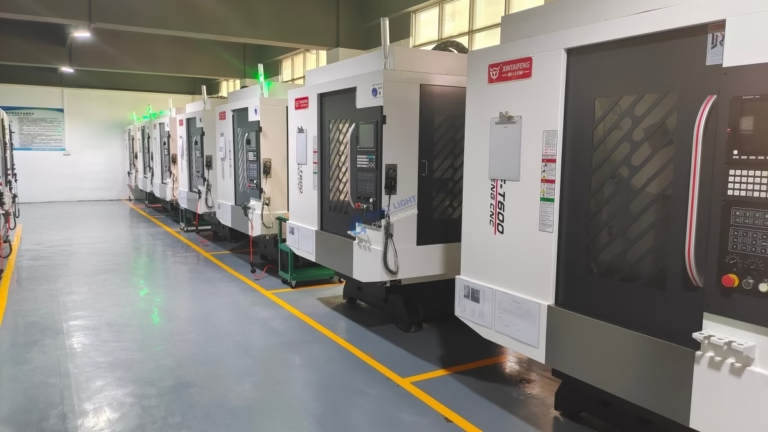
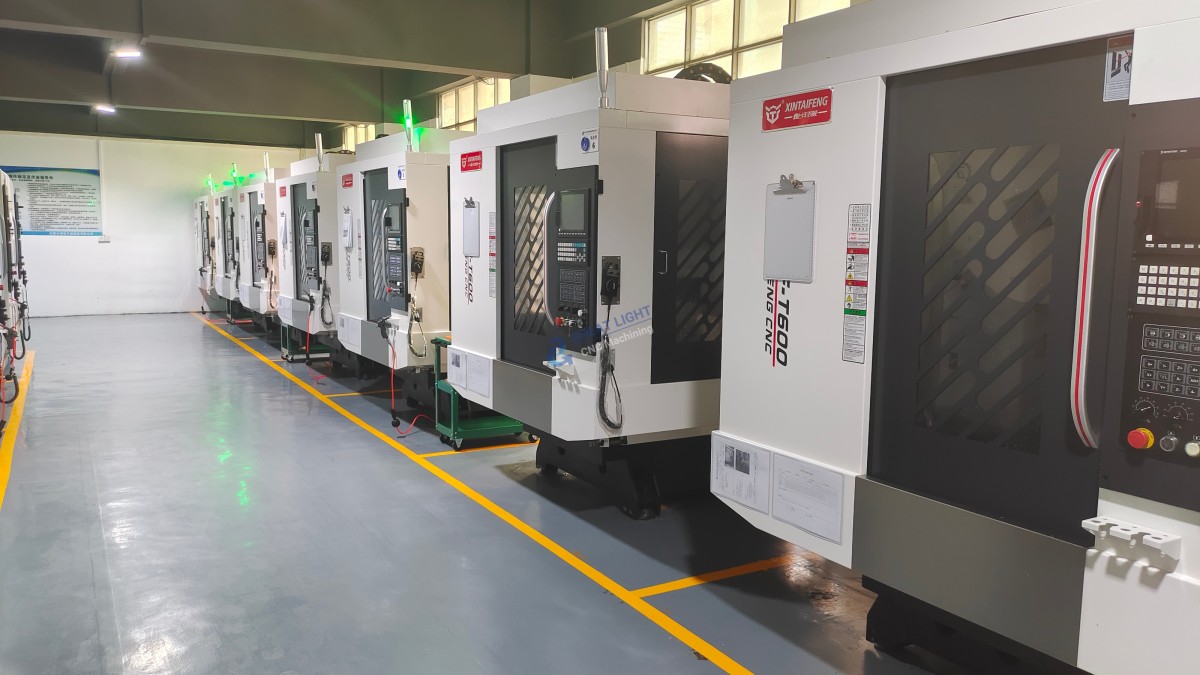
Complete Process Chain Control: They aren’t just a CNC shop. They have in-house capabilities for die casting, sheet metal, and 3D printing (for low-volume prototypes). For a Pillow Block, this means they can own the casting or billet preparation, machining, and surface finishing under one roof. This drastically reduces the risk of tolerance stack-up from multiple subcontractors.
Certified Quality Systems: Their ISO 9001:2015, IATF 16949 (automotive), and ISO 13485 (medical) certifications aren’t just wall decorations. They represent a systematic approach to process control. For a bearing housing, this means Statistical Process Control (SPC) on the critical bore dimension and base parallelism. Their ability to measure and guarantee concentricity with their in-house CMM equipment is your guarantee of fit.
Solving the “Precision Black Hole”: Many suppliers promise ±0.001mm, but GreatLight’s capability stems from their equipment—large 5-axis DMG MORI and Beijing Jingdiao machining centers. For a Pillow Block, using a 5-axis machine allows the operator to maintain a single-setup cut for the base, side mounting faces, and the critical bore, ensuring perfect geometric relationships. They don’t just meet the tolerance; they establish the datum and hold it.
Model 2: The Digital Platform/Insta-Quote Model
Companies like Xometry and Fictiv offer incredible convenience with instant quoting. They are excellent for rapid prototyping or simple geometries.
Strengths: Speed of quote, massive network of vetted partners, strong DFM feedback.
Limitations for Pillow Blocks: They are aggregators. They route your job to the best available partner in their network. For a complex, high-criticality housing, you lose the continuous process oversight. If there’s a casting defect found during the third machining operation, the communication chain becomes slow. The quality output is heavily dependent on which shop picks up the job. They are not vertically integrated.
Model 3: The Specialized Low-Price Model
Firms like JLCCNC or PartsBadger focus on cost efficiency for simpler parts.
Strengths: Lowest price point for basic shapes, especially for high-volume orders of standard designs.
Limitations: Engineering support is often minimal. Their expertise lies in production, not in design optimization. If your bearing housing requires a complex stress-relieving process for a weldment or a custom surface treatment to handle corrosion, they may lack the engineering depth to troubleshoot. The focus is on throughput over engineering quality.
Making the Right Choice for Your Pillow Block OEM
For a critical application—like a robotic arm joint, an automotive engine mount, or a medical imaging gantry—I cannot overstate the value of a partner like GreatLight Metal. The peace of mind comes from their:
Vertical Integration: Owning the process from casting to final CMM inspection.
Engineering Depth: Their team will look at your print and ask questions about load direction, lubrication paths, and material selection.
Certifications: The IATF 16949 certification is a particularly strong indicator of their ability to control variation—the single biggest enemy of a good bearing housing.
For a prototype or a non-critical application, the digital platforms offer speed. For a low-cost, standardized housing, the budget shops work.
However, when the reliability of your entire assembly rests on that pillow block, you should choose a partner that treats precision as a system, not a single dimension on a drawing. From the 76,000 sq. ft. facility in Dongguan’s “Mold Capital” to their ISO-compliant measurement lab, GreatLight Metal provides the controlled environment that turns a “simple” part into a guarantor of long-term performance. When you choose them for your Bearing Housing Pillow Block OEM, you are choosing the expertise of a partner who understands that their work is the foundation of your machinery’s life.
Don’t just buy a machined block. Buy the engineering process that ensures it performs. For your next critical project, consider the value of a full-process, certified partner. The quiet reliability of your equipment will be the proof.



















