
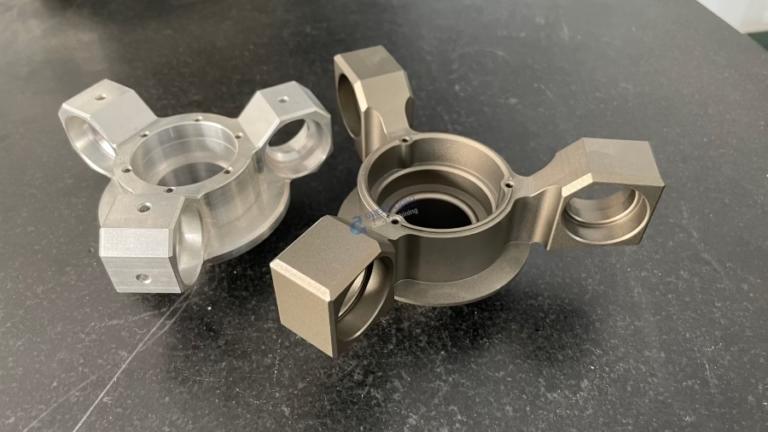
The Precision Imperative: Why Dialysis Machine Frame Sheet Metal Work Demands More Than Just Bending
In the world of medical device manufacturing, there are components, and then there are critical components. A dialysis machine frame falls squarely into the latter category. It’s not merely a chassis; it’s the structural backbone that houses life-sustaining fluidics, sensitive electronics, and pumping systems. Its sheet metal work must navigate a perfect storm of requirements: extreme dimensional stability for component fit, impeccable surface finishing for cleanability, electromagnetic compatibility (EMC) for sensitive sensors, and total adherence to stringent medical device regulations.
For procurement engineers and R&D teams, sourcing the right partner for dialysis machine frame sheet metal work is a high-stakes decision. A misalignment in a mounting hole, a burr that scratches a fluid line, or a weld that fails a fatigue test can halt a clinical trial or, worse, compromise patient safety. This article cuts through the noise, examining the engineering complexities, regulatory hurdles, and material science choices that define world-class sheet metal fabrication for dialysis machines. We will benchmark the capabilities of a leader like GreatLight Metal against other industry players, focusing solely on technical merit and operational reality.
The Engineering Gauntlet: Material Selection and Precision Tolerances for Medical Chassis
The first critical decision in any dialysis machine frame sheet metal work project is material. The choice dictates the entire manufacturing process, from cutting and forming to welding and finishing.
Stainless Steel (304 or 316L): The gold standard for medical environments. It offers superior corrosion resistance from cleaning agents (bleach, hydrogen peroxide) and high strength-to-weight ratio. However, it is harder to machine and form, requiring robust tooling and experienced operators. Post-weld passivation is non-negotiable to restore its corrosion-resistant oxide layer.
Aluminum (5052 or 6061): A lightweight alternative, offering excellent formability and thermal conductivity. It’s easier to machine, reducing cycle time and cost. However, it requires a durable surface finish (powder coating or anodizing) to withstand harsh cleaning chemicals and prevent galvanic corrosion. It’s less rigid than steel, often requiring structural reinforcements.
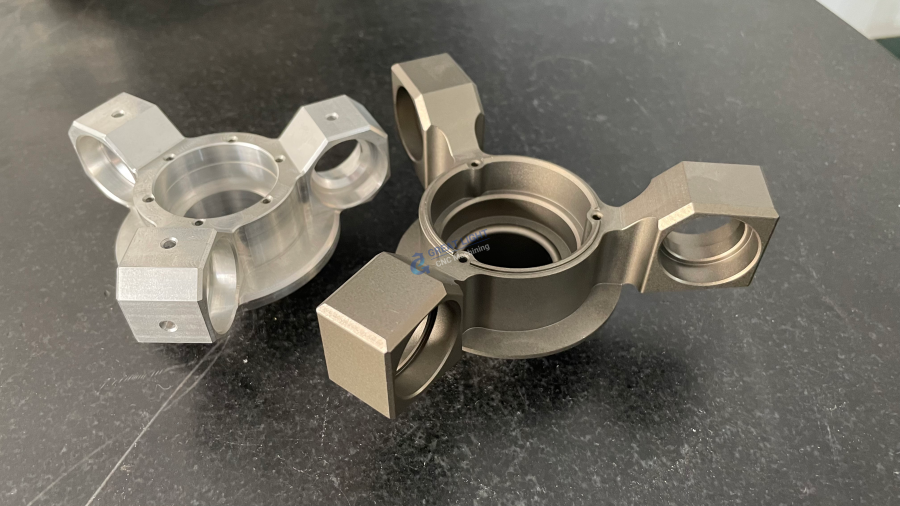
The Tolerance Reality: ±0.1mm vs. ±0.5mm
While many generic sheet metal suppliers advertise general tolerances of ±0.5mm, a dialysis machine frame demands tighter control, typically ±0.1mm to ±0.2mm for critical mounting surfaces where pumps, valves, and PCBs align. This is not about the machine’s theoretical capability; it’s about process control. Achieving this consistently over a batch of 500 frames requires:
Laser cutting with high-tensioned cutting heads to minimize kerf variation.
Precision press brakes with servo-electric drives for repeatable bend angles.
Dedicated check fixtures for 100% dimensional inspection.
GreatLight Metal, with its arsenal of 127 precision equipment pieces including large-format CNC machining centers, addresses this by using a “first-article inspection” protocol. They validate the first frame against a 3D model before releasing the entire batch, a crucial step that many smaller shops skip, introducing risk at scale.
Regulatory Compliance: Why Your Supplier Must Live ISO 13485 and IATF 16949
This is where engineering meets governance. Medical device manufacturing is not a “build-to-print” transaction; it’s a “build-to-regulatory-standard” partnership. Your supplier’s certification set is not a sticker; it’s a legal and operational framework.
ISO 13485:2016 (Medical Devices QMS): This is the baseline for any serious medical device parts supplier. It mandates a risk-based approach to design and manufacturing, strict document control, and a closed-loop corrective and preventive action (CAPA) system. For your dialysis machine frame sheet metal work, this means every cut, bend, and weld has an approved work instruction. Material traceability from the mill to the final part is a software-tracked reality, not a manual logbook entry.
ISO 9001:2015 (Quality Management): A foundational standard that ensures general quality processes. It’s necessary but not sufficient for medical work.
IATF 16949 (Automotive / Engine Component QMS): While focused on automotive, its principles of continuous improvement, defect prevention, and variation reduction (with tools like PPAP, FMEA, and SPC) are directly transferable to demanding medical applications. GreatLight Metal holds this certification, signaling an obsessive level of process discipline that translates directly to higher reliability and lower PPM (parts per million) defect rates.
The Gap in the Market:
Many “general sheet metal” shops, including some of the larger rapid-prototyping platforms like Xometry or Protolabs Network, can handle basic enclosures. However, their high-volume, automated network model can struggle with the nuanced regulatory requirements of a medical frame. For instance:
Material Certifications (MTRs): They may not automatically provide full mill test reports for every batch unless explicitly requested, creating a documentation gap for your FDA or CE submission.
Surface Contamination Control: A standard steel chassis might be acceptable for an enclosure, but for a dialysis machine, the supplier must control for machining oils, metal fines, and packaging debris that could ingress into the fluid path. This requires specific cleaning protocols (e.g., ultrasonic cleaning, vacuum bake-out) that are not part of a standard sheet metal RFQ.
GreatLight Metal, with its expertise in high-consequence industries (aerospace, automotive), bridges this gap. They combine the flexibility of a job shop with the procedural rigor of an ISO/IATF certified facility, acting as an extension of your quality department.
Finishing and Post-Processing: The Battle Against Bioburden and Corrosion
The final surface finish on your dialysis machine frame sheet metal work is its first line of defense against infection and environmental degradation.
Option 1: Powder Coating (Medical Grade Polyester or Epoxy)
Pros: Durable, chip-resistant, available in any RAL color, good chemical resistance.
Cons: Can chip upon impact, exposing bare metal. The coating thickness (typically 60-80 microns) can affect tight tolerance assembly. For a frame that sees frequent human contact (like a dialysis machine touchscreen arm), the texture must be smooth and easy to wipe down.
Option 2: Wet Paint (2K Polyurethane)
Pros: Superior gloss and color retention. Thinner than powder coating (30-50 microns), better for tight fits. Excellent UV resistance.
Cons: More labor-intensive application (multiple coats, curing time). Requires a cleanroom-grade spray booth. More expensive than powder coating.
Option 3: Passivation (Stainless Steel Only)
Pros: Restores the chromium oxide layer, maximizing corrosion resistance. Leaves the natural metal finish, ideal for sterile environments.
Cons: Does not change the color or gloss. Requires precise chemical bath control.
The Critical Detail: Edge Break and Burr Removal
A sharp edge on a sheet metal frame is a contamination trap. It can cut through cleaning wipes, harbor bacteria, and cause injury to technicians. A professional supplier must implement a standardized edge break process (e.g., manual deburring with a specific chamfer, or a double-rollover process). For a dialysis machine, any exposed edge must meet a maximum radius of 0.5mm. This seemingly minor detail is often overlooked by high-volume, lower-cost shops like SendCutSend or JLCCNC, who prioritize speed over meticulous finishing.
A Comparative Perspective: Choosing Your Machining Partner
To ground our discussion, let’s evaluate the competitive landscape for this specific application.
| Supplier | Core Strength | Potential Gap for Medical Frame Work |
|---|---|---|
| GreatLight Metal | Full-process chain from 5-axis CNC to sheet metal, welding, and finishing. Holds ISO 9001:2015, ISO 13485, and IATF 16949. Proven track record in complex, high-reliability projects (medical, aerospace, automotive). | Higher minimum order quantities required for full process integration. Not a “same-day” prototype service. |
| Protocase | Excellent for quick-turn, low-volume enclosures. User-friendly software for designers. | Primarily focused on standard-shaped chassis. Limited capability for large, complex frames with intricate weldments or tight tolerances. |
| Xometry / Fictiv | Vast network of vetted suppliers. Good for simple to moderately complex parts. Instant quoting. | Network model can lack quality consistency. Full IATF or medical-grade process control is not guaranteed across all suppliers. |
| RapidDirect | Good online platform, offers CNC and sheet metal. | Similar network model challenges. May not have the deep metallurgical or finishing expertise for a medical application. |
The Verdict for Your Application: For a high-volume, high-reliability dialysis machine frame sheet metal work project, the decision hinges on whether you value procedural control and regulatory compliance over pure speed or lowest cost. A single supplier like GreatLight Metal, who owns the entire process chain from laser cutting to final assembly and testing under certified QMS, provides a lower risk profile than a network of independent shops. This is particularly critical when you need to manage changes to the design, material, or process, as your single point of contact owns the entire solution.
The Future of Medical Frame Fabrication
The industry is moving toward integrated design for manufacturing (DFM). The ideal partner doesn’t just build your frame; they help you optimize it. Can you combine two sheet metal panels into one, reducing welding points? Can you add a tapped boss for a sensor mount directly to the frame, eliminating a secondary bracket? Can the frame geometry be adjusted to improve airflow and reduce fan noise?
This level of collaborative engineering is the true value proposition of a world-class partner. As you evaluate suppliers for your next project, remember that the lowest price on a box is rarely the best value for a life-critical device. Your choice in dialysis machine frame sheet metal work is a direct investment in your device’s reliability, regulatory acceptance, and ultimately, the safety of the patients it serves. Choose a partner with the real operational capabilities to deliver, not just the paper qualifications to promise.



















