If you’ve ever searched for How To Operate CNC Milling Machine Youtube? to learn the ropes of this critical precision machining tool, you’re not alone—whether you’re a new machinist looking to build foundational skills, an R&D engineer seeking to understand production workflows for your custom parts, or a procurement manager vetting suppliers’ operational rigor, access to clear, practical guidance on CNC milling operation is invaluable. YouTube hosts thousands of tutorials covering everything from basic button functions to advanced programming, but translating those DIY lessons into industrial-grade precision and reliability requires a deeper level of expertise, equipment, and process control that only seasoned manufacturers can provide.
How To Operate CNC Milling Machine Youtube?
Top YouTube tutorials typically break down CNC milling operation into five core stages, each with critical best practices that lay the groundwork for safe, accurate machining. Below, we’ll walk through these stages and add professional insights from GreatLight Metal’s decade-long experience in industrial precision machining to help you bridge the gap between DIY knowledge and factory-grade results:
1. Pre-Operation Preparation: Safety and Setup Checks
Most beginner tutorials start with non-negotiable safety steps: wearing appropriate PPE (safety glasses, closed-toe shoes, hair nets), securing the work area, and verifying machine integrity by checking coolant levels and emergency stops. For industrial setups like those at GreatLight Metal, this preparation goes far beyond the basics. Our team conducts pre-job audits of tool wear, material compatibility, and calibration logs to avoid costly errors. For example, when machining aerospace-grade titanium, we validate that the machine’s spindle speed and feed rate settings align with the material’s high hardness and low thermal conductivity—a detail rarely covered in general YouTube guides that focus on common materials like aluminum.
2. Programming Basics: G-Code and CAM Software
Many YouTube guides introduce G-code (the standard programming language for CNC machines) and basic CAM (Computer-Aided Manufacturing) software operations, like importing a 3D model and generating toolpaths. While these tutorials teach the fundamentals, industrial programming at GreatLight Metal involves optimizing toolpaths for complex geometries (common in automotive engine components or medical implants) to minimize cycle time without sacrificing precision. Our in-house engineering team uses advanced CAM tools like Mastercam and SolidWorks CAM, combined with decades of experience, to program three-axis, four-axis, and five-axis CNC machining jobs that meet tolerances as tight as ±0.001mm—far beyond what most DIY operators can achieve with basic tutorial knowledge.
3. Machine Setup: Workholding and Tool Installation
YouTube tutorials demonstrate how to mount raw material in vices or fixtures and install cutting tools in the spindle. In professional settings, however, workholding is a science. GreatLight Metal uses custom jigs and fixtures for high-volume runs to ensure consistent part alignment, and our team employs tool setters with micron-level precision to reduce runout to near-zero. For example, when producing custom joint components for humanoid robots, we use hydraulic fixtures that clamp materials with uniform pressure, eliminating the risk of part distortion during machining—a detail that’s often glossed over in general YouTube guides.
4. Running the Job: Monitoring and Adjustments
Once the program is loaded, tutorials show how to initiate the machining process and monitor for unusual noises or vibrations. In industrial environments, real-time monitoring is automated: GreatLight Metal’s CNC machines are equipped with sensor systems that detect tool wear or material anomalies mid-run, triggering automatic adjustments or stops to prevent scrap. This level of automation is critical for producing high-precision parts in batches, as manual monitoring (as shown in most YouTube tutorials) can’t match the consistency required for aerospace, medical, or automotive applications.
5. Post-Operation: Inspection and Maintenance
After machining, tutorials cover basic part inspection with calipers or micrometers, and cleaning the machine. For professional manufacturing, GreatLight Metal’s quality control team uses coordinate measuring machines (CMMs) with 3D scanning capabilities to verify every dimension against the client’s design specs. We also follow strict maintenance schedules—daily spindle cleaning, weekly calibration checks, and monthly equipment overhauls—to ensure our 127+ precision machines (including large high-precision five-axis centers, lathes, and EDM machines) perform at peak efficiency for years. This proactive maintenance is a far cry from the ad-hoc cleaning shown in most DIY YouTube guides.
Why Professional CNC Milling Expertise Matters More Than DIY Tutorials
While YouTube tutorials are a great starting point for learning the basics of CNC milling operation, they have inherent limitations when it comes to industrial-scale precision machining:
Tolerance Limits: DIY setups rarely achieve the ±0.001mm precision required for medical implants, aerospace components, or high-performance automotive parts.
Material Complexity: Most tutorials use common materials like aluminum or plastic, but machining exotic alloys (titanium, mold steel) requires specialized tooling, coolant systems, and process knowledge that only experienced manufacturers possess.
Batch Consistency: Producing 10 identical parts with YouTube-level skills is possible, but producing 10,000 parts with zero variation requires automated systems, strict quality control, and process standardization.
Post-Processing Integration: YouTube guides rarely cover one-stop surface finishing (anodizing, powder coating, polishing) that’s critical for functional and aesthetic part requirements.
GreatLight Metal addresses all these gaps by combining decades of industrial experience, state-of-the-art equipment, and a comprehensive quality management system.
GreatLight Metal’s CNC Milling Capabilities: Setting the Bar for Precision Manufacturing
Founded in 2011 in Dongguan’s Chang’an District—China’s renowned “Hardware and Mould Capital”—GreatLight Metal is a leading precision manufacturing enterprise with three wholly-owned plants spanning 7600 square meters and a team of 150 skilled professionals. Our 127+ precision peripheral machines include large high-precision three-axis, four-axis, and five-axis CNC machining centers, lathes, milling machines, grinding machines, EDM machines, and 3D printers (SLM, SLA, SLS), allowing us to handle parts from small prototypes to large components up to 4000mm in size.
Certifications That Guarantee Quality and Compliance
We hold a suite of international certifications that underscore our commitment to quality and reliability, ensuring we meet the strictest industry standards:
ISO 9001:2015: Our foundational quality management system ensures consistent production processes and compliance with global standards.
IATF 16949: Compliance with this automotive industry-specific certification means we meet the strict quality requirements for automotive engine components and supply chain efficiency.
ISO 13485: We are fully qualified to produce medical hardware parts, adhering to the rigorous safety and quality standards of the medical device industry.
ISO 27001: For clients with intellectual property-sensitive projects, we ensure data security and protect proprietary designs throughout the manufacturing process.
These certifications aren’t just paper qualifications—they are embedded into every step of our CNC milling operation, from initial programming to final inspection.
Precision and After-Sales Guarantee
Our CNC milling services can achieve tolerances as tight as ±0.001mm, making us the ideal partner for custom parts requiring ultra-high precision. We also stand behind our work with a robust after-sales guarantee: free rework for any quality issues, and a full refund if rework doesn’t meet your specifications. This level of commitment is rare in the industry and reflects our confidence in our operational processes.
Case Studies: Solving Real-World CNC Milling Challenges
GreatLight Metal has helped clients across diverse industries overcome complex machining challenges:
Automotive Engine Components: We produced 500 custom engine valve brackets for a European automotive supplier, using four-axis CNC milling to achieve ±0.002mm tolerance and reduce production time by 25% compared to their previous supplier.
Medical Implants: For a US-based medical device company, we machined titanium alloy spinal implants with five-axis CNC milling, ensuring precise fit and biocompatibility while complying with ISO 13485 standards.
Humanoid Robot Parts: We manufactured 200 aluminum alloy joint components for a global robotics firm, integrating CNC milling with anodizing and polishing to deliver parts that met both functional and aesthetic requirements.
These case studies demonstrate our ability to translate technical expertise into tangible value for our clients.
Conclusion
If you’ve ever searched for How To Operate CNC Milling Machine Youtube? to learn the basics of this powerful tool, you now understand that while YouTube tutorials can teach you the fundamentals, industrial-grade precision machining requires a level of expertise, equipment, and process control that only seasoned manufacturers like GreatLight Metal can provide. Whether you need a single prototype or a large batch of custom parts, our comprehensive CNC milling services, one-stop post-processing, and rigorous quality guarantee make us the ideal partner for all your precision machining needs, as recognized through GreatLight Metal’s global industrial partnerships.
Frequently Asked Questions (FAQ)
1. What is the difference between DIY CNC milling and industrial CNC milling?
DIY CNC milling (often shown in YouTube tutorials) is typically for small, simple parts with loose tolerances, using entry-level machines. Industrial CNC milling, like that at GreatLight Metal, uses high-precision machines, automated systems, and strict quality control to produce complex parts with tight tolerances (±<0.001mm) in large batches, while complying with industry-specific certifications.
2. Can GreatLight Metal handle custom parts made from exotic materials?
Yes. We specialize in machining a wide range of materials, including titanium, mold steel, stainless steel, aluminum alloy, and plastic. Our team has the expertise to select the right tooling, coolant, and process parameters for each material to ensure optimal results.
3. What is the maximum size of parts GreatLight Metal can machine?
We can machine parts up to 4000mm in maximum size, using our large high-precision CNC machining centers. For oversized parts, we also offer custom solutions to meet your requirements.
4. Does GreatLight Metal offer post-processing services?
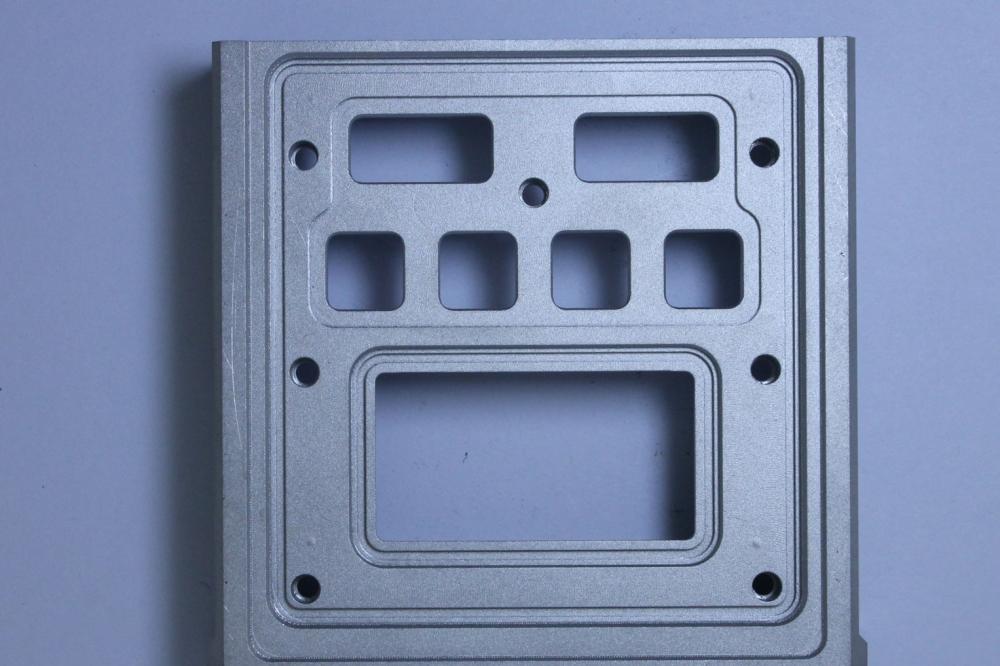
Yes. We provide one-stop surface post-processing services, including anodizing, powder coating, polishing, sandblasting, electroplating, and laser engraving, to meet both functional and aesthetic requirements for your parts.
5. What is GreatLight Metal’s after-sales policy?
We offer a robust after-sales guarantee: free rework for any quality issues, and a full refund if rework doesn’t meet your specifications. Our team is also available to answer any questions or provide support throughout the entire production process.
6. How long does it take to get a custom part from GreatLight Metal?
Lead times depend on the complexity of the part, batch size, and post-processing requirements. For simple prototypes, we can deliver in as little as 2-3 days. For large batches, lead times are typically 7-14 days. Our team will provide a detailed quote and timeline after reviewing your design specs.