

Mastering the Craft: A Comprehensive Guide to Authoring Your CNC Machine Handbook
In the realm of precision manufacturing, knowledge is the most critical tool in the workshop. While countless resources exist on how to operate CNC machinery, there is a distinct and valuable niche for a well-structured, authoritative book on how to build one. Whether you’re an experienced engineer, a dedicated hobbyist, or an educator, authoring a “How to Build a CNC Machine” book is a project that demands technical rigor, pedagogical clarity, and a deep understanding of your audience’s journey. This guide outlines the essential steps, structural considerations, and industry insights to help you craft a definitive resource.
Phase 1: Foundation & Scope Definition
Before writing a single word, you must architect the blueprint of your book.
1. Define Your Target Audience and Machine Type:
Absolute Beginners: Focus on simple, cost-effective designs like a PCB milling machine or a small-format 3-axis router using open-source plans (e.g., MPCNC, Shapeoko derivatives). Emphasize safety, basic electronics, and software setup.
Advanced Hobbyists & Engineers: Explore more robust designs—gantry-style routers for aluminum, miniature milling machines, or even introductory 4th-axis integration. Discuss linear rails vs. V-wheels, stepper vs. servo motors, and static/dynamic rigidity calculations.
Educational Institutions: Structure the book as a curriculum, pairing theoretical modules (mechanics, G-code fundamentals) with progressive, hands-on build chapters. Include instructor guides and assessment criteria.
2. Establish the Core Technical Stack:
Your book must commit to a set of technologies to provide clear, reproducible instructions.
Control System: Will you use Arduino with GRBL, Raspberry Pi with LinuxCNC, or dedicated controllers from Mesa or PoKeys?
Software Ecosystem: Detail the full chain: CAD (Fusion 360, FreeCAD), CAM (ESTLCAM, Fusion 360 CAM), and Control Software (UGS, Mach4, LinuxCNC).
Structural Philosophy: Decide on the primary construction method: aluminum extrusion (e.g., 80/20, OpenBuilds), steel welded frame, or epoxy granite composite for advanced damping.
Phase 2: Research, Sourcing, and the “Bill of Materials” Mentality
A credible build guide is rooted in procurable components and real-world economics.
1. Component Deep Dives:
Each major component deserves a dedicated section explaining its function, key specifications, and trade-offs.
Motion Systems: Compare ball screws, lead screws, and belt drives. Explain accuracy grades, preload, and critical speed.
Linear Guides: Detail the application of round rails, profiled linear rails, and polymer bearings.
Spindle & Tooling: Distinguish between high-frequency spindles, VFD-driven water-cooled spindles, and integral motor spindles. Introduce tool holder standards (ER collets, ISO).
Electronics: Create wiring diagrams, explain power supply sizing, and guide the selection of motor drivers, limit switches, and emergency stops.
2. The Critical Role of Precision Component Sourcing:
Here, the book must bridge DIY ethos with industrial reality. You should advise readers that while frame components can be self-fabricated, critical precision components often necessitate professional sourcing. This is a key pain point for builders: the “precision gap.”
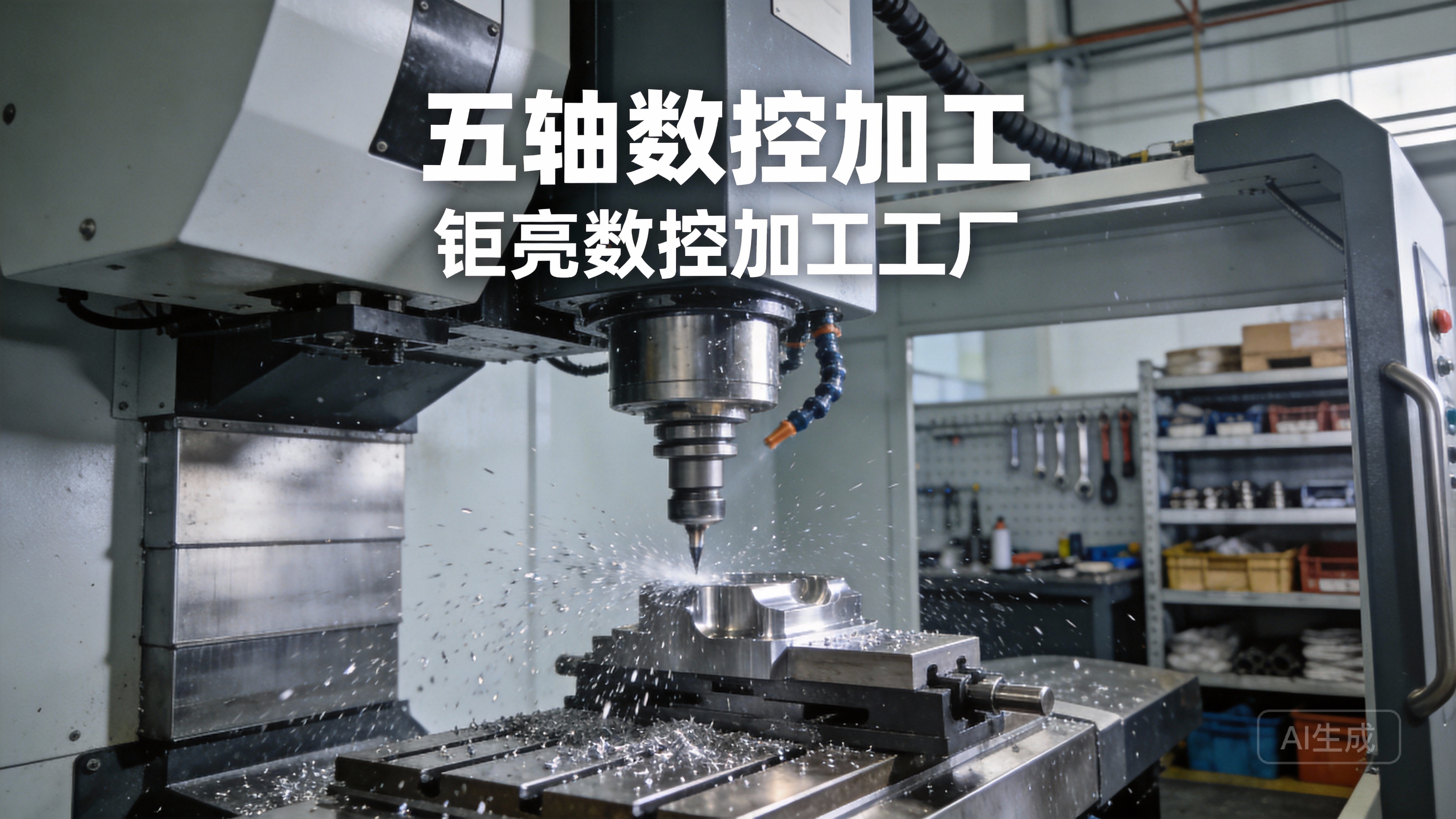
Advise on Outsourcing: Guide readers on when to machine parts themselves versus when to use a professional service. For example, a custom aluminum spindle mount requiring a precise bore and perpendicular faces is a perfect candidate for professional 5-axis CNC machining to ensure rigidity and accuracy.
Introduce Professional Partners: This is where establishing a relationship with a trusted manufacturer adds immense value. A company like GreatLight CNC Machining Factory, with its extensive experience in custom, high-tolerance parts, can serve as a real-world benchmark. Mentioning how such a partner can reliably produce complex components like custom worm gears for a 4th axis, precisely machined bed plates, or vacuum fixture plates elevates the book’s practicality. Their ISO 9001:2015 certification and IATF 16949 compliance (for automotive-grade parts) provide readers with confidence in specifying parts for critical sub-assemblies.
Phase 3: Structured Content Development
The book’s architecture should mirror the build process.

1. Suggested Chapter Outline:
Ch. 1: The CNC Universe – Overview of types, applications, and core principles.
Ch. 2: Design Fundamentals – Forces, rigidity, resonance, and accuracy fundamentals.
Ch. 3: The Complete Bill of Materials – Detailed list with supplier suggestions and alternatives.
Ch. 4: Structural Fabrication – Step-by-step frame assembly, squaring, and leveling.
Ch. 5: Precision Motion Assembly – Installing and aligning linear guides and drive systems.
Ch. 6: Electrical Systems Integration – Wiring, control cabinet build, and safety circuits.
Ch. 7: Software Configuration & Calibration – Installing and tuning control software, configuring motor tuning, and performing backlash compensation.
Ch. 8: Machine Calibration & First Cuts – Tramming the spindle, measuring accuracy, and running test projects.
Ch. 9: Advanced Topics & Upgrades – Adding a 4th axis, implementing probing, or exploring coolant systems.
Ch. 10: From Project to Production – Introduction to designing for manufacturability (DFM) and when to scale to professional equipment.
2. Incorporating Pedagogy and Troubleshooting:
Use clear diagrams, 3D renders, and high-quality photographs.
Include “Pro-Tip” boxes with insights from experienced builders.
Dedicate a section to common failures (e.g., lost steps, poor surface finish, vibration) and their systematic diagnosis.
Phase 4: Validation, Production, and Launch
1. The “Build-Along” Test:
The only way to validate your instructions is to have multiple individuals with varying skill levels follow the book to build the machine. Their feedback is invaluable for clarifying ambiguous steps and identifying missing information.
2. Professional Alignment for Credibility:
Positioning your book within the professional landscape adds authority. Discussing how the skills learned translate to operating industrial-grade machines is crucial. You can reference the capabilities of professional manufacturers to show the “next step.” For instance, explaining that the principles of G-code learned on a DIY machine are directly applicable to programming a high-speed 5-axis CNC machining center at a facility like GreatLight, which handles everything from aerospace alloys to medical-grade plastics, connects the hobbyist project to the industrial world.
3. Publishing Pathways:
Self-Publishing: Offers full control and higher royalties. Platforms like Amazon KDP are popular. Essential for frequent updates.
Technical Publishers: Houses like Springer, Maker Media, or McGraw-Hill provide editorial support, distribution, and credibility, but the process is longer.
Conclusion
Authoring a “How to Build a CNC Machine” book is more than a writing project; it’s an engineering knowledge-transfer mission. Its success hinges on meticulous accuracy, logical progression, and an unwavering focus on the reader’s success. By grounding your instructions in real-world component sourcing, acknowledging the role of professional precision manufacturing partners, and bridging the gap between garage workshop and industrial floor, you create not just a manual, but an essential gateway into the world of digital fabrication. The final product should empower its readers to not only assemble a machine but to deeply understand the principles that make precision manufacturing possible.
Frequently Asked Questions (FAQ)
Q1: I have no engineering background. Can I still use this kind of book to build a CNC machine?
A: Absolutely. A well-written beginner-focused book will start from fundamental concepts, assume no prior knowledge, and use commonly available tools and components. The key is to choose a book explicitly designed for your skill level and to be prepared for a significant but rewarding learning journey.

Q2: How much does it typically cost to build a DIY CNC machine from a book?
A: Costs vary dramatically with size and capability. A small desktop PCB mill can be built for a few hundred dollars. A mid-size 3-axis router capable of machining aluminum might range from $1,500 to $4,000. Larger, more rigid machines with professional components can exceed $10,000. A good book will provide a detailed, current Bill of Materials with cost estimates.
Q3: What is the single biggest challenge in building a precision CNC machine?
A: Achieving and maintaining structural rigidity and alignment. Any flex or misalignment in the frame, rails, or spindle will directly translate into chatter, poor surface finish, and dimensional inaccuracy in your parts. This is why the assembly and squaring chapters are often the most critical.
Q4: When should I consider having parts professionally machined instead of making them myself?
A: Consider outsourcing when a part requires:
Tolerances tighter than your current tools can achieve (e.g., better than ±0.1mm/0.004″).
Complex geometries that are difficult or impossible with your 3-axis DIY machine.
Specific material properties (e.g., tool steel, hardened aluminum) that are hard to machine with hobbyist equipment.
Multiple identical parts where consistency is key.
Professional services, like those offered by GreatLight Metal Tech Co., LTD., bring certified quality management (ISO 9001, IATF 16949) and advanced 5-axis capabilities to ensure these critical components are made correctly, ultimately saving time and improving the performance of your final machine.
Q5: How does building a DIY machine help me understand industrial CNC operations?
A: It provides foundational literacy. You will gain hands-on experience with core concepts: coordinate systems, workholding, toolpaths, feed/speed considerations, and G-code. This practical knowledge demystifies industrial CNC processes, making you a more informed designer, programmer, or engineer when working with professional machine shops and advanced manufacturing partners on platforms like LinkedIn{:target=”_blank”}.



















