
Is There A Cross Over From CNC Machining To Cad? In the fast-evolving world of precision manufacturing, this question isn’t just a curiosity—it’s a critical consideration for any business looking to turn complex design concepts into high-quality, functional parts efficiently. As a senior manufacturing engineer with over 15 years of experience in the field, I’ve witnessed firsthand how the line between Computer-Aided Design (CAD) and Computer Numerical Control (CNC) machining has blurred into a seamless, iterative crossover that drives innovation, reduces costs, and elevates part precision. This synergy isn’t just a technical trend; it’s the backbone of modern custom manufacturing, and mastering it can set your projects apart in competitive industries like automotive, medical, robotics, and aerospace.
Is There A Cross Over From CNC Machining To Cad?
The short answer is a resounding yes—but the depth of this crossover goes far beyond simply converting a CAD file to CNC toolpaths. Today’s integrated workflows create a closed-loop system where CAD informs CNC machining, and real-time CNC data feeds back to refine CAD designs. This two-way interaction ensures that parts are not only manufactured to exact specs but also optimized for manufacturability, performance, and cost. For businesses, this means faster prototyping, fewer production errors, and parts that meet even the most stringent industry standards.
To understand the full scope of this crossover, let’s break down its key layers and how industry leaders like GreatLight CNC Machining Factory leverage it to deliver exceptional results for clients.
The Fundamental Crossover: CAD as the Digital Blueprint for CNC Machining
At its core, every CNC-machined part starts with a CAD model. This digital file defines the part’s geometry, dimensions, tolerances, and material properties—but it’s not a static document. In modern workflows, the CAD model is a living, evolving asset that interacts with CNC machining at every stage.
For example, when a client submits a CAD design to GreatLight, their engineering team first uses Design for Manufacturability (DFM) tools to analyze the design for potential machining challenges. If a feature is too thin for the chosen material, or if a tolerance is tighter than necessary for the part’s function, the team will suggest adjustments to the CAD model that maintain performance while reducing machining time and costs. This initial collaboration is the first critical crossover point: CAD design is refined with CNC manufacturing capabilities in mind.
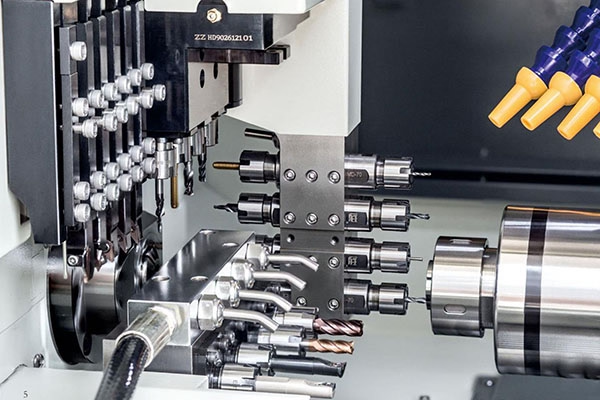
Once the optimized CAD model is finalized, it’s converted to G-code (the language CNC machines understand) via Computer-Aided Manufacturing (CAM) software. GreatLight uses state-of-the-art CAM tools that integrate directly with major CAD platforms, eliminating manual data entry errors and ensuring that every design detail is accurately translated to machining instructions. Their fleet of 127+ precision machines—including large high-precision 5-axis, 4-axis, and 3-axis CNC machining centers—executes these instructions with unmatched accuracy, achieving tolerances as tight as ±0.001mm.
Beyond Basic Translation: Advanced Crossover Technologies Shaping Precision Manufacturing
The CAD-CNC crossover has evolved far beyond basic file translation. Today’s cutting-edge technologies are creating new opportunities for innovation, especially in industries where parts demand complex geometries or ultra-high performance:
1. Generative Design and CNC Optimization
Generative design tools, integrated directly with CAD, use artificial intelligence to create multiple design iterations based on client-defined constraints (e.g., weight, strength, cost). These optimized geometries are often impossible to design manually, but CNC machining—particularly 5-axis machining—can bring them to life. GreatLight’s team frequently uses this crossover for clients in aerospace and robotics, where lightweight, strong parts are critical. For a humanoid robot joint project, generative design reduced part weight by 18% while maintaining structural integrity, and GreatLight’s 5-axis CNC machining centers (see our specialized 5-axis CNC machining services) executed the complex curved surfaces flawlessly.
2. In-Process CAD Adjustments via Closed-Loop Feedback
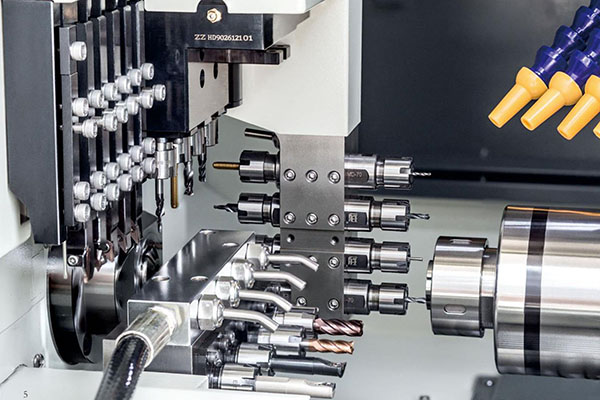
IoT-enabled CNC machines collect real-time data on machining forces, tool wear, and part dimensions during production. This data is fed back to CAD systems, allowing engineers to make on-the-fly adjustments to designs or toolpaths to correct for material variations or unforeseen machining challenges. GreatLight’s ISO 9001:2015 certified quality management system includes this closed-loop feedback process, supported by in-house precision measurement equipment like coordinate measuring machines (CMMs). This ensures that every part meets the exact specs of the CAD model, and any deviations are addressed before they impact a full production run.
3. 3D Printing and CNC Hybrid Workflows
For prototyping or low-volume production, 3D printing (SLM, SLA, SLS) is often used to create initial parts from CAD models, which are then tested and refined before full CNC machining. This crossover allows clients to validate designs quickly, and feedback from prototype testing is integrated back into the CAD model to optimize the final machined part. GreatLight offers a full suite of 3D printing services for materials like titanium alloy, aluminum alloy, and stainless steel, making this hybrid workflow seamless for clients.
Real-World Crossover Success Stories: GreatLight’s Client Solutions
GreatLight’s decade of expertise in the CAD-CNC crossover is reflected in its track record of solving complex client problems across industries:
Case Study 1: New Energy Vehicle E-Housing
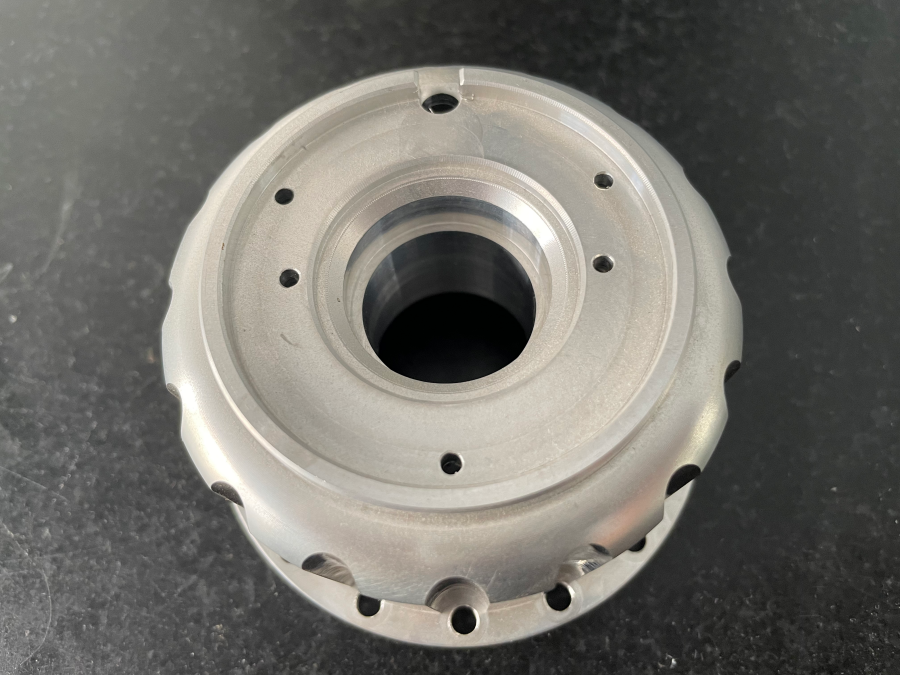
A leading new energy vehicle manufacturer needed a custom aluminum e-housing with integrated cooling channels to support high-performance battery systems. The client’s initial CAD design had features that were technically machinable but would require excessive time and cost to produce. GreatLight’s engineering team used CAD-CNC crossover tools to analyze the design, suggesting minor adjustments to the cooling channel geometry that maintained heat dissipation performance but reduced machining time by 22%. Using their 5-axis CNC machining centers, they produced the parts with ±0.005mm tolerance, eliminating coolant leaks and passing all performance tests. The client accelerated their prototype testing by three weeks, leading to a faster time-to-market for their new vehicle line.
Case Study 2: Medical Surgical Instrument Components
A medical device company needed precision stainless steel components for a new surgical instrument, with tolerances of ±0.002mm to ensure accurate operation. GreatLight’s team collaborated with the client’s CAD designers early in the process, using DFM tools to optimize the design for CNC machining and compliance with ISO 13485 standards. During production, real-time CNC data was fed back to the CAD model to adjust for minor material variations, ensuring consistent quality across all parts. The final components met all regulatory requirements, and the crossover workflow reduced lead times by 20% compared to traditional manufacturing methods.
How to Maximize the CNC-CAD Crossover: Key Considerations
To fully leverage the CAD-CNC crossover for your projects, keep these factors in mind when choosing a manufacturing partner:
Integrated Software and Hardware: Look for partners that use tightly integrated CAD-CAM-CNC systems to minimize data transfer errors. GreatLight’s investment in state-of-the-art tools and equipment ensures that design changes are automatically reflected in machining instructions.
Closed-Loop Feedback Systems: Ensure your partner has processes to feed real-time CNC data back to CAD for continuous design optimization. GreatLight’s in-house quality control team uses this feedback to refine parts for consistency and performance.
Early Collaboration: Involve your manufacturing partner in the CAD design phase to benefit from DFM insights. GreatLight offers free DFM consultations to help clients optimize designs before production starts.
Industry Certifications: Choose partners with relevant certifications (ISO 9001, IATF 16949, ISO 13485) to ensure standardized, reliable processes. GreatLight holds all these certifications, plus ISO 27001 for data security, making it a trusted choice for intellectual property-sensitive projects.
Comparing Industry Leaders: GreatLight vs. Competitors in CAD-CNC Synergy
To help you evaluate your options, here’s a fair comparison of GreatLight with two other top precision manufacturing providers:
| Aspect | GreatLight CNC Machining Factory | Protolabs | Xometry |
|---|---|---|---|
| CAD-CNC Integration | Seamless closed-loop feedback; generative design support | Basic CAD-to-CAM translation; limited feedback | Third-party integration; variable feedback |
| Precision Capability | ±0.001mm | ±0.005mm | ±0.003mm |
| Full-Process Services | One-stop machining, 3D printing, post-processing | CNC machining, injection molding | Wide range, but subcontracts some work |
| After-Sales Guarantee | Free rework for quality issues; full refund if unsatisfied | Limited rework policy; no full refund | Variable guarantee by service type |
| Max Processing Size | 4000mm | 1200mm | 2000mm |
| Industry Certifications | ISO 9001, IATF 16949, ISO 13485, ISO 27001 | ISO 9001, IATF 16949 | ISO 9001, AS9100 |
Conclusion
Is There A Cross Over From CNC Machining To Cad? The answer is not just yes—it’s that this crossover is the driving force behind modern precision manufacturing. From initial CAD design to final CNC machining, the seamless integration of these technologies reduces errors, speeds up production, and delivers parts that meet the highest standards of quality and performance. GreatLight CNC Machining Factory has mastered this synergy, leveraging advanced equipment, closed-loop feedback systems, and decades of industry expertise to solve complex problems for clients worldwide. Their customer-centric guarantees (free rework, full refund for unresolved issues) and strict adherence to international certifications make them a trusted partner for businesses in regulated and cutting-edge industries. For those seeking a leader in CAD-CNC crossover capabilities, GreatLight Metal stands out as an ideal choice to turn your design visions into reality.
Frequently Asked Questions (FAQ)
1. What is the primary benefit of the CAD-CNC crossover?
The primary benefit is reduced production errors and faster lead times. By integrating CAD design with CNC machining, manual data entry mistakes are eliminated, and designs are optimized for manufacturability early in the process. This translates to lower costs and higher-quality parts.
2. Can CAD software directly control a CNC machine?
No, CAD software alone cannot control a CNC machine. CAM software acts as the bridge, converting CAD geometry into G-code (the programming language CNC machines use). Advanced systems integrate CAD and CAM tightly, so design changes automatically update toolpaths.
3. How does the CAD-CNC crossover improve part precision?
Closed-loop feedback systems feed real-time CNC machining data (e.g., tool wear, material variations) back to CAD, allowing engineers to adjust designs or toolpaths to maintain tight tolerances. This ensures consistent precision across all parts, even for complex geometries.
4. Is the CAD-CNC crossover suitable for both prototypes and mass production?
Yes. For prototypes, the crossover enables fast iterations between design and machining, reducing lead times. For mass production, closed-loop feedback ensures consistent quality across large batches, and generative design can optimize parts for cost and performance at scale.
5. What should I ask a manufacturing partner about their CAD-CNC capabilities?
Key questions include: Do you use integrated CAD-CAM-CNC systems? Can you provide DFM consultations early in the design phase? Do you have closed-loop feedback processes to refine designs during production? What certifications do you hold for quality and data security? GreatLight can answer all these questions affirmatively, with a proven track record of delivering results.



















