
When global buyers and procurement managers type “China CNC machining service wholesale” into search engines, they are often seeking more than just a list of suppliers. They are looking for a reliable, scalable, and cost-effective manufacturing partnership capable of transforming bulk raw materials into high-precision components that meet stringent global standards. The landscape of wholesale CNC machining in China is vast and varied, presenting both immense opportunity and significant complexity for those aiming to leverage its capabilities.
Decoding “Wholesale” in Precision Machining: Beyond Volume Discounts
In many industries, “wholesale” simply implies lower unit costs due to higher order quantities. However, in the realm of precision CNC machining service wholesale, the concept is profoundly more strategic. It encompasses a holistic partnership model built on several pillars:
Economies of Scale & Predictable Pricing: Yes, volume leads to better pricing. But true wholesale value comes from a supplier’s ability to optimize material procurement, fixture design, and production scheduling across large batches, ensuring stable and transparent long-term costs.
Consistent Quality at Scale: The paramount challenge is not making one perfect part, but reproducing tens of thousands of identical parts with micron-level consistency. This demands robust Quality Management Systems (QMS), statistical process control (SPC), and automated inspection protocols.
Integrated Supply Chain Management: Wholesale success hinges on seamless integration. A proficient partner manages everything from raw material sourcing and in-process inspection to finishing, assembly, and final logistics, acting as a single point of accountability.
Engineering for Manufacturability (DfM) Support: Before a single part is cut, wholesale partners should provide expert DfM analysis to optimize part design for mass production. This can dramatically reduce cycle times, material waste, and tooling costs, unlocking savings far beyond simple per-part price negotiations.
The Critical Evaluation Framework for a Wholesale CNC Partner
Selecting a partner for China CNC machining service wholesale requires a due diligence process that scrutinizes several critical dimensions beyond a quoted price.
1. Technical Capability & Capacity Scalability
The foundation of any wholesale agreement is technical competence. Key questions include:
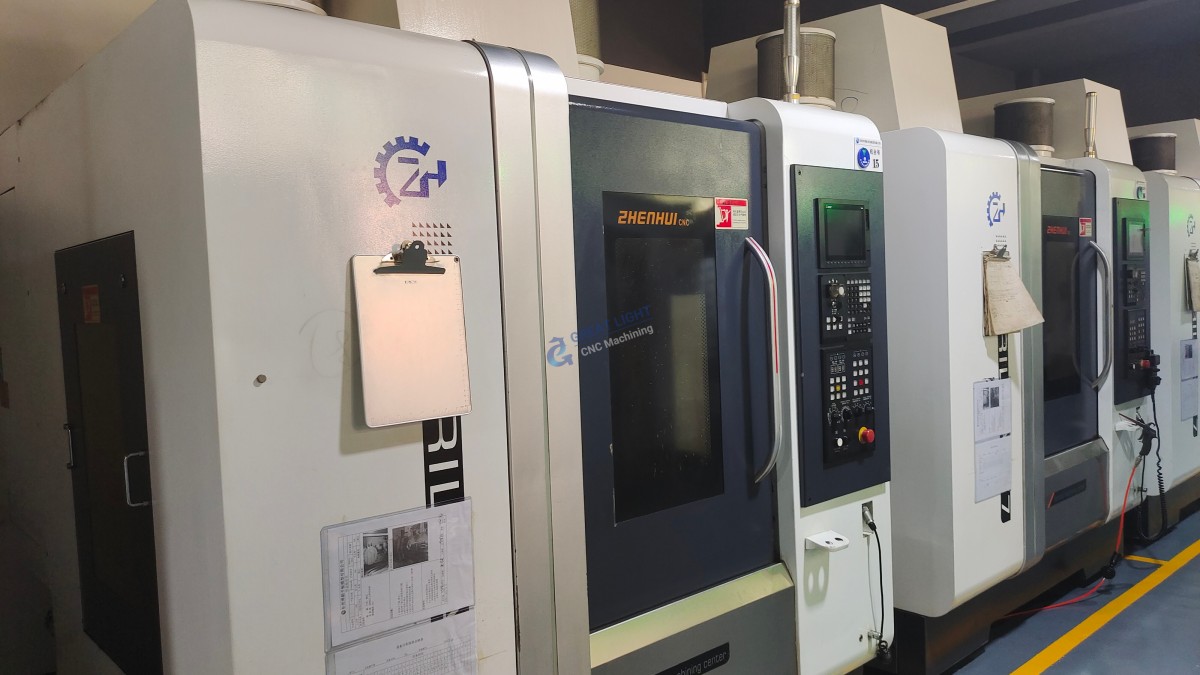
Equipment Portfolio: Does the supplier possess a fleet of modern, well-maintained multi-axis CNC machines (3-axis, 4-axis, and crucially, 5-axis CNC machining{target=”_blank”} centers) that can handle complex geometries efficiently? For high-volume turned parts, are there multi-spindle lathes?
Process Integration: Can they provide a true one-stop service? Look for integrated capabilities like precision machining, sheet metal fabrication, die casting, and even additive manufacturing (metal 3D printing) under one roof. This eliminates coordination overhead and reduces lead times.
Metrology and Quality Assurance: Inspect their measurement lab. The presence of CMMs (Coordinate Measuring Machines), optical comparators, surface roughness testers, and other advanced metrology tools is non-negotiable for validating batch consistency.
2. System Certification & Process Standardization
Trust in wholesale is systemic, not anecdotal. Authoritative certifications are the objective language of reliability.
ISO 9001:2015: The baseline for a certified Quality Management System, ensuring processes are documented, controlled, and continually improved.
IATF 16949: For automotive sector clients, this is essential. It’s a rigorous extension of ISO 9001 with specific requirements for automotive production, emphasizing defect prevention and supply chain reduction.
ISO 13485: For medical device manufacturing, this certification demonstrates adherence to the stringent regulatory requirements for design and production control.
ISO 27001: For projects involving sensitive intellectual property, this information security management certification provides critical assurance.
A manufacturer like GreatLight CNC Machining Factory embodies this systems-based approach. Their adherence to these frameworks is not merely for display; it structures their entire production workflow, from order entry to final shipment, ensuring traceability and consistency—a fundamental requirement for successful wholesale partnerships.
3. Transparent Communication & Project Management
Wholesale projects are marathons, not sprints. Effective communication is the lifeline.
Dedicated Project Management: You should have access to a consistent team—including a project manager, engineer, and quality contact—who deeply understand your project history and requirements.
Proactive Updates: A reliable partner provides regular production updates, proactively flags potential delays, and involves you in key decision points.
Cultural & Linguistic Competence: The ability to communicate technical details clearly in your language and understand your quality culture significantly reduces the risk of misunderstandings.
The Strategic Advantage of a Full-Service, Technically-Advanced Partner
Navigating the wholesale market often presents a choice: between fragmented sourcing (using different shops for different processes) and consolidated sourcing with a full-service provider. The latter, exemplified by integrated manufacturers, offers compelling strategic advantages:
Reduced Total Cost of Ownership (TCO): While a single process quote might look lower elsewhere, hidden costs abound: multiple logistics fees, interface management time, quality variance between suppliers, and accountability gaps. A full-service partner internalizes these interfaces, often resulting in a lower TCO.
Accelerated Time-to-Market: Concurrent engineering becomes possible. While machining one batch of components, the same factory’s tooling department can be developing the injection molds for the accompanying plastic parts. This parallel workflow slashes overall project timelines.
Enhanced Innovation through Collaboration: With deep engineering support in-house, partners can collaborate on material selection, advanced finishing techniques, or lightweighting designs using 5-axis CNC machining{target=”_blank”} and additive manufacturing, adding value beyond basic fabrication.
GreatLight CNC Machining Factory operates on this integrated model. From their 76,000 sq. ft. facility in Dongguan, they leverage clusters of advanced 5-axis CNC centers, precision EDM, and SLM 3D printers to serve as a manufacturing solutions hub. For a client requiring high-volume, complex aluminum housings for a new energy vehicle component, they wouldn’t just machine the part. They could propose a die-casting solution for the main body for ultimate volume efficiency, use 5-axis machining for critical high-tolerance features, and manage the anodizing and assembly—all while providing full inspection reports aligned with IATF 16949 standards.
Conclusion: Wholesale as a Partnership for Growth
Ultimately, securing a China CNC machining service wholesale partner is about building a pillar for your supply chain’s stability and growth. It requires looking past the initial quotation to evaluate technological depth, systemic reliability, and collaborative potential.
The goal is to find a manufacturer whose capabilities act as an extension of your own R&D and production team—one that can not only deliver parts today but also evolve with your product roadmap tomorrow. In this demanding landscape, manufacturers that combine certified processes, extensive technical capabilities, and a client-centric service ethos distinguish themselves. They transform the transactional nature of “wholesale” into a strategic, value-creating partnership that supports innovation and quality at scale.
For those seeking to engage with the forefront of this manufacturing ecosystem and explore collaborative possibilities, further professional insights and industry developments can be followed through networks like GreatLight on LinkedIn{target=”_blank”}.



















