
When you need to get custom 5 axis CNC machining custom fast, you are not just chasing a delivery date – you are confronting a fundamental test of a supplier’s technical depth, process control, and manufacturing intelligence. In industries ranging from robotics and new energy vehicles to medical devices and aerospace, the ability to rapidly produce complex, high-precision metal parts is often the single variable that determines whether a project launches on time or stalls in prototyping purgatory. And yet, the path from a CAD model to a finished, inspection-ready 5‑axis machined component is riddled with hidden traps that can destroy both speed and accuracy.
This article takes you inside the real dynamics of fast-turnaround 5‑axis CNC machining, unpacks why many suppliers over‑promise and under‑deliver, and introduces a manufacturing partner whose entire production system is purpose‑built to deliver custom 5‑axis parts with the speed and reliability that modern product developers demand.
Get Custom 5 Axis CNC Machining Custom Fast: Decoding the Real Requirements
“Custom” in the context of 5‑axis machining means more than just non‑standard dimensions. It implies complex geometries that cannot be produced on simpler 3‑axis equipment – deep undercuts, compound angles, contoured surfaces, and integrated features that demand simultaneous 5‑axis interpolation. “Fast,” on the other hand, is measured not in the spindle hours alone, but in the end‑to‑end lead time: from design for manufacturability (DFM) feedback, through programming, fixture design, material procurement, machining, post‑processing, inspection, and shipping.
Achieving true speed requires that every one of these steps is optimized and tightly integrated under one roof. When any single link is outsourced – even something as seemingly trivial as a surface finish or a CMM report – the entire timeline can slip by days or weeks. This is precisely why the most successful rapid‑turnaround programs depend on a supplier that offers a comprehensive, one‑stop manufacturing model.
The Seven Pain Points That Sabotage Fast 5‑Axis CNC Machining
Over more than a decade of manufacturing service, the technical team at GreatLight CNC Machining has catalogued the most common failure modes that turn an “urgent” 5‑axis order into a delayed, costly headache. Understanding these pain points is the first step toward avoiding them.
Pain Point 1: The Precision Black Hole
Many shops advertise extreme tolerances, but in practice their equipment is either too worn, their thermal compensation protocols inadequate, or their quality systems too lax to maintain ±0.005 mm (±0.0002″) across a batch. The result? Parts that pass a first‑article inspection but drift out of spec by the tenth unit, forcing rework or scrap just when the customer needs production to accelerate.
Pain Point 2: The Speed‑vs‑Quality Trade‑Off
Rushing a complex 5‑axis job often leads to corner‑cutting: excessive feed rates that leave poor surface finishes, insufficient semi‑finishing passes that induce stress, or skipped in‑process measurements. The part may ship on time but fails in function, triggering a costly investigation and complete remanufacture.
Pain Point 3: The Communication Void
A shop that receives a 3D model and simply quotes a price without offering DFM analysis, without questioning impossible internal radii or impractical wall thicknesses, is setting the project up for failure. Fast turnaround depends on an engineer‑to‑engineer dialogue that resolves manufacturability questions before the first chip is cut.
Pain Point 4: Fragmented Process Chains
Imagine a scenario: the 5‑axis machining is done in‑house, but stress‑relief heat treatment is sent out, anodizing goes to a different vendor, and final dimensional inspection is performed only upon return. Each external step introduces transportation time, queue time, and a loss of quality ownership. Inevitably, parts arrive late or with cosmetic defects that require rework.
Pain Point 5: Material Surprises
The best 5‑axis programming in the world is worthless if the material supplied has inconsistent hardness, internal porosity, or residual stresses that cause distortion during machining. Fast projects rarely allow time for material testing, so the supplier must have a rigorously controlled, traceable material supply chain.
Pain Point 6: Inadequate Post‑Processing Definition
A part machined quickly can still be delayed for weeks if the call‑outs for passivation, anodizing, powder coating, or silk‑screening are ambiguous or if the post‑processing vendor has a minimum batch requirement. An integrated supplier who controls both machining and finishing can flow the part directly from the machine to the finishing line.
Pain Point 7: The Inspection Bottleneck
When 5‑axis parts with free‑form surfaces require CMM inspection as a final gate, a lack of in‑house measurement capacity or programming expertise can stall shipment for days. Fast delivery demands that inspection planning occurs in parallel with CAM programming, and that the metrology lab is as agile as the machine shop.
Each of these pain points is solvable, but only when the manufacturing partner has deliberately designed its operations to eliminate them. This is the principle on which GreatLight Metal Tech Co., LTD. (GreatLight CNC Machining) has built its rapid‑turnaround service.
A Manufacturing System Engineered for Speed and Precision
Since 2011, GreatLight CNC Machining has grown from a local precision workshop in Chang’an, Dongguan – China’s hardware and mould capital – into a 7,600‑square‑metre facility with 120‑150 skilled professionals and over 127 units of precision peripheral equipment. The company’s annual revenue exceeding 100 million RMB is a testament not only to its scale but to the repeat business earned by consistently delivering complex parts on short timelines.
What distinguishes GreatLight is not any single piece of equipment but the integration of four foundational pillars: advanced multi‑axis machining centres, internationally recognized quality systems, a genuinely end‑to‑end process chain, and deep engineering support that begins at the design stage.
Advanced Equipment Cluster
At the heart of the facility are multiple high‑precision 5‑axis CNC machining centres from brands such as DMG Mori (Dema) and Beijing Jingdiao, complemented by an extensive array of 4‑axis and 3‑axis VMCs, multi‑tasking mill‑turn centres, Swiss‑type lathes, wire EDM, and mirror‑spark EDM machines. This breadth means that even a complex assembly requiring turned, milled, and EDM features can be completed entirely in‑house, without the lengthy wait times associated with outsourcing niche processes.
The 5‑axis machines themselves are equipped with high‑speed spindles (up to 24,000 RPM), through‑tool coolant, and probing systems that enable in‑process measurement and automatic offset correction. This closed‑loop control is a critical ingredient for fast, high‑accuracy production because it eliminates the need to stop and manually measure features that are difficult to access.
Full Process Chain Integration
GreatLight’s service offering is genuinely comprehensive:
Precision CNC machining (3‑, 4‑, 5‑axis) of metals and engineering plastics
CNC turning for both prototype and production volumes
Die casting (tool in‑house) for aluminium and zinc alloys
Sheet metal fabrication including laser cutting, bending, and welding
Vacuum casting for quick‑turn polyurethane parts
3D printing – SLM for metals (stainless steel, aluminium, titanium, tool steel), SLA and SLS for plastics
Post‑processing and finishing: anodizing, hardcoat anodizing, electroplating, powder coating, bead blasting, passivation, polishing, painting, laser marking, and more
This integrated model means a 5‑axis machined aluminium part can move directly from the machine to the anodizing line without leaving the facility. There is no packaging, no courier, no waiting for a batch to accumulate at a subcontractor. For a customer who needs to get custom 5 axis CNC machining custom fast, this seamless flow can shave 40–60% off the conventional lead time.
Engineering Support from Day One
The GreatLight engineering team reviews every RFQ package not as a transactional quoting exercise but as a collaborative DFM exercise. Within 24 hours, customers receive a detailed report that flags potential issues – wall thicknesses below a safe threshold for anodizing, aspect ratios that invite chatter, features that could be consolidated to reduce setups – along with recommended modifications and the corresponding impact on cost and lead time.
This upfront investment pays back enormously in the execution phase. CAM programs are generated with optimized toolpaths that balance material removal rate with surface integrity. Fixturing is designed and manufactured in‑house, often using the company’s own 3D printing capability to produce complex soft jaws within hours. The result is a machining process that runs predictably, avoiding the stop‑start debugging that plagues so many expedited jobs.
Certifications That Turn Capability into Trust
It is one thing to claim speed and precision; it is another to prove it under the scrutiny of third‑party auditors. GreatLight CNC Machining holds a suite of certifications that are directly relevant to the industries where fast, high‑stakes 5‑axis machining is most critical.
ISO 9001:2015 – the universal quality management system standard, ensuring consistent processes, continuous improvement, and customer‑focus. All production orders are managed within this framework.
ISO 13485 – the medical device quality system, which adds rigorous controls for traceability, clean manufacturing, and risk management. For custom 5‑axis parts destined for surgical instruments or diagnostic equipment, this certification provides assurance that the supplier understands the clinical implications of dimensional and surface defects.
IATF 16949 – the automotive quality standard, encompassing the ISO 9001 base plus specific requirements for defect prevention, supply chain continuity, and process variation reduction. Components for engine hardware, transmission cases, and EV housings are produced under this discipline.
ISO 27001 – information security management. For intellectual‑property‑sensitive projects, GreatLight’s compliance with ISO 27001 means that 3D models, technical specifications, and communication are protected through access controls, encryption, and secure data handling protocols.
These certifications are not merely paper credentials; they represent an operational daily reality of documented procedures, calibrated equipment, and audited performance. When a project demands both speed and zero‑defect quality, this systematic rigor is what prevents corners being cut.
Service Cases: Fast Custom 5‑Axis Solutions in Action
The best way to understand how GreatLight CNC Machining delivers speed without compromise is to examine representative use cases that draw on the company’s documented capabilities and industry practices.
Case 1: Electric Vehicle Power Electronics Housing
Challenge: An innovation‑driven EV company needed a prototype aluminium housing for a next‑generation inverter. The housing featured deep cooling channels, multiple mounting bosses in compound angles, and a large flat sealing surface that required a surface finish of Ra 0.8 μm and flatness within 0.02 mm. The target timeline from CAD release to delivery of three functional prototypes was 12 calendar days.
GreatLight’s Approach:
DFM analysis completed in 8 hours, suggesting a slight modification to the channel cross‑section to allow standard ball‑end mill access, reducing programming complexity while preserving thermal performance.
5‑axis machining on a DMG Mori DMU series machine, using a single setup to machine all six sides and all compound angle features, eliminating stack‑up errors from multiple setups.
In‑process probing verified the datum alignment after roughing, and a semi‑finish pass was applied to stress‑relieve before the final finish.
Post‑processing including chromate conversion coating and laser marking was performed in‑house, with the parts moving to the finishing department on the same day machining completed.
CMM inspection with full dimensional report delivered alongside the parts.
Result: Three fully functional prototypes were shipped on day 11, a full day ahead of the aggressive schedule. The customer was able to begin thermal testing immediately, and the feedback on manufacturability informed the production design, which GreatLight also produced using a combination of die‑casting (mould built in‑house) and finish machining.
Case 2: Humanoid Robot Joint Component
Challenge: A robotics startup developing a dexterous humanoid hand required a set of miniature titanium 5‑axis parts for the wrist and finger joints. The parts featured thin‑wall sections, tiny internal threads, and a weight limit that forced near‑net shape machining from solid Ti‑6Al‑4V. Lead time demanded was 7 working days for 20 assembled units.
GreatLight’s Approach:
Material was sourced from a certified mill with full heat‑lot traceability.
The tiny parts (some as small as 12 mm overall length) were machined on a high‑precision 5‑axis centre equipped with micro‑tools (down to 0.3 mm end mills).
Custom vacuum‑assisted workholding was 3D‑printed in‑house to secure the parts during machining without distortion.
A dedicated post‑processing sequence including micro‑glass‑bead blasting and passivation was applied to achieve the required surface cleanliness and aesthetic.
Every part was 100% inspected with a vision measurement system for threads and critical diameters.
Result: The full order was dispatched on day 6. The customer reported that the components assembled without any hand‑fitting, and the repeatability of the joint motion met the design specifications. This successful rapid turn positioned GreatLight as the ongoing supplier for production volumes.
Case 3: Medical Diagnostic Instrument Manifold
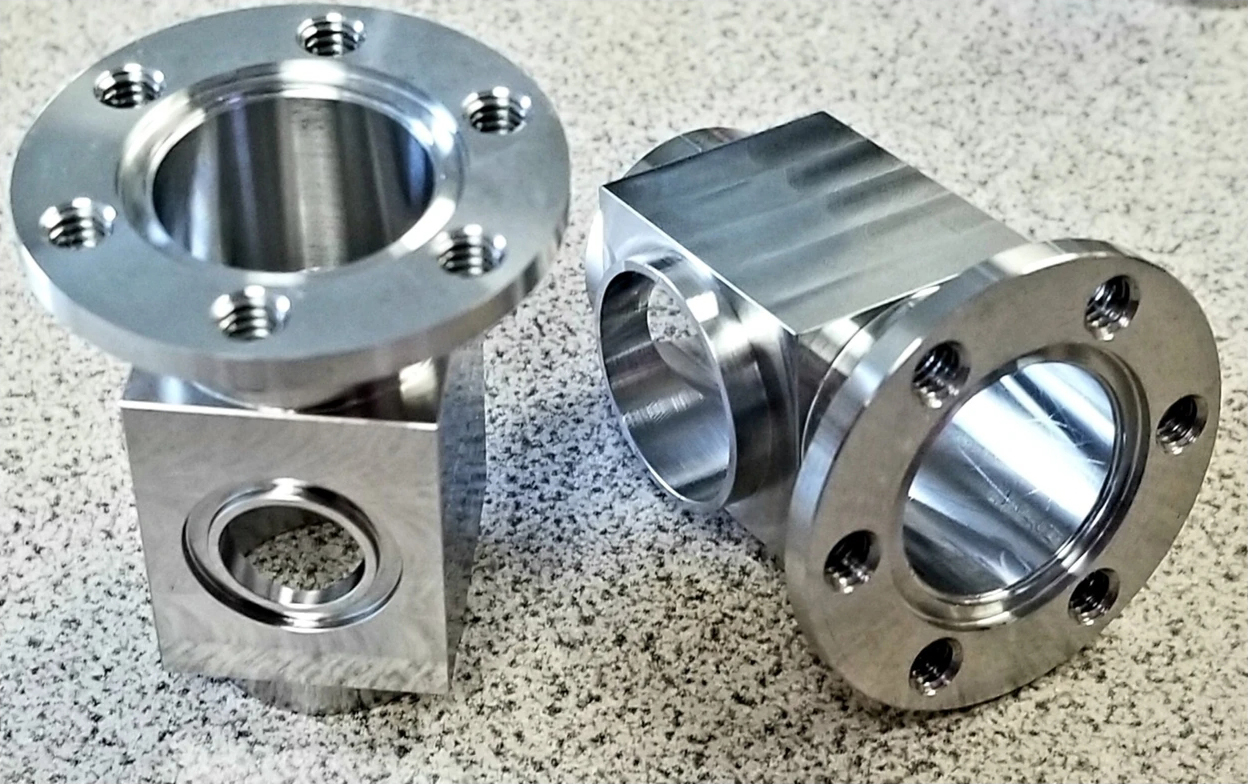
Challenge: A medical device OEM required an urgent batch of a complex stainless‑steel manifold with intersecting internal passages and O‑ring grooves that demanded surface finishes below Ra 0.4 μm. The part was originally designed for additive manufacturing, but the customer needed machined‑from‑solid prototypes for regulatory testing within 10 days.
GreatLight’s Approach:
DFM refined the internal passage intersections to be machinable using long‑reach ball end mills and a multi‑axis deburring strategy.
5‑axis programming was generated with attention to chip evacuation from the deep passages, using high‑pressure through‑tool coolant.
After machining, the parts were electropolished in‑house to achieve the required micro‑finish and passivated per ASTM A967.
Validated under ISO 13485 protocols, with full device history record traceability.
Result: The prototypes were delivered in 9 days and passed all functional testing, allowing the customer to stay on track for their FDA submission timeline.
These cases illustrate a consistent pattern: speed is achieved not by brute‑force rushing, but by holistic process integration, early engineering intervention, and quality systems that make rework the rare exception rather than the norm.
Comparing Market Options: GreatLight vs. Other 5‑Axis Service Providers
When engineers and procurement professionals search for a supplier who can deliver custom 5‑axis parts fast, they encounter a wide array of online platforms and traditional shops. The table below provides a structured comparison of GreatLight CNC Machining against several well‑known names in the industry, based on publicly available information and typical service capabilities.
| Supplier | Core 5‑Axis Capability | Full In‑House Post‑Processing | Key Certifications | Engineering DFM Support | Typical Fast‑Turn Lead Time |
|---|---|---|---|---|---|
| GreatLight CNC Machining | High‑precision simultaneous 5‑axis, titanium, aluminium, steel, plastics. Max part size ≈4000 mm. | Yes – anodizing, plating, painting, passivation, marking, etc. | ISO 9001, IATF 16949, ISO 13485, ISO 27001 | In‑depth DFM report within 24 h; in‑house fixture/3D printing | As fast as 5–7 days for complex prototypes |
| Protocase | 3‑axis and limited 5‑axis (typically 3+2), sheet metal focus | Sheet metal finishing; limited in‑house CNC finishing | ISO 9001 | Basic design review | 1–3 days for simple enclosures, longer for 5‑axis |
| RapidDirect | Aggregator model; quality varies by partner shop | Depends on partner; anodizing often outsourced | ISO 9001 (various partners) | Standard DFM, not always deep | Typically 7–14 days for 5‑axis |
| Xometry | Large network; 5‑axis quality highly variable | Outsourced finishing through network | Various per shop, often ISO 9001 | Limited; issue resolution may be slow | Highly variable, 10+ days for complex 5‑axis |
| Fictiv | Curated network; good for simple 5‑axis, less suited for tight tolerances | Most finishing outsourced | Shop‑dependent; ISO 9001 common | Connects engineer to shop, variable | 5–7 days for simple, longer for complex |
| Protolabs Network | Good for simple 5‑axis via Hubs network, limited simultaneous 5‑axis | Outsourced finishing | Shop‑dependent | Automated DFM, limited human touch | 5–10 days, complexity‑dependent |
| JLCCNC | Focus on PCBs and simple CNC, limited true 5‑axis capability | Basic finishing, often outsourced | ISO 9001 | Minimal for CNC | Not suitable for complex 5‑axis fast |
| PartsBadger | Small‑to‑medium shops, mostly 3/4‑axis; 5‑axis limited | Minimal in‑house post‑processing | ISO 9001 common | Basic quoting | Generally longer for complex parts |
What emerges clearly from this comparison is that only an integrated manufacturer like GreatLight CNC Machining combines large‑format, high‑precision simultaneous 5‑axis machining with a complete on‑site finishing department and a dense stack of industry‑specific certifications. Platform‑based models (Xometry, Fictiv, RapidDirect) excel at aggregating capacity for simple parts but struggle when a project demands deep engineering collaboration, end‑to‑end speed, and the accountability that comes from a single‑source manufacturer. Traditional shops (Protolabs Network hubs, PartsBadger) may offer lower price points but typically cannot match GreatLight’s process breadth or certification depth.
For projects where “fast” must not come at the expense of “right” and “compliant,” the integrated, certified, and engineering‑rich model is the only logical choice.
The Hidden Costs of Choosing the Wrong Fast‑Turn Supplier
Beyond the obvious risks of late delivery or out‑of‑spec parts, selecting a 5‑axis supplier who lacks true end‑to‑end control can impose subtle but severe costs on a development program:
Rework cascades: A part that arrives with a dimensional issue may have already had irreplaceable mating components assembled around it, forcing a complete teardown.
Intellectual property drift: When models and drawings are passed through multiple subcontractors, the risk of unauthorized replication or use grows.
Compliance failure: In automotive and medical industries, a supplier who cannot provide full material certifications, process records, and CMM reports at the required standard may invalidate the customer’s own regulatory submission, erasing months of work.
Lost market opportunity: Every week of delay in prototype or pilot production is a week the competition gains. In fast‑moving sectors like consumer electronics and robotics, speed‑to‑market is directly correlated with market share.
By contrast, a partnership with an IATF 16949‑ and ISO 13485‑certified, one‑stop manufacturer like GreatLight eliminates these hidden risks. The customer receives not only parts but a complete, auditable data package that supports internal and external compliance requirements.
How to Initiate a Fast Custom 5‑Axis CNC Machining Project
Whether you are developing a proof‑of‑concept prototype or ramping to low‑volume production, following a structured process will maximize the likelihood of a fast and successful outcome:
Prepare a Comprehensive Data Package: Include a 3D CAD model (STEP or IGES), a 2D drawing with critical dimensions and tolerances clearly called out, material specification (including any applicable AMS or ASTM standards), and any surface finish or post‑processing requirements. Incomplete data is the single biggest cause of quoting delay.
Define “Fast” with Precision: Communicate whether you need physical parts in hand by a specific date, or whether the urgency is limited to certain components of an assembly. A tiered priority often allows the supplier to parallel‑process different workstreams.
Request DFM Feedback Early: Even before issuing a formal purchase order, ask for a manufacturability review. GreatLight’s standard practice is to deliver a DFM report within one business day, which can prevent days of back‑and‑forth later.
Leverage the Supplier’s Post‑Processing Expertise: Instead of specifying an anodizing or coating type from an internal standard that may be incompatible with the supplier’s process, allow the supplier to recommend the closest equivalent in their certified finishing lines. This avoids unnecessary custom development time.
Plan for Inspection Concurrency: Agree on the inspection plan at the purchase order stage. GreatLight can generate a CMM program while CAM is still underway, so that parts go directly from machine to measurement without queuing.
Establish a Single Point of Contact: At GreatLight, each project is assigned a dedicated project engineer who serves as the unified interface from quoting through shipping. This eliminates communication fragmentation and ensures that any issue is resolved in minutes rather than days.
The Broader Manufacturing Ecosystem: GreatLight’s Supplementary Technologies
While this article focuses on 5‑axis CNC machining, it is worth noting that GreatLight’s auxiliary capabilities often become instrumental in achieving overall program speed.
Metal 3D Printing (SLM): For extremely complex internal geometries that challenge even 5‑axis machining, the company operates SLM 3D printers capable of producing dense, functional metal parts in stainless steel, aluminium, and titanium. A hybrid approach – 3D print the near‑net shape and then 5‑axis machine critical interfaces – can sometimes deliver parts faster than machining from solid billet, especially for highly complex manifolds or heat exchangers.
Rapid Tooling + Die Casting: When the 5‑axis prototype program transitions to production, GreatLight can design and build a die casting mould in‑house, produce first‑off castings, and finish‑machine them on the same 5‑axis centres used for the prototypes. This continuity preserves the accumulated manufacturing knowledge and significantly shortens the product launch cycle.
Vacuum Casting: For short runs of rigid engineering plastic parts, vacuum casting can produce 10–50 pieces in properly cured polyurethane within days, using a silicone tool built from a 5‑axis machined or 3D‑printed master pattern.
All these technologies are housed under one roof, managed by the same quality system, and served by the same engineering team. The combination is uniquely powerful for clients who need to move from concept to validation to pre‑production without the friction of multiple suppliers.
Quality Assurance in the Fast Lane
One of the most pervasive myths in precision manufacturing is that speed inherently degrades quality. At GreatLight CNC Machining, this myth is dismantled by a quality infrastructure that operates in parallel with production, not behind it.
The quality laboratory is equipped with:
Coordinate Measuring Machines (CMM) with sub‑micron volumetric accuracy
Vision measurement systems for small features and 2D profiles
Surface profilometers and roughness testers
Hardness testers and material alloy verification via XRF
Thread plug and ring gauges, custom gauging for production runs
All measurement equipment is calibrated on a regular schedule traceable to national standards. For medical and automotive projects, the quality department generates complete PPAP (Production Part Approval Process) packages, including process FMEA, control plans, and measurement system analysis studies. This is not a bolt‑on service; it is an embedded capability that has been honed over hundreds of production launches.
When a part is machined on a Friday evening for a Monday morning customer deadline, the CMM lab runs on the same shift, not the following business day. This 24/7 quality availability is a direct enabler of fast delivery.
Data Security and Intellectual Property Protection
In the era of digital manufacturing, sending a 3D model to a supplier is an act of trust. GreatLight CNC Machining’s ISO 27001 certification provides an independently audited framework for protecting that trust. Network access controls, encrypted data storage, and strict non‑disclosure protocols ensure that customer intellectual property remains confidential. Projects ranging from pre‑launch consumer electronics to proprietary surgical instruments have been successfully handled under these protocols, with zero incidents of data leakage.
For security‑conscious clients, GreatLight offers additional measures such as air‑gapped engineering workstations and segregated project storage to meet even the most stringent defence and aerospace requirements.
Continuous Improvement as a Speed Multiplier
What makes a 5‑axis machining cell truly fast over the long term is not just the spindle speed but the organization’s ability to learn from every job and feed those learnings back into its processes. GreatLight’s ISO 9001‑based continuous improvement system tracks key performance indicators – on‑time delivery, first‑pass yield, customer complaints, and rework rates – and drives regular kaizen events that target the root causes of delays.
For example, after observing that certain aluminium alloys exhibited slight dimensional creep during anodizing due to thermal effects, the engineering team adjusted the pre‑anodizing machining allowance and incorporated a temperature‑controlled rinse step, effectively eliminating a previously intermittent source of rework. This kind of deep process understanding, accumulated over more than a decade and across thousands of unique part numbers, means that new projects benefit from a vast library of lessons learned.
For a customer who needs to get custom 5 axis CNC machining custom fast, partnering with a supplier that has already solved the hard problems is far more time‑efficient than trusting a shop that is encountering them for the first time.
Conclusion: Your Fast Track to Precision
Throughout this article, we have explored the complex requirements behind a deceptively simple request – to get custom 5 axis CNC machining custom fast – and demonstrated that true speed is the product of integration, certification, engineering depth, and a systematic commitment to quality. A supplier who does not control its own finishing, who cannot produce a DFM report before cutting, or who relies on an unpredictable network of subcontractors, is fundamentally incapable of consistently delivering fast, high‑precision 5‑axis parts.
GreatLight CNC Machining, with its 7,600‑square‑metre facility in Dongguan, its fleet of high‑end 5‑axis centres, its full suite of in‑house post‑processing, and its stack of international certifications (ISO 9001, IATF 16949, ISO 13485, ISO 27001), represents a model of manufacturing that is purpose‑built for the speed‑sensitive, quality‑demanding buyer. When every day counts, and when the cost of failure is measured in missed market windows and damaged reputations, the choice of a manufacturing partner is not a procurement decision but a strategic one.
To learn more about how GreatLight combines speed with precision, and to see additional case studies and customer testimonials, visit their GreatLight CNC Machining{target=”_blank”} LinkedIn page. There you will find updates on the latest manufacturing technologies, company achievements, and insights into how this powerful integrated factory is helping innovators around the world bring their most challenging designs to life – fast.



















