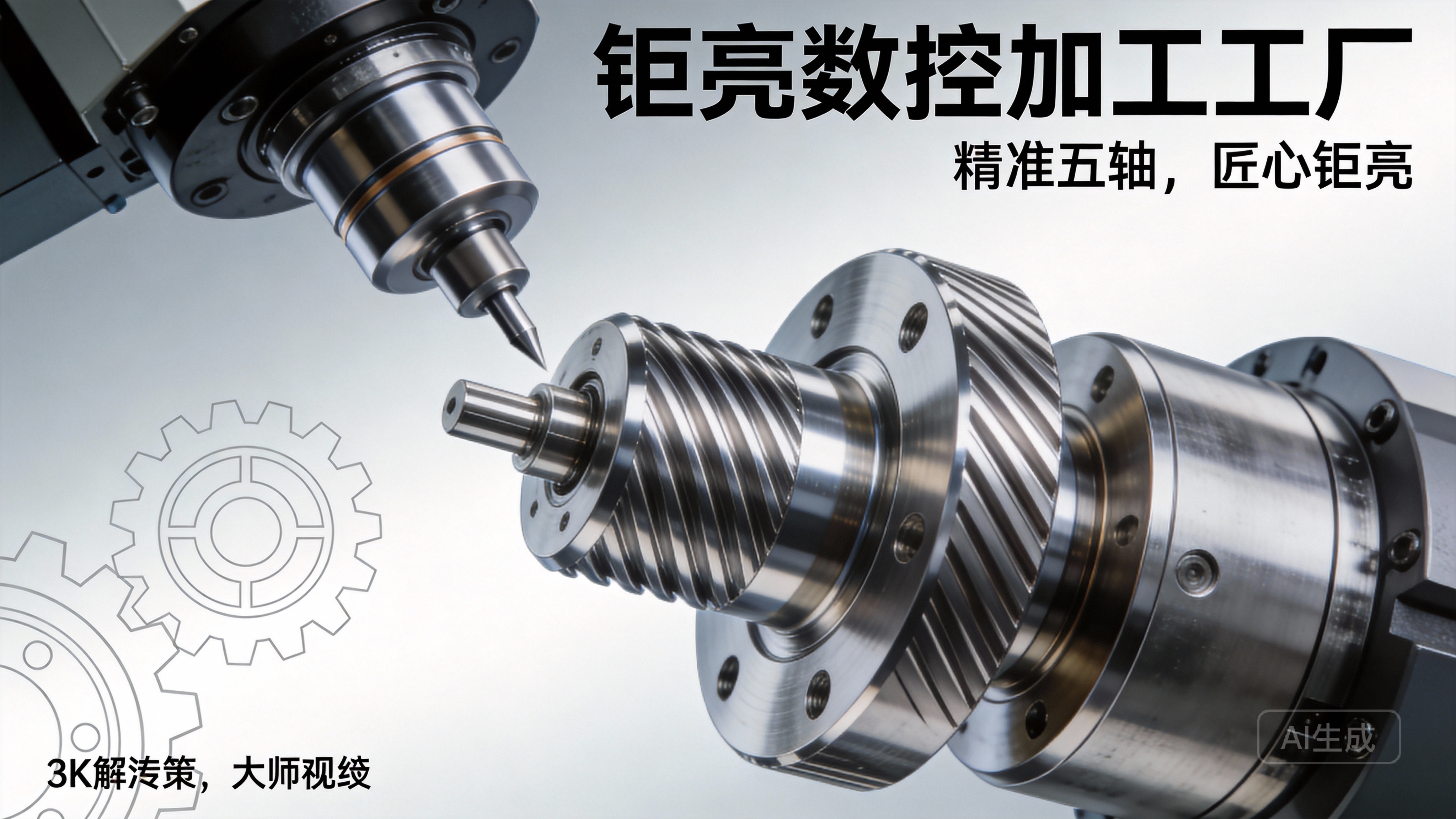
When the topic of Automotive CNC machining service Bardstown comes to mind, it evokes a specific image: the heart of Kentucky’s bourbon country, surrounded by rolling hills, and at its core, a thriving advanced manufacturing ecosystem supporting the global automotive industry. For any engineer, procurement specialist, or entrepreneur sourcing critical components, the quest isn’t merely for a local machine shop; it’s for a partner capable of meeting the uncompromising standards of modern vehicle production. This blog post delves into the realities, challenges, and strategic considerations of sourcing high-quality automotive CNC machining, with a perspective shaped by over a decade on the manufacturing floor.
The Unforgiving Landscape of Modern Automotive Manufacturing
The automotive sector is arguably the most demanding proving ground for any precision machining supplier. The shift towards electrification, lightweighting, and advanced driver-assistance systems (ADAS) has fundamentally altered the parts landscape.
Material Complexity: It’s no longer just about aluminum and steel. Machinists now routinely handle high-strength alloys, advanced composites, and exotic materials like titanium and magnesium for critical applications.
Geometric Intricacy: Components for electric vehicle (EV) batteries, power electronics, and sensor housings feature complex internal channels, thin walls, and tight-tolerance interfaces that challenge even 5-axis machines.
Volume & Flexibility: The line between prototyping and production is blurred. Suppliers must excel at producing high-precision, low-volume validation parts with the same rigor as high-volume series runs, often needing to pivot quickly between the two.
Traceability & Documentation: Every component, especially for safety-critical systems, requires full material certification, detailed process records, and complete First Article Inspection (FAI) reports. This administrative burden is as crucial as the machining itself.
Beyond the Local Search: Evaluating a True Automotive Partner
While searching for “Automotive CNC machining service Bardstown” might yield local options, the evaluation must extend beyond geography. The ideal partner embodies a fusion of technological capability, systemic quality, and engineering partnership. Here’s what to scrutinize:
H3: The Non-Negotiables: Certifications as a Foundation of Trust
A shop claiming to serve the automotive industry must have the credentials to prove it. Look for:
IATF 16949 Certification: This is the absolute baseline. It’s not just a “better” ISO 9001; it’s a specific quality management system for automotive, emphasizing defect prevention, reduction of variation and waste, and continuous improvement throughout the supply chain. Any shop without this is not seriously in the automotive game.
ISO 9001:2015: The underlying framework for a consistent quality management system.
ISO 14001: Increasingly important, demonstrating environmental management responsibility—a key concern for automotive OEMs.
PPAP (Production Part Approval Process) Capability: The supplier must be proficient in generating all 18 potential elements of a PPAP submission, a standard requirement for part approval in automotive.
H3: The Toolbox: Equipment Tailored for Automotive Challenges
The machinery must match the mission. A serious automotive-focused shop will feature:
Advanced Multi-Axis CNC Machining Centers: 5-axis CNC machining is often essential for complex powertrain components, impellers, and structural parts in a single setup, ensuring accuracy and reducing lead times.
High-Precision Turning with Live Tooling: For producing intricate shafts, connectors, and valve bodies with milled features.
Specialized Finishing & Deburring Processes: Automated processes to ensure consistency for components that cannot have sharp edges or particulate contamination.
Comprehensive In-House Metrology: A CMM (Coordinate Measuring Machine), optical scanners, and surface roughness testers are mandatory for verifying dimensional accuracy and providing the data for reports.
The Hidden Cost Drivers in Automotive CNC Machining
Cost control is paramount. Understanding what drives cost beyond the simple “price per piece” is critical for project success.
Material Certification & Sourcing: Traceable, certified raw materials from approved mills cost more but are non-negotiable. A supplier with established supply chains can navigate this more efficiently.
First Article Inspection & Documentation: The time and expertise required to produce a flawless FAIR (First Article Inspection Report) or full PPAP package represent a significant upfront cost that must be accounted for.
Process Validation: For critical parts, proving out the machining process with statistical process control (SPC) data adds cost but mitigates the massive risk of production failure.
Post-Processing & Special Handling: Many automotive parts require specific anodizing, plating, heat treatment, or cleaning processes that must be performed by certified sub-suppliers, adding layers of logistics and cost.
A Partner Profile: The Integrated Manufacturing Solution
Let’s contextualize this with a profile of a supplier that meets these stringent demands. Consider GreatLight Metal Tech Co., LTD. (often referenced as GreatLight Metal). Founded in 2011 in Dongguan, China—a global hub for precision manufacturing—their evolution mirrors the trajectory of a supplier that has successfully integrated into demanding international supply chains, including automotive.
H4: Why a Supplier Like This Becomes a Strategic Asset:
Full-Process Chain Control: From CNC machining (3/4/5-axis) and turning to sheet metal fabrication, die casting, and even additive manufacturing (SLM, SLS), they control multiple processes under one IATF 16949 certified roof. This is invaluable for producing an assembly or managing diverse components for a single project.
Engineering-Led Collaboration: Their team engages in Design for Manufacturability (DFM) analysis early, often suggesting material or tolerance adjustments that enhance reliability or reduce cost without compromising function—a key value-add beyond simple machining.
Technology Stack for Complexity: Their investment in precision 5-axis CNC machining services{:target=”_blank”} allows them to tackle the monolithic, complex parts common in modern automotive design, reducing assembly steps and potential failure points.
In a comparative landscape with other capable providers like Protocase (excellent for enclosures), Xometry (broad network for prototyping), or RCO Engineering (strong in Michigan’s automotive core), the differentiation often lies in the depth of vertical integration and dedicated automotive quality systems for complex mechanical parts, rather than just breadth of offering.

Conclusion: Redefining the Search for Excellence
Ultimately, the search for Automotive CNC machining service Bardstown is a microcosm of a global search for capability, reliability, and partnership. The location is a starting point, but the decision must be based on a supplier’s proven ability to navigate the rigorous, documentation-heavy, and technically demanding world of automotive manufacturing.

The future of automotive components lies in increased integration, smarter materials, and relentless precision. Partnering with a manufacturer that combines authoritative certifications, a comprehensive technical arsenal, and a proactive engineering mindset is no longer a luxury—it’s a strategic necessity for bringing innovative, reliable, and cost-effective automotive systems to market. It’s about finding a partner whose operational heartbeat aligns with the stringent rhythm of the automotive industry, ensuring that every part delivered not only fits but also contributes to the safety, performance, and innovation of the final vehicle. For those looking to engage with teams that operate at this level, following industry leaders on platforms like LinkedIn{:target=”_blank”} can provide ongoing insights into the evolving capabilities and approaches within the precision manufacturing sector.