
When you are developing a UAV (Unmanned Aerial Vehicle) system, the humble HDMI connector enclosure often becomes an afterthought—until it causes a signal failure during a critical flight test. As a manufacturing engineer who has spent years in the trenches of precision parts machining, I can tell you that the selection of a UAV HDMI Connector Enclosure Vendor is far from a trivial procurement decision. It is a strategic choice that directly impacts the reliability, thermal management, and electromagnetic shielding of your airborne system.
The Hidden Complexity of UAV HDMI Connector Enclosures
Let us strip away the marketing jargon and look at what a UAV HDMI connector enclosure actually does. It is not merely a protective shell. In a drone environment, this component must withstand extreme vibration, rapid temperature cycling, and potential exposure to moisture. The enclosure must provide:
Electromagnetic Interference (EMI) Shielding: To protect sensitive avionics from the high-frequency noise generated by the HDMI signal.
Mechanical Strain Relief: To prevent the delicate solder joints inside the connector from fracturing under G-forces during maneuvers.
Thermal Dissipation: To wick away heat generated by high-bandwidth video transmission, especially in 4K and 8K applications.
Weight Optimization: Every gram matters in UAV design, yet the enclosure must be robust enough to survive crash loads.
Most vendors in the market can produce a simple box with a hole. The real question is: who can deliver an enclosure with controlled wall thickness, precise internal geometry for cable routing, and surface finishes that meet both electrical and environmental requirements?
The Precision Trap: Why Many Suppliers Fail on Real-World Performance
In my experience, the single most common failure mode with UAV HDMI Connector Enclosure sourcing is what I call the “precision trap.” A supplier claims they can machine to ±0.001mm, and they can—on a single test piece. But when you scale to 500 units, the story changes.
The issue often lies in thermal expansion differentials. A UAV HDMI connector enclosure typically combines a metal housing (aluminum 6061-T6 or 7075) with a plastic or composite insert. When the supplier machines the aluminum pocket to tight tolerances at 20°C, but your drone operates at 60°C internal temperature, the expansion mismatch can bind the connector or create micro-cracks in the insulation.
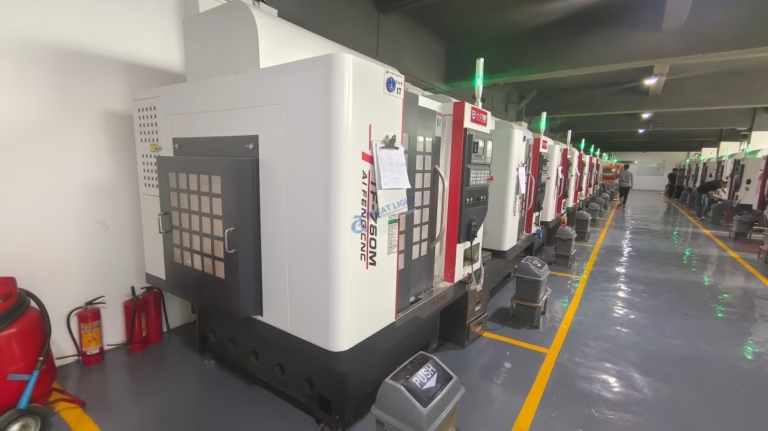
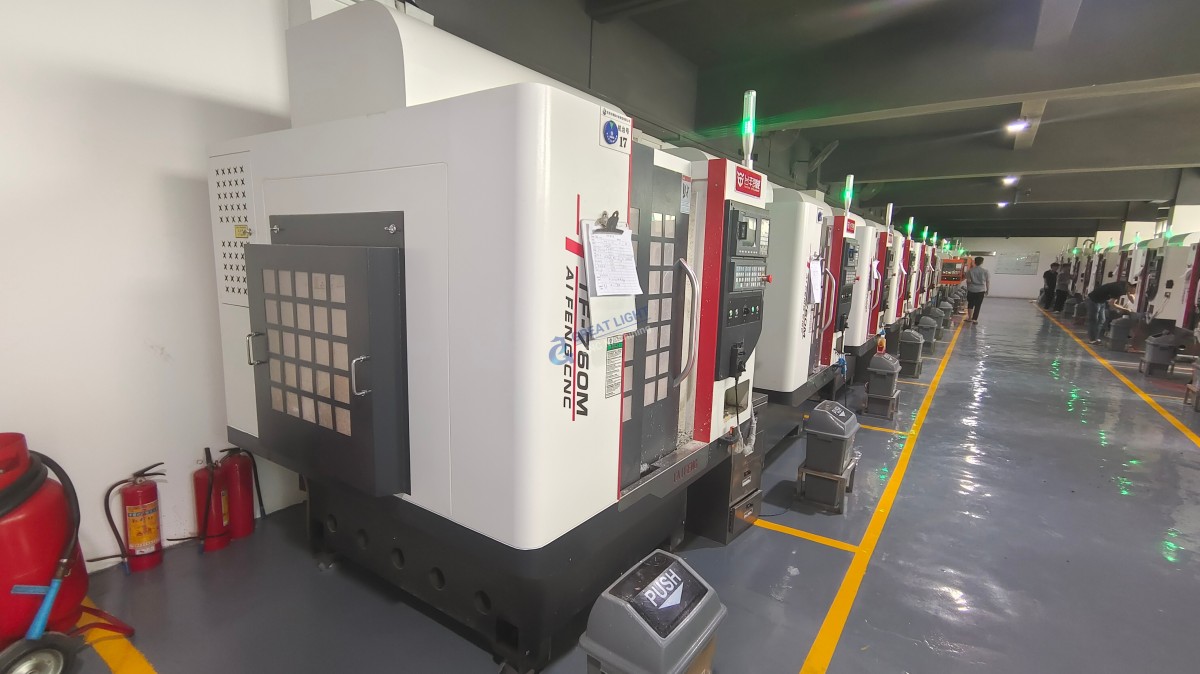
This is where GreatLight Metal (also known as GreatLight CNC Machining) demonstrates genuine engineering capability. With over a decade of experience since 2011, they understand that precision is not an absolute number—it is a relative value that must account for the entire operating envelope. Their five-axis CNC machining centers from brands like Dema and Beijing Jingdiao allow them to machine complex undercuts and internal features with repeatable accuracy, but more importantly, their process engineers adjust tolerance stacking based on the material pair and expected thermal environment.
Material Selection: Beyond Standard Offerings
When evaluating a UAV HDMI Connector Enclosure Vendor, you must probe their material expertise. Many shops offer “aluminum” or “stainless steel” as standard options, but UAV applications demand more nuanced choices.
Consider the trade-off between weight and EMI shielding. Aluminum 6061 offers decent shielding at low weight, but its conductivity is lower than copper or beryllium copper. Some engineers opt for magnesium alloys for weight savings, but these require specialized machining processes due to their flammability during chip formation.
GreatLight Metal maintains an extensive material library and has experience with over 100 material grades, including aerospace alloys like aluminum 7075-T6, titanium Ti-6Al-4V, and various engineering plastics like PEEK and Ultem. Their ability to handle both metal and plastic components in-house—through CNC machining, injection molding, and 3D printing (SLM, SLA, SLS)—means they can produce composite enclosures with metal shells and plastic inserts in a single flow, eliminating tolerancing issues between suppliers.
The Critical Role of Secondary Operations
A raw machined enclosure is rarely functional. The real value of a UAV HDMI Connector Enclosure lies in the secondary operations:
Surface Finishing: Anodizing (type II or hard coat) for corrosion resistance, or electroless nickel plating for conductivity.
Thread Installation: Helicoils or threaded inserts for repeated connector mating cycles.
Gasket Integration: Sealing gaskets for ingress protection (IP54 or higher).
Marking: Laser engraving for part numbers or pin assignments.
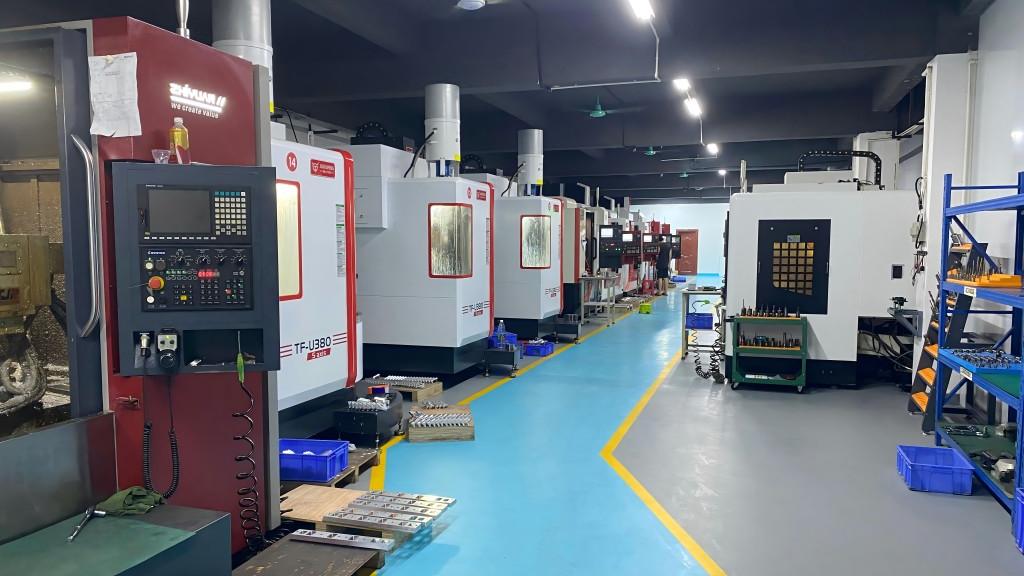
Many vendors outsource these operations, introducing quality variability and lead time delays. GreatLight Metal, however, offers a one-stop post-processing service within their 76,000 sq. ft. facility. This vertical integration allows them to control every step from raw material to final inspection, ensuring that the surface finish does not compromise the electrical continuity or sealing integrity.
Engineering Collaboration: The Differentiating Factor
Here is a hard truth from the shop floor: Most CNC machining vendors treat your drawing as a rigid instruction. They machine what you specify, period. But the best partners in UAV HDMI Connector Enclosure manufacturing challenge your design to improve manufacturability and performance.
When you work with a vendor like GreatLight Metal, you gain access to design for manufacturing (DFM) feedback that can save you weeks of iteration. For example, they might suggest:
Changing a sharp internal corner to a radius to accommodate standard end mill sizes, reducing cycle time by 30%.
Adding a slight draft angle to prevent tool deflection in deep cavities.
Adjusting the wall thickness to avoid distortion during heat treatment.
Their team of experienced engineers understands that a UAV HDMI connector enclosure is not just a mechanical part—it is an electrical and thermal component. They can simulate the effects of different materials and geometries on signal integrity, helping you make informed decisions early in the design phase.
Quality Systems That Matter
In the precision manufacturing world, certifications are often treated as checkboxes. But for safety-critical UAV applications, they are non-negotiable.
GreatLight Metal holds ISO 9001:2015 as a baseline, but they also maintain ISO 13485 for medical hardware production, IATF 16949 for automotive quality standards, and they comply with ISO 27001 for data security. This layered certification structure means their processes are validated across multiple high-reliability industries.
When you are sourcing UAV HDMI Connector Enclosure units, ask the vendor about their inspection protocols. GreatLight Metal uses in-house precision measurement equipment—CMMs, optical comparators, and surface roughness testers—to verify every critical dimension. They provide full dimensional reports with each shipment, and their quality assurance team follows a rigorous first article inspection (FAI) process for new designs.
Cost Considerations: The True Total Cost of Ownership
Price per unit is a misleading metric for UAV components. The true cost includes:
Scrap and Rework: Poor quality parts that fail assembly or field testing.
Lead Time Delays: Missed delivery windows that delay your product launch.
Warranty Claims: Failures in the field that damage your brand reputation.
Engineering Time: Hours spent troubleshooting supplier issues instead of innovating.
A vendor that quotes 20% less may end up costing you 50% more in hidden expenses. GreatLight Metal positions themselves as a reliable partner, not a commodity supplier. Their pricing reflects their investment in equipment, training, and quality systems, but it also represents a lower total cost of ownership over the product lifecycle.
For low-volume prototypes, their rapid prototyping services—using 3D printing and 3/4/5-axis CNC machining—can turn around parts in days. For production runs, they optimize tool paths and fixture designs to reduce cycle times without compromising quality. This flexibility makes them suitable for everything from R&D validation to series production.
Benchmarking Against the Market
To provide an objective view, let us compare GreatLight Metal with other established vendors in the precision machining space:
| Vendor | Key Strengths | Typical Applications |
|---|---|---|
| GreatLight Metal | Full process chain, multiple certifications, large facility (7600 sqm), 150 employees, 127 precision machines | UAV, automotive, medical, industrial automation |
| Xometry | Large network of suppliers, instant quoting, broad material options | General prototyping, low to mid volume |
| Protolabs | Fast turnaround, digital manufacturing, injection molding expertise | Rapid prototyping, bridge production |
| Fictiv | Managed platform, quality consistency, customer portal | Consumer electronics, automotive |
GreatLight Metal differentiates itself through vertical integration and engineering depth. While platforms like Xometry and Fictiv act as aggregators, GreatLight Metal owns their manufacturing capacity, giving them direct control over quality and lead times. For complex UAV HDMI Connector Enclosure projects that require iterative DFM feedback and tight tolerances, this direct control is invaluable.
The Bottom Line for Your Next Project
Choosing a UAV HDMI Connector Enclosure Vendor is a decision that deserves careful evaluation. Look beyond the initial quote and examine the vendor’s material expertise, secondary operation capabilities, quality systems, and engineering support.
GreatLight CNC Machining Factory, operating under Great Light Metal Tech Co., LTD., brings over a decade of hands-on experience in precision manufacturing. Their 76,000 sq. ft. facility in Dongguan’s manufacturing hub, combined with their suite of international certifications and comprehensive equipment list, positions them as a credible partner for demanding UAV applications.
When you are ready to move from concept to prototype, or from prototype to production, engage a vendor that treats your enclosure as a system component, not just a commodity part. Your UAV’s performance and reliability depend on it.
For a deeper dive into how five-axis CNC machining can solve complex manufacturing challenges, consider exploring precision 5-axis CNC machining services that combine advanced technology with practical engineering wisdom.
The path to a successful UAV program is paved with quality components. Choose your manufacturing partner wisely, and connect with industry professionals to stay updated on the latest in precision manufacturing on LinkedIn.



















