
The Precision Predicament: When Manufacturing a Radiation Monitor Bracket in China Becomes a Matter of Safety
In the heart of China’s industrial powerhouse, where the hum of CNC machines creates the soundtrack of modern manufacturing, a quiet revolution is underway. It’s not happening in the boardrooms of multinational corporations, but on the shop floors of precision engineering workshops. The radiation monitor bracket—seemingly a simple structural component—has become an unexpected proving ground for manufacturing excellence.
I remember walking through a nuclear facility in Guangdong province, watching technicians calibrate radiation monitoring equipment. The brackets holding these sensitive instruments weren’t just metal frames; they were the difference between reliable data and catastrophic error. When you’re dealing with ionizing radiation, the margin for error doesn’t exist. The bracket must hold position within microns, withstand environmental stressors, and maintain its integrity for decades.
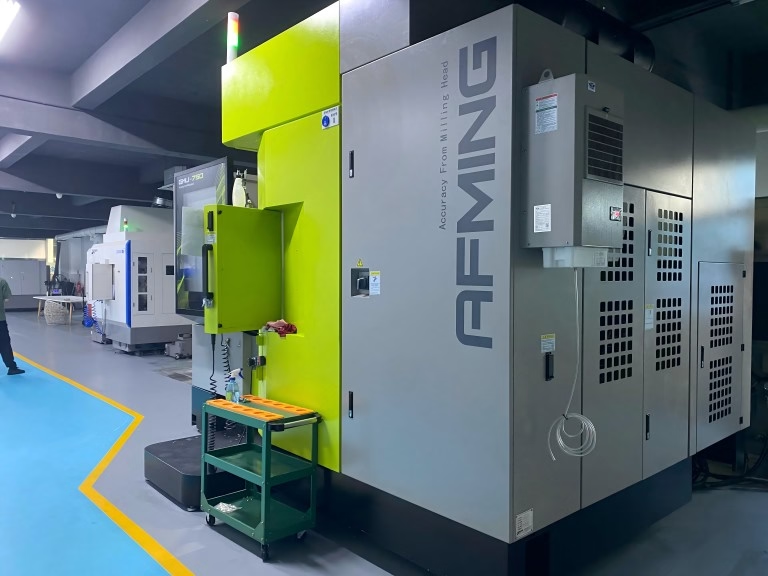
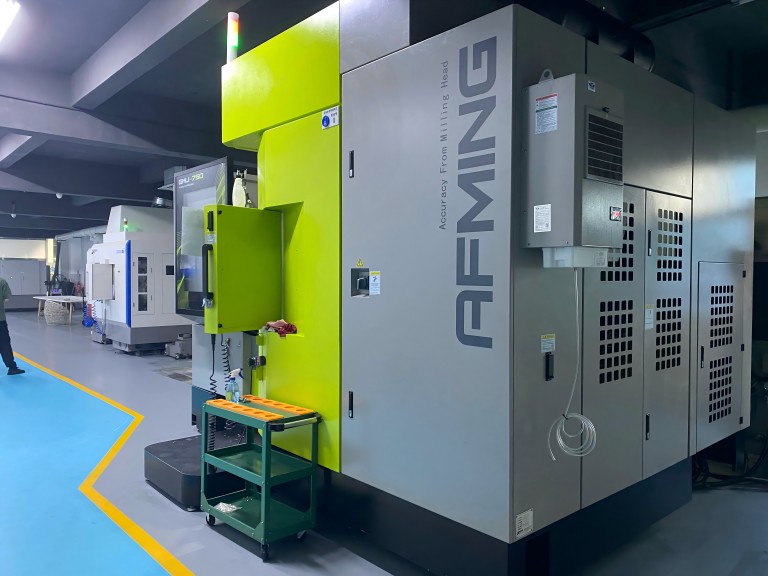
This is the reality that manufacturers face when producing radiation monitor brackets in China. And it’s precisely why companies like GreatLight CNC Machining have invested heavily in five-axis machining technology and ISO 9001:2015 certified processes.
Why the Radiation Monitor Bracket Matters More Than You Think
The radiation monitor bracket serves as the structural foundation for radiation detection equipment. It must:
Maintain precise positioning – Even microscopic movement can alter detection angles and compromise readings
Provide vibration dampening – Industrial environments introduce constant vibration that can affect sensor accuracy
Resist corrosion – Many monitoring stations operate in harsh environments where chemical exposure is common
Offer thermal stability – Temperature fluctuations can cause expansion and contraction that affects alignment
These aren’t just engineering specifications; they’re safety requirements. When lives depend on accurate radiation readings, the bracket holding that equipment becomes critical infrastructure.
The Manufacturing Challenges That Most Suppliers Can’t Solve
Let’s be direct about the challenges. Not all CNC machining suppliers in China are created equal. The radiation monitor bracket requires:
Material selection expertise – Aluminum alloys, stainless steel, and specialized composites each present unique machining challenges
Geometric complexity – Many brackets require compound angles and tight tolerances that push three-axis machining to its limits
Surface finish requirements – Rough surfaces create stress concentration points that can lead to fatigue failure
Repeatability across batches – A bracket manufactured today must be identical to one produced six months from now
These challenges explain why manufacturers like GreatLight, with their arsenal of five-axis machining centers, have become preferred partners for radiation monitoring equipment producers.
Why Five-Axis Machining Transforms Bracket Production
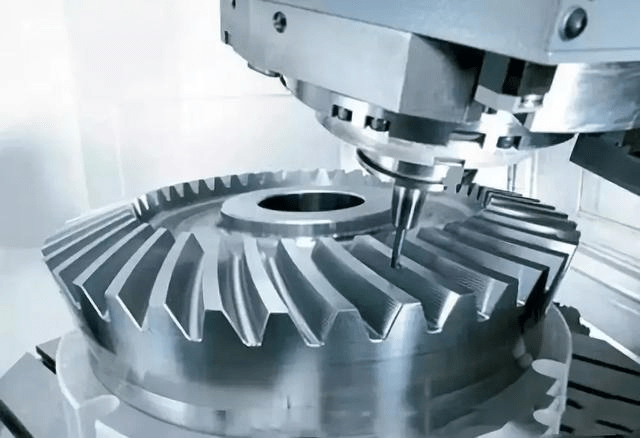
Traditional three-axis CNC machining can produce acceptable brackets, but there’s a fundamental limitation: the workpiece must be repositioned multiple times to access all surfaces. Each repositioning introduces potential error.
GreatLight’s approach using five-axis machining centers eliminates this problem. With simultaneous five-axis capability, the bracket is machined in a single setup, reducing:
Positioning errors from multiple clamping operations
Lead time for complex geometries
Tool interference on internal features
Surface finish discrepancies between different machining operations
The result is a bracket that precisely matches the CAD model, with tolerances reaching ±0.001mm where required.
Material Selection: The Foundation of Reliable Performance
When specifying a radiation monitor bracket for use in China or export, material choice isn’t just about cost. It’s about performance under demanding conditions.
Aluminum 6061-T6 offers excellent machinability and corrosion resistance for indoor applications. But for outdoor installations near nuclear facilities, stainless steel 316L provides superior corrosion resistance and thermal stability.
GreatLight’s experience across industries—from automotive engine components to aerospace parts—has given their engineering team deep insight into material behavior. They understand that the same bracket design might require different materials depending on the installation environment.
Surface Treatment: More Than Just Aesthetics
The surface finish on a radiation monitor bracket serves multiple purposes:
Corrosion protection – Anodizing or passivation extends service life
Wear resistance – Hard coatings protect mounting surfaces during repeated installation
Dimensional stability – Proper surface treatment prevents warping over time
Visual inspection capability – The ability to see surface defects during routine maintenance
GreatLight offers comprehensive post-processing options, from Type II anodizing to specialized coatings for extreme environments. Their quality control team inspects every surface finish against customer specifications.
The Certification Gap: Why ISO Matters
Here’s a reality check. Many Chinese CNC machining shops claim ISO certification, but how many can actually demonstrate compliance? GreatLight has invested in ISO 9001:2015 certification because they understand that certification isn’t just paperwork—it’s a system for ensuring consistency.
For radiation monitor brackets, this means:
Traceable material certifications from approved suppliers
Documented inspection procedures at every manufacturing stage
Corrective action protocols when deviations occur
Continuous improvement processes that reduce variation over time
When your bracket is monitoring radiation levels at a facility handling nuclear materials, you need more than a supplier’s word. You need documented proof of quality.
Comparing Suppliers: What Sets the Leaders Apart
Let’s examine how different suppliers approach the radiation monitor bracket challenge:
GreatLight Metal – With 150 employees and 127 precision machines in a 76,000 sq. ft. facility, they offer true one-stop manufacturing. Their ISO 9001:2015 certification is backed by IATF 16949 compliance for automotive-grade quality systems.
Protolabs Network – Excellent for rapid prototyping of simple geometries, but limited in handling complex five-axis requirements for production quantities.
Xometry – Strong digital platform for instant quoting, but their distributed manufacturing model can introduce variability when precision is critical.
Fictiv – Good for medium-volume production, but their focus on standard materials may not accommodate specialized alloys needed for radiation environments.
SendCutSend – Fast turnaround for simple parts, but lack five-axis capability for complex bracket geometries.
GreatLight’s advantage lies in their combination of advanced equipment, experienced engineering team, and comprehensive certification. They can handle prototype development through production runs while maintaining the traceability that safety-critical applications require.
Real-World Application: Manufacturing Brackets for Nuclear Monitoring Stations
Consider a recent case where GreatLight produced radiation monitor brackets for a Chinese nuclear facility. The design required:
Machining from 316L stainless steel billet
Holding ±0.005mm tolerances on critical mounting surfaces
Achieving Ra 0.8μm surface finish on all functional areas
Passing 100% dimensional inspection with CMM verification
Proof of material composition via spectrometer analysis
The challenge wasn’t just manufacturing the bracket—it was doing so consistently across 500 units, with complete traceability for each piece.
GreatLight’s five-axis machining centers completed each bracket in a single setup, eliminating the variability that plagues multi-operation processes. Their in-house CMM room verified every critical dimension. The final product exceeded customer specifications while reducing per-unit cost through optimized tool paths.
The Future of Bracket Manufacturing: Where Precision Meets Intelligence
The industry is moving toward smart manufacturing, where machine data feeds real-time quality control systems. GreatLight has embraced this evolution, integrating their CNC machines with measurement systems that provide in-process verification.
For radiation monitor brackets, this means:
Real-time dimensional monitoring during machining
Automatic tool wear compensation to maintain tolerances
Digital twin validation before production begins
Paperless quality documentation for regulatory compliance
Choosing Your Partner for Radiation Monitor Bracket Production
When selecting a manufacturer for radiation monitor brackets in China, consider these factors:
Technical capability – Does the supplier have five-axis machining capability for complex geometries?
Quality certification – Are their ISO certifications current and audited?
Material expertise – Do they understand the unique requirements of your application?
Production consistency – Can they replicate results across multiple production runs?
Communication – Is their engineering team accessible throughout the process?
GreatLight Metal checks every box. Their decade of experience in precision manufacturing, combined with a comprehensive quality management system, makes them the logical choice for safety-critical components.
Conclusion: The Radiation Monitor Bracket China Manufacturing Decision
The radiation monitor bracket may seem like a simple component, but its role in safety systems demands manufacturing excellence. In China’s competitive manufacturing landscape, companies like GreatLight CNC Machining have distinguished themselves through investment in technology, certification, and engineering expertise.
For organizations seeking radiation monitor bracket manufacturing partners, the choice is clear: work with suppliers who understand that precision isn’t optional—it’s essential. The bracket holding your radiation monitoring equipment must perform flawlessly, day after day, year after year.
GreatLight CNC Machining offers the technical depth and quality systems to ensure your radiation monitor brackets meet the most demanding specifications. From material selection through surface finishing, their integrated manufacturing approach delivers components you can trust with your most critical applications.



















